Transferring a Pennsylvania ATV Registration
Buying or selling a used ATV or UTV in Pennsylvania can feel like navigating a maze, especially when it comes to the official paperwork. You've just found the perfect machine or a buyer for your old one, and the excitement is real – until you realize the registration doesn't automatically follow the machine. This guide will walk you through exactly how to transfer a Pennsylvania ATV registration, making sure you know what to expect whether you're the buyer or the seller, so you can get that quad legally on the trail or into its new home without a hitch.
Understanding Pennsylvania's Approach to ATV Registration Transfers
It’s easy to assume that buying or selling a used vehicle, even an ATV, would follow the same rules as transferring a car title and registration. But Pennsylvania has a very specific system for off-road vehicles that often catches new owners and sellers off guard. Getting a handle on how the state views these machines is your first step to a smooth transfer.
Why DCNR Handles ATV Registration
One of the biggest initial confusions for anyone dealing with an ATV or UTV in Pennsylvania is why the Pennsylvania Department of Conservation and Natural Resources (DCNR) is the agency involved, rather than the Pennsylvania Department of Transportation (PennDOT). For most street-legal vehicles, PennDOT is the go-to, so it's a natural assumption. However, ATVs and UTVs are primarily designed for off-road use, even if they might briefly cross a designated road. The DCNR's mission includes managing state parks and forests, protecting natural resources, and, crucially, overseeing recreational outdoor activities like ATV riding.
This distinction means that the rules, forms, and processes you follow for your ATV or UTV are different from those for your car or truck. The DCNR aims to ensure these machines are registered for specific purposes, primarily related to trail use, safety, and funding for trail maintenance and development. It’s a dedicated system for a dedicated type of recreation, which sometimes requires a shift in mindset from traditional vehicle ownership. Understanding this separation can save you a lot of frustration when you're looking for the right forms or contact numbers. If you're wondering why this is the case, it's all laid out in detail in [Why DCNR Registers Pennsylvania ATVs], and you can see why it's not PennDOT handling it in [Why PennDOT Does Not Register Pennsylvania ATVs].
The Difference Between Titling and Registering
Before diving into the transfer specifics, it’s critical to understand the difference between an ATV's title and its registration in Pennsylvania. These are two distinct but often intertwined concepts, and confusing them can lead to headaches during a sale.
A title is the official document that proves legal ownership of the ATV. It's like the deed to a house, identifying the current owner, the vehicle identification number (VIN), and often any liens against the machine. In Pennsylvania, all ATVs and UTVs, unless specifically exempted (such as very old machines or certain youth models), are required to have a title. When you buy a new ATV, you'll get a manufacturer's certificate of origin (MCO), which is then converted into a Pennsylvania title in your name. For used machines, the previous owner should sign over their title to you. Without a proper title, proving ownership and registering the machine can become significantly more complicated. You can learn more about this process in [Titling an ATV in Pennsylvania].
Registration, on the other hand, is essentially permission from the state to operate the ATV on public lands where it's allowed. It verifies that the machine meets certain DCNR requirements and that the owner has paid the necessary fees, which often go towards funding trail systems and enforcement. Pennsylvania offers two main types of registration: Limited and General. Each comes with its own set of privileges and restrictions on where you can ride. Your registration comes with a plate and a wallet card, and it has an expiration date, requiring periodic renewal. While you generally need a title to register an ATV, the registration itself doesn't prove ownership; it merely grants operating privileges. Both are crucial, but they serve different purposes in the lifecycle of your ATV.
The Seller's Role in Transferring Registration
When you're the one selling your Pennsylvania ATV or UTV, your responsibilities extend beyond simply handing over the keys and collecting payment. To ensure a smooth transition for the buyer and to protect yourself from any future liability, there are several key steps you need to take regarding the machine's registration. Ignoring these can lead to headaches down the road, even if you think the transaction is complete.
Essential Documents the Seller Must Provide
As a seller, you are the gatekeeper for the paperwork that allows the buyer to legally claim and register their new-to-them ATV. The most crucial document is the ATV's Certificate of Title. This is the absolute proof of ownership, and you must sign it over to the buyer. Make sure your signature is exactly as it appears on the title, and that you accurately fill in the buyer's name, address, and the sale date and price. Any errors here can cause delays for the buyer at the DCNR.
Equally important, especially for protecting both parties, is a comprehensive Bill of Sale. While not strictly a DCNR requirement for transfer, it's a vital legal document that details the transaction. It should include the names and addresses of both buyer and seller, the ATV's make, model, year, VIN, the agreed-upon sale price, and the date of sale. It's also wise to include a statement that the ATV is being sold "as-is, where-is" if that's the agreement, to limit your liability after the sale. You can find excellent templates and guidance for creating a robust bill of sale from resources like LawDepot, which can help ensure all the necessary legal bases are covered. This document is also how the buyer can later prove [Proving Pennsylvania Sales Tax Was Paid], as the DCNR will collect sales tax if it wasn't handled by a dealer. For a deeper dive into what to include, check out [Pennsylvania ATV Bill of Sale Requirements].
Finally, while the buyer will be applying for a new registration, it's helpful to provide them with the current ATV Registration Card. This card contains the VIN and other details that can assist the buyer in filling out their new registration application form (DCNR-43). Even though your registration won't transfer to them, having this information readily available streamlines their process. Think of it as passing on all the necessary historical data for the machine.
Reporting the Sale to DCNR
Once you've sold your ATV, your responsibility doesn't just end with signing over the title. It's a wise and highly recommended practice for the seller to officially notify the Pennsylvania DCNR of the sale. This is a critical step to protect yourself from any potential liability should the new owner operate the ATV illegally or become involved in an accident before they complete their own registration. You definitely don't want to receive a citation for an unregistered machine that you no longer own!
While there isn't a specific "transfer of ownership" form for the registration itself (since the registration does not transfer, only the title does), you can proactively contact the DCNR's Snowmobile and ATV Section. You can do this by sending a written notice, or in some cases, by calling their registration line. This notice should include the ATV's VIN, the date of sale, and the name and address of the new owner if you have it. This acts as a paper trail, documenting that the machine is no longer in your possession or under your responsibility for registration purposes.
This step is often overlooked by private sellers who assume that once the title is signed, their obligations are over. However, official notification to the DCNR helps to sever your administrative ties to that specific registration number. It’s an extra layer of protection, similar to how you might notify PennDOT after selling a car, even though the processes are separate. Taking this small step ensures that if the new owner drags their feet on their end, you won't be held accountable for any issues with the former registration. Detailed guidance on what to do after a sale can be found in [Reporting a Sale to DCNR].
The Buyer's Steps to a New Registration
Congratulations, you've just acquired a new-to-you ATV or UTV in Pennsylvania! Now comes the crucial part: getting it legally registered in your name so you can hit those trails. While it might seem like a lot of paperwork, breaking it down into manageable steps makes the process much clearer. Your primary goal is to gather all necessary documentation, complete the application accurately, and submit it to the DCNR along with the required fees.
Gathering the Necessary Paperwork
As the buyer, you are responsible for initiating the new registration process. This starts with assembling a collection of important documents, most of which you should receive from the seller, and some you'll need to complete yourself.
First and foremost, you'll need the signed-over Certificate of Title from the seller. Ensure that the seller has properly filled out all the necessary sections, including the odometer reading (if applicable, though less common for ATVs), the sale price, and their signature. Any errors or blank fields could cause your application to be rejected. If you're buying from a private seller, you'll also want to make sure you have a detailed Bill of Sale. This document, especially one prepared using a template from a service like LawDepot, serves as proof of purchase and the amount paid, which is essential for calculating sales tax.
Next, you'll need to complete the Application for Pennsylvania Certificate of Title, Registration, and Security Interest (Form DCNR-43). This is the central document for your application. You'll fill in your personal information, details about the ATV (make, model, VIN, year), and indicate whether you want a Limited or General Registration. Be meticulous when filling out this form; double-check every box and ensure your handwriting is legible. For a complete walkthrough of what this form entails, check out [What Pennsylvania Asks on Form DCNR-43].
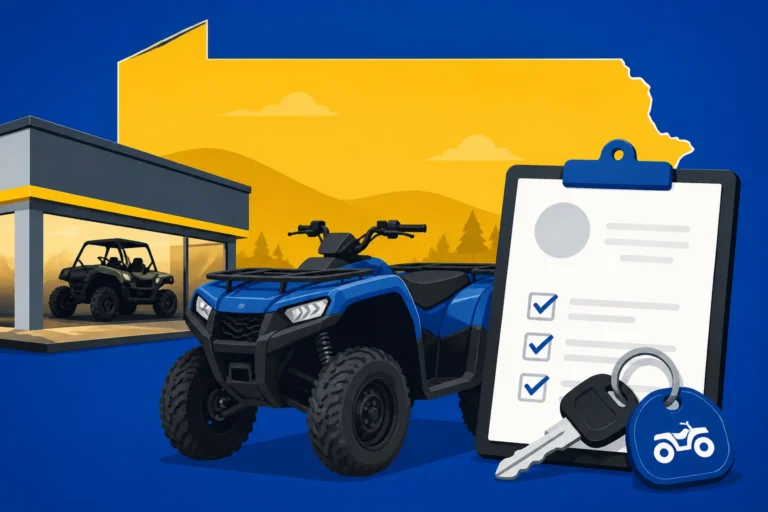
You'll also need proof of sales tax payment if you purchased the ATV from a private individual and sales tax wasn't collected at the time of sale. Pennsylvania requires a 6% sales tax on the purchase price of the ATV, which you'll typically pay directly to the DCNR when you submit your title and registration application. If you bought from a dealer, they would have collected and remitted this for you. Finally, you may need VIN proof, especially if the title has an issue or if you're registering a homemade machine. This involves a physical verification of the VIN to ensure it matches the paperwork, often completed by a dealer or notary. Having a comprehensive [Pennsylvania ATV Registration Paperwork Checklist] can prevent you from missing anything crucial.
Submitting Your Application and Fees
Once you have all your documents in order, the next step is to submit your application to the DCNR. Pennsylvania offers a few convenient methods for doing this, allowing you to choose what works best for your situation.
You can apply online through the DCNR's Snowmobile and ATV Registration Portal. This is often the quickest and most convenient method for many, allowing you to submit your information electronically and pay fees with a credit card. However, for a title transfer, you will likely still need to mail in the original signed-over title, as an electronic signature isn't sufficient for transferring legal ownership. The online portal is fantastic for renewals but can have limitations for initial title and registration processes after a sale. For specific instructions on using the portal, see [Registering Online at Pennsylvania's DCNR Portal].
Alternatively, you can mail your completed Form DCNR-43, the signed-over title, your bill of sale, and a check or money order for the applicable fees directly to the DCNR. This method is reliable, but processing times can be longer, so be prepared to wait a few weeks for your new registration card and plate to arrive. Make sure to send it via certified mail so you have proof of mailing and delivery.
The fees associated with transferring an ATV registration typically include the title fee and the registration fee. While I can't provide specific current amounts, the title fee is a one-time cost associated with officially changing ownership, and the registration fee covers the two-year period for which your ATV will be registered. This fee contributes directly to the state's ATV program, funding trail maintenance and development. Always check the current DCNR fee schedule or their website for the most up-to-date figures. You can explore the components of these costs in [Pennsylvania ATV Registration Cost] and [Pennsylvania ATV Title Cost]. Once submitted, the DCNR will process your application, and if everything is correct, you'll soon receive your new ATV registration plate, sticker, and wallet card, ready for your next adventure.
Special Situations and Common Pitfalls
While the standard transfer process is relatively straightforward when all parties have their ducks in a row, real-life scenarios often present unexpected challenges. From missing paperwork to different registration types, knowing how to navigate these special situations can save you a lot of time and frustration. Being prepared for the less common, but certainly not rare, scenarios is key to a smooth process.
Buying Without a Title or Registration Paperwork
One of the most anxiety-inducing situations for a buyer is purchasing an ATV or UTV without a proper title or current registration paperwork. Perhaps you found a fantastic deal, or the seller simply can't locate the documents. While it's certainly more complicated, it's not always a dead end, but it requires extra diligence. My first piece of advice: always try to buy a machine with a clear title in hand. It simplifies everything.
If the seller claims they never titled the machine (which is rare, but sometimes happens with older machines or those used exclusively on private land), or if the title is lost, they should be the one to apply for a duplicate title before the sale. This is their responsibility as the legal owner. If they refuse or are unable to, you're looking at a much more complex process. You might need to contact the DCNR directly to inquire about a "lost title" procedure, which often involves submitting a sworn affidavit and potentially a bond to prove ownership. This is why a thorough [Checking a VIN Before You Buy Used] is critical – to ensure the machine isn't stolen or has unknown liens.
If the machine simply doesn't have a current registration card (because it expired, or the seller never registered it), that's less of an issue for you as the buyer. As long as you have the signed-over title, you can apply for a brand new registration in your name. The DCNR requires the title to establish your ownership for registration purposes. However, buying a quad with absolutely no paperwork at all is a huge red flag. You'll face significant hurdles trying to prove ownership and meet DCNR requirements. It might involve filing for a court order to establish ownership, which is a lengthy and costly process. Always remember the old adage: if the deal seems too good to be true, it probably is. For more on handling these tricky purchases, check out [Buying a Quad With No Paperwork].
Understanding Limited vs. General Registration
Pennsylvania offers two distinct types of ATV registration, and understanding the difference is crucial, especially when transferring ownership. A buyer needs to know what they're getting into, and a seller should be able to explain the current registration type.
Limited Registration is for ATVs that are primarily used on the owner's private property or on designated private land with permission. It has a lower fee (or can even be free under certain circumstances) and is meant for machines that won't typically be ridden on state-managed trails. The plate issued for limited registration is specifically designed for this purpose and doesn't grant access to state forest or park trails. Often, a [Pennsylvania's Free Limited Registration] is chosen by riders who only use their quad on their farm or hunting camp.
General Registration, on the other hand, is for ATVs that will be operated on state-owned land open to ATV use (like state forests, parks, and designated trail systems), as well as on private property. This registration comes with a higher fee, which helps fund the development and maintenance of these public trail systems. It provides much broader riding privileges, making it the choice for most recreational riders. You can read more about what each registration type allows in [Pennsylvania's Limited and General Registrations].
When you're the buyer, you decide which type of registration you want, regardless of what the previous owner had. If the seller had a Limited Registration but you plan to ride state trails, you'll simply apply for a General Registration when you submit your DCNR-43 form and title. There's no "conversion path" in the traditional sense; you're just applying for the registration type that fits your intended use. Similarly, if the seller had General and you only plan to ride on your own land, you can opt for Limited. The key is that the registration itself does not transfer; only the ownership (via the title) changes hands, and you, as the new owner, apply for a fresh registration that suits your needs. If you find yourself wanting to change registration types later, the DCNR has a process for [Switching From Limited to General in Pennsylvania].
| Aspect | Seller's Responsibility | Buyer's Responsibility |
|---|---|---|
| Title Transfer | Sign over the Certificate of Title to the buyer. | Receive signed Title; submit with new application. |
| Bill of Sale | Provide a detailed Bill of Sale (recommended). | Obtain a Bill of Sale for proof of purchase & sales tax. |
| Registration | Current registration does NOT transfer; notify DCNR of sale. | Apply for NEW registration (Limited or General) in own name. |
| Sales Tax | N/A (unless dealer); buyer is responsible. | Pay 6% PA sales tax on purchase price to DCNR (unless dealer). |
| DCNR Forms | N/A (unless applying for duplicate title for buyer). | Complete Form DCNR-43, Application for Title & Registration. |
| Fees | N/A (unless applying for duplicate title for buyer). | Pay Title Fee & New Registration Fee to DCNR. |
| Liability | Advised to notify DCNR of sale to avoid future liability. | Responsible for operating machine legally once registered. |
Disclaimer
This article is for general informational purposes only and does not constitute professional advice. Laws, prices and regulations vary by location and change over time. Consult a qualified professional for guidance on your specific situation.