What the Dealer Files for You
Buying a new or even a well-loved used ATV or UTV from a Pennsylvania dealer can feel like a whirlwind of excitement, but then the reality of paperwork hits. It’s a common frustration: you just want to get out on the trails, but you’re handed a stack of forms and told it’ll all be taken care of. This guide is here to demystify that process, walking you through exactly what your Pennsylvania dealer handles on your behalf, so you can focus on the fun part – riding.
The Purchase Agreement and Bill of Sale: Laying the Groundwork
When you walk into a dealership, the first major hurdle you'll typically navigate, after picking out your dream machine, is the purchase agreement. This isn't just a casual handshake; it's the formal contract that sets the stage for your ownership. Dealers are experts at drafting these documents to ensure everything is legally sound and clear for both parties.
Understanding Your Purchase Agreement
Think of the purchase agreement as the blueprint for your ATV or UTV transaction. This detailed document will spell out every single term of the sale, from the agreed-upon price of your shiny new quad to any trade-in value you're receiving for an older machine. It will also detail financing arrangements, any special offers, and even the final out-the-door cost including all taxes and fees. The dealer's team meticulously prepares this document, ensuring that all the numbers add up and that the terms are clearly articulated. This transparency is crucial for your peace of mind, as it confirms what you're buying, how much you're paying, and when payments are due.
The Critical Role of the Bill of Sale
Hand-in-hand with the purchase agreement is the bill of sale, a document of paramount importance that formally transfers ownership of the ATV or UTV from the dealership to you. While the purchase agreement might cover a broad array of financial terms, the bill of sale specifically details the machine itself, the buyer and seller's information, the final sale price, and the date of the transaction. For a dealer, creating an accurate and comprehensive bill of sale is standard operating procedure. They'll ensure every detail, from the Vehicle Identification Number (VIN) to the exact model year, is correctly recorded. This meticulousness is vital because this document will serve as your primary proof of ownership when it comes to [Titling an ATV in Pennsylvania] and [Registering an ATV in Pennsylvania]. Without a properly executed bill of sale, you could face significant hurdles down the road, making the dealer's careful handling of this step incredibly valuable. While you might use a generic template from a site like LawDepot for a private sale, a dealer provides a professionally prepared, legally compliant document specific to the transaction.
Titling and Registration: Getting Your Machine Legal on Pennsylvania Trails
One of the biggest conveniences of buying from a dealer is how they streamline the often-confusing process of titling and registering your ATV or UTV. Unlike cars, which go through PennDOT, ATVs and UTVs in Pennsylvania are handled by the Department of Conservation and Natural Resources (DCNR). This distinction is something many new riders aren't aware of, and it’s where dealers truly shine by taking the burden off your shoulders.
Preparing the Title Application: Form DCNR-43
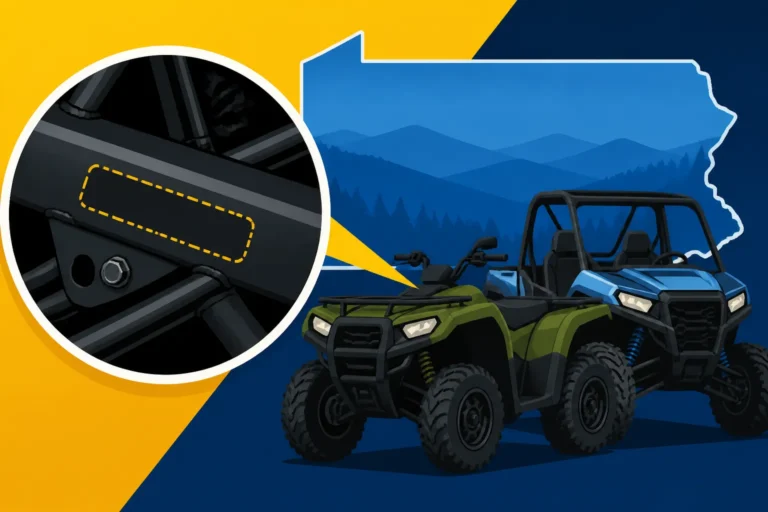
The core of getting your machine legally recognized is the title application, which in Pennsylvania means completing Form DCNR-43. This form is the official request to DCNR for a certificate of title and a registration for your ATV or UTV. Your dealer is responsible for accurately filling out this multi-section document, pulling all the necessary information from your purchase agreement and the machine's manufacturer details. This includes the full Vehicle Identification Number (VIN), the make, model, and year of the machine, and crucial details about you, the new owner, such as your full name, address, and often your driver's license number. It’s important to remember that any inaccuracies here can lead to delays or rejection from DCNR. The dealer’s familiarity with [What Pennsylvania Asks on Form DCNR-43] means they're less likely to make those common, frustrating errors that can hold up your new plate. They’ll also ensure that any [VIN Proof for a Pennsylvania Registration] requirements are met, whether it's recording it directly from the machine or providing manufacturer statements.
Handling Sales Tax and DCNR Fees
Beyond the purchase price, there are additional costs that Pennsylvania requires for ATVs and UTVs, specifically sales tax, title fees, and registration fees. When you buy from a dealer, they act as the collector for these funds. This means you pay the sales tax directly to the dealership at the time of purchase, rather than having to send a separate payment to the state yourself. This is a significant convenience, as the dealer calculates the correct [Pennsylvania ATV Sales Tax on a Private Purchase] (which is typically 6% of the purchase price, unless you're in a county with an additional local tax) and adds it to your total.
In addition to sales tax, the dealer will also collect the DCNR title and registration fees. Pennsylvania charges a specific fee for the title certificate and another for the two-year registration. [Pennsylvania ATV Title Cost] and [Pennsylvania ATV Registration Cost] are bundled together and remitted by the dealer. This eliminates the need for you to figure out these separate charges or write multiple checks to different state agencies, a process that can be particularly confusing for first-time buyers. They package all these payments and forms together, ensuring that everything that needs to go to DCNR goes there correctly and completely.
The 45-Day Temporary Sticker and DCNR Submission
Once all the paperwork is signed and the funds are collected, the dealer takes on the crucial task of submitting your application package to the Pennsylvania DCNR Snowmobile and ATV Section. While DCNR processes your official title and registration, you won't be left waiting indefinitely to ride. This is where [The Forty-Five Day Dealer Sticker in Pennsylvania] comes into play. The dealer will affix a temporary registration sticker to your machine, which allows you to legally operate your ATV or UTV for a period of 45 days. This sticker is a lifesaver, meaning you don't have to miss out on prime riding weather while the state processes your permanent documents.
The dealer's submission process typically involves sending everything electronically or via a secure courier service to DCNR, significantly reducing the chance of lost mail or processing errors. They know the ins and outs of the DCNR system, ensuring that your application starts its journey correctly. During this 45-day window, you can enjoy your new machine, confident that your permanent plate and title are on their way. If, by some rare chance, you find yourself nearing the end of that 45-day period without receiving your official documents, the dealership is your first point of contact, ready to assist in tracking the status of your application.
The Dealer's Behind-the-Scenes Role and Your Post-Purchase Responsibilities
The convenience of buying from a dealer extends far beyond just initial paperwork. Their established processes and expertise in DCNR requirements can make the entire post-purchase experience smoother and less stressful. However, even with a dealer handling most things, you still have a few crucial responsibilities to ensure everything goes off without a hitch.
Expediting the Process: How Dealers Help
Think of your dealer as a highly experienced guide navigating the labyrinth of state regulations. They don't just fill out forms; they have established relationships and systems that help expedite the entire titling and registration process. Their staff are often trained specifically on [Pennsylvania's DCNR Snowmobile and ATV Section] procedures, understanding common pitfalls and how to avoid them. This means less back-and-forth for you and a quicker turnaround for your official documents. Instead of you spending hours on the phone or researching obscure regulations, the dealer acts as your direct liaison with the state. This level of service is precisely [What a Pennsylvania Dealer Handles for You], transforming a potentially confusing bureaucratic task into a streamlined experience, letting you focus on planning your first ride rather than agonizing over forms.
Your Role After the Purchase
While the dealer takes care of much of the heavy lifting, your involvement doesn't end when you sign the final papers. It's absolutely crucial to carefully review every document before you sign. This includes the purchase agreement, the bill of sale, and any financing documents. Check for correct spellings of names, accurate addresses, and the correct VIN. A simple typo can create a huge headache later. Once everything is signed, make sure you get and keep copies of all the paperwork. These copies are your proof of purchase and submission, invaluable if there's ever a question about your ownership or registration status.
You'll also need to be aware of the type of registration you need. While the dealer processes it, the choice is yours whether you need [Pennsylvania's Limited and General Registrations]. If you plan to ride only on your own private land and not on any state-designated trails or private parks, then [Pennsylvania's Limited Registration for Your Own Land] might be sufficient and is actually free. However, if you have any intention of riding on state forest trails, DCNR-approved parks like AOAA or Rock Run, or even crossing roads in designated areas, then [Pennsylvania's General Registration for Everywhere Else] is what you'll need. Make sure you communicate your intended use clearly to the dealer so they can submit the correct application on your behalf.
Potential Issues and How Dealers Provide Support
Even with the most meticulous planning, sometimes things don't go exactly as expected. Paperwork can be tricky, and errors, though rare with experienced dealers, can still happen. The good news is that when you purchase from a reputable dealer, you have a resource to help you navigate these bumps in the road.
Common Pitfalls and Dealer Assistance
One of the most common issues that can arise with ATV or UTV registration is a simple error on the paperwork. This could be anything from a misspelled name or an incorrect address to a transposed VIN. Such seemingly minor mistakes can cause significant delays at DCNR, potentially pushing you past your 45-day temporary sticker window. If you discover an error after signing or if your permanent documents are taking longer than expected, your dealer is typically your first and best point of contact. They have the systems and expertise to communicate directly with DCNR, investigate the issue, and submit any necessary corrections or follow-ups. Their experience means they can often resolve these issues much faster than you could on your own, saving you a tremendous amount of time and frustration. Dealers also expertly handle complexities like trade-ins, ensuring that your [Pennsylvania ATV Trade-In Tax Credit] is correctly applied, which impacts the sales tax calculation.
Beyond Registration: Other Dealer Services
While securing your title and registration is a primary function, many dealers offer services that go above and beyond the basic paperwork. For instance, they can be excellent resources for information on [Pennsylvania ATV Safety Certificate Requirements], guiding you on where to take a course if you're a new rider or have a younger family member who needs certification. They often have partnerships or recommendations for [Pennsylvania ATV Insurance Requirements], helping you find a policy that covers your new machine for off-road use.
Furthermore, many dealers are deeply ingrained in the local ATV and UTV riding community. They might be able to connect you with local riding clubs, provide insights into popular trails, or even offer advice on maintenance schedules specific to Pennsylvania's riding conditions. Think of them as more than just a place to buy a machine; they can be a hub of knowledge and resources to enhance your overall riding experience.
Here’s a quick overview contrasting the responsibilities when buying an ATV/UTV from a dealer versus a private seller in Pennsylvania:
| Task | Dealer Purchase | Private Sale |
|---|---|---|
| Purchase Agreement | Dealer provides comprehensive, formal document. | Often informal, or buyer/seller drafts own. |
| Bill of Sale | Dealer generates detailed, legally sound document. | Buyer/seller drafts, often using templates (e.g., LawDepot). |
| Collects Sales Tax | Yes, dealer collects and remits to the state. | No, buyer must pay Use Tax directly to DCNR. |
| Handles Title Application (DCNR-43) | Yes, dealer completes and submits to DCNR. | No, buyer completes and submits to DCNR. |
| Collects Title/Reg Fees | Yes, dealer collects and remits to DCNR. | No, buyer includes with DCNR-43 submission. |
| Provides Temporary Tag | Yes, typically a 45-day dealer sticker. | No, buyer must wait for permanent registration. |
| Ensures VIN Accuracy | Dealer is responsible for accurate VIN submission. | Buyer is responsible for checking/submitting VIN. |
| Troubleshooting Issues | Dealer can assist with DCNR inquiries/corrections. | Buyer must resolve issues directly with DCNR. |
| Safety/Insurance Info | Often provides resources and recommendations. | Buyer must research independently. |
Understanding what the dealer files for you significantly simplifies the process of getting your new ATV or UTV ready for adventure in Pennsylvania. By entrusting these tasks to experienced professionals, you free yourself to anticipate the thrill of hitting the trails, knowing that all the necessary legalities are being handled efficiently and correctly.
Disclaimer
This article is for general informational purposes only and does not constitute professional advice. Laws, prices and regulations vary by location and change over time. Consult a qualified professional for guidance on your specific situation.