Pennsylvania Rules for Riding With a Dog
Heading out for a day of ATV or UTV riding in Pennsylvania offers a fantastic escape, but if you're like many of us, the idea of leaving your beloved canine companion behind just feels wrong. You want your dog to experience the fresh air and adventure with you, but navigating the rules and ensuring their safety on the trails can feel like a maze. This guide is here to untangle the complexities of riding with your dog in the Keystone State, from understanding the legal landscape to the practical steps you can take to make every ride safe and enjoyable for both of you.
Understanding Pennsylvania's General ATV Regulations
Before we even consider bringing our furry friends along for the ride, it's crucial to have a solid grasp of Pennsylvania's core ATV and UTV regulations. These rules form the bedrock for any off-road adventure, and adding a dog into the mix only amplifies the importance of compliance. Ignoring these basic requirements can not only lead to fines but can also put you, your machine, and your pet at risk.
Where ATVs Are Permitted in Pennsylvania
Pennsylvania offers a diverse landscape, but not all of it is open for ATV and UTV riding. The vast majority of legal riding occurs on designated state forest trails managed by the Department of Conservation and Natural Resources (DCNR), specific private parks like the Anthracite Outdoor Adventure Area (AOAA) or Rock Run Recreation Area, or on private land with the owner's explicit permission. You absolutely cannot just venture into any wooded area or field you see. State Game Lands, for example, are generally off-limits for ATVs and UTVs except for specific access routes for hunters with disabilities, and even then, strict rules apply.
Imagine you're planning a weekend trip to a popular spot like Whiskey Springs in the Sproul State Forest. You've mapped out your route, checked the [Pennsylvania ATV Trail Season] dates, and you're ready to go. This planning is critical, because if you're caught riding in an undesignated area, the consequences can be severe. A DCNR ranger isn't going to be more lenient just because you have your well-behaved golden retriever in tow; in fact, an animal safety issue could complicate the situation further. Understanding [Where to Ride an ATV in Pennsylvania] is the very first step, whether your dog is joining or not, as it dictates the entire environment your dog will be exposed to.
The Importance of Registration and Safety Certificates
Just like you wouldn't drive your car without registration and a driver's license, your ATV or UTV needs to be properly registered with the Pennsylvania DCNR. This isn't just a bureaucratic hurdle; it helps fund the very trails you ride on and provides a means of identification in case of an incident. There are two main types of registration: General Registration for state-owned trails and private property, and Limited Registration primarily for private land. Without proper registration, you're looking at significant fines if you're stopped by a ranger.
Similarly, if you're under 16 years old, or if you're older but want to ride state forest trails, you need to have a [Pennsylvania ATV Safety Certificates]. These courses teach essential riding skills, trail etiquette, and emergency procedures. While these certificates don't specifically cover riding with a dog, the foundational knowledge of safe operation, understanding trail conditions, and being prepared for unexpected situations directly contributes to your dog's safety. Consider a scenario where you're riding a challenging section of trail and suddenly need to react to a fallen tree or another rider. If you're not confident in your skills, adding a dog to the mix only increases the potential for an accident. Being prepared means you can focus on the trail and your passenger, human or canine.
Legality of Riding an ATV with a Dog in Pennsylvania
This is often the million-dollar question for dog owners: Is it even legal to have my dog on my ATV or UTV in Pennsylvania? The short answer is that Pennsylvania doesn't have a specific law that explicitly says "Thou shalt not ride an ATV with a dog" or "Thou shalt always ride an ATV with a dog." Instead, we need to look at broader animal welfare laws, local ordinances, and common-sense safety regulations that apply to any animal being transported or present in public spaces.
Is It Explicitly Allowed or Prohibited?
When you search the DCNR website or relevant sections of the Pennsylvania Code for "dog on ATV rules," you'll likely come up empty. The DCNR's regulations primarily focus on the machine itself, rider age, safety gear, and trail conduct related to environmental impact. They don't typically delve into specifics about passengers of the four-legged variety. This lack of explicit prohibition might seem like a green light, but it's more of a grey area that requires a thoughtful approach.
What this means in practice is that while there isn't a direct "no dogs allowed" sign on the general ATV trails, you're still expected to adhere to general animal welfare standards. For example, if your dog is not safely secured and falls off, or if it's exhibiting distress, you could potentially face charges under animal cruelty or neglect statutes, even if you were technically allowed to have the dog with you. The burden of proof would likely fall on demonstrating that you took all reasonable precautions for your pet's safety and well-being. Think about how [Pennsylvania Rules for Carrying a Firearm on an ATV] are specific; dog rules are far less defined, making personal responsibility even more critical.
Applying General Animal Welfare Laws to ATV Riding
Because there's no specific "dog-on-ATV" law, other general laws concerning animals come into play. These can include:
- Animal Cruelty and Neglect: Pennsylvania has strict laws against animal cruelty. If your dog is injured, sick, or visibly distressed due to being improperly transported or exposed to unsafe conditions on an ATV, you could face legal repercussions. This means ensuring your dog has adequate space, ventilation, water, and protection from the elements and trail hazards. Leaving a dog in a hot carrier without breaks is a definite no-go.
- Public Nuisance and Leash Laws: Many state parks and public lands, even those with ATV trails, have general rules about dogs being leashed and under control. If your dog is running loose on the trail, bothering other riders, chasing wildlife, or leaving waste, you could be cited for violating these rules. It's not just about the ATV; it's about responsible pet ownership in a shared environment. Always assume [Pennsylvania Rules for Riding a State Forest Road] also imply general rules of conduct for any accompanying animals.
- Transport of Animals: While more geared towards livestock, the spirit of laws regarding the safe transport of animals can be applied. This means your dog should be secured in a way that prevents injury to itself or others, cannot fall or jump from the vehicle, and is not exposed to extreme conditions without protection.
Essentially, you are responsible for your dog's safety and behavior at all times. A DCNR ranger or local law enforcement officer has the discretion to intervene if they believe an animal is in distress or causing a public safety issue. Even without a specific "no dogs on ATVs" rule, you could still be fined for other violations that arise from improper pet handling.
Practical Considerations and Best Practices for Riding with Your Dog
So, you've decided to bring your best friend along. Great! Now, let's talk about the practical side of making it a safe and enjoyable experience for everyone involved. Riding with a dog isn't just about strapping them into a carrier; it's about preparation, observation, and respect for both your pet and the environment.
Ensuring Your Dog's Safety and Comfort on the Trail
The number one priority when riding with your dog is their safety and comfort. An ATV or UTV ride can be noisy, bumpy, dusty, and hot or cold, depending on the season. Your dog needs to be protected from these elements.
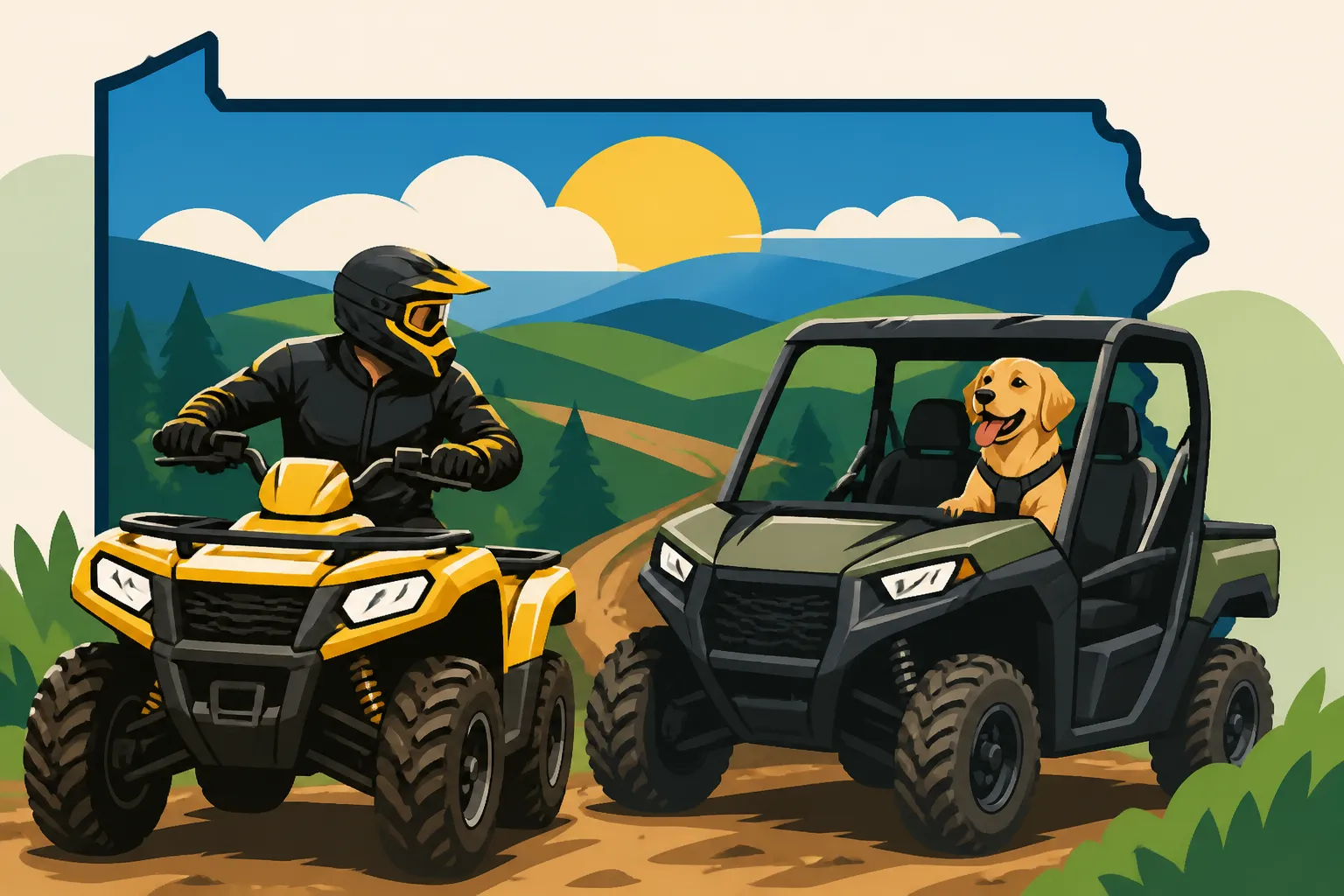
- Secure Carriers and Harnesses: This is non-negotiable. Your dog must be safely secured in a well-ventilated carrier or a purpose-built passenger seat designed for pets. A regular leash tied to your ATV is extremely dangerous and could lead to severe injury or strangulation if your dog tries to jump out or if you hit a bump. For UTVs, a secured crate in the cargo bed is a great option. For ATVs, specialized front or rear baskets with secure covers are available. SuperATV, for instance, offers a range of cargo boxes and accessories that can be adapted to safely secure a dog carrier or crate in a UTV bed, offering protection from the elements and ensuring the dog stays put.
- Paw Protection: Pennsylvania trails, especially in rocky areas like those found at Bloody Skillet, can be brutal on paws. Investing in good quality paw booties can prevent cuts, abrasions, and burns from hot surfaces. Even if your dog is in a carrier, they'll need to walk during breaks, so protection is key.
- Eye Protection: Dust, dirt, flying debris, and even low-hanging branches can seriously injure your dog's eyes. Dog goggles (often called "Doggles") are available and can offer crucial protection, especially for dogs whose heads are exposed.
- Hydration and Breaks: Just like you, your dog needs to stay hydrated. Always carry plenty of fresh water and a collapsible bowl. Plan frequent breaks, especially on longer rides or hot days, to let your dog stretch its legs, relieve itself, and rehydrate. Never push your dog past its limits.
- Temperament Assessment: Not all dogs are cut out for ATV riding. Some dogs get stressed by loud noises, vibrations, or confined spaces. Before a long trip, do several short "test rides" to see how your dog reacts. Watch for signs of anxiety, motion sickness, or overheating. If your dog is clearly miserable, it might be best to leave them home.
- First Aid Kit: A specialized pet first aid kit is essential. This should include bandages, antiseptic wipes, pain relief (specifically for dogs, under veterinary guidance), tweezers for ticks or splinters, and any necessary medications your dog takes. Knowing basic pet first aid could be a lifesaver far out on a trail.
Minimizing Impact and Maintaining Trail Etiquette
Bringing your dog means you have an increased responsibility to be a considerate and low-impact user of the trails. It's not just about you and your dog; it's about everyone else sharing the trail, as well as the local wildlife.
- Leash Laws and Control: Always keep your dog on a leash when outside of its carrier, especially when at staging areas, during breaks, or if you encounter other people or animals. Many public trails and parks have strict leash laws, and ignoring them can lead to [Pennsylvania Fines for a Trail Violation]. An unleashed dog, no matter how well-behaved, can startle other riders, hikers, or even local wildlife, creating an unsafe situation.
- Waste Management: Carry waste bags and always pick up after your dog. Pack it in, pack it out – this applies to dog waste just as much as your snack wrappers. Leaving waste on the trail is unsightly, unsanitary, and disrespectful to other users and the environment.
- Respecting Wildlife: Your dog is a predator by nature, and even the most docile pet can be tempted to chase a squirrel, deer, or rabbit. This can stress wildlife, interfere with nesting or hunting seasons, and even lead to your dog getting lost or injured. Keep your dog under close supervision and control at all times to prevent encounters with local fauna.
- Consideration for Other Trail Users: Not everyone loves dogs, and some people might even be afraid of them. If you encounter hikers, mountain bikers, or other ATV riders, ensure your dog is well-controlled and doesn't approach them without an invitation. A friendly wagging tail might seem harmless to you, but it can be intimidating to others. [Pennsylvania ATV Trail Etiquette on Narrow Trails] extends to your four-legged companion.
Equipment and Training for a Safe Adventure
Having the right gear and ensuring your dog is properly trained are critical components of safely bringing them along for your Pennsylvania ATV or UTV adventures. Just as you wouldn't head out without a helmet, your dog needs its own specialized protection and preparation.
Choosing the Right Gear for Your Canine Companion
The market for pet travel gear has expanded significantly, offering many options to keep your dog secure and comfortable on an ATV or UTV. The best choice will depend on your dog's size, temperament, and the type of machine you ride.
- Hard-Sided Carriers/Crates: For UTVs, a sturdy, well-ventilated hard-sided crate securely strapped into the cargo bed is often the safest option. These provide excellent protection from impacts and offer a consistent, secure space for your dog. Ensure the crate is large enough for your dog to stand, turn around, and lie down comfortably, but not so large that they slide around excessively. Brands like SuperATV offer robust cargo boxes and bed extenders that can perfectly house a hard-sided crate, ensuring it doesn't shift during your ride.
- Soft-Sided Carriers/Bags: These are typically less ideal for the direct rigors of ATV/UTV riding due to less impact protection, but smaller, well-designed soft carriers might work for very small dogs when placed within a larger, secured cargo area in a UTV, or a front basket on an ATV. They must be completely enclosed and securely fastened to prevent the dog from escaping or falling out. Ventilation is key here.
- ATV-Specific Dog Baskets/Bags: Some manufacturers make front or rear baskets designed to carry smaller dogs on ATVs. These often have mesh tops for ventilation and security straps. These are generally for smaller breeds and still require eye and paw protection. Always ensure they are rated for your dog's weight and securely mounted to your ATV's racks.
- Eye Protection (Doggles): As mentioned, dog goggles are a must if your dog's head will be exposed to wind, dust, or debris. Introduce them gradually and positively, treating it like a fun new accessory.
- Paw Protection (Booties): Protect paws from hot surfaces, sharp rocks, and abrasive terrain. Many brands offer durable dog boots for outdoor adventures. Again, positive reinforcement is key to getting your dog used to them.
- Harness vs. Collar: If your dog is ever outside of a fully enclosed carrier and on a leash, a sturdy harness is always preferable to a collar. A harness distributes pressure across the chest, preventing tracheal damage if the leash is pulled suddenly, which is a real possibility with an excited dog in a new environment.
Training Your Dog for the ATV Environment
Even with the best gear, an untrained or unacclimated dog can quickly turn an adventure into a nightmare. Training and gradual exposure are paramount.
- Desensitization to Noise and Vibration: ATVs and UTVs are loud and vibrate. Start by letting your dog get used to being around the unstarted machine. Offer treats and praise. Gradually introduce the sound of the engine running, initially from a distance, then closer. Never force your dog; let them approach on their own terms.
- Carrier Acclimation: Get your dog comfortable with its carrier long before the first ride. Make it a positive space with toys, treats, and comfy bedding. Practice having them sit or lie down in it for increasing periods, both inside and outside the house.
- Short Test Rides: Begin with very short rides around your property or a quiet, safe area. Start with just a few minutes, then gradually increase the duration. Observe your dog closely for any signs of stress, fear, or motion sickness.
- Basic Commands: Ensure your dog knows and responds reliably to basic commands like "sit," "stay," "come," and "leave it," even with distractions. These commands are vital for safety during breaks and unexpected encounters. [Pennsylvania Rules for Riding Private Property] often imply you need even greater control over your animal.
- Leash Training: Practice walking your dog calmly on a leash, especially in distracting environments. This will be crucial when you need to walk them to and from your machine, during breaks, or if you encounter other people or animals on the trail.
Remember, patience and positive reinforcement are your greatest tools. Not every dog will love ATV riding, and that's okay. Your dog's well-being should always come first.
Here's a quick comparison of common dog carrier options for your ATV or UTV:
| Feature | Hard-Sided Crate (UTV) | Soft-Sided Carrier/Bag (ATV/UTV) | ATV-Specific Basket/Bag (ATV) |
|---|---|---|---|
| Protection | Excellent (impact, elements) | Moderate (weather), Low (impact) | Moderate (some weather), Low (impact) |
| Ventilation | Good (often 360-degree mesh) | Varies (mesh panels, zippers) | Good (open-air, but exposed) |
| Security | Very High (securely strapped down) | Moderate (zippers, clips, internal leash point) | Moderate (straps, clips, sometimes mesh top) |
| Dog Size | Small to Large | Small to Medium | Small |
| Comfort | High (with bedding) | Moderate (can feel cramped) | Moderate (can be bumpy) |
| Best Use Case | UTV cargo bed, most secure option | Small dogs in UTV, very short, calm rides on ATV | Small dogs on ATVs, requires additional protective gear |
| Common Concerns | Bulkiness, weight, dog overheating if not well-vented | Less protection, dog escaping, less durable | Exposure to elements/debris, less secure, limited size |
Disclaimer
This article is for general informational purposes only and does not constitute professional advice. Laws, prices and regulations vary by location and change over time. Consult a qualified professional for guidance on your specific situation.