Riding From Westport to Kettle Creek
Dreaming of hitting the trails and connecting the dots between picturesque Westport and the remote beauty of Kettle Creek on your ATV or UTV? You're not alone. Many riders look at a map of central Pennsylvania and see these two points, imagining a straightforward ride, but the reality of legally connecting them requires careful planning and an understanding of our state's specific off-road rules. This guide is here to walk you through exactly how you can make that journey a reality, legally and safely.
Understanding the Route: Westport to Kettle Creek
The landscape between Westport and Kettle Creek is quintessential Pennsylvania wilderness – dense forests, winding waterways, and rolling mountains that call to every off-road enthusiast. It’s a region that feels wild and remote, yet is deeply accessible if you know the right paths.
The Allure of the Northcentral Region
When you think of ATV riding in Pennsylvania, the Northcentral region often comes to mind, and for good reason. It’s home to some of our most extensive and challenging trail systems, offering hundreds of miles of riding through state forests. The idea of traveling from a hub like Westport, known for its proximity to numerous outdoor adventures, over to the secluded Kettle Creek area, with its stunning reservoir and fishing, is incredibly appealing. It evokes a sense of journey, of truly immersing yourself in the vastness of Pennsylvania’s natural beauty. Riders envision leaving one point, traversing wild lands, and arriving at another, ready for the next adventure.
This part of the state isn't just about the trails; it's about the entire experience. You're riding through areas rich in history, dotted with small towns, and teeming with wildlife. It’s the kind of place where you truly feel disconnected from the hustle and bustle, allowing you to focus on the ride and the natural environment around you. The challenge, of course, is making sure that your vision of a seamless journey aligns with Pennsylvania’s regulations, which are designed to protect both riders and the environment.
The Reality of Connecting Two Points by ATV
While the dream of a direct point-to-point ride between Westport and Kettle Creek is enticing, the reality is that you can’t simply hop on any road and ride straight there. Pennsylvania has very specific rules about where ATVs and UTVs can operate. Our state isn't like some others where street-legal conversions are common or where many public roads are open to off-road vehicles. Instead, connecting two points often means utilizing a carefully planned network of designated ATV trails, specific joint-use roads, and approved connector routes. It’s more of an intricate puzzle than a straight line.
You'll be relying on the state forest trail systems, like those managed by the DCNR, which provide sanctioned paths through the wilderness. These trail systems are designed for off-road use and often have specific entry and exit points. To move between separate trail sections or to access amenities, you might find short stretches of township or borough roads that have been specifically designated for ATV use. It's crucial to understand that these designated roads are the exception, not the rule, and they are usually clearly marked. For a longer journey like Westport to Kettle Creek, you're likely stringing together several trail segments with permitted road connectors, rather than taking a single, continuous path.
Navigating Pennsylvania's ATV Road Rules
Pennsylvania's laws regarding ATV and UTV use on public roads can be a bit tricky, and misunderstanding them can quickly lead to fines or citations. It’s vital to know the difference between a permissible road crossing, a designated joint-use road, and a road that is strictly off-limits to off-road vehicles.
Designated Joint-Use Roads and Trail Access
The key to navigating between trail systems, or even just getting to a trailhead, often lies in identifying and understanding Pennsylvania's designated joint-use roads. These are public roads, typically maintained by townships or boroughs, that have been specifically opened for ATV and UTV use. They are usually marked with distinct green signs that clearly indicate they are shared-use roads. Without these specific signs, you must assume a road is closed to ATVs. This is a critical distinction that many riders overlook, thinking any rural, unpaved road is fair game. Unfortunately, that's almost never the case.
These designated roads play a crucial role in areas like the Northcentral region, allowing riders to create more extensive loops or to link up different sections of state forest trails. For instance, to ride from Westport in the direction of Kettle Creek, you might use a short section of a designated township road to get from one state forest access point to another. It’s not about cruising down a highway, but rather using these specific connectors to get where you need to go. Always check local DCNR maps or reach out to the relevant district office to confirm which roads are currently designated. Ignoring these regulations can lead to serious consequences, including substantial fines. If you’re ever unsure, it’s always best to err on the side of caution and avoid a particular road. You can learn more about finding these specific routes by checking out [Pennsylvania's Designated ATV Roads] and [Pennsylvania's Joint-Use Roads].
Why Street Legal Isn't an Option
One of the most common misconceptions among ATV and UTV riders, especially those new to Pennsylvania, is the idea of making their machine "street legal." Unlike some other states that allow for extensive modifications and registration for road use, Pennsylvania generally does not permit ATVs or UTVs to be registered as street-legal vehicles. There's simply no conversion path here. Our laws are very clear: these machines are designed for off-road use, and that's where they belong, with only very limited exceptions.
The exceptions primarily involve brief, ninety-degree crossings of roads to access another trail segment or private property, and the use of those aforementioned designated joint-use roads. Even on designated roads, there are often restrictions, such as speed limits, age requirements for operators (riders must be at least 16 years old to operate on designated roads), and strict adherence to rules of the road. You won't find yourself commuting to the grocery store or taking a scenic drive through town on your quad in Pennsylvania. Attempting to do so on a non-designated road will almost certainly result in a citation for riding an unregistered or illegal vehicle on a public roadway, often accompanied by a substantial fine. It's important to understand this fundamental difference in our state's approach to off-road vehicles. For more clarity on this, you might want to read [Street Legal ATVs in Pennsylvania: The Short Answer] and [Pennsylvania's Sixteen-Year-Old Road Rule].
Essential Permits and Registrations for Your Journey
Beyond understanding where you can legally ride, you also need to ensure your machine and your riding qualifications are fully in order. Pennsylvania has a clear set of requirements for ATV and UTV operation, especially on state-managed trails.
The Northcentral Regional Trail Permit
If your journey from Westport towards Kettle Creek involves any of Pennsylvania’s state forest ATV trails, which it almost certainly will, then the Northcentral Regional Trail Permit is an absolute must-have. This permit is specifically designed for the extensive network of trails located within the Sproul, Tiadaghton, Susquehannock, and Elk State Forests. These four state forests cover parts of Clinton, Lycoming, Potter, and Tioga counties – precisely the area you'll be traversing. Without this permit, you are not allowed to ride these designated state forest trails, even if your ATV is registered with the DCNR.
The permit is typically valid for a specific season, often coinciding with the DCNR’s designated ATV riding seasons. You’ll need to apply for it, and there’s a fee associated with both resident and nonresident permits. The application process usually involves submitting a form and showing proof of your current DCNR ATV registration. It’s crucial to get this sorted out before you head out, as trail rangers frequently check for permits at trailheads and along the routes. Think of it as your passport to some of the best riding in the state. Failing to have it can lead to fines and an immediate end to your ride. To ensure you’re compliant, check out [Pennsylvania ATV Trail Permits Explained] and [Pennsylvania's Northcentral Regional Trail Permit].
Your ATV Registration and Other Requirements
Having the right trail permit is only one piece of the puzzle. Your ATV or UTV itself must be properly registered with the Pennsylvania Department of Conservation and Natural Resources (DCNR). This registration is separate from any vehicle registration you might have for a car or truck with PennDOT. For most riders who plan to use state forest trails or ride on land other than their own private property, a General Registration is required. This comes with a registration plate and sticker that must be displayed on your machine. Without this, you cannot even apply for the Northcentral Regional Trail Permit, let alone legally ride on public lands.
In addition to registration, Pennsylvania mandates that all ATVs and UTVs operating off private property must carry liability insurance. This is a critical requirement designed to protect riders and landowners in the event of an accident. You’ll need to carry proof of this insurance with you, often in the form of an insurance card or declaration page, similar to what you'd carry for your car. Finally, for riders between the ages of 8 and 15, a DCNR-issued ATV safety certificate is also required. Even if you're an adult, taking a safety course is highly recommended to familiarize yourself with proper riding techniques and Pennsylvania's specific laws. Ensuring all these elements are in place before you hit the trail is non-negotiable for a hassle-free experience. For detailed information, see [Registering an ATV in Pennsylvania] and [Pennsylvania ATV Registration and Insurance Proof].
Here’s a quick overview of what you’ll need to ride on Pennsylvania’s state trails:
| Requirement | Description | Where to Get It |
|---|---|---|
| DCNR ATV Registration | General Registration for riding off private land (plate & sticker). | DCNR Snowmobile and ATV Section (online or mail) |
| Trail Permit | Northcentral Regional Trail Permit for state forest trails in Clinton, Lycoming, Potter, Tioga counties. | DCNR Forest District Offices or mail-in (seasonal) |
| Liability Insurance | Proof of insurance coverage for your ATV/UTV. | Your chosen insurance provider |
| Safety Certificate | Mandatory for riders aged 8-15; recommended for all. | DCNR-approved safety course providers (online or in-person) |
| Valid ID | For all adult riders. | State-issued driver's license or ID card |
Practical Tips for a Successful Ride
Embarking on a journey from Westport to Kettle Creek by ATV or UTV is an incredible adventure, but it requires more than just meeting legal requirements. Careful planning and responsible riding practices will ensure your trip is not only compliant but also enjoyable and safe.
Planning Your Route and What to Expect
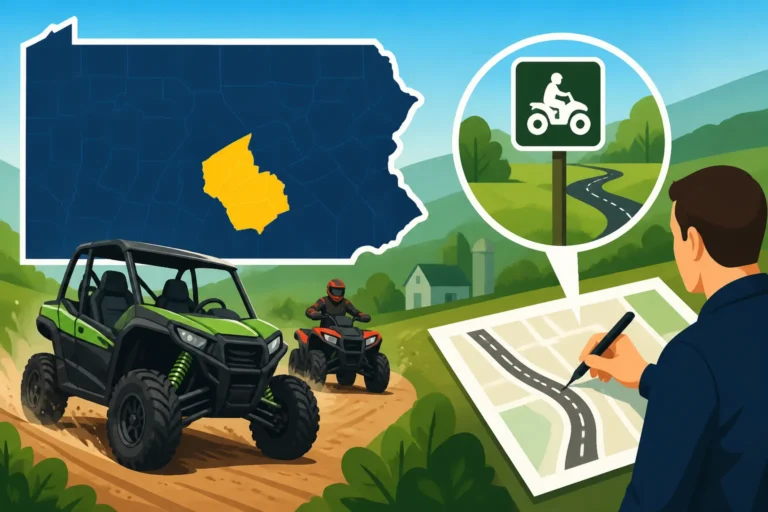
The first step in planning your ride is to get your hands on the most current trail maps available. The DCNR provides excellent, detailed maps for each state forest that clearly mark ATV trails, designated joint-use roads, and points of interest. These maps are invaluable for understanding the terrain, identifying potential connectors, and estimating your travel time. Websites for organizations like the AOAA (Anthracite Outdoor Adventure Area) or Rock Run Recreation also have maps for their specific locations, though these are typically private parks and not part of the state forest system between Westport and Kettle Creek. Always check trail conditions before you go, especially during shoulder seasons. [Pennsylvania Trail Conditions Before You Go] is a great resource. Mud season, for example, often sees many trails temporarily closed to prevent damage and ensure rider safety, so don't plan your grand adventure right after a heavy spring thaw.
Consider the capabilities of your machine and your own riding skill level. Some trails in the Northcentral region can be quite rugged, featuring rocky climbs, stream crossings, and challenging descents. Make sure your ATV or UTV is in top mechanical condition, with properly inflated tires, functioning brakes, and adequate fuel. Equipping your machine with durable aftermarket parts, perhaps from a brand like SuperATV, for things like skid plates, A-arm guards, or a robust winch, can save you a lot of headache if you encounter unexpected obstacles or tricky terrain. Always ride with a buddy or in a group, and make sure someone knows your planned route and estimated return time, especially when venturing into remote areas where cell service can be spotty. Remember, [Pennsylvania Trail Opening Day] is a big deal, and trails might be busy, so plan accordingly!
Being a Responsible Rider in the Backcountry
Riding through Pennsylvania’s beautiful state forests comes with a responsibility to protect these natural resources for everyone. Always practice Leave No Trace principles: pack out everything you pack in, stay on marked trails, and avoid disturbing wildlife or damaging vegetation. This means not going off-trail to explore an intriguing side path unless it's explicitly marked as an ATV route. Respecting private property boundaries is also paramount; always assume land is private unless clearly marked otherwise, and never trespass. You can usually find [Where to Ride an ATV in Pennsylvania] on the DCNR's website.
Beyond environmental considerations, personal preparedness is key. Always carry a basic tool kit, a first-aid kit, plenty of water, and snacks. A GPS device or a reliable mapping app on your phone (with downloaded offline maps) can be a lifesaver, as trail signage isn't always perfect, and it's easy to get turned around. Consider carrying a spare tire plug kit and a small air pump. For UTVs, durable windshields and roofs from companies like SuperATV can enhance comfort and protection from the elements, allowing you to focus on the ride. Knowing the local emergency contacts for the DCNR district office or State Police can also be invaluable in a pinch. Riding responsibly not only ensures your safety but also helps to maintain access to these incredible trails for future generations. Don't forget to account for costs like [Pennsylvania ATV Registration Cost] when budgeting for your ride.
Disclaimer
This article is for general informational purposes only and does not constitute professional advice. Laws, prices and regulations vary by location and change over time. Consult a qualified professional for guidance on your specific situation.