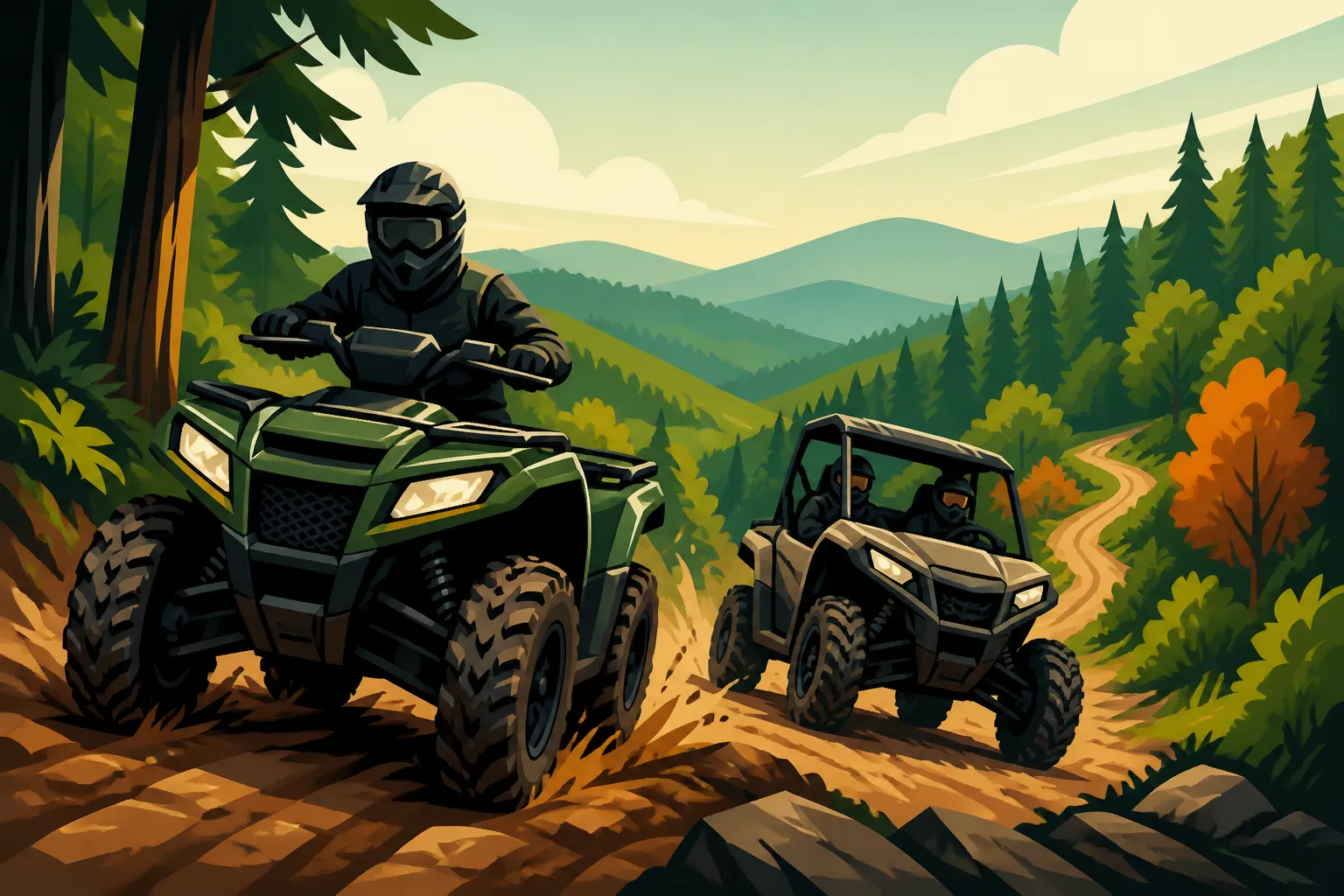
Timberline and Penoke Trails
Timberline and Penoke are two Allegheny National Forest riding areas that can make a rewarding Pennsylvania ATV trip, but planning matters: seasonal closures, permit rules, machine limits, and trail conditions can affect where you ride. This guide explains what to check before you go, how to prepare, and how to make a safer day of it without assuming every route is open.
Understanding Timberline and Penoke Trails
Where the trails fit into an Allegheny National Forest ride
Timberline and Penoke are part of the Allegheny National Forest’s network of off-road riding opportunities in northwestern Pennsylvania. Riders often plan around the Marienville area, but the names on a map do not mean every nearby road or path is open to ATVs. Forest routes, roads, and trails can have different rules, so follow the marked route rather than treating the surrounding forest as open riding ground.
A good first step is to look at the official forest trail map and identify the access point you intend to use. Then check whether the route is open for your machine and during your planned visit. If you are comparing this area with other nearby options, Allegheny Forest Trails at Marienville offers useful context for planning a wider trip.
Timberline and Penoke may be combined into a longer outing when conditions and route connections allow, but don’t count on a continuous loop without checking the map. A closure, seasonal gate, or route restriction can turn a planned loop into an out-and-back ride—or make part of the plan unsuitable for your vehicle. If you are unfamiliar with the area, decide on a turnaround point before setting off.
Trail character and what to expect on the ground
Forest trails can change noticeably with weather and use. One section may be firm and straightforward while another has loose stone, ruts, exposed roots, or muddy patches. A route that felt easy during a dry visit may be slower and more demanding after rain. That variation is part of the appeal for many riders, but it is also why a trail label alone cannot tell you how difficult a particular day will be.
Give yourself time to ride at a pace that suits the conditions. On a narrow or rocky section, leave room between machines so the rider ahead has space to choose a line and stop safely. If a route looks beyond your ability or your machine’s clearance, turning around is a sensible decision—not a failed ride.
The wider Allegheny National Forest includes different trail systems and recreation areas, so don’t assume that a pass or permit for one location automatically covers every place you might want to ride. Check What the $35 Allegheny Forest ATV Permit Covers for the permit’s scope, and confirm the applicable rules for your specific route before leaving home.
Permits, Maps, and Machine Rules
Check the permit requirement before you travel
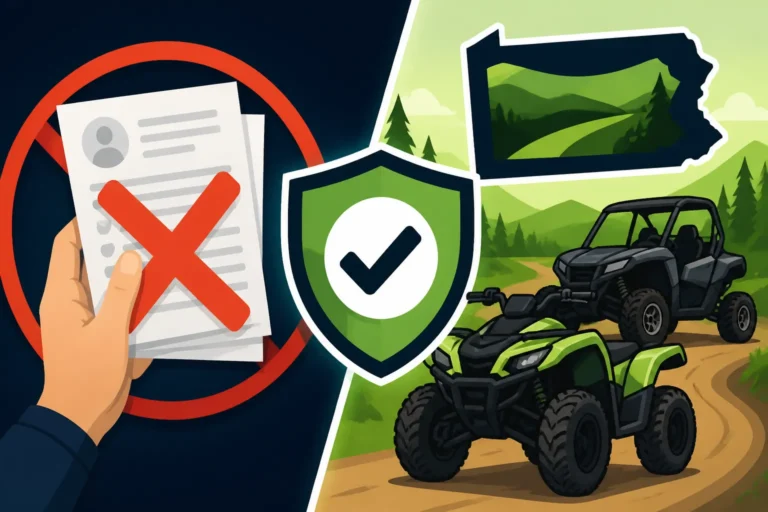
The Allegheny National Forest has its own ATV permit requirements. Pennsylvania registration and a forest riding permit serve different purposes, so having a registration plate does not necessarily mean you have everything required to ride a particular forest trail. Review Pennsylvania’s Allegheny National Forest Permit and Showing Registration to Buy a Forest Permit as part of your planning.
Keep the required permit and registration information with you while riding, and make sure the details match the machine you bring. If you are riding a borrowed ATV or UTV, don’t assume the owner’s paperwork automatically covers you or satisfies every trail requirement. Confirm how the permit applies to the vehicle and rider before you go.
Permits are only one part of access. They do not give permission to ride on closed routes, private land, or roads that are not designated for ATV use. Likewise, a route shown on an older map may have changed. Check for current closures and notices close to your trip, especially if you are travelling a long distance to the forest.
Match your ATV or UTV to the route
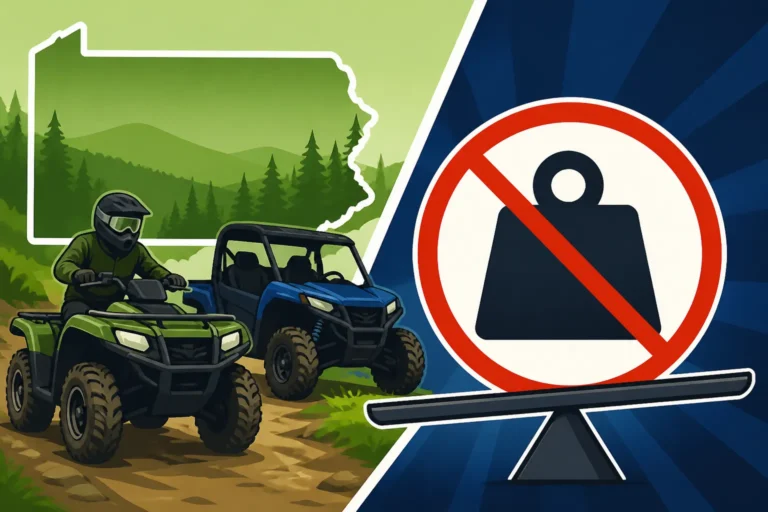
Vehicle dimensions matter on Pennsylvania trails. State forest riding areas can impose width and other machine limits, and a full-size side-by-side may not fit routes intended for narrower vehicles. Before planning a Timberline or Penoke ride in a UTV, check the current limits for the specific route and confirm the machine’s actual width as equipped. Added wheels, tires, mirrors, or accessories can affect whether it fits.
Use Pennsylvania’s Class II Trail Width Limit as a starting point for understanding why width is an important part of trail planning. It is still essential to confirm the rules for the trail system you intend to ride. A machine that is legal to own and register is not automatically suitable for every trail.
Weight and other equipment requirements can also matter. Check the current forest guidance rather than relying on a friend’s recollection or a post from a previous season. If your machine is close to a limit, measure it carefully and ask the appropriate forest office before travelling. Finding out at the trailhead that your UTV cannot use the route can spoil an otherwise well-organised weekend.
Use maps as a planning tool, not permission to ride
A trail map helps you understand route connections, access points, and nearby roads. It does not replace signs, gates, or current closure notices on the ground. If a route is marked closed, treat it as closed even if a digital map still displays the trail. Conditions and restrictions can change, and local signage should guide your decisions.
Some riders use onX Offroad to review route lines and orient themselves before a trip. It can be a helpful planning aid, but check it against official forest information and posted signs; a map app is not authorization to use a route. Download or save information before heading into areas where mobile service may be limited, and carry a backup map if you are travelling somewhere unfamiliar.
You can also use Pennsylvania Trail Maps From DCNR to understand how trail mapping fits into a broader Pennsylvania ride plan. Compare map versions, check access points, and note where you will turn around if a connection is unavailable. That small bit of preparation can prevent a confusing detour late in the day.
Planning a Safer Day on Timberline and Penoke
Choose a route that suits your group
Before starting, agree on how long the group plans to ride and how often you will stop. A mixed group with new riders, experienced riders, and different machine types will usually move at the pace of its least-experienced member. That is a good thing: keeping the group together is safer than asking a newer rider to hurry over terrain that feels difficult.
Set simple group rules before you leave the staging area. Decide who leads, who rides at the back, and what everyone should do if the group gets separated. Make sure each rider knows the planned route and meeting point. If someone needs to stop, the group should pull over somewhere safe rather than leaving a rider behind to catch up alone.
For a first visit, a shorter ride is often the better choice. It leaves time to learn the terrain, check how the machines handle, and respond to unexpected conditions. Once you know how your group rides and what the route is like, you can plan a longer outing on a later visit.
Prepare for changing weather and trail conditions
Rain can make dirt, rock, and sloped sections harder to manage. After a storm, slow down and expect slick patches, standing water, and changed trail surfaces. Avoid riding around a muddy spot by creating a new track beside the trail; doing so can damage the forest floor and widen the route. If a section is unsafe, turn back or wait for better conditions.
Check the forecast for the riding area rather than relying only on the weather at home. Conditions can differ across the forest, and a pleasant morning can become a wet, cold ride by afternoon. Pack clothing that suits the forecast and bring water, food, basic tools, and any personal items your group may need if the ride takes longer than expected.
Trail conditions can also change with seasonal use and maintenance. Consult Pennsylvania Trail Conditions Before You Go and Pennsylvania Trail Closures to Check First before leaving. If recent rain or a closure makes your original plan unsuitable, choosing another open route—or postponing the trip—is better than forcing the ride.
Bring the essentials and keep documents protected
A day ride can involve dust, water, vibration, and mud, all of which can be rough on paperwork and electronics. Keep registration and permit documents secure and accessible, and use a protective holder or sealed bag. Carry a charged phone, but do not assume you will have reliable coverage throughout the forest.
A basic trail kit might include a first-aid kit, a tire repair option suited to your machine, a small tool selection, a flashlight, and a way to contact your group if you become separated. Bring enough water for the riders and plan fuel conservatively. The right kit depends on your route, vehicle, and experience, but the goal is simple: be able to handle a minor delay without turning it into an emergency.
Before unloading, walk around each machine. Check tires, brakes, lights, controls, and visible fasteners. Confirm that the plate and required permit are attached and readable where applicable. A few minutes in the parking area is easier than discovering a loose component on a rocky section.
A Practical Pre-Ride Checklist
Use this checklist before heading to Timberline or Penoke. It cannot replace official rules or signs, but it helps catch common planning gaps.
| Before you go | What to confirm |
|---|---|
| Route | The trails and access point are open for your intended visit |
| Permit | You have the required Allegheny National Forest permit |
| Registration | Your machine has the required Pennsylvania registration or qualifying documentation |
| Machine fit | Your ATV or UTV meets current width and other trail restrictions |
| Map | You have reviewed an official map and saved a backup for limited-signal areas |
| Conditions | You have checked weather, trail updates, and closure notices |
| Group plan | Everyone knows the route, leader, regrouping point, and turnaround plan |
| Equipment | Machines are checked and riders have water, basic tools, and suitable clothing |
Common planning mistakes to avoid
One common mistake is treating registration as a trail permit. These documents may address different requirements, and a rider may need to carry more than one form of proof. Review Carrying Proof of an Out-of-State Registration if you are visiting from another state, and verify what applies to your particular machine and trip.
Another is relying on an old route description without checking closures. A trail may be temporarily unavailable or subject to seasonal restrictions even if it appears in a ride report. Look for current information before travelling, then obey posted signs and barriers when you arrive.
It is also easy to underestimate how much a UTV’s width affects route choice. Check the machine’s dimensions and the specific trail rules instead of assuming that a route used by an ATV will accommodate a side-by-side. Side-by-Sides Too Wide for State Forest Trails explains why this check matters when choosing a machine for Pennsylvania riding.
Making the trip enjoyable without rushing
Leave enough time to reach the staging area, unload, review the map, and handle small delays. If you are travelling with children or newer riders, build in extra breaks and avoid planning a full day around the fastest rider’s pace. A relaxed ride gives everyone more time to enjoy the forest and less pressure to push through difficult sections.
Keep the group’s impact in mind. Stay on designated routes, respect closures, and avoid disturbing other forest users. Riders, hikers, hunters, and people working in the forest may share the wider landscape, even when they are not using the same trail. Slow down where visibility is limited and be ready to stop when approaching others.
Timberline and Penoke can be a satisfying destination when your route, vehicle, permit, and expectations match the conditions. Check the official information before each visit, carry the required documents, and be willing to adjust the plan once you see the trail. That approach makes it easier to focus on the ride instead of sorting out avoidable problems at the trailhead.
Disclaimer
This article is for general informational purposes only and does not constitute professional advice. Laws, prices and regulations vary by location and change over time. Consult a qualified professional for guidance on your specific situation.