Registering an Out-of-State Machine in Pennsylvania
Bringing your beloved ATV or UTV with you when you move to Pennsylvania, or perhaps just for an extended stay, can feel like navigating a whole new world of paperwork. Many riders assume their out-of-state registration will cover them indefinitely, only to discover Pennsylvania has its own set of rules, often leading to confusion and frustration. This comprehensive guide will walk you through the entire process of registering an out-of-state machine in Pennsylvania, ensuring you understand the why, what, and how of getting your quad or side-by-side legal for the trails and lands of the Keystone State.
Understanding Pennsylvania's Registration Philosophy for ATVs
Moving an ATV or UTV from one state to another, especially into Pennsylvania, often introduces riders to a unique set of registration laws. It's easy to assume that if you're already registered in your home state, you're good to go anywhere. However, Pennsylvania has specific reasons for wanting off-road machines registered within its borders, and understanding these reasons can help you navigate the process with less headache.
Why Pennsylvania Cares About Out-of-State Machines
Pennsylvania's Department of Conservation and Natural Resources (DCNR) manages the registration of ATVs and UTVs, and their focus is primarily on safety, responsible riding, and funding the state's extensive trail system. When you register your machine here, you're not just getting a plate; you're becoming part of the system that helps maintain and expand the trails we all love to ride. The DCNR needs to know who is operating machines within the state for several critical reasons, including emergency response, enforcing environmental regulations, and ensuring that all riders contribute to the maintenance of the state's impressive trail network.
Think about it this way: if a situation arises on a state trail, whether it's an accident or a machine found abandoned, having a clear registration helps authorities identify owners and respond appropriately. Moreover, the fees collected from registrations are directly funneled back into the ATV program, supporting trail development, maintenance, and educational initiatives. This is why the DCNR takes registration seriously, viewing it as a fundamental component of responsible off-road recreation. You can read more about the state's reasoning in [Why DCNR Registers Pennsylvania ATVs].
The Two Paths: Limited vs. General Registration
Pennsylvania offers two distinct types of ATV and UTV registration, and understanding the difference is paramount for anyone bringing a machine in from out of state. Your intended use of the machine will dictate which registration type you need, and choosing incorrectly can lead to fines or restricted riding access. It's not a one-size-fits-all situation, and the DCNR is pretty clear about the distinctions.
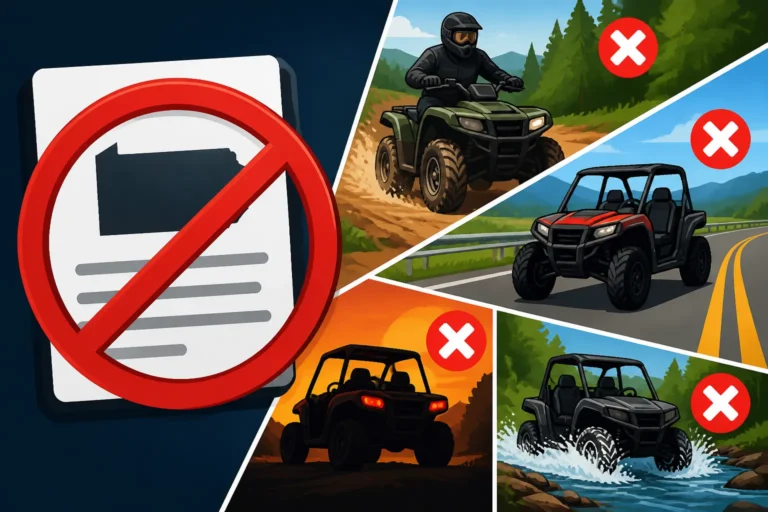
Limited Registration is designed for machines primarily used on private property. This could be your own land, land leased for hunting, or another private parcel where you have permission to ride. If your machine rarely, if ever, touches a public trail, a Limited Registration might seem appropriate. However, it comes with significant restrictions. This registration does not grant you access to any DCNR-designated state forest or state park ATV trails, nor can you ride on other public lands or roads that might be open to ATVs under a General Registration. It's strictly for private use.
General Registration, on the other hand, is the key to unlocking Pennsylvania's vast network of public ATV trails, including those managed by DCNR in state forests and parks, as well as many municipal or private-pay trail systems that require state registration. If you plan to explore the exciting riding opportunities Pennsylvania offers, from the challenging terrain of the Anthracite Outdoor Adventure Area (AOAA) to the sprawling state forest trails, General Registration is almost certainly what you'll need. This type of registration ensures you're compliant for both private land use and the majority of public riding areas. It's crucial to consider where you envision yourself riding most often before committing to one type over the other. The full breakdown can be found in [Pennsylvania's Limited and General Registrations].
When Does Your Out-of-State Registration Stop Being Enough?
This is the golden question for many riders moving to Pennsylvania or planning extended stays. It's not always immediately obvious when your out-of-state plate becomes insufficient, and misunderstanding these rules can lead to unpleasant encounters with law enforcement or DCNR rangers. Pennsylvania's rules are designed to ensure that machines primarily operating within its borders are properly registered and contributing to the state's off-highway vehicle program.
Moving to Pennsylvania Permanently
If you're making Pennsylvania your new permanent home, the expectation is that your ATV or UTV will eventually be registered in the state. Just like with cars, boats, or other vehicles, once you establish residency here, your recreational machines fall under Pennsylvania's jurisdiction. There isn't always a hard, fast deadline like 30 or 60 days spelled out in plain text for ATVs, which can be a source of confusion. However, the spirit of the law implies that once you've officially moved – changed your driver's license, registered to vote, or started working here – your machine should be registered in Pennsylvania as well.
This becomes particularly important if you plan to ride regularly within the state. If you get stopped on a trail or public land, and you present an out-of-state registration but have clearly established residency in Pennsylvania (e.g., your PA driver's license shows your new address), you could face questions or even fines for not having a valid Pennsylvania registration. It’s always best to err on the side of caution and begin the registration process shortly after your move to avoid any issues. For more specific details on this transition, refer to [Pennsylvania ATV Registration After Moving to the State].
Extended Stays for Work, School, or Hunting Camp
What if you're not permanently moving, but your machine will be in Pennsylvania for an extended period? This is a common scenario for college students, seasonal workers, or those with a hunting camp that becomes a second home for several months out of the year. In these cases, the lines can get a little blurry, but DCNR generally expects machines that are "based" in Pennsylvania for more than a short visit to be registered here.
Consider the example of a hunting camp. If you bring your UTV to a camp in Potter County every September and leave it there until January, and then return for spring gobbler season, your machine is essentially "living" in Pennsylvania for significant portions of the year. While you might still maintain your primary residence out of state, the machine's primary operational base is Pennsylvania. In such situations, DCNR officials might argue that the machine should be registered in Pennsylvania, especially if you're frequently riding state forest trails or other public access points. It's about where the machine is primarily used, rather than just where the owner's legal mailing address is. Don't risk a fine during deer season; get it registered. This scenario is particularly common for those who maintain a secondary residence in the state, as detailed in [Registering a Machine Kept at a Hunting Camp].
The Reciprocity Reality: When Other States' Plates Work (and When They Don't)
Pennsylvania does have reciprocity agreements with certain other states, meaning that if your ATV or UTV is properly registered and plated in one of these reciprocal states, you might be able to ride legally in Pennsylvania for short visits. This is often the case for visitors coming for a weekend ride or a week-long vacation. However, these agreements are not universal, nor do they cover every situation.
Reciprocity typically means that the other state also honors Pennsylvania's registration for PA residents visiting their trails. It’s a two-way street. The list of reciprocal states can change, and the specific terms often have limitations, such as the duration of the visit or the type of trails you can access. For instance, some reciprocity agreements might only apply to state-managed trails and not to private-pay parks like the AOAA, which often require all riders, even out-of-staters, to have a valid registration from their home state or Pennsylvania.
It's absolutely critical to check the most current DCNR guidelines or contact them directly if you plan to visit with an out-of-state machine. Do not assume your home state's registration is automatically valid here without verifying. This could lead to a hefty fine if you're stopped on a Pennsylvania trail without proper registration, even if you thought you were compliant. For detailed information, consult [Pennsylvania's Conditional Reciprocity Rule].
Gathering Your Paperwork: The Essentials for a Smooth Transition
Once you've determined that your out-of-state machine needs a Pennsylvania registration, the next step is to gather all the necessary documentation. This can be the most daunting part of the process, especially if your previous state had different titling or sales tax rules for ATVs and UTVs. Having everything in order before you start will save you significant time and frustration.
Proof of Ownership: Title or Bill of Sale
This is often the trickiest hurdle for out-of-state machines. In Pennsylvania, all ATVs and UTVs require a title, unless they fall under specific exemptions like being manufactured before February 1987. However, many states either don't title ATVs at all, or they only title them if they're used on public roads, which ATVs rarely are. This discrepancy can create a headache for new Pennsylvania residents.
If your machine came from a state that issued a title, great! That's your primary proof of ownership. You'll need to submit the original title, or a certified copy, to DCNR. The DCNR will then issue a new Pennsylvania title in your name. However, if your previous state did not issue a title for your ATV or UTV, you'll need to provide other proof of ownership. This typically means a comprehensive Bill of Sale. This document needs to clearly identify the machine (make, model, VIN), the seller, the buyer, the purchase price, and the date of sale.
If you bought your machine years ago and no longer have the original bill of sale, or if the one you have is incomplete, you might need to create a new one or sign an affidavit of ownership. In such cases, online resources like LawDepot can be incredibly useful. They offer customizable templates for bills of sale and affidavits, which can help ensure you have a legally sound document that meets DCNR's requirements for proving ownership when an original title isn't available from your previous state. Ensure your bill of sale includes all the critical information Pennsylvania will be looking for. Learn more about what a good bill of sale includes in [Pennsylvania ATV Bill of Sale Requirements].
Proving Sales Tax Payment (or Exemption)
Pennsylvania requires a 6% sales tax (plus local taxes in some areas like Allegheny County or Philadelphia) on the purchase price of ATVs and UTVs. When you register an out-of-state machine, DCNR will want to ensure that Pennsylvania sales tax has either been paid or that you are exempt from paying it again. This can be a point of confusion for many.
If you bought your machine in another state and paid sales tax there, you might be thinking you shouldn't have to pay it again. Pennsylvania law, however, typically applies its sales tax if the machine is brought into the state for use here, even if tax was paid elsewhere. There can be credits for taxes paid in other states if certain conditions are met, but it’s not always automatic. Generally, if you've owned the machine for a significant period (often 6 months or more) before moving to Pennsylvania, you may be exempt from paying PA sales tax again, as it's considered a personal asset accompanying you during a residency change. However, if you recently purchased the machine out-of-state and immediately moved or brought it to Pennsylvania, DCNR might require you to pay the difference if your previous state's sales tax was lower than Pennsylvania's, or the full 6% if no tax was paid.
It’s crucial to have proof of purchase and any sales tax paid in the original state, such as a receipt from a dealer or a detailed bill of sale showing the tax line item. Be prepared to explain the circumstances of your purchase and move to the DCNR agent processing your application. This area requires careful attention to avoid unexpected fees. For specific guidance on sales tax, check out [Proving Pennsylvania Sales Tax Was Paid].
Verifying the VIN: A Crucial Step
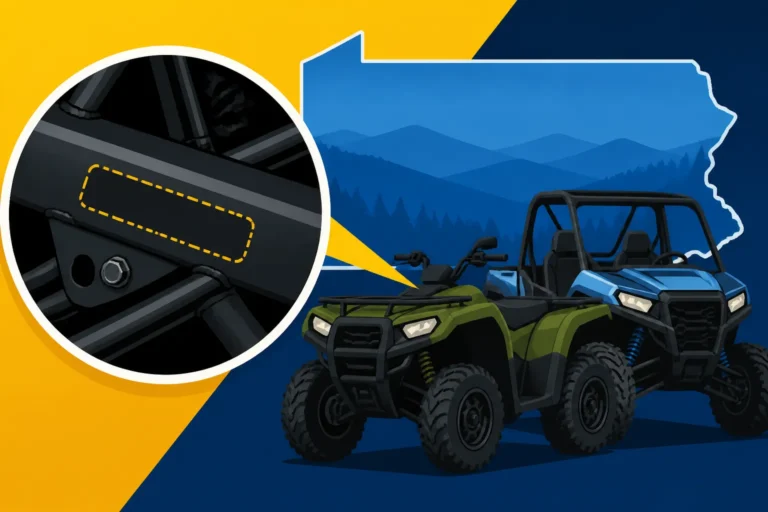
The Vehicle Identification Number (VIN) is the unique identifier for your ATV or UTV, and DCNR needs to verify it as part of the registration process. This step is essential to confirm the machine's identity, ensure it hasn't been reported stolen, and verify the make, model, and year. For most modern machines, the VIN is easily accessible on the frame or a data plate.
For out-of-state machines, particularly older ones or those with faded VIN plates, DCNR might require a physical VIN verification. This usually involves having a certified inspection mechanic, law enforcement officer, or DCNR official visually inspect the VIN on the machine and complete a verification form. If the VIN is difficult to read due to rust, damage, or an unusual location (which can happen on some older or custom-built machines), you might need to take extra steps, such as cleaning the area or providing clear photos.
This process ensures that the machine being registered matches the documentation you're providing. Without a clear and verifiable VIN, your registration application will likely be put on hold until this crucial piece of information can be confirmed. It's a fundamental step in preventing fraud and ensuring the integrity of the registration system. Prepare to assist in this verification if your VIN isn't perfectly clear and legible. Detailed requirements are laid out in [VIN Proof for a Pennsylvania Registration].
The Registration Process Itself: Step-by-Step for Out-of-Staters
You’ve gathered your documents, understood the nuances of sales tax, and verified your VIN. Now it’s time to actually apply for registration. The process for an out-of-state machine is largely similar to an in-state one, but with a few points of emphasis specifically for those transitioning from another jurisdiction.
Choosing Your Registration Type
Before you even fill out the form, you absolutely must decide whether you need a Limited or General Registration. As we discussed earlier, this choice dictates where and how you can legally ride your ATV or UTV in Pennsylvania. It's not a decision to take lightly, as choosing the wrong one can limit your recreational opportunities or even lead to citations if you ride where you shouldn't.
If your primary intention is to ride on state forest trails, DCNR-managed public lands, or any of the popular private riding parks that require state registration, then a General Registration is non-negotiable. This is the registration that opens up most of Pennsylvania's vast riding landscape. If, however, you truly only plan to use your machine on your own private property, or strictly on land you have permission to ride from a private landowner, then a Limited Registration might suffice. But remember, the moment you decide to venture onto a designated public trail, your Limited Registration is inadequate. It’s always better to foresee your riding needs and select the registration that aligns with your broadest possible use. Many riders from out-of-state find the General Registration to be the most practical choice for exploring everything Pennsylvania has to offer. For more details on public access, see [Pennsylvania's General Registration for Everywhere Else], and for private land, refer to [Pennsylvania's Limited Registration for Your Own Land].
Filling Out Form DCNR-43
Form DCNR-43, "Application for Certificate of Title and/or Registration for Snowmobile/ATV," is the primary document you’ll submit. While it looks like a standard form, there are sections that out-of-state registrants need to pay particular attention to. Make sure every field is filled out clearly and accurately to avoid delays.
- Applicant Information: Fill in your full name, current Pennsylvania address (if you’ve moved), phone number, and email. If you still have an out-of-state driver's license, that's okay for now, but be clear about your Pennsylvania residence.
- Machine Information: This is where you detail your ATV or UTV – make, model, year, engine size, color, and most importantly, the VIN. Double-check the VIN against your machine and your ownership documents. Any discrepancies here will cause an immediate hold-up.
- Proof of Ownership Section: Indicate whether you are providing an out-of-state title or a bill of sale. If it's a bill of sale, be prepared to attach the original or a certified copy, along with any necessary affidavits if your previous state didn't title ATVs.
- Sales Tax Section: Clearly state the purchase price and whether Pennsylvania sales tax is due or if you are claiming an exemption (e.g., owned for over six months before moving). Attach proof of sales tax paid in another state if applicable.
- Registration Type: Tick the box for "Limited" or "General."
- Signatures: Ensure all required signatures are present.
Take your time with this form. A common pitfall is rushing through it and missing a signature or a critical piece of information, leading to the form being sent back for corrections. This form is your official declaration of ownership and intent, so precision is key. A complete guide to filling it out is available in [What Pennsylvania Asks on Form DCNR-43].
Submitting Your Application and Awaiting Your Plate
Once Form DCNR-43 is meticulously filled out and all your supporting documents (title, bill of sale, sales tax proof, VIN verification if needed) are attached, you're ready to submit. You have a few options for submission:
- Mail: You can mail your complete application package, along with a check or money order for the applicable fees, to the DCNR Bureau of Forestry, Snowmobile/ATV Section. This is a common method, but be aware that processing times can vary, especially during peak seasons.
- In-Person: Some DCNR regional offices may accept applications in person. This can be beneficial if you have complex questions or want to ensure everything is correct before submission. However, it's wise to call ahead to confirm office hours and whether they process registrations directly.
- Dealer: If you’ve purchased a new machine from a Pennsylvania dealer, they will often handle the registration and titling for you. While this isn't usually the case for an existing out-of-state machine unless you're trading it in, it’s worth noting that dealers streamline the process significantly.
After submission, DCNR will process your application. If everything is in order, they will mail you your new Pennsylvania ATV/UTV title, your registration plate, a renewal sticker, and a wallet-sized registration card. The plate will need to be affixed to your machine, and the sticker applied to the plate. Be patient during this waiting period; processing times can sometimes be a few weeks. If there are any issues with your application, DCNR will typically contact you by mail or phone to request additional information or corrections. The average turnaround time is explored further in [How Long Pennsylvania Takes to Process a Registration].
Costs and Practicalities: What to Expect Financially and Operationally
Getting your out-of-state machine registered in Pennsylvania involves more than just paperwork; there are financial considerations and operational requirements you need to understand. Budgeting for these costs and knowing what to expect can prevent surprises down the road.
Understanding Pennsylvania's Fees for Registration and Titling
When you register your ATV or UTV in Pennsylvania, you’ll encounter a few distinct fees. It’s important to remember that these fees go directly to DCNR for the ATV program, not to PennDOT, which handles vehicle registrations for cars and trucks. The costs associated with an ATV in Pennsylvania are generally lower than for highway vehicles, which is a relief for many riders.
- Registration Fee: Pennsylvania ATV/UTV registration is typically issued for a two-year period. This fee contributes directly to the funding of the state’s ATV program, including trail development, maintenance, and safety education. Whether you choose Limited or General registration, there's a fee involved, though General registration has a slightly higher fee due to the expanded riding privileges it grants.
- Title Fee: All ATVs and UTVs in Pennsylvania require a Certificate of Title. There is a separate fee for issuing this title. This is a one-time fee unless you sell the machine and a new title needs to be issued to the new owner.
- Sales Tax: As discussed, you will either pay the 6% Pennsylvania sales tax (plus local taxes where applicable) on the purchase price, or demonstrate that you are exempt. This is collected at the time of registration if it hasn't been paid to a Pennsylvania dealer.
It’s always a good idea to check the most current DCNR fee schedule before you submit your application, as these figures can adjust over time. However, generally speaking, expect a modest two-year registration fee and a title fee. These fees, while small individually, collectively fund the trails and services that benefit all riders in the state. For current fee structures, consult [Pennsylvania ATV Registration Cost] and [Pennsylvania ATV Title Cost].
Insurance Requirements for Riding in Pennsylvania
Registration is one thing, but insurance is another crucial aspect of legal and responsible ATV/UTV operation in Pennsylvania. Even if your machine is properly registered, you are not exempt from the state's insurance requirements, especially when riding off your own private land.
Pennsylvania law mandates that all ATVs and UTVs operated anywhere other than the owner's private property must carry liability insurance. This means if you plan to ride on state forest trails, state park trails, designated township roads, or any private-pay trail system like the AOAA or Rock Run Recreation Area, you absolutely must have an active insurance policy. This is not just a suggestion; it's a legal requirement designed to protect you and others in the event of an accident.
When bringing an out-of-state machine, you'll need to confirm that your existing insurance policy extends its coverage to Pennsylvania and meets its minimum liability requirements. Some insurance companies may have geographic restrictions or specific clauses for off-road vehicles. It’s best to contact your insurance provider and let them know you’ll be operating your machine in Pennsylvania. They can confirm coverage or help you secure a new policy that complies with Pennsylvania's laws. You'll need to carry proof of insurance with you while riding, often in the form of an insurance card. Failure to have adequate insurance can result in fines and other penalties, separate from any registration violations. More on Pennsylvania's insurance rules can be found in [Pennsylvania ATV Insurance Requirement].
What to Do While You Wait: The Temporary Sticker
After you've submitted your application and paid your fees, there's typically a waiting period while DCNR processes your paperwork and mails out your plate and title. This waiting period can feel agonizing if you're eager to hit the trails! Fortunately, Pennsylvania has a system in place to allow you to ride legally, in some circumstances, while your permanent registration is being processed.
If you register your ATV or UTV through a Pennsylvania dealer, they will often issue you a 45-day temporary registration sticker. This sticker allows you to operate your machine legally for a specified period (up to 45 days) while you await your permanent plate and documents. This is a huge convenience, as it means you don't have to miss out on riding season just because your paperwork is in transit.
However, if you're registering an out-of-state machine directly with DCNR (not through a dealer), you generally won't receive a temporary sticker immediately. In these cases, you might have to wait for your permanent plate to arrive before you can legally ride on public lands or trails. It's crucial not to operate an unregistered machine on public property during this waiting period, as you could face fines. If you are in a situation where you've moved to Pennsylvania and need to ride sooner, contacting DCNR directly after submitting your application might provide insight into any options available, but generally, the 45-day sticker is tied to dealer transactions. Always confirm the specific rules regarding temporary stickers before assuming you can ride. Details about dealer-issued temporaries are available in [The Forty-Five Day Dealer Sticker in Pennsylvania].
Navigating Common Hurdles for Out-of-State Registrants
Bringing an ATV or UTV from another state into Pennsylvania’s registration system can sometimes uncover unique challenges, especially when it comes to historical paperwork or existing financial arrangements. Being prepared for these common hurdles can help you overcome them efficiently.
No Title from Your Previous State? Here's What to Do
This is arguably the most frequent and frustrating issue for individuals trying to register an out-of-state ATV or UTV in Pennsylvania. As mentioned, many states simply did not issue titles for these types of off-road vehicles, especially older models, as they weren't intended for public road use. Pennsylvania, however, generally requires a title for all ATVs and UTVs. This creates a bureaucratic disconnect.
If your previous state did not issue a title, DCNR has a process to handle this. You will need to provide robust proof of ownership in the absence of a title. This usually involves:
- A comprehensive Bill of Sale: This must clearly identify the seller, buyer, machine (VIN, make, model, year), and purchase price. It’s best if this is an original or certified copy.
- An Affidavit of Ownership: You may be required to sign a notarized affidavit stating that you are the rightful owner of the machine, that the previous state did not issue a title, and that the machine is not stolen or encumbered by any liens. This is where resources like LawDepot can be invaluable, allowing you to create a professional and legally sound affidavit tailored to your situation.
- VIN Verification: A physical verification of the VIN by an authorized party (law enforcement, certified mechanic) may be more stringently required in these cases to confirm the machine's identity.
DCNR will review these documents to establish a chain of ownership and, if satisfied, will issue a new Pennsylvania title and registration for your machine. It might take a bit more back-and-forth, but it is certainly possible to get your machine registered even without a previous title. For more information, refer to [Pennsylvania ATV Registration Without a Title].
My Machine Is Too Old for a Title in PA!
While Pennsylvania generally requires titles for ATVs and UTVs, there’s a significant exemption for very old machines. If your ATV or UTV was manufactured and originally sold before February 1987, it is typically exempt from Pennsylvania’s titling requirement. This is a welcome relief for owners of vintage or classic quads.
If your machine falls into this category, you still need to register it for use on public lands and trails, but you won't need to go through the titling process. You'll simply register the machine. You will still need to provide proof of ownership (usually a bill of sale or older registration documents) and a verifiable VIN. The DCNR will issue a registration plate and card, but no physical title certificate. This exemption acknowledges that the titling infrastructure for off-road vehicles simply didn't exist in the same way prior to certain dates. If you're unsure if your machine qualifies, locate its manufacturing date (often on a VIN plate or manufacturer’s label) and check DCNR guidelines. This specific date is covered in [Pennsylvania Machines Registered Before February 1987].
Dealing with Liens from Out-of-State Lenders
If you financed your ATV or UTV and still owe money on it, your lender will hold a lien on the machine. When you move to Pennsylvania and attempt to register it, DCNR will need to acknowledge and record this lien on the new Pennsylvania title. This process requires cooperation between you, your lender, and DCNR.
Typically, your out-of-state lender will need to send a copy of the original title (or a statement of lien) to DCNR, indicating their interest in the machine. DCNR will then issue a new Pennsylvania title that reflects the lender’s lien. The physical title document will likely be sent directly to your lender, and you will receive a registration card.
It’s crucial to communicate with your lender early in the process. Inform them that you are moving to Pennsylvania and need to re-title and register your machine. They will guide you on their specific procedures for transferring the lien to Pennsylvania. This might involve a special form, a fee, or simply providing DCNR with the necessary documentation. Failing to properly record a lien can complicate future transactions, such as selling the machine, so ensure this step is handled thoroughly. You can find more information about this process in [Pennsylvania ATV Registration With a Lien].
After Registration: Staying Compliant and Enjoying the Trails
Congratulations! You’ve successfully navigated the maze of registering your out-of-state ATV or UTV in Pennsylvania. But the journey doesn't end with receiving your plate. To ensure continued legal riding and maximum enjoyment of Pennsylvania's trails, there are a few more practicalities to keep in mind.
Plate and Sticker Placement Rules
Once your new Pennsylvania registration plate arrives, it's not just about attaching it anywhere convenient. DCNR has specific rules for where and how your plate and registration sticker must be displayed. These rules are in place to ensure visibility and easy identification by law enforcement or DCNR personnel.
- Plate Placement: The registration plate must be securely attached to the rear of your ATV or UTV. It should be visible from the rear, legible, and not obstructed by any accessories, mud, or other items. It's often mounted to a bracket on the rear grab bar or frame. The DCNR specifies that the plate should be mounted where it is least likely to be damaged by aggressive riding or terrain, but still clearly visible. A bent or mud-covered plate could lead to a citation, so pick a robust location. For more details, see [Pennsylvania ATV Plates and Where They Mount].
- Sticker Placement: Along with your plate, you’ll receive a small, square registration sticker indicating the current registration period. This sticker must be affixed to the upper right-hand corner of your new Pennsylvania registration plate. It's a critical visual cue for rangers to quickly determine if your registration is current. Make sure it's applied smoothly and securely to prevent it from peeling off, especially when exposed to the elements. Read more about sticker placement in [Where the Sticker Goes on the Plate].
Failure to properly display your plate and sticker can result in fines, even if your machine is legally registered. Rangers and law enforcement conduct routine checks at trailheads and on the trails themselves. Make it easy for them to see your compliance.
Renewing Your Pennsylvania Registration
Unlike some state vehicle registrations that are annual, Pennsylvania ATV and UTV registrations are valid for a two-year period. This means you won’t have to think about renewal every single year, which is a nice convenience. However, it’s crucial to keep track of your expiration date so you don’t accidentally let your registration lapse.
DCNR typically sends out renewal notices well in advance of your registration's expiration. These notices will provide instructions on how to renew, the current fees, and any forms that might be required. You can usually renew your registration by mail, or increasingly, through the DCNR’s online Snowmobile and ATV Portal. Online renewal is often the quickest and easiest method, allowing you to pay with a credit card and receive your new sticker in the mail.
It’s important to renew before your current registration expires. Riding with an expired registration is just as illegal as riding unregistered and can lead to fines. Set a reminder in your calendar or on your phone so you don't miss the renewal window and keep your machine legally ready for adventure. For comprehensive renewal guidance, consult [Renewing a Pennsylvania ATV Registration] and [Renewing Through the DCNR Portal].
Understanding Pennsylvania Trail Permits (Beyond Registration)
This is a crucial distinction that often confuses new Pennsylvania riders, especially those coming from states with different systems. While your Pennsylvania General Registration makes your ATV or UTV legal for public use in the state, it does not automatically grant you access to all state forest ATV trails.
Many of Pennsylvania's state forest ATV trails, particularly in the Northcentral region (like those in Clinton, Lycoming, Potter, and Tioga counties), require an additional Northcentral Regional ATV Trail Permit. Similarly, the Allegheny National Forest also requires its own separate permit for riding on its designated trails. These permits are typically annual and involve an additional fee.
Why the extra permit? These permits help manage the impact on specific, heavily used trail systems and contribute to their maintenance beyond what general registration fees cover. It’s a way of ensuring that the costs associated with these particular trails are more directly borne by those who use them.
Before planning a trip to a state forest trail system, always check the DCNR website or contact the specific forest district office to determine if a separate trail permit is required. Don't assume your state registration is your golden ticket everywhere. Failing to have the correct trail permit can lead to fines, even if your machine is fully registered with the state. This is an important distinction for planning your rides. Dive deeper into this topic with [Pennsylvania ATV Trail Permits Explained].
Table of Key Documents and What They Solve
To help summarize the essential paperwork you'll need, especially for out-of-state machines, here's a helpful table:
| Document Type | Purpose | Common Out-of-State Hurdles | Where LawDepot Can Help |
|---|---|---|---|
| Out-of-State Title | Primary proof of ownership. Required for PA titling. | Many states don't title ATVs. Must be original/certified copy. | N/A (but helps if you have one) |
| Bill of Sale | Proof of ownership when no title exists or for private sales. | Must be comprehensive (VIN, buyer, seller, price, date). Original can be lost. | Generating a new, complete Bill of Sale template. |
| Affidavit of Ownership | Legal declaration of ownership if title is unavailable or lost. | Required when no title or complete bill of sale exists. | Creating a legally sound, notarized Affidavit of Ownership. |
| Proof of Sales Tax Paid | Shows tax was paid in previous state or new tax is due. | PA may still require tax or difference if paid less. Documentation can be missing. | N/A (you need your original purchase receipt) |
| VIN Verification | Confirms the machine's unique identifier. | Faded VINs, custom machines, or older models may require physical inspection. | N/A (physical check needed, but ensures VIN is accurate for forms) |
| Form DCNR-43 | The official application for PA title and registration. | Must be filled out perfectly; choosing Limited vs. General registration correctly. | N/A (DCNR form, but helps organize info for it) |
| Proof of Insurance | Mandatory liability coverage for riding off private land. | Out-of-state policies may not meet PA requirements or cover out-of-state riding. | N/A (contact your insurance provider) |
Disclaimer
This article is for general informational purposes only and does not constitute professional advice. Laws, prices and regulations vary by location and change over time. Consult a qualified professional for guidance on your specific situation.