Group Size on a Forest Trail
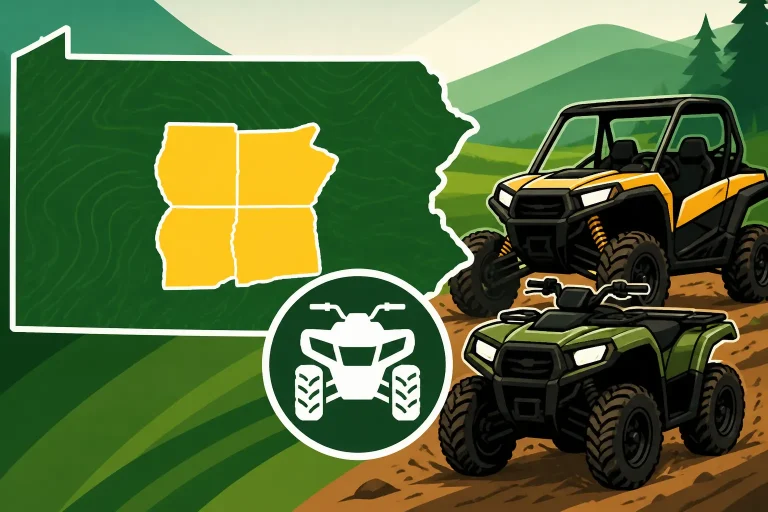
A large riding party can be fun, but it is harder to keep together, pass safely and stay within trail rules. On Pennsylvania state forest ATV trails, plan for no more than 10 machines in a riding group, and check the rules for the specific trail before setting out. These steps help you organize a bigger party without turning a forest ride into a traffic jam.
How group size works on Pennsylvania forest trails
For planning a ride on Pennsylvania state forest ATV trails, use 10 machines as the maximum size for one group. Count vehicles, not people: a side-by-side carrying several occupants is still one machine. If your party has more than 10 machines, divide it into separate groups before you reach the trail.
That limit is a practical starting point, not a substitute for the rules that apply at your chosen location. The land manager may post additional restrictions, and a particular trail can have access limits or seasonal closures. Check current trail information and signs before you ride, and follow any more restrictive local direction.
Group size matters for more than staying within the rules. A long line of machines can block a narrow trail, make it harder for oncoming riders to pass, and increase the chance that someone gets separated at a junction. Smaller groups are easier to count, communicate with and keep moving safely.
| Riding-party size | A sensible plan |
|---|---|
| Up to 10 machines | Ride as one group if everyone can keep a safe pace and stay together. |
| More than 10 machines | Split into groups of 10 or fewer before entering the trail. |
| A group with different abilities or machine types | Consider smaller groups matched by pace, range and trail suitability. |
| A group on a narrow or busy route | Keep the group compact without tailgating, and make space for other riders to pass. |
The rule applies to the moving group, not just the number of people who arranged the trip together. If two smaller groups ride so close that they function as one continuous procession, the separation may not solve the practical problem. Keep enough space between groups for other trail users to pass or travel safely, and avoid regrouping in a spot that blocks the trail.
Before choosing a route, make sure the trail is open to the type of machine you plan to bring. Width, vehicle eligibility, permit coverage and seasonal access can all affect whether a route works for your party. For a broader look at access, see Pennsylvania’s Northcentral Regional Trail Permit and Pennsylvania’s Free State Forest Trails. The fact that a permit covers an area does not necessarily mean every road or trail in that area is open to every machine.
Splitting a large party into manageable groups
The best time to divide a large group is before anyone starts riding. Decide who rides with whom, choose a lead rider and a sweep rider for each group, and make sure every rider knows the planned route and meeting point. Splitting at a trail entrance or junction can create confusion and block other users, especially when trailers and several vehicles are waiting.
A simple arrangement works well: assign a leader who knows the route and a sweep rider who stays behind the last machine. The sweep helps confirm that nobody is left behind after a stop or turn. If the group has several experienced riders, put one in charge of each smaller party rather than relying on a single leader for everyone.
Leave time between groups, but do not use a fixed interval as a substitute for adequate spacing and trail awareness. The right gap depends on trail conditions, visibility, traffic and how quickly the first group moves. On a tight, winding trail, a following group may catch up quickly. On a busy route, bunching can make it difficult for other riders to pass. If one group catches another, pause only where it is safe and legal, then restore space without blocking the trail.
A useful pre-ride plan covers these basics:
- Name the groups. Keep each group within the planned machine limit and tell riders which group they are in.
- Choose leaders and sweep riders. Make sure each group has someone who knows the route and someone responsible for watching the rear.
- Set a pace. Agree that the group will travel at a speed suitable for its least experienced rider and the conditions.
- Pick safe regrouping places. Use a staging area or a wide, visible spot off the travel line. Do not stop across a trail, at a blind corner or on a narrow bridge.
- Plan for separation. Tell everyone what to do if they lose sight of their group, miss a turn or need to stop.
- Check the route and access. Confirm that the trail is open and appropriate for each machine, including any side-by-sides.
Different machine types can affect how a party moves. A side-by-side may be wider than an ATV, and not every trail accommodates every width. Check the applicable limits and trail information before including one in the route plan. Pennsylvania Rules for a Side-by-Side on a Trail can help you think through machine suitability, but local signs and current trail notices still matter.
If the group includes beginners, children or riders with different experience levels, splitting by pace can be safer than keeping everyone in one slow-moving line. That does not mean sending less experienced riders out without support. Put an experienced rider with each group, choose a route appropriate for the least experienced person in that group, and explain the plan before departure. For youth riders, check the relevant age, supervision and safety requirements separately; group size does not replace those rules.
Staying safe and considerate as a group
Ride in a way that lets other trail users see what your group is doing. Keep to the traveled portion of the trail, ride at a pace that allows you to stop within the distance you can see, and leave room between machines. Following too closely makes it harder to react to a sudden stop, loose surface or obstacle. It also increases the chance that a rider near the back gets dust, debris or a blocked view.
On narrow trails, do not assume the whole group can pass an oncoming machine at once. Stop in a suitable place if needed, keep machines out of vegetation, and avoid widening the trail by driving around obstacles. A large party should not claim a junction or staging spot longer than necessary. If you need to regroup, choose a location where stopped machines will not prevent others from getting through.
These practices are especially useful:
- Keep the group orderly. Ride single file where the trail is narrow or visibility is limited, and avoid side-by-side riding unless the route and conditions make it safe and permitted.
- Leave a stopping cushion. Give the machine ahead enough room for an unexpected stop. Increase the gap on loose, wet or rocky ground.
- Use clear signals. Agree on simple ways to indicate a stop, turn or hazard. Make sure riders at the back can receive the message rather than relying on the leader to assume it traveled through the line.
- Stop in safe places. Move fully out of the travel path where possible. Do not gather at a blind bend, crest, bridge or narrow trail entrance.
- Account for every rider. Take a headcount at planned stops and before leaving a staging area. A sweep rider can help, but each rider should also know who is in their group.
- Respect other users. Slow down when approaching people or other vehicles, and give them room. A group should not expect everyone else to wait until all its machines pass.
- Leave the trail as you found it. Do not ride around closed gates, barriers or signs, and do not create a wider route to get past mud or an obstruction.
Trail conditions can change the safe size and spacing of a group even when the legal limit stays the same. After rain, ruts and slippery surfaces can slow the front of the group while the rear continues forward. On a rocky section, machines may need more time and space to pass safely. A party that can move smoothly on a wide road may need to break into smaller units for a narrow trail.
Check maps and closures before traveling, rather than relying only on a route someone rode previously. Pennsylvania Trail Maps From DCNR can help with route planning, and Pennsylvania Trail Closures to Check First is relevant when weather, maintenance or seasonal access may affect your plans. For riding conduct on narrow routes, see Pennsylvania Trail Etiquette on Narrow Trails. Rules and access can differ by trail system, so verify information with the land manager responsible for the route.
Registration and permits are separate questions from group size. A group being small enough does not make an unregistered machine eligible to ride, and a registration does not automatically provide access to every trail. Check that each machine has the required registration and that the riders have any permits needed for the area. A visitor riding on an out-of-state registration should also confirm whether it is recognized for the intended ride; Pennsylvania ATV Reciprocity With Other States covers that separate issue.
A final check before leaving the staging area can prevent avoidable problems: count the machines, confirm each group has a leader and sweep, review the route and meeting point, and make sure everyone knows what to do if separated. If trail signs set a tighter limit or a route is closed, follow the posted direction rather than trying to make the original plan work.
Disclaimer
This article is for general informational purposes only and does not constitute professional advice. Laws, prices and regulations vary by location and change over time. Consult a qualified professional for guidance on your specific situation.