What Pennsylvania Asks on Form DCNR-43
Let's be honest, dealing with paperwork for our ATVs and UTVs can feel like navigating a muddy trail with a flat tire – frustrating, confusing, and you just want to get to the clear path. When it comes to getting your off-road machine legally registered in Pennsylvania, there's one piece of paper that rises above the rest: Form DCNR-43. This comprehensive guide will walk you through every step of understanding and completing this crucial document, ensuring your registration process is as smooth as a freshly graded forest road.
Understanding Form DCNR-43: Your Gateway to Pennsylvania Trails
Before you can hit those fantastic Pennsylvania trails or even just ride legally on your own property with a registered machine, you’ll need to complete some essential paperwork. Form DCNR-43 is the primary application form for registering your All-Terrain Vehicle (ATV) or Utility Terrain Vehicle (UTV) with the Pennsylvania Department of Conservation and Natural Resources (DCNR). It's the document that gathers all the necessary details about you and your machine to ensure everything is above board.
Why This Form is Crucial
Think of Form DCNR-43 as your official introduction to the DCNR's ATV and UTV program. It's not just a formality; it's the legal document that proves your ownership and your intent to comply with Pennsylvania's off-road vehicle laws. Without this completed form and the associated fees, your machine cannot be officially recognized or operated on designated public trails or certain private lands if you opt for General Registration. It lays the groundwork for receiving your registration plate, sticker, and that all-important wallet card, which are your tickets to legal riding. For anyone wondering about [Registering an ATV in Pennsylvania], this form is your starting point.
This form directly impacts your ability to enjoy the sport. Improperly filled out or missing forms are the leading causes of delays in receiving your registration. Imagine planning a big trip to a state forest trail system, only to realize your paperwork isn't processed because of a simple error on the form. It's a common frustration that can easily be avoided by understanding each section and providing accurate information right from the start.
Who Needs to Fill It Out
Basically, if you own an ATV or UTV in Pennsylvania and it needs to be registered, you'll be interacting with Form DCNR-43. This includes folks buying a brand-new machine from a dealer, as well as those who just picked up a used quad from a private seller. Even if you're registering an out-of-state machine that you've brought into Pennsylvania, or if you're transferring ownership of an existing registered machine, this form is your go-to.
There's a subtle but important distinction in who physically fills it out and who submits it. If you buy from a Pennsylvania dealer, they will often handle much of the paperwork for you as part of the sales process. They're well-versed in what the DCNR needs. However, if you're doing a [Registering After a Private Sale in Pennsylvania], then the responsibility falls squarely on your shoulders to get this form completed accurately and submitted correctly. Even if your machine is technically exempt from certain registration types (like a farm quad solely used for agriculture), if you ever plan to ride it beyond that specific exemption, you’ll need this form.
A Walkthrough of Form DCNR-43: What Each Section Asks Of You
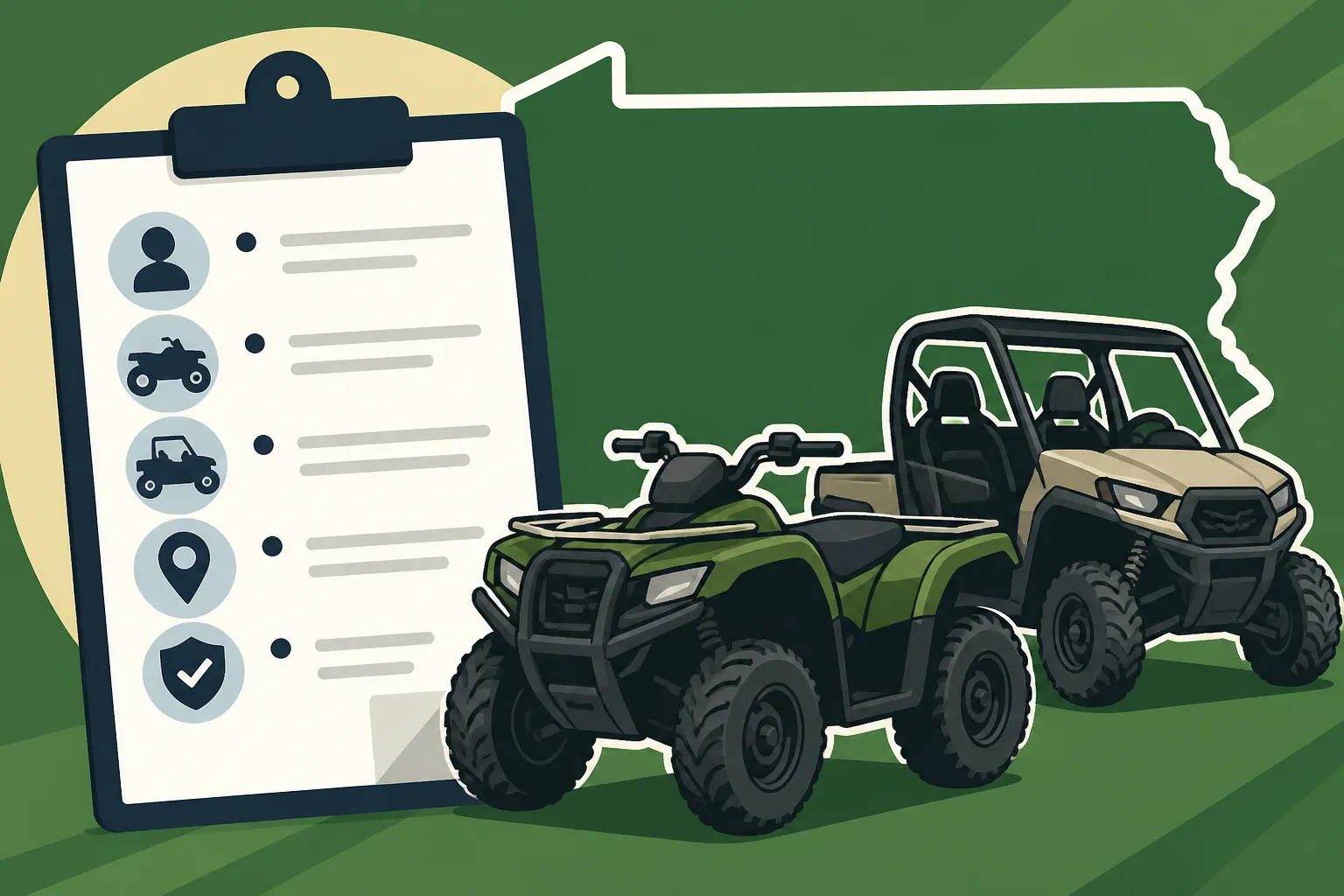
Form DCNR-43 is divided into several key sections, each designed to gather specific information necessary for registration. Taking the time to understand each part will save you headaches down the road. Let's break it down section by section so you know exactly what to provide.
Applicant and Owner Information
The very first part of Form DCNR-43 is all about you, the applicant and owner. This section will ask for your full legal name, current residential address, mailing address (if different), phone number, and email address. It’s crucial that this information is accurate and up-to-date, as this is how DCNR will communicate with you and send your registration materials.
A simple typo in your address could mean your registration plate ends up at a neighbor's house or, worse, gets returned to DCNR. If you've recently moved, make absolutely sure to use your new address. DCNR needs to know exactly where to send your plate and sticker, so precision here is key. This information also becomes part of the official record for your machine, which is important for any future transactions or inquiries, including if you ever need to process a [Changing Your Address With DCNR].
Vehicle Identification and Details
This is where you describe the machine you're trying to register. You'll need to provide the Vehicle Identification Number (VIN), the make (e.g., Polaris, Honda, Yamaha), model, year of manufacture, and engine size in cubic centimeters (cc). The VIN is especially critical; it’s the unique fingerprint of your ATV or UTV. Make sure you transcribe it accurately from the machine's frame or title document. A single digit off can cause a rejection.
For those riding side-by-sides, DCNR-43 is also the form you’ll use for [Pennsylvania Registration for a UTV]. While the form primarily says "ATV," UTVs fall under the same registration umbrella in Pennsylvania, and the form accommodates their details. The engine size is important for classification and sometimes for certain age-related rider restrictions, though for most adult machines, it's just a data point. Accuracy in this section is paramount, as this information directly correlates to the machine being registered and helps prevent any issues with [VIN Proof for a Pennsylvania Registration].
Choosing Your Registration Type
Pennsylvania offers two main types of ATV/UTV registrations: Limited Registration and General Registration. This section of DCNR-43 requires you to choose which one applies to your needs. This is not a decision to take lightly, as it dictates where you can legally ride your machine.
- Limited Registration: This type is specifically for machines that will only be operated on your own property or on private land where you have explicit permission. It's often chosen by farmers, property owners, or those who rarely venture onto public trails. [Pennsylvania's Limited Registration for Your Own Land] is perfect if your riding is confined to specific private spaces. The cost for this is typically lower because it doesn't contribute to the public trail system. You'll still get a plate and a wallet card, but it restricts where you can go. For details on how much this costs, check out [Pennsylvania Limited Registration Cost].
- General Registration: If you plan on riding on Pennsylvania's incredible DCNR-managed ATV trails, state forest roads designated for ATV use, or other public riding areas, you will need a General Registration. This type contributes directly to the maintenance and development of the state's public trail system. [Pennsylvania's General Registration for Everywhere Else] is your choice if you're seeking adventure beyond your backyard. It comes with a plate, a registration sticker that goes on the plate, and a wallet card. Naturally, the [Pennsylvania General Registration Cost] is a bit higher to support the extensive trail network. Understanding [Pennsylvania's Limited and General Registrations] is key before marking this box.
The All-Important Ownership and Sales Tax Declarations
This part of the form delves into how you acquired your ATV or UTV and confirms that you've fulfilled your sales tax obligations. You'll typically need to indicate if the machine was purchased new, used, or if it was a gift. If purchased, you'll declare the purchase price and the amount of Pennsylvania sales tax paid.
This section is where many private sale transactions can get tricky. Pennsylvania requires a 6% sales tax (plus any local taxes, like an additional 1% in Allegheny County or 2% in Philadelphia) on the purchase of an ATV, even in a private sale. If you're buying from a dealer, they'll collect and remit this automatically. For a private sale, however, you're responsible for declaring and paying this tax directly. DCNR-43 will ask for proof that this tax was paid, or if it's due, they'll collect it. For guidance on how to provide this, refer to [Proving Pennsylvania Sales Tax Was Paid]. Make sure you have a solid [Pennsylvania ATV Bill of Sale Requirements] in place, whether you draft it yourself or use a template from a resource like LawDepot, to clearly document the transaction and sales price. This will be vital to avoid delays and ensure all taxes are correctly accounted for.
Assembling Your Support Documents Before You Start
Filling out Form DCNR-43 is only part of the equation. You'll also need to gather several supporting documents to prove ownership, verify information, and confirm sales tax payment. Having these ready before you even pick up the pen will make the whole process much smoother.
Proof of Ownership: Title, MSO, or Bill of Sale
The DCNR needs clear evidence that you are the legal owner of the ATV or UTV you are trying to register. What exactly you need depends on how and when you acquired your machine:
- Manufacturer's Statement of Origin (MSO) or Certificate of Origin (COO): If you're buying a brand-new ATV or UTV from a dealership, the MSO or COO is the foundational document. This is essentially the birth certificate of your machine, issued by the manufacturer, and it will be transferred to you.
- Pennsylvania Certificate of Title: For most used machines that have been previously registered and titled in Pennsylvania, you'll need the actual title, properly signed over to you by the previous owner. [Titling an ATV in Pennsylvania] is a separate, but often simultaneous, process with registration. Ensure all signatures and dates on the title transfer section are correct.
- Bill of Sale: If you purchased your machine in a private sale, especially for older machines that may not have been titled, a comprehensive bill of sale is crucial. This document, ideally notarized, details the buyer, seller, machine information (including VIN), purchase price, and date of sale. Resources like LawDepot can provide excellent templates for a detailed bill of sale that covers all necessary legal points. It's often the main proof of ownership if the machine falls under [Pennsylvania ATV Registration Without a Title] rules, such as those registered before a specific date.
It's important to understand that having the correct ownership document is non-negotiable. Without it, DCNR cannot process your registration.
Verifying Your Sales Tax Payment
As mentioned earlier, Pennsylvania law dictates that sales tax must be paid on most ATV and UTV purchases. DCNR-43 requires proof of this.
- Dealer Purchases: If you bought your machine from a licensed dealer, the sales tax is typically collected by them at the time of purchase and then remitted to the state. Your bill of sale or purchase agreement from the dealer will usually show the sales tax collected, which serves as your proof.
- Private Sales: For machines bought from a private individual, it's your responsibility to ensure the sales tax is paid. If you previously paid the Pennsylvania sales tax directly to the Department of Revenue (perhaps on another form like a PA-1000), you'll need proof of that payment. If not, the DCNR will calculate and collect the sales tax (6% plus local surcharges where applicable) when you submit your DCNR-43 form and title application. This is a common point of confusion, so be prepared to show documentation or pay the tax. Even for transactions like a [Pennsylvania ATV Registration for a Gifted Machine], there might be use tax implications depending on the circumstances, so it's best to be clear.
VIN Verification Requirements
While not always explicitly required for every single DCNR-43 submission, DCNR reserves the right to request a VIN verification. This is especially true for machines that have out-of-state titles, salvage titles, or if there's any discrepancy or missing information on the ownership documents.
A VIN verification usually involves a certified agent (such as a dealer, notary, or law enforcement officer) physically inspecting your machine and attesting to the VIN. Sometimes, a VIN tracing – where you literally rub a pencil over paper placed on the VIN plate to create an impression – might be accepted. The goal is to ensure the VIN on your machine matches the paperwork exactly and that the machine itself isn't stolen or cobbled together without proper provenance. Having a clear, legible VIN on your machine is crucial, so if yours is dirty or obscured, give it a good cleaning before you attempt to apply. This helps streamline the [VIN Proof for a Pennsylvania Registration] process.
Common Missteps and How to Navigate Them Smoothly
Even with the best intentions, it's easy to make small mistakes on official forms. When it comes to Form DCNR-43, these little errors can lead to frustrating delays or even rejection of your application. Knowing the common pitfalls ahead of time can help you steer clear of them.
Incomplete or Incorrect Information
This is perhaps the most frequent reason for application delays. Forgetting to fill in a required field, transcribing a VIN incorrectly, or using an outdated address can all bring your registration process to a screeching halt. Imagine forgetting to write down your engine size, or mistyping a digit in your phone number. These details seem minor, but DCNR personnel need a complete and accurate picture.
To avoid this, treat filling out DCNR-43 like you're going over a pre-ride checklist: slowly, carefully, and double-checking every item. Use clear, legible handwriting – if your penmanship isn't the best, consider typing out the form if DCNR offers a fillable PDF version online. Cross-reference all vehicle information with your title or MSO. Better yet, have a second pair of eyes look it over before you send it off. A fresh perspective can often catch errors you've overlooked.
Mismatched or Insufficient Payment
Registration and titling in Pennsylvania come with associated fees. The [Pennsylvania ATV Registration Cost] is separate from the [Pennsylvania ATV Title Cost]. These fees can change, so relying on old information is a recipe for disaster. If you send too little, your application will be held up until the correct amount is received. If you send too much, while DCNR will eventually process a refund, it adds unnecessary complexity and delay.
Always check the current fee schedule on the official DCNR website or contact their Snowmobile and ATV Section directly before sending your application. The fees are typically for a two-year registration period. You'll also need to include the titling fee if you're applying for a new title simultaneously. Ensure your check or money order is made out to the correct entity (usually "Commonwealth of Pennsylvania" or "DCNR") for the exact amount required. It’s always best to have the right numbers for [Pennsylvania's $22.50 ATV Title Fee] and the registration fees.
Overlooking Key Signatures or Notarizations
Forms require signatures, and DCNR-43 is no exception. There will be sections that require your signature as the applicant and owner, signifying that all the information you've provided is true and accurate to the best of your knowledge. Forgetting to sign these crucial lines is a common oversight that results in applications being returned.
Furthermore, for private sales and certain other transactions, a notary public's seal and signature may be required. This usually applies to sections where you're attesting to the purchase price or ownership transfer, adding an extra layer of legal verification. If your bill of sale or title transfer section requires notarization, make sure you visit a notary public before submitting the form. Don't sign documents that require notarization until you are in front of the notary; they must witness your signature. A notary can be found at most banks, credit unions, or often at local mailing service stores. Being proactive about getting necessary signatures and notarizations will prevent your form from being flagged for missing essential legal endorsements.
Submitting Form DCNR-43: Getting Your Paperwork Where It Needs To Go
Once you've meticulously filled out Form DCNR-43 and gathered all your supporting documents, the next step is to submit everything to the DCNR. There are a few avenues for this, each with its own benefits and considerations.
The Traditional Mail-In Method
For many, mailing in the completed DCNR-43 packet is the most common and straightforward approach. You'll compile the application form, your proof of ownership (title, MSO, or bill of sale), proof of sales tax payment (if applicable), and your check or money order for the fees. All of this should be sent to the specific address provided on the DCNR-43 form for their Snowmobile and ATV Section.
It's highly recommended to send your application packet via certified mail with a return receipt requested. This provides you with proof that DCNR received your application and exactly when. In a world where important documents can sometimes go astray, having that tracking number and signature confirmation offers invaluable peace of mind. While it adds a small extra cost, it’s worth it for the security of your original documents and fees. The address can be found directly on the form or on the DCNR's official website under the [Pennsylvania's DCNR Snowmobile and ATV Section].
Relying on Your Dealer for Assistance
If you purchased your ATV or UTV from a licensed Pennsylvania dealer, they are often a huge asset in the registration process. Many dealers offer to handle all the paperwork for you, submitting the DCNR-43, title application, and fees on your behalf. This is a fantastic convenience, as dealers are familiar with the current forms, fees, and requirements, significantly reducing the chances of errors or delays on your end.
When a dealer processes your registration, they'll typically provide you with a [The Forty-Five Day Dealer Sticker in Pennsylvania]. This temporary registration allows you to legally operate your new machine for a specified period (usually 45 days) while DCNR processes your permanent registration. This means you can often hit the trails much sooner! The dealer will handle [What a Pennsylvania Dealer Handles for You], including ensuring all fields are correctly filled and all necessary supporting documents are attached before mailing it to DCNR. It’s a service that justifies any minor administrative fees they might charge.
Exploring Online Registration Options
In today's digital age, many services are moving online, and DCNR is no exception. While direct online registration for a new ATV or UTV registration (especially those requiring title transfers or sales tax payments) might have limitations, the DCNR does offer an online portal for certain transactions. This portal is often excellent for renewals or checking the status of an existing registration.
For initial registrations or complex transfers, the paper form is generally still the primary method. However, it's always worth checking the DCNR website or the [Using the Snowmobile and ATV Portal] for any updates or specific scenarios where online submission might be possible. Even if you submit via mail, keeping an eye on the portal might eventually allow you to track your application status or manage future renewals electronically, streamlining subsequent interactions.
After Submission: What to Expect While You Wait
Once you've submitted your meticulously completed Form DCNR-43 and all supporting documents, the waiting game begins. It's natural to be excited and eager to get your new registration materials, so understanding the process and timeline can help manage your expectations.
Understanding Processing Times
The time it takes for DCNR to process your ATV or UTV registration can vary. Generally, you should anticipate a processing period. Factors that influence this include the volume of applications DCNR is receiving at any given time (e.g., peak seasons before major riding holidays might see longer waits), the completeness and accuracy of your submitted paperwork, and whether any follow-up is required from DCNR's end.
While DCNR strives for efficiency, it’s not an instant process. If your paperwork is flawless, it usually moves faster. However, if there are questions about your bill of sale, missing signatures, or incorrect fees, your application might be put on hold, and DCNR may reach out to you for clarification or additional documentation, which naturally extends the timeline. For a general idea of the wait, you can look into [How Long Pennsylvania Takes to Process a Registration], but remember these are usually estimates and not guarantees.
Receiving Your Registration Materials
Once DCNR has successfully processed your application, they will mail out your official registration materials to the address you provided on Form DCNR-43. What you receive will depend on your registration type:
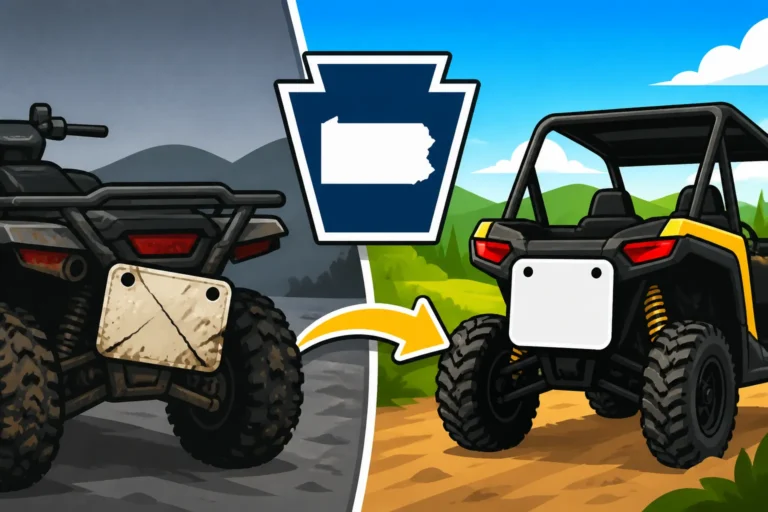
- Registration Plate: This is a small, typically white or yellow metal plate with your unique registration number. This plate must be securely mounted on the rear of your ATV or UTV. [Pennsylvania ATV Plates and Where They Mount] clearly outlines the requirements for placement, usually away from the tires where it won't get mud-caked immediately.
- Registration Sticker: If you opted for General Registration, you will also receive a small sticker with the expiration date. This sticker is to be affixed to the upper right corner of your registration plate. [The Sticker Pennsylvania Adds to General Registration] needs to be clearly visible, as it's often the first thing a ranger will look for when checking compliance on a trail.
- Wallet Card: Regardless of whether you have Limited or General Registration, you will receive a durable wallet-sized card. This card contains your machine's information, registration number, and expiration date. It's crucial to carry this card with you whenever you ride your ATV or UTV. [Why Both Pennsylvania Registrations Include a Wallet Card] is about proving your legal status on the spot, as enforcement officers need to see current proof of registration.
Make sure to keep these materials safe and secure. The plate and sticker are for your machine, and the wallet card is for your person.
Temporary Riding Solutions
If you purchased your machine from a dealer and received a 45-day temporary sticker, you can generally ride during that period while your permanent registration is being processed. This is a huge benefit of buying through a dealership, as it minimizes downtime.
However, if you purchased your machine through a private sale, you typically cannot legally operate your ATV or UTV on public lands or trails until you have received your official DCNR registration plate, sticker, and wallet card. There is no temporary paper tag for private sales. Patience is key in these scenarios. Use this waiting time to get your machine ready, familiarize yourself with Pennsylvania's riding rules and regulations, and plan your first adventure. Remember, riding an unregistered machine on designated trails or public lands can lead to fines and other penalties.
| Section Title (Example) | What It Asks For | Common Errors to Avoid |
|---|---|---|
| Applicant Information | Full name, current address, contact details | Typos in address, outdated phone numbers |
| Vehicle Information | VIN, make, model, year, engine size | Incorrect VIN transcription, guessing engine size |
| Registration Type | Limited (private land) or General (public trails) | Selecting the wrong type for your intended use |
| Proof of Ownership/Tax Paid | How acquired, sales price, sales tax paid | Missing bill of sale, no proof of tax payment |
| Signatures & Notary | Your signature, date, and sometimes a notary seal | Forgetting to sign, not getting a required notarization |
Disclaimer
This article is for general informational purposes only and does not constitute professional advice. Laws, prices and regulations vary by location and change over time. Consult a qualified professional for guidance on your specific situation.