Replacing a Lost Pennsylvania ATV Plate
There’s almost nothing more frustrating for a Pennsylvania ATV rider than hitting a rocky section of trail, powering through a deep mud bog, or even just cruising a bumpy access road, only to glance back and realize your hard-earned ATV plate is nowhere in sight. It’s an instant sinking feeling, knowing that riding legally now hinges on getting a replacement. This guide is all about navigating the often-confusing process of getting a new plate for your registered Pennsylvania ATV, from the moment you realize it's gone to ensuring your next one stays put.
The Mystery of the Missing Plate: Why They Disappear
It’s not just you. Lost ATV plates are a surprisingly common occurrence for riders who truly put their machines through their paces on Pennsylvania's diverse terrain. Our state offers some incredible riding, from the technical rock gardens of Whiskey Springs to the sprawling mud pits of the AOAA, and these environments are absolute plate magnets for trouble.
Trail Hazards and Vibrations
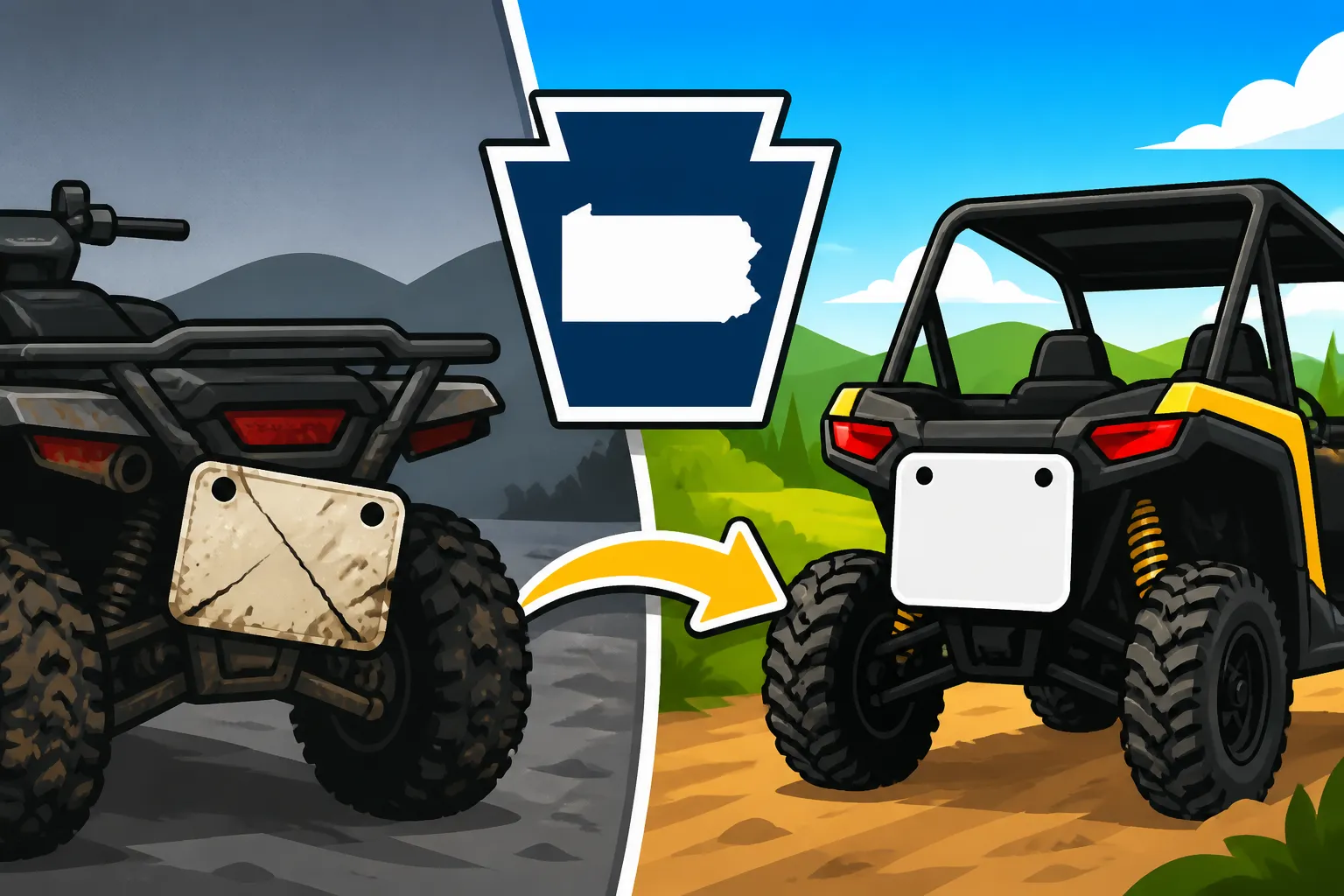
Think about the forces your ATV plate endures. Every bump, every jar, every high-frequency vibration from the engine and drivetrain conspires to loosen screws, crack plastic mounts, or simply fatigue the metal itself. A simple bracket might seem sturdy enough in the garage, but after fifty miles of relentless jarring, it can give up the ghost. When you add in flying debris – rocks, sticks, mud clods – hitting the plate from behind, it's a wonder they last as long as they do. We've all seen those bent, mangled plates on other riders' machines, and that often happens before they eventually break off completely.
Imagine crawling over a series of ledges on the [Bloody Skillet's 38 Miles] trail. Each time your rear suspension compresses, then extends, the plate is subject to a jolt. Over and over, those bolts holding it on are working themselves loose, or the plastic fender it’s mounted to is flexing and stressing. It's a cumulative effect, and eventually, something has to give.
Water Crossings and Mud Bogs
Water and mud are perhaps the most notorious plate snatchers. When you blast through a deep creek crossing, the sheer force of the water hitting the plate can be incredible, especially if it's mounted low. Picture your ATV plowing through a hidden water filled rut on a forest road; the water doesn't just flow over the plate, it often pushes against it with surprising pressure, trying to peel it right off the back of your machine.
Mud bogs are even worse. The thick, viscous mud acts like glue, but also applies immense pressure. If your plate gets caught in a deep pocket of mud, especially if it's flexing, the suction and resistance can tear it free in an instant. Then, it's buried in the muck, likely never to be seen again. You might even drive away thinking nothing of it, only to realize later your machine looks a little naked in the back. [What a Rock Trail Does to Your ATV Plate] really highlights the stress points.
Immediate Action: What to Do When Your Plate is Gone
Discovering your ATV plate is missing can be alarming, especially if you're out on the trails. It instantly puts a damper on your ride and raises questions about legalities. Taking the right steps immediately can prevent further headaches.
Retracing Your Steps and Checking Key Spots
The very first thing you should do, if possible, is retrace your path. Often, a plate will fall off in a high-impact area like a particularly rough section of trail, a deep water crossing, or a mud bog. If you're riding with friends, they might have noticed it come off behind you, or you might spot it yourself if you haven't gone too far. Focus on any recent moments of significant jostling or impacts.
Even if you can't find it, it's worth checking all the usual suspects on your machine where a plate might have been bent or caught and then simply torn away. Sometimes, a plate doesn't fall off completely but rather ends up wedged in a mud flap, caught by a tire, or even resting precariously on an exhaust pipe if the mounting points gave way. This is a rare lucky break, but worth checking before you assume it's lost forever.
Contacting DCNR and Understanding the Implications
Once you've confirmed your plate is truly lost, it's wise to contact the Pennsylvania Department of Conservation and Natural Resources (DCNR) Snowmobile and ATV Section. While you don't necessarily have to report a lost plate immediately to ride, it begins the official process and can give you peace of mind. They can offer guidance on the specific forms needed for replacement and might even be able to confirm the last known status of your registration.
The big implication of a lost plate is that your machine is now considered unplated and, by extension, effectively unregistered in the eyes of the law, even if your registration is technically still active. Riding without a visible, valid plate can lead to fines and citations. A ranger performing a check at a trailhead, say at [Registration Checks at Bloody Skillet] or [Registration Checks at Whiskey Springs], will look for that plate first and foremost. Even if you have your wallet card with you, the absence of the physical plate is a major issue. This is why getting a replacement quickly is so important.
The Official Process: Replacing Your Pennsylvania ATV Plate
Replacing a lost Pennsylvania ATV plate isn't overly complicated, but it does require following the specific steps laid out by the DCNR. It's not like replacing a car plate through PennDOT; the DCNR handles all ATV and snowmobile registrations.
Filling Out Form DCNR-43
The primary document you'll need to complete is Form DCNR-43, also known as the "Application for Certificate of Title/Pennsylvania Registration for Snowmobile and All-Terrain Vehicle." Now, don't let the title fool you; you won't be getting a new title just for a lost plate. This multi-purpose form is used for various registration and titling actions, including replacements. You'll need to indicate clearly on the form that you are requesting a replacement plate.
Make sure to fill out all relevant sections accurately, including your vehicle identification number (VIN), your personal information, and the details of your machine. If you remember your old plate number, include it. If not, DCNR can usually look it up by your VIN. It's a good idea to keep a copy of this form for your records. Sometimes, having structured documents, like those you might create using resources like LawDepot for other personal or vehicle-related needs, can help you keep track of all your essential paperwork should the need arise.
Submitting Your Application
Once you've meticulously filled out Form DCNR-43, you'll need to submit it along with the appropriate fee. Typically, you'll mail the application and payment to the DCNR's Snowmobile and ATV Section. Always double-check the DCNR's official website for the most current mailing address and fee structure. They don't typically accept faxed or emailed applications for something like this.
While the DCNR has an online portal, the [Using the Snowmobile and ATV Portal], it's primarily for renewals and certain other transactions. For a lost plate replacement, the form is usually the way to go. Make sure your check or money order is made out correctly and that all your information is legible. An incomplete or incorrect application can lead to delays, which means more time before you can legally hit the trails again.
Costs and Waiting Times for a New Plate
When you're without a plate, every day feels like a week. Understanding the financial aspect and the expected timeline for a replacement can help manage expectations.
Replacement Fees and Payment Methods
The DCNR charges a specific fee for replacing a lost ATV plate. This fee is generally modest, designed to cover the administrative costs and the manufacturing of a new physical plate. It's crucial to ensure you include the correct amount with your application to avoid processing delays. The exact figure for a [Pennsylvania ATV Plate Replacement Cost] can fluctuate, so always check the latest fee schedule on the DCNR's official website or by calling their Snowmobile and ATV Section directly.
Payment is typically accepted via check or money order, made payable to the Commonwealth of Pennsylvania. It's rare for them to accept credit card payments for mailed-in forms, so planning ahead with your payment method is key. Remember, this fee is separate from your standard [Pennsylvania ATV Registration Cost] or your [Pennsylvania ATV Title Cost], as those cover the initial registration or change of ownership, not a mere plate replacement.
Processing Times and What to Expect
Once your application and fee are received, the DCNR will process your request. The processing time can vary depending on their current workload, time of year (peak riding season might mean longer waits), and whether your application was complete and accurate. Generally, you can expect to wait a few weeks for your new plate to arrive in the mail.
Along with your new plate, you should also receive a new registration sticker (which goes on the plate itself) and an updated wallet-sized registration card. This card is important because it serves as your official proof of registration, which you should always carry when riding, along with [Carrying Proof of Insurance in Pennsylvania]. This process is slightly different from renewing your [Pennsylvania's Two-Year ATV Registration], but the end result—a legal plate and card—is the same. Keeping your records organized, perhaps with digital backups generated through services like LawDepot for other important documents, can simplify managing your vehicle's paperwork.
Preventing Future Plate Loss: Secure Mounting Techniques
Losing a plate once is frustrating enough; nobody wants to go through it again. Thankfully, there are several effective strategies you can employ to make your ATV plate more secure and resilient against the rigors of Pennsylvania's trails.
Reinforced Mounting Methods
The standard mounting method for an ATV plate often involves just two screws directly into a plastic fender. While adequate for light use, it's far from bomb-proof. To truly secure your plate, consider these reinforcements:
- Backing Plate: Cut a piece of thin sheet metal, aluminum, or sturdy plastic (like a cutting board) slightly larger than your ATV plate. Drill holes to match the plate's mounting points and place this backing plate behind your ATV plate, then screw both into the fender. This distributes the stress over a wider area and prevents the plate from simply tearing through the plastic.
- Larger Washers: Instead of tiny flat washers, use fender washers (large diameter, small hole) or even rubber washers. The larger surface area helps hold the plate more firmly against the fender, and rubber washers can absorb some vibration.
- Nyloc Nuts and Bolts: If you can mount your plate directly to a frame member or a sturdy metal bracket using bolts that pass all the way through, use nyloc (nylon insert lock) nuts. These nuts are designed to resist loosening from vibration.
- Threadlocker: For any screws or bolts that fasten your plate, apply a drop of medium-strength threadlocker (like blue Loctite) to the threads before tightening. This will significantly reduce the chance of them vibrating loose.
- Strategic Placement: Consider [Where Pennsylvania Wants the Plate Mounted]. The DCNR specifies it must be clearly visible from the rear. Avoid mounting it in a spot where it’s constantly bombarded by debris from the tires, or where it’s prone to snagging on branches. [Mounting a Plate Away From the Tires] is crucial to avoid impacts.
A simple table can illustrate some common methods:
| Mounting Method | Description | Pros | Cons |
|---|---|---|---|
| Standard Screws | Two self-tapping screws into plastic fender. | Easy, quick. | Prone to vibration, tearing, loss. |
| Backing Plate | Metal or heavy plastic plate behind ATV plate. | Distributes force, prevents tearing. | Requires extra material and drilling. |
| Larger Washers | Fender washers, rubber washers under screw heads. | Better grip, absorbs some vibration. | May not prevent severe tearing alone. |
| Nyloc Nuts & Bolts | Through-bolting with vibration-resistant nuts. | Extremely secure, highly resistant to loosening. | Requires access to both sides, may involve drilling new holes. |
| Threadlocker | Chemical adhesive on screw threads. | Prevents screws from vibrating out. | Requires cure time, can be messy. |
| Zip Ties (Supplemental) | Used in conjunction with other methods. | Quick extra security, easily replaceable. | Not a primary mounting method, can break. |
Regular Checks and Maintenance
Even with the most robust mounting, nothing beats a quick visual inspection before each ride. Make it a habit to check your plate for any signs of loosening, bending, or damage. Are the screws tight? Is the plate flexing excessively? Is it still [Keeping Your ATV Plate Readable From Behind]?
If you notice any issues, address them immediately. Tighten screws, replace worn washers, or reinforce the mounting. It's a small investment of time that can save you the hassle and expense of replacing a lost plate down the line. This proactive approach is part of responsible ATV ownership in Pennsylvania, much like regularly checking your oil or tire pressure before hitting the [Pennsylvania's 908 Miles of ATV Riding Statewide].
The Consequences of Riding Without a Plate
Let's be clear: riding your ATV on designated trails or roads without a visible, current Pennsylvania registration plate is a direct violation of the law. Even if your registration is paid up, if that plate isn't on your machine, you're opening yourself up to significant trouble.
Fines and Citations
The DCNR takes unregistered or unplated machines seriously. Riding an ATV without a valid registration is generally considered a summary offense, and the fines can be substantial. [Riding Unregistered Brings an Automatic $300 Fine] is a common figure that gets tossed around, and that's usually just the starting point. This doesn't include additional court costs or administrative fees that often get tacked on, collectively referred to as the [Cost of Prosecution on Top of a Fine]. That seemingly small "lost plate" problem can quickly escalate into a several-hundred-dollar headache.
Imagine you're having a great day at [Rock Run Recreation Area in Cambria County] or one of the state forest trails like [Whiskey Springs and Pennsylvania's Longest Trail], and a DCNR ranger or local law enforcement officer pulls you over for a routine check. They're looking for that plate, your DCNR wallet card, and proof of insurance. If the plate is missing, they're likely to issue a citation. It's not worth the risk.
Impoundment and Other Penalties
While less common for a simple lost plate (as opposed to a machine that was never registered), in some egregious cases or if you're a repeat offender, your ATV could potentially be impounded. This would incur towing and storage fees on top of any fines, turning an already bad situation into a truly expensive ordeal. Nobody wants their machine hauled away, especially when it could have been avoided with a simple plate replacement.
Beyond the immediate financial penalties, a citation could also lead to a mark on your record, and if you repeatedly violate ATV laws, it could impact your ability to ride on state land in the future. The DCNR wants riders to enjoy the trails responsibly, and that starts with ensuring your machine is legally registered and plated. So, if your plate is gone, the best course of action is always to replace it before heading out again.
Disclaimer
This article is for general informational purposes only and does not constitute professional advice. Laws, prices and regulations vary by location and change over time. Consult a qualified professional for guidance on your specific situation.