VIN Proof for a Pennsylvania Registration
Oh, the joy of finally getting that ATV or UTV home, only to be met with the daunting stack of paperwork required for registration! One of the biggest head-scratchers for many Pennsylvania riders, especially if you're dealing with a used machine or an older model, is proving the Vehicle Identification Number (VIN). It can feel like navigating a maze, trying to figure out exactly what the Pennsylvania Department of Conservation and Natural Resources (DCNR) needs to confirm your machine is legitimate and yours. This comprehensive guide is here to walk you through every step of proving your VIN for a Pennsylvania ATV or UTV registration, ensuring you avoid frustrating delays and get out on the trails faster.
Why VIN Proof Is So Crucial for Pennsylvania ATV Registration
It might seem like just another hoop to jump through, but proving your ATV's VIN is a cornerstone of the entire registration process in Pennsylvania. The DCNR isn't just being difficult for the sake of it; there are very good, practical reasons why they need to meticulously verify this unique identifier. Think of the VIN as your machine's fingerprint – it's what makes it one-of-a-kind, and it's essential for a secure, organized system.
The DCNR's Need for Verification
At its core, the DCNR's role in ATV registration is about managing access to state trails, ensuring safety, and maintaining a clear record of all off-highway vehicles operating within Pennsylvania. To do this effectively, they need to know exactly what machine is being registered. The VIN provides that immutable link. Without solid VIN proof, the DCNR wouldn't have a reliable way to connect your application to a specific ATV or UTV. This verification process allows them to track registrations, issue plates, and manage the entire lifecycle of an off-highway vehicle's presence in the state. It's how they can confirm that the machine you're registering aligns with the details on your application, preventing discrepancies that could lead to bigger problems down the line. It's a foundational step in the broader process of [Registering an ATV in Pennsylvania].
Preventing Theft and Fraud
Perhaps one of the most critical reasons for stringent VIN proof requirements is the prevention of theft and fraud. Unfortunately, stolen ATVs and UTVs are a reality, and a robust registration system helps to deter these crimes. If someone tried to register a stolen machine, the VIN check would ideally flag it. By requiring clear proof that the VIN on the machine matches the documentation you're providing, the DCNR adds a layer of security. This protects legitimate owners from unknowingly purchasing a stolen vehicle and makes it harder for criminals to "wash" stolen machines through the registration system. It's a safeguarding measure that ultimately benefits every responsible rider in Pennsylvania, ensuring the machines on our trails are there legally.
Linking Your Machine to Its Paperwork
Beyond preventing crime, VIN proof is about creating a crystal-clear, legal connection between you, your machine, and the official records. Every piece of paperwork, from the initial bill of sale to the application itself, needs to point back to that one unique VIN. When you submit [What Pennsylvania Asks on Form DCNR-43], for instance, the VIN you list there must be supported by verifiable documentation. This linkage is crucial for everything from tax purposes (proving sales tax was paid) to insurance claims, and even future resale. Should you ever need to sell your ATV, the clear chain of VIN documentation will make the transfer smoother and more legitimate for the next owner. It’s about creating an undeniable paper trail that follows your machine, providing clarity and legal standing for all parties involved.
Common Scenarios Requiring VIN Proof
The specific type of VIN proof you'll need often depends on how and where you acquired your ATV or UTV. While the core requirement is always to show that your machine's VIN is legitimate and belongs to you, the documents you provide can vary significantly. Understanding these different scenarios can save you a lot of time and frustration.
Buying a New ATV from a Dealer
When you purchase a brand-new ATV or UTV from an authorized dealer in Pennsylvania, the VIN proof process is generally the most straightforward. Dealers are well-versed in the DCNR's requirements and typically handle much of the initial paperwork for you. They're equipped to ensure you have all the necessary documentation right from the start.
The primary document you'll receive from a dealer that serves as VIN proof is the Manufacturer's Certificate of Origin (MCO), sometimes called a Manufacturer's Statement of Origin (MSO). This document is essentially the "birth certificate" of your ATV. It's issued by the manufacturer and certifies that the vehicle meets all federal safety standards and has not been previously titled or registered. The MCO will clearly state the VIN, make, model, year, and often the engine size of your new machine. The dealer will also typically provide you with a bill of sale, which lists the VIN as well. They'll then submit these documents, along with your application and fees, to the DCNR on your behalf. This streamlined process is one of the many benefits of [What a Pennsylvania Dealer Handles for You].
Registering a Used Machine from a Private Sale
This is where things can get a little more complicated, and it's also where many riders encounter their first real hurdles. When you buy a used ATV or UTV from a private seller, you become responsible for gathering and providing all the necessary VIN proof yourself. The key is to ensure you have a clear chain of ownership that leads back to the original MCO or a previous title.
For a used machine, the most common and robust form of VIN proof is a Pennsylvania Certificate of Title. If the machine was previously titled in Pennsylvania, the seller should provide you with the signed-over title. This document will have the VIN prominently displayed, and the transfer of ownership section will be completed by the previous owner. If the ATV was previously registered but not titled (which can happen with older machines, as [Pennsylvania ATV Registration Without a Title] is a thing for some), you'll need to rely on the previous registration card and a solid bill of sale. In this scenario, a detailed bill of sale, perhaps drafted using a reliable template service like LawDepot, becomes incredibly important. This document should explicitly state the VIN, the purchase price, and be signed and dated by both you and the seller. It's your primary evidence of the transaction and helps link you to the machine. Remember, [Registering After a Private Sale in Pennsylvania] requires diligence.
Dealing with Machines Lacking Original Documentation
Sometimes, you might come across an ATV or UTV that's a fantastic deal, but it comes with a catch: missing or incomplete documentation. This can happen with older machines, barn finds, or those that have changed hands many times without proper paperwork being maintained. While this situation adds complexity, it's not always a deal-breaker, though it does require more legwork.
If you don't have an MCO, a Pennsylvania title, or even a clear bill of sale, you'll need to explore alternative methods to prove the VIN. The DCNR understands that not every situation is textbook. In such cases, a sworn affidavit from the seller (if you can locate them) detailing the machine's history and VIN can be a vital piece of evidence. This affidavit, a legally binding statement, would confirm that they are the rightful owner and are transferring it to you. You might consider using a reputable online service like LawDepot to create a legally sound bill of sale or affidavit template if you find yourself in this situation. Additionally, the DCNR may require a physical inspection of the ATV by an authorized agent (sometimes a dealer or law enforcement) to visually verify the VIN on the machine itself matches any historical records or the information in your affidavit. This process is about establishing trust and verifying the VIN through other means when traditional documents are absent. It's always wise to perform a [Checking a VIN Before You Buy Used] in any private sale, especially if paperwork is sparse.
Acceptable Forms of VIN Proof in Pennsylvania
When the rubber meets the road and you're ready to submit your registration application, having the correct and accepted forms of VIN proof is paramount. The DCNR has specific expectations, and providing the right documents from the outset will prevent unnecessary back-and-forth.
Manufacturer's Certificate of Origin (MCO/MSO)
As mentioned, the MCO (Manufacturer's Certificate of Origin) or MSO (Manufacturer's Statement of Origin) is the gold standard for proving the VIN of a new ATV or UTV. This document is provided by the manufacturer to the dealer, and then typically transferred to you upon purchase. It's the official record that a brand-new vehicle has been produced and is being released into commerce.
The MCO is critically important because it confirms several key pieces of information directly from the source: the VIN, the make, model, and year of manufacture, and that the vehicle has not yet been titled or registered in any state. When you purchase a new machine, the dealer will typically complete your part of the application, including the DCNR-43 form, and attach the MCO to it before submitting everything. This document is usually printed on special, secure paper, often with watermarks or other security features, to prevent tampering. It serves as irrefutable proof of the machine's identity and its initial entry into the hands of a consumer.
Out-of-State Title or Registration
If you've moved to Pennsylvania with an ATV or UTV already registered or titled in another state, or if you've purchased a used machine from a seller in another state, your out-of-state documents can serve as VIN proof. Pennsylvania generally recognizes valid titles and registrations issued by other states, provided they meet certain criteria.
For a titled machine, the out-of-state title certificate, properly assigned to you by the previous owner, is usually sufficient. This title will clearly display the VIN and show a legal chain of ownership. If the machine was only registered and not titled in the previous state (again, a common scenario for older ATVs), then the out-of-state registration card, coupled with a solid bill of sale, will be necessary. It's crucial that the VIN on the out-of-state documents precisely matches the VIN stamped on your ATV. Any discrepancies will likely trigger a deeper review or require additional verification. The DCNR needs to see a clear and unbroken link from the previous owner in the other state to you, the new owner in Pennsylvania. This is especially relevant if you are doing [Pennsylvania ATV Registration After Moving to the State].
Sworn Affidavits and Inspections for Special Cases
There are those unique situations where the traditional documents simply aren't available. This often happens with very old machines, those purchased without any previous paperwork, or potentially a homebuilt ATV. In these special cases, the DCNR might accept a combination of a sworn affidavit and a physical VIN inspection.
A sworn affidavit is a formal, written statement of facts confirmed by oath or affirmation. If you've acquired a machine with no MCO or title, and perhaps only a rudimentary bill of sale (or none at all), you might need to provide an affidavit explaining the circumstances of ownership and affirming the machine's VIN. This affidavit would typically need to be notarized to lend it legal weight. Resources like LawDepot can be helpful in drafting such a document to ensure it includes all necessary legal language and information. Alongside this, the DCNR will almost certainly require a physical VIN inspection. This means an authorized individual – often a DCNR official, a licensed ATV dealer, or sometimes even law enforcement – will physically examine the VIN on the frame of your ATV or UTV. They will compare it against any documents you provide and confirm its integrity (i.e., that it hasn't been tampered with). This inspection helps the DCNR establish the machine's true identity when the standard paperwork is absent.
| Scenario | Primary VIN Proof Document | Additional Required Documents | Potential Complications |
|---|---|---|---|
| New from Dealer | Manufacturer's Certificate of Origin | Bill of Sale, DCNR-43 | Incorrect VIN entry by dealer |
| Used Private Sale (Titled) | Pennsylvania Certificate of Title | Bill of Sale, DCNR-43 | Seller didn't sign correctly, missing lien release |
| Used Private Sale (Registered Only) | Prior Registration Card | Detailed Bill of Sale, DCNR-43 | Missing prior registration, unclear ownership history |
| Out-of-State Purchase/Move | Out-of-State Title/Registration | Bill of Sale (if purchased), DCNR-43 | VIN discrepancy, state not recognized for reciprocity |
| No Documentation (Special Cases) | Sworn Affidavit (notarized) | DCNR-43, Inspection Report (if required) | Difficulty locating previous owner, VIN damage/tampering |
What to Do If Your VIN Is Damaged or Missing
Discovering your ATV's VIN is damaged, illegible, or appears to be missing can feel like hitting a brick wall. It's a genuinely frustrating situation, as this unique identifier is so fundamental to ownership and registration. However, it's not necessarily the end of the road. Pennsylvania has processes in place for these less-than-ideal scenarios, though they do require patience and diligence.
Seeking Professional Inspection and Verification
If you find that the VIN on your ATV's frame is unreadable due to rust, damage, or perhaps a previous owner's clumsy repair job, your first step should be to seek a professional inspection. The DCNR will almost certainly require a physical verification if there's any doubt about the VIN's legibility or authenticity.
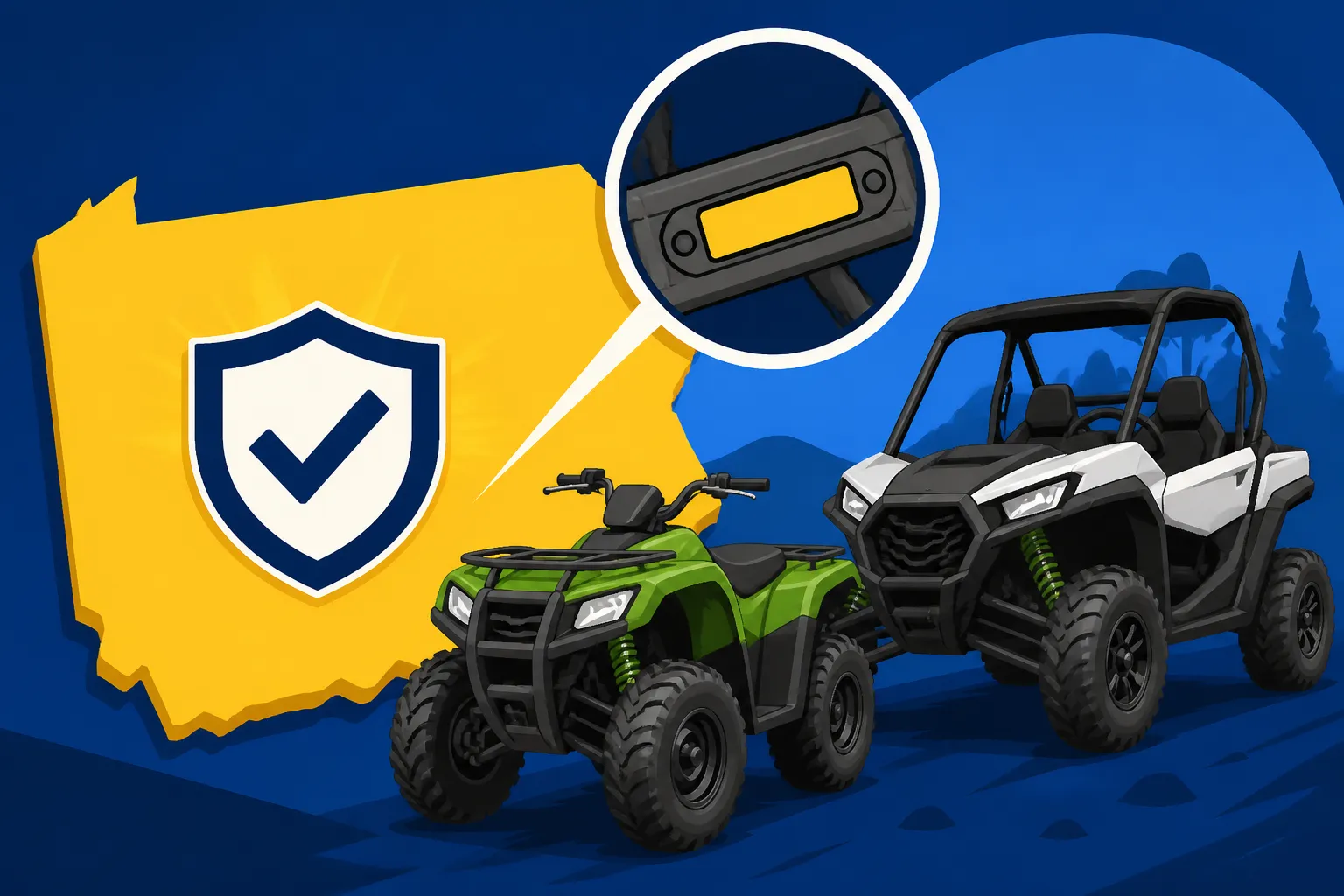
This inspection is typically performed by an authorized agent. This could be a licensed Pennsylvania ATV dealer, who has experience verifying VINs for registration purposes, or in some cases, a law enforcement officer. The inspector's role is to carefully examine the area where the VIN is stamped on the frame. They will try to decipher any faded numbers or letters, and critically, they will look for any signs of tampering or alteration. If the VIN can be successfully identified, the inspector will usually provide you with a written statement or a completed form confirming the VIN and its condition. This official documentation then becomes a crucial piece of your VIN proof package for the DCNR. It effectively acts as a third-party verification that bridges the gap between your physical machine and the required paperwork.
Navigating the Process for Rebuilt or Homebuilt Machines
Rebuilt or homebuilt ATVs and UTVs present a unique challenge when it comes to VIN proof because they don't have a traditional MCO from a manufacturer. If you've pieced together an ATV from various parts, or extensively rebuilt one to the point where its original identity is ambiguous, you'll need to establish a new identity for registration.
For these machines, the DCNR has a specific process, which often involves applying for a DCNR-issued VIN. This typically requires a thorough inspection by a DCNR representative or an authorized agent. You'll need to demonstrate the origin of the major components if possible, and provide proof that the machine is structurally sound and safe. For a homebuilt machine, you might need to provide receipts for major parts used in its construction. The DCNR will then assign a new, unique VIN to your machine, which will be stamped onto the frame. This newly assigned VIN then becomes the official identifier for your ATV, allowing you to proceed with titling (if applicable) and registration. This is a specialized process, and it's always best to contact the DCNR's Snowmobile and ATV Section directly for the most current requirements and guidance on this specific path.
Potential Roadblocks and Solutions
Dealing with a damaged or missing VIN can lead to several roadblocks. One common issue is that some inspectors might be hesitant to sign off on a VIN that's heavily obscured, fearing legal repercussions if they misidentify it. Another challenge can be the time it takes for these special inspections and the DCNR's review process.
The best solution is always to be proactive and transparent. If you know the VIN is problematic, address it head-on.
- Be patient but persistent: The process for special cases can take longer. Keep detailed records of all communication and submissions. [How Long Pennsylvania Takes to Process a Registration] can already be a wait, and special cases might extend it.
- Gather all supporting documents: Even if the VIN is damaged, provide any old bills of sale, past registration cards, or even repair receipts that might mention the VIN. The more information you can provide to establish a historical link to the machine, the better.
- Consider a clear bill of sale (even if old): If you had a previous bill of sale that listed the VIN, even if the VIN is now damaged, it can still serve as valuable evidence. If you're buying a machine with a questionable VIN, consider using a comprehensive bill of sale, perhaps generated through a service like LawDepot, to clearly document all known information, even if it's imperfect.
- Contact DCNR directly: Don't guess. The DCNR's Snowmobile and ATV Section is your best resource for guidance on these unique situations. They can advise you on the exact steps and forms required for a damaged or missing VIN.
Step-by-Step: Providing VIN Proof with Your Application
Once you understand the 'why' and the 'what,' it's time to focus on the 'how.' Submitting your VIN proof alongside your Pennsylvania ATV registration application requires attention to detail. A well-prepared application package can significantly speed up the process and reduce the likelihood of your application being returned for missing information.
Preparing Your Documents for Submission
The key to a smooth registration process lies in meticulous preparation. Before you even think about putting an envelope in the mail or clicking "submit" online, gather all the necessary documents and ensure they are correct and complete.
First, identify the primary VIN proof document you will be using: an MCO, a Pennsylvania title, an out-of-state title/registration, or a sworn affidavit/inspection report for special cases. Make sure this document is original or a certified copy if required. For titles, ensure all transfer sections are properly filled out and signed by the previous owner (and yourself as the new owner). If you're using a bill of sale, especially for a private sale, double-check that it includes the full VIN, the purchase date, the purchase price, and the signatures of both buyer and seller. A robust bill of sale, possibly created using a template from a service like LawDepot, can make a huge difference here. Next, ensure you have your completed DCNR-43 application form. All fields should be accurately filled out, and the VIN on this form should match your proof document exactly. If there are any discrepancies, even a single digit, your application will likely be rejected. Finally, make copies of everything for your personal records before sending the originals or submitting them online. This [Pennsylvania ATV Registration Paperwork Checklist] can be invaluable for organizing your submission.
What to Expect During the Review Process
After you've submitted your application and VIN proof to the DCNR, it enters their review queue. The DCNR staff will meticulously examine all the documents you've provided to ensure everything is in order. They will cross-reference the VIN on your application form with your primary proof document (MCO, title, etc.) and look for any inconsistencies.
During this stage, the DCNR is confirming a few critical things:
- VIN Accuracy: Does the VIN on your application precisely match the VIN on your proof document?
- Ownership Chain: Is there a clear and legal transfer of ownership from the previous owner (or manufacturer) to you?
- Document Integrity: Are all signatures present, dates correct, and documents free from alterations?
- Sales Tax (if applicable): If you purchased the machine, they will verify that sales tax has been paid or is accounted for, especially for private sales where you often pay the sales tax directly to the state. This is covered in more detail when discussing [Pennsylvania ATV Sales Tax on a Private Purchase].
If everything is in order, your application will be processed, and you'll eventually receive your Pennsylvania ATV registration materials, including your plate and wallet card. If there are issues, the DCNR will typically contact you by mail or phone, explaining what needs to be corrected or what additional information is required. This can delay your registration, so thoroughness upfront is key.
Common Mistakes to Avoid
Even with the best intentions, it's easy to make small errors that can cause significant delays in your registration. Being aware of these common pitfalls can help you avoid them.
- Incomplete or Illegible Forms: Ensure that all sections of the DCNR-43 application form are filled out clearly and completely. Any blank fields or handwriting that's difficult to read can lead to your application being returned.
- VIN Discrepancies: This is perhaps the most frequent error. Double-check, then triple-check, that the VIN entered on your application exactly matches the VIN on your MCO, title, or other proof document. A single transposed digit can halt the entire process.
- Missing Signatures: For titles and bills of sale, ensure all required parties have signed in the correct places. For a title transfer, both the seller and buyer usually need to sign. A missing signature means the DCNR cannot verify the transfer of ownership.
- Expired or Invalid Documents: While less common for VIN proof specifically, ensure any supporting documents like previous registrations are still considered valid if they're being used to establish a chain of ownership.
- Notarization Issues: If you're using a sworn affidavit, ensure it's properly notarized with the notary's seal and signature. An improper notarization renders the affidavit invalid.
- Sending Copies Instead of Originals (When Originals are Required): While it's crucial to make copies for yourself, some documents, like the MCO or original title, often need to be submitted as originals. Always check DCNR guidelines to confirm. When in doubt, call the DCNR's [Pennsylvania ATV Registration Help Line] to clarify.
By being diligent and paying close attention to these details, you can ensure your VIN proof is solid and your Pennsylvania ATV registration process goes as smoothly as possible. Happy riding!
Disclaimer
This article is for general informational purposes only and does not constitute professional advice. Laws, prices and regulations vary by location and change over time. Consult a qualified professional for guidance on your specific situation.