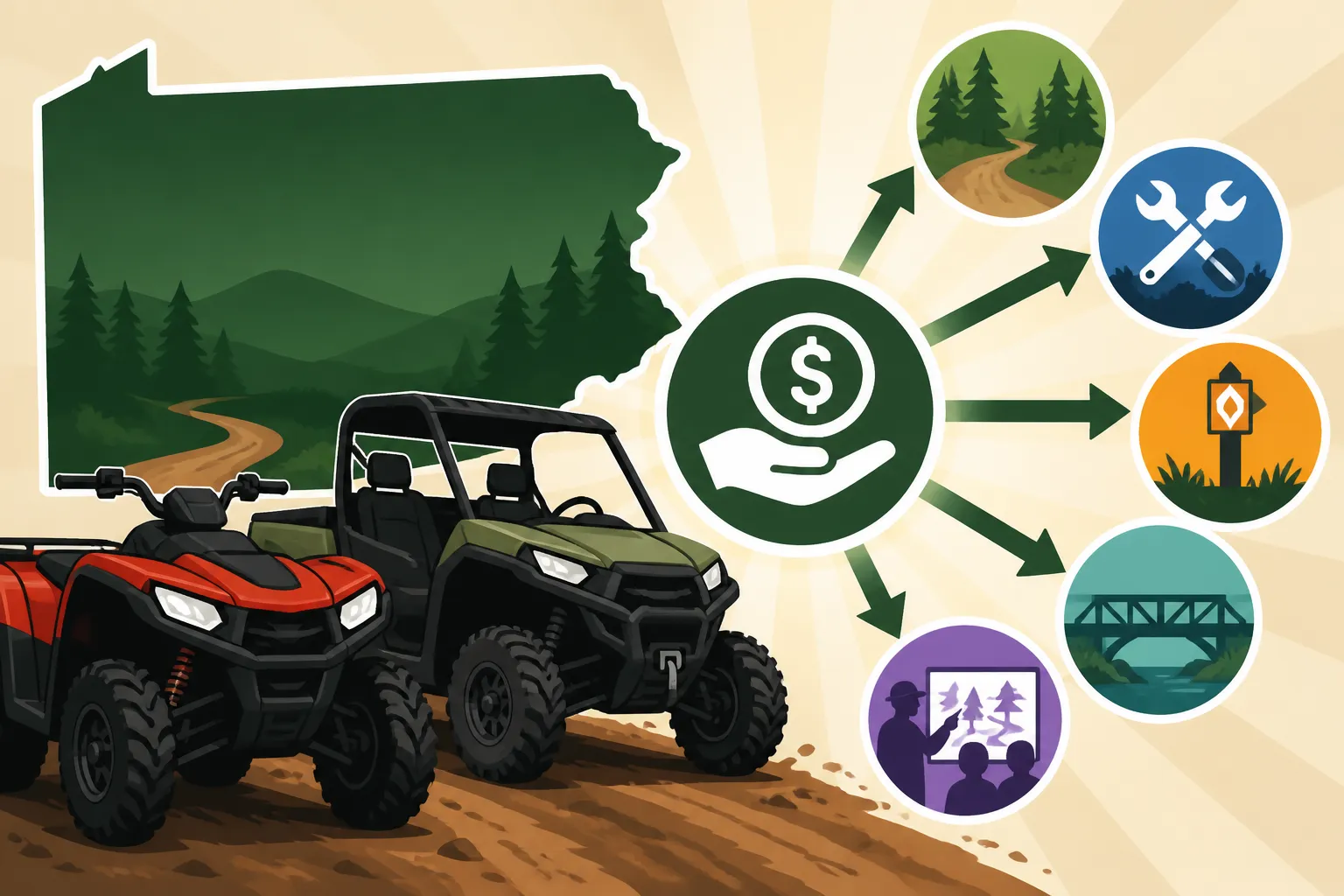
Where Registration Money Goes
It's easy to look at that twenty-dollar fee every two years for your ATV registration here in Pennsylvania and wonder, "Where does that money actually go?" For many riders, it can feel like just another charge on the list, especially when you're already shelling out for gas, gear, and maybe even a trail permit. This guide is here to pull back the curtain and show you exactly how the Pennsylvania Department of Conservation and Natural Resources (DCNR) manages and spends the funds collected from ATV registrations, ensuring you understand the real impact of your contributions.
Why We Even Pay Registration Fees
Let's be honest, nobody loves paying fees, right? When you buy your ATV, whether it's new from a dealer in Clearfield or a used machine from a private seller near Harrisburg, there's a certain amount of paperwork and cost involved. You've got the sales tax, the titling fee, and then the registration fee on top of it all. It can feel like a lot of hoops to jump through, and that little DCNR wallet card and plate can sometimes just feel like a formality.
The frustration is completely understandable. You work hard for your money, and you want to know it's being put to good use, especially when it comes to supporting a hobby you love. Many folks assume these fees just disappear into a general state fund, never to be seen again by the ATV community. But in Pennsylvania, that's thankfully not the case. The system is designed to create a dedicated funding stream specifically for the benefit of ATV riders and the trails we all enjoy. It's not just a tax; it's an investment in the future of riding in the Commonwealth. Think of it as a membership fee that directly contributes to the infrastructure and safety of your passion.
The DCNR's Role in Managing ATV Funds
In Pennsylvania, the DCNR is the central authority for ATV and snowmobile registration, and they are also the primary steward of the funds collected. Unlike vehicle registrations handled by PennDOT, your ATV's registration money doesn't go into the general highway fund. Instead, it's deposited into a special, restricted account known as the Snowmobile and ATV Restricted Account. This is a critical distinction, as it means every dollar collected from ATV registrations, as well as snowmobile registrations, is earmarked exclusively for programs and services directly related to these two outdoor activities.
The DCNR's Snowmobile and ATV Section within the Bureau of Forestry is the group responsible for administering this account and overseeing its allocation. They work tirelessly behind the scenes, from processing applications and issuing plates to managing the budgets for various projects across the state. They're the ones who handle everything from when you're [Registering an ATV in Pennsylvania] for the first time, to managing the system when you're [Renewing a Pennsylvania ATV Registration]. This dedicated structure ensures that the funds aren't diverted to other state priorities, but rather remain focused on enhancing the riding experience for you and other enthusiasts. It’s their job to make sure the money is spent wisely to maintain existing trails, develop new ones, and promote responsible riding throughout the state.
Specific Uses of Your Registration Dollars
So, let's get down to the brass tacks: where exactly does your hard-earned registration money go? It's invested back into the ATV program in several key areas, all designed to improve and sustain the sport we love.
Trail Development and Maintenance
This is arguably one of the most visible and important uses of your registration fees. Pennsylvania boasts hundreds of miles of designated ATV trails, from the rugged terrain of the Anthracite Outdoor Adventure Area (AOAA) to the expansive state forest trails like Whiskey Springs and Bloody Skillet. These trails don't maintain themselves! Your registration dollars are crucial for:
- Building New Trails: Expanding the network of legal riding areas, often converting old logging roads or acquiring new easements. This means more places for you to explore.
- Routine Upkeep: This involves everything from clearing downed trees after a storm, fixing washouts from heavy rains, and maintaining signage to ensure riders stay on designated paths.
- Infrastructure Improvements: Replacing or repairing bridges, culverts, and other structures to ensure safe crossings over streams and ravines. Think about those tricky water crossings; funds help make them safer.
- Erosion Control: Implementing measures to prevent soil erosion, which can damage trails and impact water quality in nearby streams. This often involves grading, installing water bars, and planting vegetation.
Without these funds, many of our beloved trails would quickly become impassable, unsafe, or simply disappear. It’s an ongoing effort, and every two-year registration contributes directly to keeping those tires turning on well-maintained paths.
Education and Safety Programs
Safety is paramount, and Pennsylvania invests a significant portion of registration funds into ensuring riders have the knowledge and skills to ride responsibly. This isn't just about avoiding fines; it's about preventing accidents and ensuring everyone has a good time.
- ATV Safety Certificate Courses: Mandatory for riders aged 8 to 15 on state-owned land, these courses teach critical riding techniques, trail etiquette, and emergency procedures. Funds support instructors, course materials, and the administrative costs of issuing certificates. You can find more details about [Pennsylvania ATV Safety Certificate Requirements] on the DCNR website.
- Promotional Materials: Developing and distributing guides, maps, and online resources that inform riders about regulations, safe operating practices, and where to find legal riding areas.
- Public Awareness Campaigns: Running initiatives to educate the general public and riders about safe and responsible ATV use, especially concerning environmental impact and respecting private property.
These programs are vital for fostering a culture of safety among riders of all ages and experience levels, helping to reduce accidents and ensure a positive public image for the sport.
Law Enforcement and Patrols
While nobody likes seeing a ranger pull up with a ticket book, the presence of DCNR rangers and State Police on ATV trails serves a crucial function. Registration fees help fund these patrols, which are essential for maintaining order, enforcing rules, and ensuring everyone adheres to the regulations designed to keep us safe and protect our riding privileges.
- Patrolling Designated Trails: Officers monitor trails at popular locations like the AOAA, Whiskey Springs, and other state forest trails to ensure riders have current registrations, helmets, and are following speed limits and other rules. They're checking that you have your [Pennsylvania ATV Plates and Where They Mount] correctly.
- Responding to Incidents: Investigating accidents, addressing trespass issues on adjacent private lands, and handling situations involving illegal riding.
- Equipment and Training: Providing law enforcement personnel with the necessary equipment (like their own ATVs) and specialized training to effectively patrol off-road environments.
This enforcement not only deters illegal riding but also helps protect the integrity of the trail system for law-abiding riders. It helps everyone feel safer knowing that there's a presence out there to handle issues.
Administration and Operations
Finally, a portion of the registration fees covers the essential administrative costs of running the entire ATV program. While perhaps not as exciting as new trails, these are the fundamental expenses that keep the wheels turning behind the scenes.
- Staff Salaries: Funding the DCNR personnel who manage the registration process, maintain databases, answer rider inquiries, and oversee trail projects.
- System Maintenance: Keeping the online registration portal up and running, ensuring that forms like [What Pennsylvania Asks on Form DCNR-43] are processed efficiently, and that registration information is accurate.
- Printing and Distribution: Costs associated with printing your registration wallet cards, license plates, and the stickers that signify your valid registration.
- Office Supplies and Utilities: Basic overhead expenses required to keep the DCNR's Snowmobile and ATV Section functioning.
These operational costs are the backbone of the system, enabling the DCNR to effectively manage all other aspects of the ATV program.
Here’s a quick overview of how these funds are typically allocated:
| Category | Description | Examples of Spending |
|---|---|---|
| Trail Development & Maintenance | Enhancing and preserving legal riding areas. | New trail construction, erosion control, bridge repairs, clearing debris, signage. |
| Education & Safety | Promoting safe and responsible riding practices. | ATV Safety Certificate courses, instructional materials, public awareness campaigns, instructor training. |
| Law Enforcement & Patrols | Ensuring compliance with regulations and rider safety. | Ranger patrols on state lands, incident response, investigation of illegal riding, officer equipment. |
| Administration & Operations | Essential functions to manage the registration program. | Staff salaries, database management, printing registration cards/plates, office overhead. |
What Your Registration Money Doesn't Cover
It’s just as important to understand what your Pennsylvania ATV registration money doesn't cover, to avoid any misconceptions. These funds are specifically restricted to ATV and snowmobile-related programs, meaning they don't get siphoned off for other state services that might seem related but fall under different budgets.
Road Maintenance (Generally)
While your ATV might occasionally traverse a designated joint-use road or cross a highway at a ninety-degree angle, the funds from your ATV registration are not used for general road maintenance or paving of public roads. Those costs are primarily handled by PennDOT, drawing from gasoline taxes and vehicle registration fees for cars and trucks. So, while you might appreciate a smooth ride on the blacktop connecting two trail sections, that asphalt wasn't paid for by your ATV registration. Your ATV registration is focused on the off-road experience, not the statewide road network.
Emergency Services (Directly)
When you're out on the trails, especially in remote areas like some parts of Sproul State Forest, the idea of an emergency can be a real concern. While DCNR rangers and local law enforcement supported by registration funds can assist in emergencies, your ATV registration fee does not directly fund local fire departments, ambulance services, or search and rescue teams. These vital emergency services are typically funded through local taxes, state grants, and volunteer contributions. While a robust trail system and enforcement might indirectly reduce emergency calls by promoting safety, the direct financial support for these services comes from other sources.
Private Property Issues
Pennsylvania has a lot of private land, and riders often seek permission to ride on friends' or family's property. However, your state ATV registration funds do not get involved in private land matters. For instance, if you're dealing with a dispute over access to private property, or if you need to formalize a private land use agreement, that's entirely outside the scope of DCNR's registration fund management. For situations like that, where you might need a formal written agreement for land use or a clear bill of sale when [Buying From a Neighbor and Registering It], you'd look to resources like LawDepot for customizable legal forms and documents. They can help you create a robust, legally sound agreement that protects all parties involved, ensuring clarity where state funds cannot reach. This distinction is crucial, as the DCNR's mandate is primarily focused on public lands and the state-managed ATV program.
Understanding the Value of Your Contribution
Knowing where your Pennsylvania ATV registration money goes can change your perspective on that biennial fee. Instead of just seeing it as a mandatory expense, you can view it as a direct investment in the sport you love. It’s the money that builds and maintains the trails you ride on, educates new riders, helps keep those trails safe, and ensures the entire program runs smoothly.
When you purchase or transfer an ATV, you'll go through the process of titling and registering it, proving sales tax was paid, and ensuring all the paperwork is in order. Sometimes, this can involve private sales where you need a formal contract. In those cases, services like LawDepot can be incredibly helpful for drafting documents like a bill of sale or an affidavit of ownership, ensuring your private transactions are as solid as your state registration. Remember, a comprehensive document from a service like LawDepot can save you headaches down the road.
Ultimately, your registration helps sustain a vibrant and accessible ATV community across Pennsylvania. So, the next time you hit the trails at a state forest or a designated riding area, you can ride with confidence, knowing that your contribution is actively working to enhance and protect those experiences for everyone. That twenty-dollar fee, which is really just ten dollars a year, is a small price to pay for access to hundreds of miles of thrilling terrain and the peace of mind that comes with a well-managed program. You're supporting not just a hobby, but a community and a resource that many people enjoy.
Disclaimer
This article is for general informational purposes only and does not constitute professional advice. Laws, prices and regulations vary by location and change over time. Consult a qualified professional for guidance on your specific situation.