Pennsylvania Registration for a UTV
Let's talk about UTVs in Pennsylvania! Many folks diving into the world of off-road riding in the Keystone State find themselves a little bewildered when it comes to registering their Utility Task Vehicle (UTV). You see these machines everywhere, from rugged mountain trails to working farms, and it’s easy to assume they fall under the same umbrella as ATVs. However, UTVs often come with their own unique set of considerations for registration, largely due to their size, design, and how they interact with Pennsylvania's specific regulations. This guide is here to cut through the confusion and walk you through everything you need to know about getting your UTV legally registered and ready to ride in Pennsylvania.
Understanding UTVs in Pennsylvania's ATV Registration System
The Pennsylvania Department of Conservation and Natural Resources (DCNR) is the state agency responsible for registering off-highway vehicles, including both ATVs and UTVs. While they share a common regulatory home, UTVs often present unique challenges that riders need to understand from the outset. It's not just a bigger quad; the differences are significant.
The Core Distinction: UTV vs. ATV
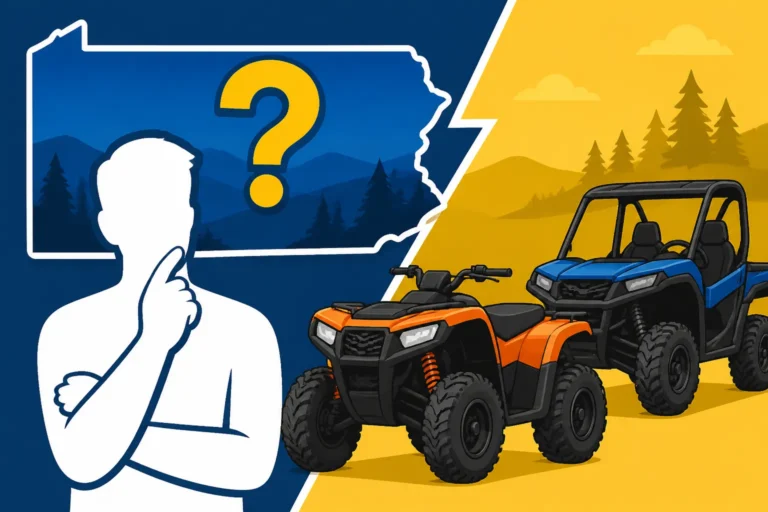
When we talk about ATVs, most people picture a single-rider or two-rider machine where the operator straddles the seat, uses handlebar steering, and their feet are exposed. A UTV, on the other hand, is a different beast entirely. It typically features side-by-side seating, a steering wheel, foot pedals like a car, and often a cargo bed at the back. These characteristics mean UTVs are generally wider, longer, and heavier than traditional ATVs, and they're designed with utility and multiple passengers in mind.
This fundamental difference in design and intended use means that while both are considered "all-terrain vehicles" in the broadest sense for registration purposes, the state often looks at them through slightly different lenses. It's less about the engine size and more about the overall footprint and operational characteristics. Understanding this distinction is the first step to navigating the registration process successfully.
Why UTV Size and Design Matter for Registration
The sheer size and weight of many UTVs are primary factors that impact their registration and, more importantly, where you can legally ride them in Pennsylvania. While standard ATVs often easily fit within trail width restrictions, many UTVs, especially modern sport models, push or even exceed these limits. [Pennsylvania's Class II Trail Width Limit] is a prime example of a regulation that can significantly restrict where you can take your UTV on state forest lands.
Because of this, the DCNR needs to categorize these machines clearly to ensure safety and preserve trail conditions. A larger, heavier vehicle has a different impact on trails than a smaller quad, and the state's regulations reflect this. So, when you're looking at registration, you're not just getting a plate; you're also implicitly agreeing to abide by the rules that govern your machine's specific class, especially concerning its physical dimensions.
Road Use Limitations and Their Impact
One of the biggest areas of confusion for UTV owners is the question of road legality. Because UTVs often resemble small cars, many owners hope to use them on public roads, even if just to connect trails or run quick errands. Unfortunately, Pennsylvania's stance is quite clear: UTVs, like ATVs, are generally not street legal. They are off-highway vehicles, plain and simple.
This means that while your UTV will be registered and titled by the DCNR, it will not receive a vehicle registration from PennDOT. [Why PennDOT Does Not Register Pennsylvania ATVs] explains this for quads, and the same principles apply to UTVs. The DCNR registration allows you to ride on designated trails and private property, but it doesn't magically transform your UTV into a road-legal vehicle. This distinction is crucial to avoid fines and ensure you're riding safely and legally.
Choosing the Right Registration for Your Pennsylvania UTV
Pennsylvania offers two main types of registration for UTVs, just as it does for ATVs: General Registration and Limited Registration. Your choice depends entirely on how and where you plan to use your UTV. It’s not a one-size-fits-all situation, and picking the wrong one can limit your riding opportunities or, worse, lead to issues with enforcement.
General Registration: For Trail Riders and Public Lands
If your dream is to explore the vast network of designated ATV trails across Pennsylvania's state forests, participate in organized rides, or hit up commercial riding parks, then General Registration is the path you need to take. This type of registration explicitly grants you the privilege to operate your UTV on public lands and authorized private trails. It comes with a distinct plate and sticker that signifies its eligibility for these areas.
[Pennsylvania General Registration Cost] covers the fees, and it typically lasts for [Pennsylvania's Two-Year ATV Registration]. Most UTV owners who plan to actively ride beyond their own property will opt for this. It's the most common choice and provides the broadest legal access for recreational use. Without it, even if you have a UTV, you'll be significantly restricted to private land with permission.
Limited Registration: For Farms, Businesses, and Private Property
For those who use their UTV primarily as a workhorse—think farming, property maintenance, hauling materials on a large private estate, or for a business operation—Limited Registration is likely your best fit. This registration type is designed for machines that will rarely, if ever, venture onto public trails. It acknowledges the UTV's utility role without granting wide-ranging recreational access.
The main advantage here is that it's a simpler, often free option, described further in [Pennsylvania's Free Limited Registration]. However, it comes with significant restrictions. [What Limited Registration Does Not Let You Do] is a critical read, as it clearly outlines that you cannot ride on state forest trails, commercial parks, or any other public riding areas with a Limited Registration. It's essentially for exclusive use on private land, including designated farm or business operations.
Navigating a Registration Switch for Your UTV
Sometimes, life changes, and so do your riding habits. Perhaps you initially registered your UTV with a Limited Registration because you only planned to use it on your hunting camp property. But now, you've discovered the joy of Pennsylvania's extensive trail system and want to join your friends on a ride through Sproul State Forest. In such cases, you absolutely can switch your UTV's registration type.
The process for [Switching From Limited to General in Pennsylvania] involves submitting a new application to the DCNR and paying the necessary fees for the General Registration. You'll essentially be updating your machine's status to reflect its new intended use. It's important to complete this conversion before you venture onto any public trails, as riding with the incorrect registration can lead to fines and legal trouble.
Step-by-Step Guide to Registering Your UTV with Pennsylvania DCNR
Getting your UTV registered in Pennsylvania isn't overly complicated, but it does require attention to detail and ensuring you have all your ducks in a row. The DCNR has a streamlined process, but missing a step can cause delays.
Essential Documents for UTV Registration
Before you even touch a form, gather your paperwork. This is where most people get tripped up, especially if they've bought a used UTV. You'll need proof of ownership, which for a new UTV is typically the Manufacturer's Certificate of Origin (MCO). For a used UTV, it will be the previous owner's DCNR title.
You'll also need a bill of sale, especially for private transactions. [Pennsylvania ATV Bill of Sale Requirements] provides a good overview of what needs to be included. If you're buying or selling a UTV, creating a comprehensive document through a service like LawDepot can be incredibly helpful. It ensures all parties are protected and all necessary information, such as the vehicle identification number (VIN) and sale price, is legally documented. Finally, you’ll need proof that sales tax was paid ([Proving Pennsylvania Sales Tax Was Paid]), or that you're exempt from it.
Completing the Form DCNR-43 for UTVs
The cornerstone of your UTV registration is Form DCNR-43, the "Application for Certificate of Title and Registration for Snowmobile/ATV." Don't let the "Snowmobile" part throw you off; this is the correct form for UTVs as well. When filling it out, pay close attention to all fields. You’ll need to accurately record your UTV's VIN, make, model, year, and engine size.
[What Pennsylvania Asks on Form DCNR-43] details each section. Ensure your personal information, including address and contact details, is correct. Indicate whether you are applying for General or Limited Registration. Incorrect or incomplete forms are the number one reason for processing delays, so double-check everything before moving on.
Submitting Your Application and Fees
Once your Form DCNR-43 is complete and all supporting documents are attached, it's time to submit your application. You have a few options for submission. Many people choose to mail their application directly to the DCNR Snowmobile and ATV Section. Make sure to send it with a traceable method.
Alternatively, some dealers offer to handle the registration paperwork for you, which can be a huge convenience, especially with [The Forty-Five Day Dealer Sticker in Pennsylvania] allowing you to ride while the permanent registration processes. You can also [Registering Online at Pennsylvania's DCNR Portal] for renewals, but initial registrations often require mail-in. Be prepared to pay the [Pennsylvania ATV Registration Cost] and [Pennsylvania ATV Title Cost] at the time of submission. These fees help fund the state's trail system and administrative costs.
Titling, Buying, and Selling UTVs in Pennsylvania
The process of buying, selling, or simply owning a UTV in Pennsylvania involves more than just registration; it also includes titling. This can be a point of confusion for new owners, especially if they are used to cars and trucks handled by PennDOT.
The DCNR Titling Requirement for UTVs
In Pennsylvania, UTVs are required to have a DCNR title, just like ATVs. This title serves as the official proof of legal ownership for your machine. It's distinct from a PennDOT vehicle title and is specifically for off-highway vehicles. Without a title, proving ownership and transferring the UTV can become a significant headache.
[Titling an ATV in Pennsylvania] explains the importance of this document. Even if you're not planning on selling your UTV anytime soon, having the title in your name is crucial for any future transactions, insurance claims, or proving legitimate ownership if ever questioned. The title fee is separate from the registration fee and is typically a one-time charge as long as you own the machine.
Registering a UTV Bought from a Dealer vs. Private Seller
The pathway to registration differs whether you purchase your UTV from an authorized dealer or a private individual. When you buy from a dealer, they often handle much of the paperwork for you, submitting the application for title and registration on your behalf. [What a Pennsylvania Dealer Handles for You] clarifies their role. They’ll collect the necessary fees and sales tax, often providing you with a temporary permit so you can start riding almost immediately.
For a private sale, the responsibility falls squarely on the buyer. You'll need to gather the existing title (signed over by the seller), the bill of sale (essential for proving the transaction and purchase price), and proof of sales tax payment. [Registering After a Private Sale in Pennsylvania] outlines the steps you’ll need to take. This usually means filling out Form DCNR-43 yourself and mailing it in with all supporting documents and payment.
What to Do When Buying a Used UTV with No Title
One of the most common and frustrating scenarios for prospective UTV owners is finding a great deal on a used machine, only to discover the seller doesn't have the title. While not an impossible situation, it certainly complicates things. [Buying When the Seller Cannot Find the Title] advises caution. Without the title, proving legal ownership can be incredibly difficult, and the DCNR will not register a machine without clear evidence of who owns it.
Your best course of action is to insist the seller obtains a duplicate title before you complete the purchase. If that's not possible, proceed with extreme caution. Ensure you get a detailed bill of sale, perhaps using a template from LawDepot, that clearly identifies the UTV by VIN and states the seller is the legal owner and has the right to sell. You'll also need to verify the VIN against the bill of sale and any other documentation you can find, such as from previous registrations if available. Sometimes, you may need to pursue a bonded title, a more complex legal process, to establish ownership.
Keeping Your UTV Legal and Safe on Pennsylvania Lands
Getting your UTV registered and titled is a fantastic first step, but the journey doesn't end there. To truly enjoy your machine on Pennsylvania's diverse terrain, you need to understand and adhere to the ongoing requirements for display, access, and insurance.
Properly Displaying Your UTV's Plate and Sticker
Once your UTV is registered, the DCNR will issue you a registration plate and a sticker. These aren't just decorative; they are legal identifiers and must be displayed correctly. For UTVs, the plate typically mounts on the rear of the machine, where it's clearly visible. [Pennsylvania ATV Plates and Where They Mount] gives general guidance, but for a UTV, you might need to find a suitable flat surface on the back, often near the cargo bed or tailgate, making sure it isn't obstructed by accessories or mud.
The registration sticker, which indicates the current registration period, needs to be affixed to the upper left corner of your registration plate. [Where the Sticker Goes on the Plate] is specific about its placement. Additionally, you'll receive a wallet-sized registration card. [Why Both Pennsylvania Registrations Include a Wallet Card] is for quick reference and proof of registration while riding. Always carry this card with you, perhaps in a waterproof holder on the UTV or on your person.
UTV Width Restrictions on Pennsylvania State Forest Trails
This is a critical point for UTV owners that cannot be overstated. While many UTVs are powerful and fun to ride, their width can be a significant limitation on state forest trails. Pennsylvania's designated ATV trails on state forest land adhere to a [Pennsylvania's Class II Trail Width Limit] of 64 inches. Many popular UTV models, especially sport-oriented side-by-sides, exceed this width.
It is absolutely crucial to know your UTV's exact width before you head out to state forest trails. Riding a UTV that is too wide on these trails is illegal and can result in fines. This is where [Pennsylvania Trails for a Wide Machine] becomes a critical resource. While some private parks or specific areas might accommodate wider machines, the state forest system maintains strict adherence to this limit for safety and trail preservation. Always check trail rules and your machine's dimensions.
UTV Insurance: A Must for Riding Off Private Land
Just like ATVs, UTVs operated anywhere off private property in Pennsylvania are required to carry liability insurance. This isn't just a recommendation; it's a legal mandate. The state wants to ensure that if you are involved in an accident that causes damage to property or injury to another person, there's a mechanism in place to cover those costs.
[Pennsylvania ATV Insurance Requirement] explains the details. While the DCNR doesn't specify a minimum coverage amount, your insurance policy must provide liability coverage. When selecting a policy, consider not only the minimum requirements but also what would adequately protect you given the potential for incidents while off-roading. Always carry proof of insurance with you, perhaps alongside your DCNR wallet card, to present if requested by law enforcement or park rangers.
Disclaimer
This article is for general informational purposes only and does not constitute professional advice. Laws, prices and regulations vary by location and change over time. Consult a qualified professional for guidance on your specific situation.