What a Pennsylvania Dealer Handles for You
The excitement of bringing home a new ATV or UTV in Pennsylvania is incredible, isn't it? You’ve pictured yourself hitting the trails at Bloody Skillet or navigating the terrain at the AOAA. But then the reality sets in: the stack of papers, the forms, the fees, and the confusing process of getting your machine legally registered and titled. It's enough to make your head spin and can definitely dim that new-machine glow. This guide is here to shed light on exactly what your Pennsylvania dealer handles for you during this often-overwhelming process, so you can focus on the fun parts of ownership.
The Foundation: Sales Tax and Initial Ownership Documentation
When you buy a new ATV or UTV from a Pennsylvania dealer, you're not just getting a machine; you're also buying into a structured process that takes care of many of the initial administrative hurdles. One of the biggest advantages of buying from a dealer is how they streamline the financial and ownership documentation aspects right from the start.
Sales Tax Collection and Remittance
Let's be real, sales tax is never the fun part of any purchase, but it's a non-negotiable step in Pennsylvania. The good news is that when you buy your quad or side-by-side from a licensed dealer, they take on the responsibility of collecting and remitting the state sales tax for you. This means you don't have to worry about a separate trip to the Department of Revenue or figuring out how to file that specific tax yourself. It's all part of the purchase transaction at the dealership.
Imagine you're at the dealership, signing the final papers for your shiny new machine. The sales agreement will clearly itemize the purchase price, any accessories you've added, and then the applicable sales tax. In Pennsylvania, this is generally 6% of the purchase price. However, don't be surprised if you see an extra percentage or two tacked on if you're buying in certain counties, like the extra 1% in Allegheny County or the 2% in Philadelphia. The dealer calculates this for you and includes it in your total. This seamless process prevents any headaches down the road, ensuring the state gets its due and you don't face any surprises. You simply pay the dealer, and they handle the rest, sending that tax money directly to the state coffers. This is a huge convenience, especially for folks who aren't used to dealing with specific vehicle sales tax forms. It's a critical step that ensures your ownership is clean and clear from a tax perspective. For more detailed information, check out [Pennsylvania Sales Tax on an ATV Purchase].
Titling Application Processing
In Pennsylvania, virtually all ATVs and UTVs need a title. This is your proof of legal ownership, similar to a car title, and it’s something you absolutely need to have for your machine. This is another area where your dealer steps up to the plate. They are experts in preparing and submitting the necessary forms for your title application to the Pennsylvania Department of Conservation and Natural Resources (DCNR), which is the agency responsible for ATV and snowmobile titling and registration.
When you're at the dealership, they'll gather all the pertinent information from you: your full name, address, contact details, and sometimes even your Social Security Number (for identification purposes, not credit). They'll also meticulously record all the details of your new machine, such as the make, model, year, and most importantly, the Vehicle Identification Number (VIN). The dealer then takes this information and completes the required forms, such as Form DCNR-43, on your behalf. They act as the intermediary, ensuring that the application is filled out correctly, reducing the chances of errors or delays that could come from a first-time applicant. It's a massive relief to know that someone experienced is handling this intricate paperwork, as getting it wrong could mean your title is delayed, and you can't officially claim ownership. If you're curious about the general titling process, read up on [Titling an ATV in Pennsylvania].
Navigating Registration Paperwork and Getting You on the Trail
Beyond just handling the title, a Pennsylvania dealer plays a pivotal role in getting your new ATV or UTV registered so you can legally ride it. This involves not only filling out the forms but also providing you with a crucial temporary solution to get you riding sooner.
Completing the Registration Forms
Once the sales tax and titling information are squared away, the dealer moves on to the registration application itself. Pennsylvania has two main types of registration for ATVs: Limited Registration and General Registration. Your dealer will discuss with you which type is appropriate for your intended use and guide you through the process. Limited Registration is typically for machines used exclusively on your own land or private property, while General Registration allows you to ride on designated state-owned trails and private lands with permission.
The dealer will meticulously complete all sections of the registration forms, ensuring every detail about your machine and your personal information is accurate. This includes specifying whether you want a [Pennsylvania's Limited and General Registrations]. They will also confirm that you have met any other requirements, such as carrying the mandatory liability insurance for machines that will be ridden off your own private property and on public trails. They act as your administrative assistant, making sure no blank is left unfilled and no box unchecked. This careful attention to detail by the dealer is invaluable, as any omission or error could lead to your registration being rejected or delayed by DCNR, holding up your trail adventures. For a detailed rundown of what's involved, check out the [Pennsylvania ATV Registration Paperwork Checklist].
Issuing the 45-Day Temporary Sticker
This is often one of the most appreciated services a dealer provides: the temporary sticker. The DCNR permanent registration process, including issuing your physical registration plate and wallet card, takes some time. It's not an instant thing. Recognizing that riders want to get out and enjoy their new machines right away, Pennsylvania dealers are authorized to issue a temporary 45-day registration sticker.
Imagine this: You’ve just made your purchase, and you're eager to head straight to a local trail. The dealer, understanding this excitement, will affix a temporary sticker to your machine. This sticker immediately grants you legal permission to ride on designated trails and areas for up to 45 days while you wait for your official DCNR plate and registration card to arrive in the mail. It's a lifesaver for weekend warriors or anyone who wants to enjoy their new toy without unnecessary delay. This temporary sticker is a direct testament to the dealer's ability to facilitate your immediate enjoyment, bridging the gap between purchase and permanent registration. Without it, you'd be stuck waiting, and that's no fun for anyone. You can learn more about this crucial interim step in [The Forty-Five Day Dealer Sticker in Pennsylvania].
Financial Obligations, Verification, and Beyond
The dealer's role extends into managing the financial aspects of registration and ensuring the unique identity of your machine is properly documented. This reduces the burden on you and helps prevent future issues.
Handling Registration and Title Fees
Let’s face it, dealing with multiple payments to different agencies can be a hassle. When you purchase from a Pennsylvania dealer, they simplify this significantly by collecting all the necessary registration and title fees directly from you at the time of sale. This means you don't have to send separate checks or money orders to DCNR yourself. It's all rolled into your total purchase price, or itemized on your bill of sale as part of the total.
For instance, the [Pennsylvania ATV Title Cost] is a separate fee from the [Pennsylvania ATV Registration Cost]. The dealer collects both of these from you. They then ensure these fees are properly submitted to the DCNR along with your completed title and registration applications. This consolidated payment system is a huge convenience, minimizing paperwork and potential errors that can occur when individuals try to manage multiple payments to different government entities. It also ensures that the correct amounts are paid, as dealers are always up-to-date on the current fee structures. This streamlining helps ensure your machine's paperwork is processed efficiently without you having to navigate complex payment portals or mail procedures. You can check [Pennsylvania's $22.50 ATV Title Fee] for specifics on the title fee.
VIN Verification and Record Keeping
Every ATV and UTV has a unique Vehicle Identification Number, or VIN, much like a car. This 17-character code is essential for identifying the machine and is crucial for titling, registration, and preventing theft. When you buy from a dealer, they have a professional obligation to verify this VIN. This often involves physically inspecting the VIN on the machine's frame and ensuring it matches the manufacturer's documentation and the paperwork being submitted to DCNR.
This VIN verification by the dealer is a critical step that adds an extra layer of security and authenticity to your purchase. It confirms that the machine you are buying is indeed the one being titled and registered, and that there are no discrepancies that could cause problems later on. The dealer then submits this verified VIN information as part of your title and registration applications. This meticulous record-keeping helps DCNR maintain accurate records of all ATVs and UTVs in the state and is vital for tracking ownership changes and ensuring compliance. It’s a safeguard that a private sale might lack, offering you greater peace of mind about the machine’s history and legality. For more information on this process, consider [VIN Proof for a Pennsylvania Registration].
Your Role in the Process and the Dealer's Documentation
While the dealer handles a significant portion of the administrative burden, there are still a few key items you, as the new owner, need to be aware of and keep track of. The dealer also provides you with important documents that are yours to safeguard.
Providing Sales Agreements and Bill of Sale
Even though your dealer is filing a lot of paperwork on your behalf with the state, you won't walk away empty-handed. In fact, you'll receive some very important documents for your own records. The primary documents you'll receive are the sales agreement and the bill of sale. These papers are your definitive proof of purchase and legally establish that you are the machine's new owner.
The sales agreement will detail the terms of the sale, including the purchase price, any trade-in value, financing terms (if applicable), and all associated taxes and fees. The bill of sale, often a simpler document, will explicitly state the date of sale, the buyer and seller's information, and the specific details of the ATV or UTV, including its VIN. These documents are incredibly important for several reasons. They are your personal record of the transaction, invaluable if you ever need to prove ownership for insurance purposes, future sales, or even if there's a dispute down the line. Keep these documents in a safe place, separate from your machine. If you ever need to create a bill of sale for a private transaction in the future, services like LawDepot can help you generate one. Understanding what these documents contain is vital for your long-term ownership. For a complete look at what's expected, see [Pennsylvania ATV Bill of Sale Requirements].
What You Still Need to Do
While your dealer performs a monumental service in streamlining the registration and titling process, your job isn't entirely over once you drive off the lot. There are a few responsibilities that fall squarely on your shoulders as the ATV/UTV owner.
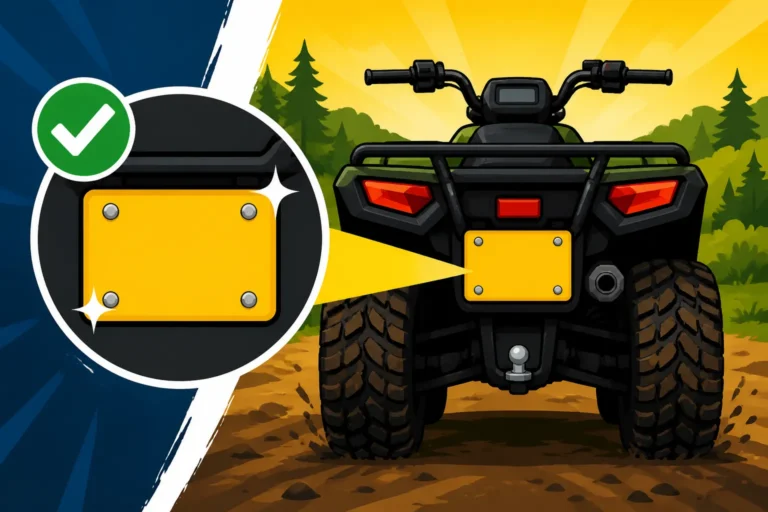
First and foremost, once your permanent registration plate and wallet card arrive from DCNR, it's up to you to properly display the plate on your machine and carry the wallet card with you whenever you ride. The temporary sticker the dealer provided is great for those initial 45 days, but it expires, and you'll need the permanent documentation to remain legal. DCNR issues a physical registration plate that must be mounted on the rear of your ATV or UTV, and a small wallet card that serves as proof of registration. This card also includes details about your machine and ownership. You'll definitely want to keep that wallet card dry and safe, perhaps in a protective holder. For more on this, check out [Why Both Pennsylvania Registrations Include a Wallet Card].
Secondly, if your machine is under General Registration, you are required to have liability insurance. While the dealer may ask for proof of insurance to complete the registration application, it is ultimately your responsibility to obtain and maintain this coverage. DCNR doesn't specify minimum coverage amounts, but you must have it to ride on public lands or designated trails. Failure to carry proof of insurance can lead to fines, even if your registration is otherwise in order. Make sure you understand [Pennsylvania ATV Insurance Requirement] and get a policy that fits your needs before hitting the trails. The dealer sets you up for success, but you have to follow through on these ongoing requirements.
The Advantages of Dealer Assistance and What to Do If Problems Arise
Choosing to purchase from a dealer offers significant benefits beyond just getting a new machine. Their experience and established processes can save you a lot of time and potential headaches. However, it's also wise to know what to do if the process doesn't go as smoothly as expected.
Streamlined Process and Expertise
The primary advantage of having a Pennsylvania dealer handle your ATV or UTV registration and titling is the sheer streamlining of the entire process. These dealerships process dozens, if not hundreds, of these transactions every year. They are intimately familiar with DCNR's requirements, forms, and submission procedures. This expertise translates directly into efficiency for you.
Think about it: instead of you, a first-time ATV owner, trying to decipher complex government forms, understanding the difference between various fees, and figuring out where to mail everything, the dealer takes care of it all. They know exactly which boxes to tick, what information is critical, and how to avoid common pitfalls that could delay your registration. Their staff often has direct lines of communication or established protocols with DCNR, which can sometimes expedite queries or resolve minor issues faster than an individual could. This seamless experience frees you up from bureaucratic stress, allowing you to focus on learning about your new machine, planning your first rides, and getting any necessary safety gear. It's truly a service that simplifies what can otherwise be a daunting administrative task, proving the value of their specialized knowledge.
When Things Go Wrong and How to Address Them
While dealers strive for a perfect process, sometimes things don't go exactly as planned. Perhaps your permanent registration plate and card haven't arrived within the expected timeframe, or you have a question about the documentation. It's important to know the steps to take to resolve these issues.
Your first point of contact should always be the dealership where you purchased the machine. They initiated the paperwork, collected your fees, and have a vested interest in your satisfaction. Reach out to the sales or finance department, explain the situation, and provide them with your purchase details. They should be able to check their records, track the submission to DCNR, and give you an update. Often, they can quickly identify if there was a minor error or if DCNR is simply experiencing a backlog.
If, after contacting the dealer, you still don't get a satisfactory answer or your problem persists, then it's time to reach out directly to the Pennsylvania Department of Conservation and Natural Resources (DCNR) Snowmobile and ATV Section. They are the ultimate authority for registrations and titles. Have all your purchase information, the dealer's name, and any temporary stickers ready when you call. This direct contact can often help resolve more complex issues or escalate a delayed application. While it's rare for major issues to occur with reputable dealers, knowing these steps ensures you're prepared to handle any hiccups in the process. For direct contact information, consult [Pennsylvania's DCNR Snowmobile and ATV Section].
Here's a handy breakdown of the division of labor between you and your dealer:
| Task | Dealer Handles | Rider Handles (or confirms) |
|---|---|---|
| Sales Tax | Calculation, Collection, and Remittance to State | Payment as part of total purchase |
| Titling Application | Completion and Submission of forms (e.g., DCNR-43) | Providing personal info (name, address, SSN), confirming machine details |
| Registration Form | Completion and Submission of application (Limited or General) | Specifying registration type, providing personal info, confirming machine details |
| Temporary Sticker | Issuance and placement on machine (45-day validity) | Ensuring sticker is visible, riding legally until permanent plate arrives |
| Permanent Plate/Card | Initial submission to DCNR for processing | Receiving in mail, properly mounting plate, carrying wallet card |
| Fees (Title & Registration) | Collection from buyer, remittance to DCNR | Payment as part of total purchase |
| VIN Verification | Physical inspection and recording on all official documents | Ensuring VIN matches purchase documents |
| Insurance (for General Reg.) | May ask for proof to complete application | Obtaining and maintaining mandatory liability insurance |
| Proof of Ownership (Bill of Sale) | Provides buyer with sales agreement and bill of sale for their records | Safely storing these crucial documents |
Choosing to buy your ATV or UTV from a Pennsylvania dealer truly makes the initial stages of ownership much smoother. They act as your guide and administrator through what can be a confusing labyrinth of forms and fees, allowing you to quickly get to what you really want to do: ride! By understanding their role and your remaining responsibilities, you can ensure a hassle-free start to your off-road adventures.
Disclaimer
This article is for general informational purposes only and does not constitute professional advice. Laws, prices and regulations vary by location and change over time. Consult a qualified professional for guidance on your specific situation.