Nonresident Machines in Pennsylvania
It's frustrating enough to plan a great ATV trip to Pennsylvania, imagining those winding forest trails and scenic vistas, only to be bogged down by confusion over what paperwork your machine needs. You might wonder if your out-of-state registration is enough, or if you need to jump through new hoops just to enjoy a weekend ride. This guide is here to clear up exactly what Pennsylvania requires from nonresident ATV and UTV owners, ensuring your adventure starts with peace of mind, not a hefty fine.
Understanding Pennsylvania's Rules for Out-of-State ATVs
Pennsylvania wants riders to enjoy its vast trail systems, but it also has a vested interest in managing these resources and ensuring safety. This is why the state has specific registration requirements for all ATVs and UTVs, including those brought in by visitors from other states. It's not about making things difficult; it's about maintaining the trails, funding their upkeep, and keeping everyone safe.
Do Nonresidents Need a Pennsylvania ATV Registration?
This is often the first question on a visitor's mind, and the answer isn't a simple yes or no. Pennsylvania operates on a principle of reciprocity. What does that mean for you? Essentially, if your home state requires ATVs to be registered and that state, in turn, honors Pennsylvania's ATV registrations for its own trails, then Pennsylvania will generally honor your home-state registration. It’s a mutual agreement aimed at making it easier for riders to explore different states without doubling up on paperwork and fees.
However, it's crucial to understand that "generally honor" doesn't mean "always honor." The Pennsylvania Department of Conservation and Natural Resources (DCNR), which oversees ATV registration, maintains specific agreements or understandings with other states. If your state doesn't register ATVs at all, or if it doesn't extend similar courtesies to Pennsylvania-registered machines, then your out-of-state plate might not be enough. In such cases, you would need to obtain a [Pennsylvania General Registration for Everywhere Else] to legally ride on designated state trails and other open areas. This distinction is vital because riding unregistered can lead to significant penalties, overshadowing any fun you might have had.
The Role of DCNR in Nonresident Registration
The Pennsylvania DCNR is the central authority for all ATV and snowmobile registration matters in the Commonwealth. Unlike cars, which are handled by PennDOT, ATVs fall under DCNR's purview, mainly because their primary use is recreational and often occurs on state-managed lands. [Why DCNR Registers Pennsylvania ATVs] boils down to trail management, conservation efforts, and rider safety. They are the ones who decide which out-of-state registrations are honored based on their reciprocity agreements.
This means that if you're a nonresident, you'll be dealing with DCNR for any questions regarding your machine's legality in Pennsylvania. They provide the most up-to-date information on reciprocity, the application process for temporary registrations, and details about trail permits. While your out-of-state registration might be recognized, always remember that any specific rules about trail access, youth rider requirements, and safety certificates still apply to you just as they do to Pennsylvania residents. It's about ensuring a consistent standard of safety and responsibility across all riders enjoying Pennsylvania's diverse landscapes.
Navigating Reciprocity: When Your Home State is Recognized
The concept of reciprocity is a huge relief for many out-of-state riders planning a trip to Pennsylvania. It means that in certain circumstances, your existing ATV registration from your home state is perfectly valid for riding on Pennsylvania's designated trails. However, it's not a free-for-all, and there are specific conditions and requirements you need to be aware of to ensure your ride is legal and hassle-free.
States That Typically Have Reciprocity with Pennsylvania
Pennsylvania's DCNR aims to make riding accessible while also protecting its resources. Therefore, it typically honors registrations from states that have similar registration requirements and, importantly, that also honor Pennsylvania's ATV registrations. While specific, current agreements can change, states like [Pennsylvania Reciprocity With New York], [Pennsylvania Reciprocity With Ohio], [Pennsylvania Reciprocity With West Virginia], and [Pennsylvania Reciprocity With Maryland] often have some form of reciprocity or mutual understanding with Pennsylvania. This means if your machine is legally registered in one of these states, you likely won't need to get a separate Pennsylvania registration just for a visit.
However, always check the latest DCNR guidelines before you travel. Reciprocity agreements are dynamic and can be updated. What was true last year might not be true today. A quick check on the DCNR website or a call to their Snowmobile and ATV Section can save you a lot of headache and potential fines. Don't assume your state is covered; verify it directly. This diligence ensures that when you arrive, you're ready to hit the trails, not fill out paperwork at the nearest DCNR office.
What Documents You Need to Carry as Proof
Even if your state enjoys reciprocity with Pennsylvania, simply having a license plate on your ATV isn't the full story. You absolutely must carry specific documents with you while riding to prove your machine's legality. Think of it like driving a car; you wouldn't leave home without your driver's license and registration card. The same principle applies here, and rangers on state trails frequently check for proper documentation.
Here’s what you should have readily available:
- Your Home State's ATV Registration Card: This is your primary proof that your machine is legally registered in your state of residence. Make sure it’s current and legible.
- Proof of Insurance: [Pennsylvania ATV Insurance Requirement] for riding off your own land. While DCNR doesn't set minimum coverage amounts, it does require insurance. If your home state mandates ATV insurance, proof of that policy is often sufficient. It’s always best to have this on hand, as many private trail systems and even some public lands may request it.
- Photo Identification: Your driver's license or state-issued ID proves you are the owner or legal operator of the machine.
- Youth Safety Certificate (if applicable): If you have riders aged 8 to 15, they will still need to have completed an approved ATV safety course and carry their certificate. Pennsylvania has strict rules for young riders, and these apply to nonresidents as well. [Pennsylvania Rules for Riders Aged 8 to 15] are in place for safety, regardless of where you're from.
It’s a good idea to keep these documents in a waterproof bag or container, perhaps in a fanny pack or sealed compartment on your ATV. Trails can be dusty, muddy, and wet, and you don’t want your important papers to become unreadable. A ranger performing [What a Ranger Checks at a Trailhead] will expect to see these items clearly and quickly.
When Your State Doesn't Reciprocate: Getting a Pennsylvania Registration
So, you've checked, and your home state doesn't have a reciprocity agreement with Pennsylvania for ATV registrations. Don't despair! This doesn't mean your trip is off; it simply means you'll need to take an extra step to get a Pennsylvania registration for your machine. The process is straightforward, designed to allow all riders to legally access the Commonwealth's trails.
Obtaining a Pennsylvania General Registration for Your Machine
If your out-of-state registration isn't recognized, you'll need to get a [Pennsylvania General Registration for Everywhere Else]. This is the same type of registration that most Pennsylvania residents obtain for their ATVs and UTVs, allowing them to ride on designated state forest trails and other legal riding areas. It's a two-year registration, and while you might only be visiting for a short period, this is the standard option available to nonresidents who need to register their machine in PA.
The process typically involves filling out a DCNR registration form (Form DCNR-43), providing proof of ownership, and paying the associated fees. You'll also need to prove sales tax has been paid, or pay it upon registration if you haven't already. This ensures that even though you're a nonresident, your machine contributes to the trail system funding and is properly documented within the state. The DCNR Snowmobile and ATV Section handles these applications, and while it might seem like a bit of a hassle, it ensures you're fully compliant and avoids potential fines.
Essential Documents for Nonresident PA Registration
To successfully register your out-of-state machine in Pennsylvania, you’ll need to gather a few key documents. Being prepared will make the process much smoother, whether you're applying by mail or in person.
Here's a checklist of what you'll typically need:
- Completed Form DCNR-43: This is the main application form for ATV and snowmobile registration. Make sure all sections are filled out accurately. [What Pennsylvania Asks on Form DCNR-43] includes information about you, your machine, and how you acquired it.
- Proof of Ownership: This is critical. For new machines, you’ll need the Manufacturer’s Certificate of Origin (MCO). If you bought a used machine, you’ll need the original title from your home state (if your state titles ATVs), or a bill of sale. If you purchased your machine through a private sale, a clear and comprehensive bill of sale is absolutely essential. Services like LawDepot offer templates that can help ensure you have all the necessary details documented for proof of ownership when registering in a new state, especially if your home state doesn't issue formal titles.
- Proof of Sales Tax Payment: If you purchased the machine, you’ll need to show proof that sales tax was paid. Pennsylvania has a 6% sales tax (with additional local sales tax in Allegheny and Philadelphia counties). If you haven't paid sales tax in your home state, or if your home state's sales tax is lower than Pennsylvania's, you might be required to pay the difference or the full amount upon registration. This is covered under [Pennsylvania ATV Sales Tax on a Private Purchase].
- Proof of Vehicle Identification Number (VIN) Verification: The DCNR may require proof of VIN verification, especially for out-of-state machines or if there's no clear title. This is to ensure the machine isn't stolen and matches the documentation. [VIN Proof for a Pennsylvania Registration] is an important step in preventing fraud and ensuring proper identification of your ATV.
- Payment for Fees: Be ready to pay the registration fee, which covers the two-year period, and potentially any applicable sales tax if not already paid. [Pennsylvania ATV Registration Cost] and [Pennsylvania ATV Title Cost] are separate fees.
Once your application is processed, you'll receive a Pennsylvania ATV registration plate and a wallet-sized registration card. This plate must be mounted clearly on the rear of your machine, and you should always carry the wallet card with you when riding.
Practical Considerations for Nonresident Riders
Riding in Pennsylvania as a nonresident involves more than just getting your machine registered. There are other practical aspects, from securing trail permits to understanding youth rider rules, that are crucial for a legal and enjoyable experience. Being aware of these details upfront will prevent unexpected surprises on the trails.
Trail Permits: A Separate Requirement
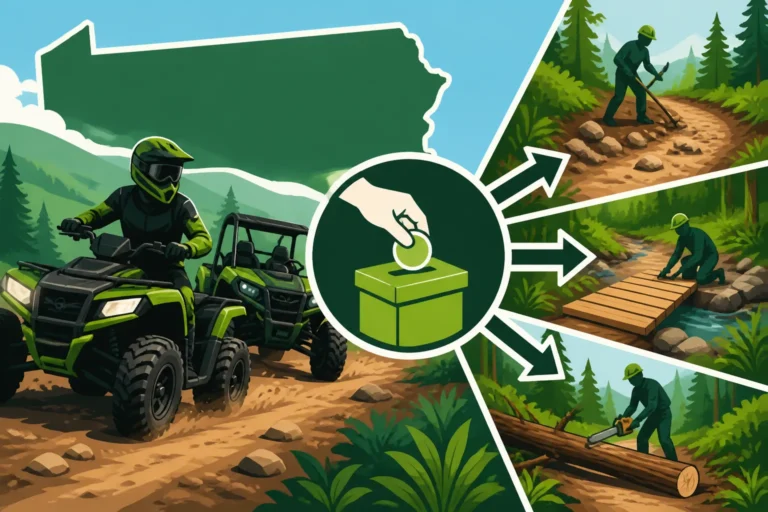
Even if your out-of-state registration is fully honored through reciprocity, or you've obtained a Pennsylvania registration, you're not entirely off the hook. To ride on Pennsylvania's state forest trails, you will almost certainly need a separate Pennsylvania ATV Trail Permit. This is distinct from your machine's registration and directly supports the maintenance and development of the extensive state trail system.
The most common permit is the [Pennsylvania's Northcentral Regional Trail Permit], which covers nearly 1,000 miles of trails across four counties. There's also a specific permit required for riding in the Allegheny National Forest, managed by the U.S. Forest Service. These permits are typically purchased annually and are required for every machine that uses the trails. Nonresident fees for these permits are often higher than for residents, reflecting the state's investment in these recreational opportunities. Always check the DCNR website or the specific trail system's requirements before you go, as fees and application processes can change. Carrying your permit is just as important as carrying your registration, as rangers will check for both.
Youth Riders and Safety Certificates
Pennsylvania has a strong emphasis on ATV safety, especially for younger riders. These rules apply universally, whether you're a resident or a visitor. If you have a child between the ages of 8 and 15 who will be operating an ATV on public lands, they must possess a valid Pennsylvania ATV Safety Certificate. [Pennsylvania ATV Safety Certificate Requirements] are mandatory, and even if your child has an equivalent certificate from your home state, Pennsylvania may or may not accept it through reciprocity. It's often safer to ensure they have the Pennsylvania certificate or verify acceptance of their home-state certification directly with DCNR.
Riders under 8 years old are generally prohibited from operating ATVs on public lands, and there are specific engine displacement limits (e.g., a 70cc cap for ages 8 and 9) to ensure machines are appropriately sized for young operators. Supervision rules also apply, requiring an adult to oversee younger riders. These regulations are in place to protect children and ensure they have the skills and knowledge to ride safely on potentially challenging trails.
Special Cases: Moving to Pennsylvania or Extended Stays
What if your "visit" turns into a permanent move, or you plan an extended stay, perhaps for a hunting season at a remote cabin? If you become a Pennsylvania resident, or if your machine will be kept in Pennsylvania for a significant period (e.g., at a hunting camp for months), you will need to register your ATV in Pennsylvania. The initial reciprocity might cover a short visit, but establishing residency or storing the machine long-term in the state typically triggers the full Pennsylvania registration requirement.
The process for [Pennsylvania ATV Registration After Moving to the State] is similar to registering as a nonresident without reciprocity, but it confirms your new status as a resident. It's important not to try and skirt these rules, as prolonged use of an out-of-state plate while being a de facto resident could lead to fines and complications. When in doubt, always err on the side of full compliance to ensure your machine is legal for all your Pennsylvania adventures.
Avoiding Penalties and Ensuring a Smooth Trip
No one wants their outdoor adventure to end with a citation or a confiscated machine. Understanding Pennsylvania's enforcement policies and taking proactive steps to ensure compliance can save you from costly fines and unnecessary stress. Pennsylvania's DCNR rangers and local law enforcement are vigilant in enforcing ATV regulations to maintain safety and preserve trail systems.
The Consequences of Riding Unregistered or Without a Permit
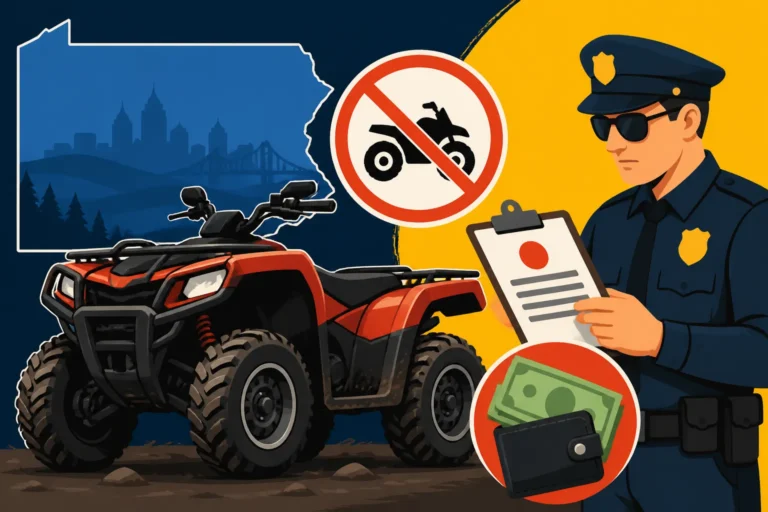
Riding an ATV or UTV in Pennsylvania without proper registration or, if required, without a valid trail permit, can lead to significant penalties. The state takes these regulations seriously, and ignorance of the law is generally not a valid defense. Fines for operating an unregistered ATV can be substantial, often starting at around $300 for a first offense, plus court costs. [Pennsylvania Fines for an Unregistered ATV] can quickly add up, making a supposedly "free" ride incredibly expensive.
Beyond monetary fines, repeated violations or severe infractions could potentially lead to the impoundment of your machine. This not only incurs towing and storage fees but also creates a massive headache trying to retrieve your ATV, especially if you're an out-of-state visitor. Furthermore, riding on restricted or closed trails, or operating unsafely, can also lead to citations, regardless of your registration status. These rules are in place for safety, environmental protection, and ensuring a positive experience for all trail users.
Proactive Steps for a Worry-Free Ride
Planning is your best friend when it comes to enjoying Pennsylvania's ATV trails as a nonresident. A little preparation can prevent a lot of problems down the line. Here are some key proactive steps:
- Verify Reciprocity Annually: Before each trip, check the official DCNR website or call their Snowmobile and ATV Section. Confirm that your home state's registration is still honored in Pennsylvania. Don't rely on old information or forum posts.
- Gather All Documents: Before you even load up your trailer, make sure all your paperwork is in order. This includes your home-state registration card, proof of insurance, photo ID, and any safety certificates for youth riders. Having a robust bill of sale, perhaps created using a service like LawDepot, can smooth over potential questions about ownership or sales tax if you ever need to clarify how you acquired your machine. Keep all these documents in a waterproof holder that's easily accessible on your person or machine. [Carrying Proof of an Out-of-State Registration] is non-negotiable.
- Obtain Trail Permits: If you plan to ride on state forest trails, purchase your [Pennsylvania ATV Trail Permit Cost] well in advance. These can often be bought online through the DCNR portal. Do not assume your registration covers trail access – it rarely does.
- Know the Rules of the Trail: Familiarize yourself with Pennsylvania's specific ATV laws and trail etiquette. This includes speed limits, noise restrictions, passenger rules, and rules about riding with headlights or tail lights. Even if your registration is valid, violating trail rules can lead to citations.
- Check Trail Status: Before heading out, check the DCNR website for trail conditions and any closures. Trails can close due to weather, logging operations, or other events, and riding a closed trail is a serious violation.
By being diligent and prepared, you can avoid the common pitfalls many nonresidents encounter. Your goal is to create memories on Pennsylvania's incredible trails, and that starts with making sure your machine is legal and ready to roll.
Disclaimer
This article is for general informational purposes only and does not constitute professional advice. Laws, prices and regulations vary by location and change over time. Consult a qualified professional for guidance on your specific situation.