Pennsylvania Fines for an Unregistered ATV
It’s an amazing feeling to hit the trails on your ATV or UTV, exploring Pennsylvania’s incredible landscapes. But that excitement can quickly turn into a gut punch if you're pulled over and discover your machine isn't properly registered. The fines for an unregistered ATV in Pennsylvania aren't just a minor inconvenience; they can be substantial and truly put a damper on your riding season. This guide will walk you through the specifics of these fines, where you're most likely to encounter enforcement, and most importantly, how to ensure your machine is always street legal (for designated roads, of course!) and trail-ready, helping you avoid those costly penalties altogether.
The Harsh Reality: Pennsylvania's Unregistered ATV Fines
Let's not sugarcoat it: riding an unregistered ATV or UTV in Pennsylvania can be a costly mistake. The state takes its registration requirements seriously, and for good reason—it helps manage trail systems, funds upkeep, and ensures accountability. When you skip that crucial step, you're not just bending the rules; you're risking a significant hit to your wallet.
Automatic $300 Fine for No Registration
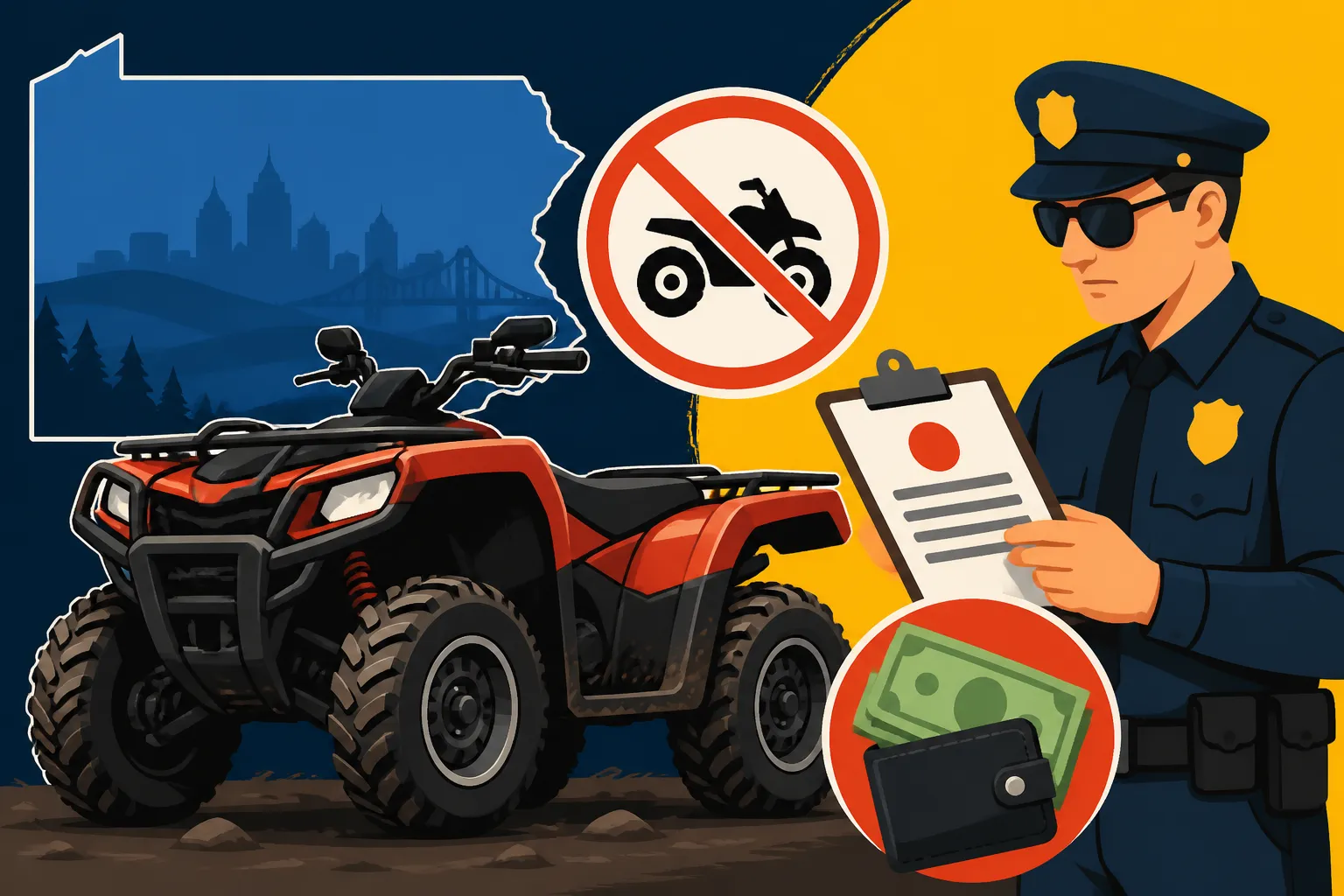
The first thing to understand is that Pennsylvania doesn't mess around when it comes to riding without proper registration. If you're caught operating an unregistered ATV or UTV on any public land, designated trail, or even certain private lands where public access is permitted, you're looking at an immediate, automatic fine. This isn't a "maybe" or a warning; it's a fixed penalty designed to deter unregistered operation. Think of it as an instant tax on your oversight.
This $300 fine can surface in many scenarios. Perhaps you're enjoying a beautiful day at a state forest trail, like those found in Sproul State Forest, only to have a DCNR ranger pull up and ask for your paperwork. Or maybe you're traversing a designated joint-use road trying to get to a trailhead. Any official encounter where your registration isn't valid or present can trigger this penalty. It’s a bitter pill to swallow when you consider that registration itself is a fraction of that cost, and ensures you're riding legally and contributing to the very trails you enjoy. The immediate financial burden can certainly ruin what was supposed to be a fun day out.
Escalating Costs: First and Second Offense Fines
While that initial $300 fine is certainly significant, it's often just the beginning if you're a repeat offender. Pennsylvania's legal framework allows for escalating penalties, meaning that subsequent infractions can lead to even higher fines. The state views continuous operation of an unregistered vehicle as a serious disregard for regulations and safety, and they're prepared to enforce it with increasing severity. It’s not just a one-and-done situation; persistent non-compliance will be met with harsher consequences.
Imagine you received a citation last year for an unregistered machine, paid the fine, but then forgot to renew your registration. Getting caught again means you’re facing a second offense. While I can't give specific current figures, these subsequent fines are designed to be more punitive, ensuring that riders understand the importance of compliance. This system is in place to encourage all ATV and UTV owners to be diligent about their registration status. It's a clear signal that Pennsylvania expects you to keep your paperwork in order and not repeatedly put the burden on enforcement to remind you.
The Hidden Costs: Cost of Prosecution
Beyond the initial fine, many riders are surprised to learn that the "ticket price" isn't the total sum they'll have to pay. Every citation in Pennsylvania comes with additional "cost of prosecution" fees. These aren't usually mentioned on the initial ticket but are tacked on by the court system. These charges cover administrative expenses, court processing fees, and other legal overhead associated with handling your case. Suddenly, that $300 fine can balloon significantly once all these hidden costs are added in, sometimes pushing the total much higher than anticipated.
These costs are often non-negotiable and must be paid in addition to the base fine. It means that what might seem like a simple citation can quickly become a much larger financial drain. Ignoring these costs can lead to further legal complications, including potential warrants or license suspensions, depending on the severity and your jurisdiction. It’s a sobering reminder that taking shortcuts with registration can lead to a tangle of expenses and headaches far greater than the simple act of registering your machine correctly in the first place. You'll find these costs itemized if you have to go before a magistrate, clearly demonstrating that [Cost of Prosecution on Top of a Fine] makes an already unpleasant situation even worse.
Where You're Most Likely to Get Caught and Fined
Knowing the fines is one thing, but understanding where and how you might get caught is equally important. Enforcement isn't always obvious, and rangers and local authorities have specific strategies and locations where they actively check for compliance. Being aware of these common scenarios can help you stay vigilant and ensure you're always riding legally.
Trailhead Checks and Random Patrols
One of the most common places for enforcement is right at the entrance to popular trail systems or along the trails themselves. DCNR rangers are frequently present at major trailheads across Pennsylvania, like those leading into Whiskey Springs or Bloody Skillet, performing routine checks. They might simply greet riders and ask to see their registration, safety certificate, and insurance. What starts as a friendly interaction can quickly turn serious if your paperwork isn't in order. These checks are not just random; they are often targeted during peak riding weekends or seasons when trail usage is highest.
Furthermore, these rangers and local law enforcement officers also conduct active patrols on the trails. They ride ATVs and UTVs themselves, blending in with other riders, making it difficult to spot them until they're right behind you. They're looking for everything from unsafe riding practices to, you guessed it, expired or missing registration. A simple stop to chat about trail conditions can evolve into a check of your [Pennsylvania ATV Plates and Where They Mount] and your wallet card. These regular patrols at popular spots like [Registration Checks at Bloody Skillet] are a critical part of DCNR’s strategy to maintain order and safety on public lands.
Roadside Stops on Designated Routes
While ATVs are generally not street legal in Pennsylvania, there are specific designated joint-use roads where they are permitted to operate. These roads are typically managed by townships or the DCNR and are clearly marked with signage. However, just because you're on a designated road doesn't mean you're exempt from registration requirements. In fact, it often means quite the opposite. When riding on any of [Pennsylvania's Designated ATV Roads], you're sharing the road with other vehicles, and this increases your visibility to all law enforcement, not just DCNR rangers.
Local police and state troopers, familiar with the rules for these mixed-use routes, can and do pull over ATV and UTV operators. A stop might be initiated for a variety of reasons—perhaps you briefly exceeded a speed limit, made an improper turn, or were observed operating erratically. Once stopped, an officer will inevitably ask for your identification and vehicle registration. If your ATV isn't properly registered for public land use (typically through a [Pennsylvania's General Registration for Everywhere Else]), you'll be cited. It’s a scenario where a minor traffic infraction can expose a larger registration issue, leading to fines you might not have anticipated.
Riding on Game Lands or Other Restricted Areas
Pennsylvania has vast expanses of State Game Lands, managed by the Pennsylvania Game Commission. These lands are primarily for hunting, trapping, and other wildlife-related activities, and generally, ATV use is strictly prohibited. There are very limited exceptions, such as those granted by an [Applying for a Disabled Access Route Permit], but even in those rare cases, your machine still needs to be properly registered with DCNR if it's being operated off your own private property.
Riding your unregistered ATV or UTV on Game Lands is essentially a double whammy. Not only are you likely to face fines for trespassing or operating a motor vehicle in a restricted area, but you'll also almost certainly be cited for the lack of registration. Game Wardens are keenly aware of the rules governing these areas and are diligent about enforcement. Similarly, there are other sensitive areas, like certain state parks or private lands without explicit permission, where an unregistered machine is an immediate red flag. The fines in these situations can stack up quickly, making a casual ride incredibly expensive. Always know the rules of the land you're on, and always ensure your machine is registered appropriately for where you intend to ride.
Avoiding the Fines: The Importance of Proper Registration
The good news is that avoiding these hefty fines is entirely within your control. It simply requires understanding Pennsylvania's registration system and taking the necessary steps to keep your ATV or UTV compliant. It's a small investment of time and money that pays off immensely by preventing stress, legal trouble, and unexpected expenses.
Understanding Pennsylvania's Registration Types
Pennsylvania offers two main types of ATV registration, and choosing the correct one is fundamental to staying legal. Many riders get tripped up here, not realizing there’s a distinction based on where you plan to ride. The first is [Pennsylvania's Limited Registration for Your Own Land], which is essentially a free, permanent registration that allows you to operate your ATV only on your own private property or land where you have explicit permission. This type of registration comes with a small, permanent plate that doesn't expire. However, it explicitly prohibits you from riding on state-owned land, designated trails, or public roads.
The second type, and the one required for most recreational riders, is [Pennsylvania's General Registration for Everywhere Else]. This registration is for machines you intend to ride on state-designated ATV trails, state forest lands that permit ATVs, and any joint-use roads. This registration involves a fee and is valid for a specific period, typically two years. It's the one that gives you access to the vast network of trails across the state. Understanding the difference between [Pennsylvania's Limited and General Registrations] is your first step; don't assume a "limited" plate means you're good to go on public trails, because it absolutely does not.
The Registration Process: What You Need to Do
Once you know which type of registration you need, the actual process is straightforward, though it requires attention to detail. The Pennsylvania Department of Conservation and Natural Resources (DCNR) handles ATV and UTV registration, not PennDOT. To [Registering an ATV in Pennsylvania], you'll generally need proof of ownership (like a title or bill of sale), proof of sales tax payment (or an exemption), and verification of your machine's Vehicle Identification Number (VIN). If you purchased your ATV through a private sale, ensuring you have a proper bill of sale is absolutely crucial for registration, as it proves your ownership and sale price. Resources like LawDepot can provide templates for creating a legally sound document, helping you prove ownership and sales tax payment when you complete Form DCNR-43.
You can often register your ATV or UTV in person at a DCNR office, through the mail, or increasingly, through their online portal. The [Registering Online at Pennsylvania's DCNR Portal] has made it more convenient for many riders. Make sure to gather all your paperwork in advance. A good starting point is to refer to a comprehensive [Pennsylvania ATV Registration Paperwork Checklist], which outlines everything you'll need. This preparation will save you headaches and potential delays in getting your machine legally plated and ready for the trails.
Keeping Your Registration Current and Accessible
Getting registered is a great start, but it's not a one-and-done deal for general registration. Your registration has an expiration date, and it's your responsibility to [Renewing a Pennsylvania ATV Registration] before it lapses. Operating with an expired registration is essentially the same as riding with no registration at all in the eyes of the law, and it carries the same potential for fines. The DCNR typically issues a two-year registration, so mark your calendar or set a reminder to ensure you don't miss the renewal window.
Beyond keeping it current, you must always have proof of your registration with you when you ride. Pennsylvania issues a small wallet card that serves as your proof of registration, and it's essential to carry this whenever you're operating your ATV off your own private property. While the plate and sticker on your machine are visible indicators, rangers will often ask for the physical card. Think of it like your driver's license for your ATV. This [Why Both Pennsylvania Registrations Include a Wallet Card] is compact and designed to be easily carried, perhaps in a waterproof holder. If a ranger asks for your documents and you can't produce the card, it could lead to further questions or even a citation, even if your machine is technically registered.
Here's a quick overview of potential costs if you're caught:
| Offense Type | Initial Fine | Plus Cost of Prosecution (Estimate) | Total Potential Cost (Estimate) |
|---|---|---|---|
| Riding Unregistered (First) | $300 | $150 – $250 | $450 – $550 |
| Riding Unregistered (Second) | Higher* | Higher* | Substantially Higher* |
| Expired Registration | $300 | $150 – $250 | $450 – $550 |
| No Proof of Registration | Discretionary | Varies | Varies |
*Specific amounts for subsequent offenses and exact cost of prosecution vary and are determined by local jurisdiction and prevailing fee schedules.
Disclaimer
This article is for general informational purposes only and does not constitute professional advice. Laws, prices and regulations vary by location and change over time. Consult a qualified professional for guidance on your specific situation.