Switching From Limited to General in Pennsylvania
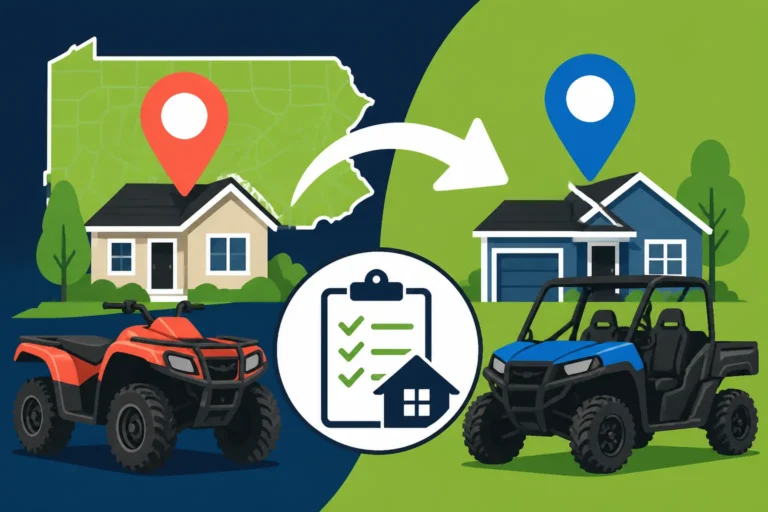
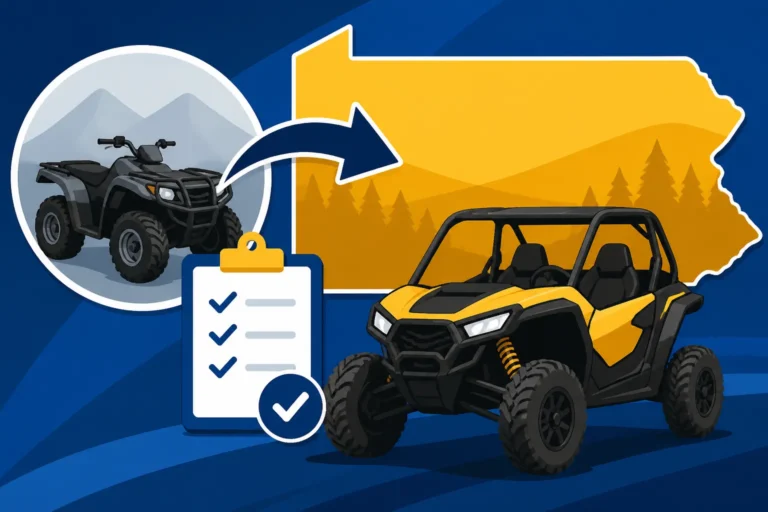
It's a common scenario in Pennsylvania: you bought your ATV or UTV with the best intentions, thinking you'd mostly stick to your own property or a friend's private land. You opted for the [Pennsylvania's Limited Registration for Your Own Land], which made perfect sense at the time. But now, the open call of Pennsylvania's vast state forest trails, exciting riding parks, or even organized poker runs is getting louder. You realize that your current registration limits where you can ride, leaving you with that frustrating feeling of being stuck on the sidelines. This guide is here to walk you through the entire process of switching your ATV or UTV registration from limited to general in Pennsylvania, ensuring you're ready for any adventure the state throws your way.
Understanding the Two Flavors of Pennsylvania ATV Registration
Before diving into the switch, it’s crucial to truly grasp the distinction between Pennsylvania's two ATV registration types. Many riders initially pick one without fully understanding the nuances, only to find themselves wanting more later on. It’s not just about the sticker; it’s about where you’re legally allowed to venture.
Pennsylvania's Limited Registration: Your Private Playground Pass
Think of limited registration as your exclusive pass to private property. This is the registration type most people opt for when they know their riding will be confined to their own acreage, their buddy’s hunting camp, or other land where they have explicit permission. It's often seen as the simpler, more affordable option because it has fewer requirements and restrictions compared to its general counterpart.
With a limited registration, the Commonwealth acknowledges your machine, but it’s not set up for public land use. You'll receive a special [The Plate Pennsylvania Gives Limited Registrants] which differentiates your machine from those with general registration. This setup is perfect for the farmer using a quad to check fences, the hunter hauling gear on their own vast property, or the weekend warrior who simply enjoys tearing up their backyard track without venturing further. The peace of mind that comes with knowing you're legal on your personal stomping grounds is valuable, but it's important to remember that this legal status doesn't extend beyond those boundaries. You're essentially telling the state, "This machine stays on private dirt."
Pennsylvania's General Registration: Opening Up Public Trails
General registration, on the other hand, is your key to the wider world of Pennsylvania's ATV riding opportunities. This is the standard registration for anyone planning to ride on state-designated trails, such as those found in state forests, approved municipal trails, or private riding parks that require state registration. If you've ever dreamt of tackling the challenges of the Anthracite Outdoor Adventure Area (AOAA), exploring the vast expanses of the Sproul State Forest trails, or joining an organized ride that traverses public lands, general registration is non-negotiable.
This registration type not only grants you access to these public lands (often in conjunction with a trail permit, which is a separate but related requirement for many state forest trails), but it also means your machine meets the broader legal requirements for operation beyond private property. With general registration, your ATV or UTV receives [The Sticker Pennsylvania Adds to General Registration] to be affixed to your plate, signifying its readiness for public adventure. It’s a declaration that your machine is ready for anything from a leisurely cruise through a state park to a challenging day on a rocky mountain trail. [Pennsylvania's General Registration for Everywhere Else] is truly about embracing the full spectrum of riding possibilities available in the state.
Why You Might Need to Switch to General Registration
The decision to switch from limited to general registration often stems from a change in riding habits or aspirations. What once seemed sufficient for your needs might now feel like a straitjacket, holding you back from new experiences. This realization typically hits after seeing friends’ photos from epic trail rides or discovering a new, exciting riding destination.
Expanding Your Riding Horizons
The primary reason most riders make the switch is to access the vast network of public ATV trails across Pennsylvania. Imagine the frustration of hearing about a fantastic new trail system opening up, only to remember your limited plate prevents you from joining in the fun. With a limited registration, you’re excluded from state forest trails like those in the Bald Eagle State Forest, Tiadaghton State Forest, or the popular Whiskey Springs and Bloody Skillet trails. You can't even visit popular pay-to-ride parks like the AOAA or Rock Run Recreation Area, as they require machines to be fully state-registered for public use.
Switching to general registration means you can pack up your machine, head to a state forest staging area, and confidently hit the trails, knowing you’re fully compliant with Pennsylvania law. This opens up hundreds of miles of diverse terrain, from challenging rocky climbs to scenic forest paths, transforming your riding experience from confined to limitless. It’s about more than just legal access; it’s about joining the larger ATV community and experiencing the freedom of Pennsylvania’s incredible outdoor recreation opportunities.
Selling Your Machine to a Public Land Rider
Another common trigger for switching registration is the intent to sell your ATV or UTV. If you plan to sell your machine to someone who wants to ride it on public trails, having general registration can make the sale much smoother. While the new owner could certainly register it themselves, presenting a machine that's already set up for public use is a significant selling point. It tells potential buyers that the machine is ready to go, without them having to worry about an additional step in the registration process.
Even if a buyer intends to keep it on private land, a general registration offers more flexibility and higher resale value. It shows that the machine has met the more stringent requirements for public operation, potentially indicating a well-maintained vehicle. While [Pennsylvania ATV Registration After Moving to the State] or [Registering After a Private Sale in Pennsylvania] covers the new owner's process, making it easier for them can only help your sale. Think of it as preparing your machine for its next chapter, ensuring it's as attractive as possible to a wide range of potential buyers, not just those who only ride private property.
The Step-by-Step Process for Switching Registration
So, you're ready to make the leap and unleash your ATV or UTV onto Pennsylvania's public trails! The process for switching from limited to general registration is straightforward, handled by the Pennsylvania Department of Conservation and Natural Resources (DCNR). It primarily involves filling out a form and submitting it with the necessary fees.
Filling Out Form DCNR-43
The key document for this process is DCNR Form-43, also known as the "Application for Certificate of Title and Registration for All-Terrain Vehicles and Snowmobiles." Don't let the "Certificate of Title" part throw you off if you already have a title; this form serves multiple purposes, including registration changes. You can usually find this form on the DCNR's official website, or you can request one by mail or pick one up at a DCNR office.
When filling out Form DCNR-43, you’ll need to clearly indicate that you are requesting a change in registration type. You'll fill in your personal information, the machine's details (VIN, make, model, year), and your current limited registration number. There will be a specific section or box to check to request the switch to general registration. Be meticulous here; any errors or omissions could delay your application. It’s a good idea to double-check every field before submitting. If you’re unsure about any section, don’t hesitate to use the [Pennsylvania ATV Registration Help Line] for clarification. While DCNR has its specific forms, if you've recently had a private transaction that perhaps wasn't fully documented and you need to clarify ownership for any reason, a service like LawDepot could provide templates for a comprehensive bill of sale or affidavit to ensure your personal records are robust, even if it's not a direct DCNR requirement for the registration switch itself. Such supporting documents, even if for your own peace of mind, make any future transaction or clarification easier.
Required Documents and Fees
Along with your completed DCNR Form-43, you'll need to include a few other items to ensure a smooth transition:
- Proof of Ownership: This typically means your original Certificate of Title. If you're simply changing registration type and you're the titled owner, this should be straightforward.
- Current Limited Registration Card: You’ll need to surrender your existing limited registration card. This tells DCNR you're actively moving from one status to another, not trying to maintain both.
- Payment for Fees: There's a fee associated with switching to general registration. While specific figures can change, [Why General Registration Costs $20] is a factor to consider in the overall [Pennsylvania ATV Registration Cost]. This fee covers the administrative costs of processing your request and issuing your new general registration. Make sure your payment method (check or money order, generally) is correct and made out to the proper entity, usually "Commonwealth of Pennsylvania" or "DCNR." Remember, like any administrative process, there is a fee, and this helps cover the state's cost for managing the trail system and registration process.
When compiling your package, it’s always a good idea to make copies of everything for your records. Consider using a [Pennsylvania ATV Registration Paperwork Checklist] to ensure nothing is missed. This simple step can save you a lot of hassle down the road if there's ever a question about your submission.
What Happens After You File Your Switch
Once you've carefully filled out the form, gathered your documents, and secured your payment, you'll send it all off to DCNR. The waiting game can be a bit frustrating, but knowing what to expect can help ease the anxiety.
Processing Time and Confirmation
After DCNR receives your application, it will enter their processing queue. The [How Long Pennsylvania Takes to Process a Registration] can vary depending on the time of year, with peak seasons (like spring before trail openings) potentially seeing longer waits. Generally, it can take a few weeks for them to process the switch.
Once approved, you won't receive your limited registration card back. Instead, you'll get a brand new general registration card, often referred to as a "wallet card," which you should carry with you whenever you ride. You will also receive a new registration sticker designed to be affixed to your existing ATV plate. This new sticker is the visual confirmation that your machine is now registered for general use. In some cases, depending on the age and condition of your plate, DCNR might issue a completely new plate, but usually, it's just the sticker change. This whole process ensures you have valid proof for law enforcement and trail officials. [Why Both Pennsylvania Registrations Include a Wallet Card] emphasizes the importance of always having this proof readily available.
Receiving Your New Sticker and Plate (If Applicable)
Your existing physical ATV plate, which might currently signify limited registration, will be updated by adding the new general registration sticker. The sticker needs to be placed correctly on the plate, usually in a designated spot, to ensure it's visible and valid. [Where the Sticker Goes on the Plate] is something to pay attention to when it arrives. This new sticker is your green light for public trails.
If, for some reason, your existing plate is damaged or lost, this might be the time to get a replacement, which would then come with the general registration sticker already on it. Replacing a plate is a separate but related process, so ensure you clarify this with DCNR if you believe your plate is not in good condition. The goal here is a clear, visible plate with the correct, current general registration sticker. Remember, having the correct plate and sticker is critical; riding with an expired or incorrect registration can lead to [Pennsylvania ATV Registration Fines].
Common Pitfalls and How to Avoid Them
Even with a straightforward process, there are always a few bumps in the road that riders can encounter. Knowing these ahead of time can help you navigate the switch smoothly and avoid unnecessary delays or frustration.
Incomplete or Incorrect Forms
One of the most frequent reasons for delays in registration processing is an incomplete or incorrectly filled-out DCNR Form-43. It’s easy to overlook a small box or misspell a name, but these errors can send your application right back to you, wasting precious time.
To avoid this:
- Read Everything Carefully: Before you even start writing, read through the entire form once or twice. Understand what each section is asking.
- Use Blue or Black Ink: Always use clear, legible blue or black ink. Pencil or other colors might not scan well or could be seen as unofficial.
- Fill Out All Relevant Sections: Even if a section seems minor, if it applies to your situation, complete it. If it truly doesn’t apply, consider writing "N/A" rather than leaving it blank, which can sometimes be interpreted as an oversight.
- Double-Check VIN and Numbers: The Vehicle Identification Number (VIN) is critical. Match it exactly to your machine's frame and your title. Any discrepancy here will cause a major holdup.
- Review Before Sending: Have someone else, perhaps a trusted friend or family member, review your completed form. A fresh pair of eyes can often spot mistakes you’ve overlooked. This diligence helps DCNR process your request efficiently, meaning you get on the trails faster.
Forgetting to Surrender the Old Registration Card
When you switch from limited to general registration, you are effectively invalidating your limited registration. DCNR needs that old card back to finalize the change. Forgetting to include it with your application is a common oversight that will definitely cause a delay.
Make it a part of your checklist:
- Fill out DCNR Form-43.
- Gather your title.
- Include your payment.
- Enclose your old limited registration wallet card.
Think of it as trading in your old license for a new one; the old one needs to be retired. If you've lost your limited wallet card, you might need to contact DCNR beforehand to explain the situation and ask for guidance. There may be an additional step or form required to attest to the lost card. Handling this upfront prevents the headache of your application being returned weeks later.
| Step | Action | Potential Pitfall | How to Avoid |
|---|---|---|---|
| 1. Obtain Form DCNR-43 | Download from DCNR website or request by mail. | Using an outdated version of the form. | Always get the form directly from the DCNR website to ensure you have the most current version. |
| 2. Fill Out Form | Complete all sections with accurate information, checking "change registration type." | Incomplete fields, incorrect VIN, illegible handwriting, failing to mark the "change type" box. | Read instructions thoroughly, use blue/black ink, double-check VIN against title/machine, mark the correct box for "change from limited to general," and have someone else review. |
| 3. Gather Documents | Your Certificate of Title, current limited registration card. | Forgetting to include the limited registration card, or submitting a copy instead of the original title (if required). | Crucially, include your original limited registration card. Ensure you include the original title, or a clear copy if only a copy is requested (always check current DCNR instructions, but typically, an original title is required for a title change, not just registration type). |
| 4. Prepare Payment | Check or money order for the correct fee amount. | Incorrect fee amount, wrong payee, expired check. | Verify the current fee on the DCNR website or by calling. Make sure the check is current and payable to "Commonwealth of Pennsylvania" or "DCNR." |
| 5. Submit Application | Mail to the DCNR Bureau of Forestry, Snowmobile/ATV Section. | Mailing to the wrong address, not using certified mail for tracking. | Confirm the mailing address on the DCNR website. Consider using certified mail with return receipt to track your application. |
| 6. Await Processing | DCNR processes your application. | Impatience leading to premature inquiries, not knowing processing times. | Allow ample time (several weeks) for processing, especially during peak seasons. Check the DCNR website or contact the help line after the estimated processing window. |
| 7. Receive New Items | New general registration card (wallet card) and sticker for your plate. | Misplacing the new card/sticker, not affixing the sticker correctly. | Keep the wallet card with you when riding. Affix the sticker to your plate as instructed, ensuring it's visible and secure. |
Cost Implications and Renewals
Understanding the financial aspect of switching registration is just as important as knowing the paperwork. While the immediate cost might seem small, the long-term implications for renewals and other associated expenses are worth considering.
The Cost of General Registration
When you switch from limited to general registration, you'll incur the standard fee for a new general registration. [Pennsylvania General Registration Cost] is higher than limited registration, primarily because it contributes to the larger fund that supports the state’s trail systems and administrative oversight of public ATV use. This fee is a crucial part of [What Pennsylvania ATV Fees Pay For], directly supporting trail maintenance, enforcement, and education efforts that benefit all riders.
It’s not just a charge; it's an investment in the trails you'll soon be enjoying. While specific numbers can fluctuate, expect to pay the stated general registration fee at the time of your application. This fee covers a two-year registration period, consistent with all Pennsylvania ATV registrations. Always check the DCNR website or call their help line for the most current fee schedule before sending in your application. Budgeting for this ensures there are no surprises when you mail in your paperwork.
Renewing Your General Registration
Once you've successfully switched to general registration, your ATV or UTV will then operate on a two-year renewal cycle. This is the same cycle as all other general registrations in Pennsylvania. You won't go back to the limited registration cycle or have any staggered renewal dates because of the switch. DCNR will typically send you a renewal notice in the mail as your expiration date approaches, making it easy to keep your registration current.
The renewal process for general registration is similar to the initial application, often requiring an updated form and the current general registration fee. You can usually renew online through the [Renewing Through the DCNR Portal] or by mail. It’s important to stay on top of your renewal dates to avoid any lapse in registration, which could lead to fines if you're caught riding on public trails with an expired tag. Setting a reminder on your calendar or phone can be a simple way to ensure you never miss a renewal date and can continue enjoying Pennsylvania's diverse riding opportunities without interruption.
Disclaimer
This article is for general informational purposes only and does not constitute professional advice. Laws, prices and regulations vary by location and change over time. Consult a qualified professional for guidance on your specific situation.