Tracing a VIN From the Frame
It's incredibly frustrating when you're trying to register or title your ATV or UTV in Pennsylvania, and you realize the VIN on your paperwork is either missing, unreadable, or simply doesn't match what's on the machine itself. This guide is all about helping you overcome that hurdle by showing you exactly how to locate and accurately trace the Vehicle Identification Number directly from your machine's frame, ensuring you have the correct information for all your DCNR dealings.
Why Finding the VIN on the Frame is So Important
The VIN isn't just a random string of numbers and letters; it's the unique identifier that gives your ATV or UTV its legal identity. Without a clear, verifiable VIN, you're going to hit a brick wall when trying to navigate the registration and titling process here in Pennsylvania.
The VIN as Your Machine's Identity
Think of the VIN as your machine's fingerprint. Every ATV or UTV has one, and no two are exactly alike. This 17-character code tells you who manufactured it, where it was made, the engine type, model year, and even a unique serial number. When you're dealing with the Pennsylvania DCNR (Department of Conservation and Natural Resources) for registration, or if you ever need to apply for a title, this VIN is absolutely paramount. If the VIN on your bill of sale, old title, or even an existing registration card is unclear, incomplete, or simply gone, the DCNR will require you to provide a verifiable VIN from the machine itself. This is especially true if you're trying to register a machine for the first time or if you're like many riders in Pennsylvania who bought a quad without perfect paperwork. It’s a vital step on your [Pennsylvania ATV Registration Paperwork Checklist].
Common Reasons You'd Need the Frame VIN
There are a handful of scenarios where you'll find yourself needing to physically locate and verify the VIN stamped on your ATV or UTV's frame. Perhaps you bought an older machine from a private seller, and the title was lost years ago, or maybe the previous owner never even titled it in the first place. Sometimes, the VIN on a manufacturer's sticker might have faded or been damaged over time, rendering it unreadable. You might also be trying to register a machine that's been sitting in a barn for ages, or you're simply performing due diligence before a purchase and want to check for any discrepancies. When you're [Registering After a Private Sale in Pennsylvania], especially without a pristine title, tracing the VIN from the frame becomes a non-negotiable step to confirm the machine's true identity and legality.
Where to Look for the VIN on Your ATV or UTV Frame
Finding the VIN on the frame can feel like a scavenger hunt, but manufacturers tend to place them in predictable, albeit sometimes hard-to-reach, locations. Knowing where to start looking can save you a lot of time and frustration.
Typical ATV VIN Locations
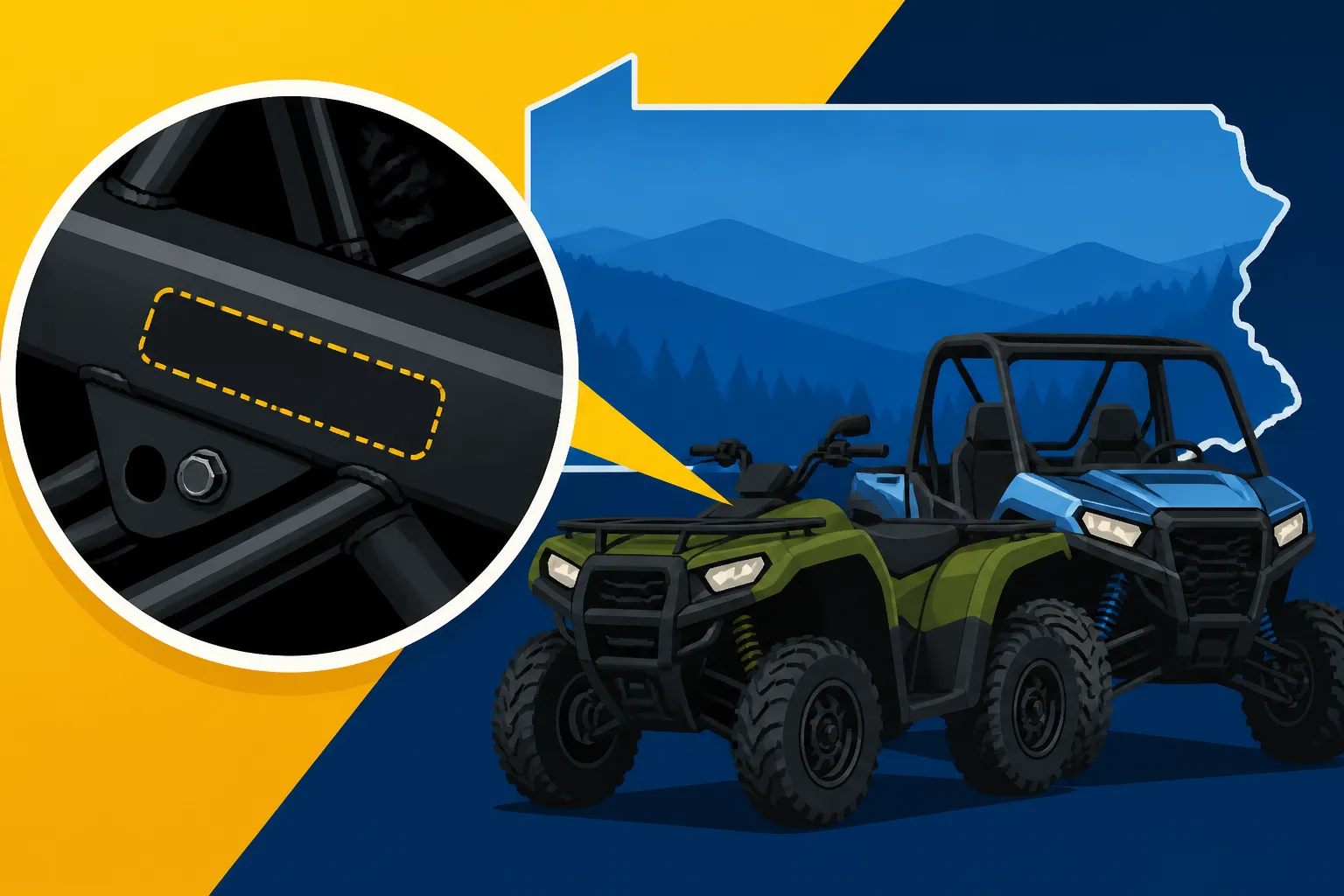
For most ATVs, the VIN is usually stamped directly into the frame itself, not on an easily removable plate. The most common spot, and usually the first place to check, is the front frame tube, specifically near the steering neck. You'll often find it on the right-hand side, just below the handlebars, where the steering column goes into the frame.
Another frequent location is on the left-hand lower frame rail, often somewhere around the footpeg area. It might be tucked away, requiring you to bend down and peer closely. Sometimes, manufacturers will stamp it on a crossmember or structural part of the frame located under the seat, or even further back toward the rear axle. Because ATVs get ridden hard and put through their paces, these areas can get caked with mud, dirt, and even surface rust, making the VIN hard to spot at first glance. It's a good idea to bring a flashlight and perhaps a small brush to help clear away any debris.
Typical UTV VIN Locations
UTVs, or side-by-sides, being larger and more complex, often have their VINs in slightly different, though still consistent, places. A very common spot for UTVs is on the passenger side frame rail, often underneath the seat or closer to the front wheel well. You might need to remove the seat or lift a floor mat to get a good view. Some UTVs also have the VIN located on the firewall (the barrier between the engine compartment and the passenger cabin) or on a front crossmember behind the bumper.
Unlike ATVs, some UTV manufacturers might use a small VIN plate riveted to the frame rather than stamping directly into the metal, particularly on the firewall or door jamb area. Regardless, the intent is the same: to have a clearly visible, permanent identifier. Always check the primary frame structures first, as these are the most resistant to alteration.
What the VIN Looks Like
The VIN is a standardized 17-character code that uses a combination of uppercase letters and numbers. It never includes the letters I, O, or Q to avoid confusion with the numbers 1 and 0. When you're looking at a VIN stamped into the frame, it will usually be a series of clearly defined, machine-punched characters. It won't look like a handwritten number or a sticker.
Understanding this format is crucial, especially when you're performing a [Checking a VIN Before You Buy Used] and comparing it to what's on any existing paperwork. If the VIN you find doesn't have 17 characters, contains I, O, or Q, or appears crudely altered, that's a huge red flag that requires further investigation before you proceed with a purchase or registration.
Tips for Tracing and Documenting the Frame VIN
Once you've located the VIN on your ATV or UTV's frame, the next step is to accurately record it. This might sound simple, but often the VIN is in a tight spot, covered in grime, or partially obscured, requiring a bit of technique to get it right.
Cleaning and Lighting the Area
This is perhaps the most critical first step. Years of mud, dirt, oil, and even rust can accumulate over the VIN, making it completely invisible. Start by using a stiff brush or a rag to remove any loose debris. For stubborn grime, a degreaser or even a bit of WD-40 can work wonders, followed by a good wipe-down. If you encounter surface rust, a very gentle scrub with a fine-grit wire brush can help expose the numbers without damaging the underlying metal or the stamped characters. However, exercise extreme caution; you don't want to inadvertently scratch or erode the VIN itself.
Good lighting is your best friend here. A bright LED flashlight, especially one with a narrow beam, can help illuminate the stamped characters, allowing shadows to highlight the indentations. Try holding the light at different angles—sometimes a raking light (shining from the side) makes the characters pop out better than direct illumination. Don't be afraid to get down on the ground, use a creeper, or even temporarily remove a plastic fender or seat to get the best angle.
Techniques for Recording the VIN
Once the area is clean and well-lit, you'll need to accurately record the VIN. The easiest method is to simply write it down, but be extremely careful to get every character correct. Double-check for common confusions like the number "8" and the letter "B," "0" and "O," or "1" and "I" or "L." Write it down, then read it backward, and then have someone else read it as you check it.
Another time-honored technique is the pencil rubbing. Place a thin piece of paper (like tracing paper or even a regular sheet of printer paper) directly over the VIN. Then, using the side of a pencil lead (not the tip), gently rub back and forth over the paper where the VIN is located. The raised edges of the stamped characters will transfer the lead onto the paper, creating a clear impression of the VIN. This method provides physical evidence and is often requested as [VIN Proof for a Pennsylvania Registration] by the DCNR or a notary.
Taking clear, well-lit photos with your smartphone is also highly recommended. Take multiple shots from different angles, ensuring the entire VIN is visible and legible in at least one photo. These digital records can be invaluable if there's ever a dispute or if you need to submit additional proof.
What to Do if the VIN is Unreadable or Missing
This is where things can get a bit more challenging and potentially frustrating. If, despite all your efforts, the VIN is completely unreadable, or worse, appears to have been intentionally altered or removed, you'll need to take a different path.
Your first step should be to contact the Pennsylvania DCNR Snowmobile and ATV Section directly. They handle all ATV and UTV registrations and titling, and they are the authority on how to proceed with problematic VINs. You can reach out to the [Pennsylvania ATV Registration Help Line] or use the general contact methods for [Calling the DCNR Registration Line]. Explain your situation clearly and calmly. They may instruct you to bring the machine to a DCNR office for a physical inspection by an agent, or they might direct you to a Pennsylvania State Police Barracks for a VIN inspection.
In some rare cases, if a VIN is truly missing or deemed unidentifiable due to damage (and not alteration), the DCNR might have a process for assigning a new VIN, but this is an extensive process and usually only for specific situations like salvaged or homebuilt machines. Be prepared for a potentially lengthy process and understand that a machine with a completely unreadable or suspicious VIN may be difficult, if not impossible, to legally register or title in Pennsylvania. It's a situation where patience and persistence are key.
What to Do With the VIN Once You Have It
Successfully locating and accurately tracing your ATV or UTV's VIN from the frame is a significant accomplishment. But getting the VIN is just the beginning; now you need to put that information to good use to get your machine properly documented.
Filling Out Paperwork
With your verified VIN in hand, you can confidently proceed with completing the necessary forms for registration and titling. The most common form you'll encounter for Pennsylvania ATV registration is Form DCNR-43, the "Application for Certificate of Title and/or Registration for an ATV/Snowmobile." This form has dedicated sections for the VIN, and it's absolutely crucial that the VIN you write down matches exactly what you traced from the frame. Any discrepancies could lead to delays or rejection of your application. You can refer to [What Pennsylvania Asks on Form DCNR-43] for detailed instructions on filling out this form.
If you're buying or selling a machine, especially in a private sale, you'll also want to create a robust Bill of Sale. This legally binding document should clearly state the VIN, ensuring both buyer and seller have an undeniable record of the transaction. For this, resources like LawDepot can be incredibly helpful. They offer customizable templates for legal documents, including bills of sale, that you can adapt to include all the specific details required for your Pennsylvania ATV transaction, ensuring the VIN is prominently featured and correctly recorded.
Running a VIN Check
Even if you're the long-time owner, once you have that verified VIN, it’s always a good idea to run a comprehensive VIN check. This is particularly vital if you've just purchased a used ATV or UTV from a private seller, or if you're considering one. A VIN check can reveal a treasure trove of information about the machine's history, including:
- Theft Status: Is the machine reported stolen? This is critical for your own protection.
- Lien History: Are there any outstanding loans or liens against the machine? You don't want to buy someone else's debt. This is important to check if you want to avoid issues with [Pennsylvania ATV Registration With a Lien].
- Accident History: Has the machine been involved in any significant accidents or declared a total loss?
- Previous Ownership and Registration: Helps verify the seller's claims and the machine's lineage.
There are various online services that offer VIN checks, some free, some paid. While the DCNR can assist with registration validation, a commercial VIN check service often provides a more detailed report on financial and damage history. When you're creating a bill of sale through a platform like LawDepot, you might even find clauses or sections designed to address VIN verification or disclaimers regarding the machine's history, which can offer added legal protection.
Permanent Record Keeping
Finally, once you've gone through the effort of tracing the VIN and using it for registration or titling, make sure you keep a permanent, accessible record of it. Don't rely solely on the registration card or title, as these can be lost or damaged.
Keep a written copy of the VIN in a safe place, such as with other important documents. Store the photos you took of the VIN on the frame in a secure digital location, like a cloud service or an external hard drive. If you used the pencil rubbing technique, keep that physical rubbing with your other ATV/UTV paperwork.
Having these multiple records ensures that if you ever lose your title or registration card, or if the frame VIN somehow becomes unreadable in the future, you have a solid backup. Tools like LawDepot can help you create and store legally sound personal records or agreements for your machine, giving you peace of mind that all your documentation is in order and easily retrievable when you need it most.
Disclaimer
This article is for general informational purposes only and does not constitute professional advice. Laws, prices and regulations vary by location and change over time. Consult a qualified professional for guidance on your specific situation.