Looking Up a Machine’s Registration
It can be incredibly frustrating to find yourself in a situation where you need to verify an ATV or UTV's registration details in Pennsylvania, only to hit a brick wall. Maybe you're looking at a used machine and the seller seems a bit cagey about the paperwork, or perhaps you've been the victim of theft and need to give the authorities every bit of information possible. This guide is here to walk you through the realities of looking up a machine's registration in the Commonwealth, explaining what's possible, what's not, and how you can best protect yourself.
Why Would You Need to Look Up an ATV Registration in Pennsylvania?
There are a handful of scenarios where you might desperately wish you could just punch a VIN into a website and get all the registration details for a Pennsylvania ATV. While the reality is often more complex due to privacy concerns, understanding these situations helps explain why this information is so valuable.
Before Buying a Used Machine
This is probably the most common reason people want to look up an ATV's registration. Imagine you've found what looks like a great deal on an ATV online or from a private seller. The price is right, the machine looks good, but something just feels a little off. Maybe the seller only has a bill of sale and can't produce a current registration card or a title. In Pennsylvania, all ATVs need to be registered with the Department of Conservation and Natural Resources (DCNR) unless they fall under specific exemptions like [Pennsylvania's Free Limited Registration] for private land use, or if they're too old.
When you're shelling out your hard-earned cash, you want assurance that you're buying a legitimate machine. You're trying to verify ownership, confirm there aren't any hidden liens on the vehicle, and most importantly, ensure you're not inadvertently buying a stolen ATV. Without access to registration records, it feels like you're buying blind, and that's a risk no one wants to take. Being able to independently confirm the seller's story and the machine's status would bring immense peace of mind.
After a Theft or Incident
The absolute worst-case scenario: your beloved quad is gone. Stolen right out of your garage or from your trailer. Or, perhaps you were involved in an unfortunate incident on a trail, and you need to provide accurate details about the other machine involved. In these distressing moments, being able to quickly access or provide official registration information becomes critical.
Law enforcement relies heavily on accurate vehicle identification and ownership records to recover stolen property and investigate incidents. If you're the victim, providing your machine's VIN and any registration details you have from your own DCNR wallet card makes their job much easier. But what if you're trying to identify another machine, and all you have is a license plate number or a partial VIN? This is where the desire to "look up" registration becomes a matter of seeking justice or recovery. The frustration here stems from feeling helpless when you need official data the most.
General Verification or Information
Beyond buying and theft, there are other times when registration information could be useful. Maybe you're trying to join an ATV club that requires proof of registration for all machines. Or perhaps your insurance company needs to verify details about a machine for coverage, and something is unclear. While less urgent than the other scenarios, these situations still highlight the need for accurate, accessible information.
The DCNR itself, through its rangers and staff, often needs to verify registration status, especially when checking riders on state forest trails or during routine stops. They need to confirm that a machine is properly [Pennsylvania's General Registration for Everywhere Else] or [Pennsylvania's Limited Registration for Your Own Land], as applicable. If you've misplaced your own [Why Both Pennsylvania Registrations Include a Wallet Card], you might be looking for a way to confirm your own details.
The Pennsylvania DCNR as the Central Authority
In Pennsylvania, when it comes to ATVs and UTVs, the Department of Conservation and Natural Resources (DCNR) is the key agency you need to know. They handle everything from registration to trail management. Understanding their role is crucial to understanding how registration information is handled.
Why PennDOT Isn't Involved
One of the first things many new ATV owners in Pennsylvania realize, often with a little confusion, is that the Pennsylvania Department of Transportation (PennDOT) isn't the agency they'll be dealing with for their off-road machine. This is a common point of misunderstanding because PennDOT handles all the titling and registration for cars, trucks, and motorcycles that drive on public roads.
However, ATVs and UTVs are classified as "off-highway vehicles" (OHVs) in Pennsylvania. They are generally not street legal, with very limited exceptions for crossing roads or designated joint-use roads. Because they aren't primarily road-going vehicles, they fall under the jurisdiction of the DCNR, which is responsible for managing the state's natural resources, including its state forests and parks where many ATVs are ridden. This clear separation means that all official records for your quad, including its registration and title, will be found with the DCNR, not PennDOT. For more on this, you can look up [Why PennDOT Does Not Register Pennsylvania ATVs].
The Information DCNR Collects
When you register an ATV or UTV with the DCNR, you're providing a specific set of information that they keep on file. This data is essential for identifying the machine and its owner, as well as for administrative purposes.
The core piece of information for any machine is its Vehicle Identification Number (VIN). This unique serial number is like the ATV's fingerprint, tracing its origin and history. Beyond the VIN, the DCNR collects:
- Owner's Full Name: The individual or entity legally responsible for the ATV.
- Owner's Address: Where the owner resides, crucial for mailing renewal notices and other official communications.
- Machine Make, Model, and Year: Basic descriptive information about the ATV.
- Engine Size: Important for classification and youth rider regulations.
- Type of Registration: Whether it's a [Pennsylvania's General Registration for Everywhere Else] or [Pennsylvania's Limited Registration for Your Own Land].
- Title Information: If the machine has a title, the title number will also be recorded.
This comprehensive dataset allows DCNR to maintain accurate records, track machines for renewal, and assist law enforcement when necessary. It's stored in their secure database, accessible only to authorized personnel, which brings us to the next point about accessing this information.
How to Attempt to Look Up an ATV Registration in Pennsylvania
Given the DCNR is the official record-keeper, you might assume there's a simple online tool or public database to look up an ATV's registration. Unfortunately, due to privacy laws and data security, this isn't the case for private citizens.
Official Channels and Limitations
Here's the tough truth: the Pennsylvania DCNR does not offer a public-facing VIN lookup or registration search function. You cannot go to their website, type in a VIN or a plate number, and expect to get owner details or registration status. This restriction is primarily due to privacy laws, which protect personal information like names and addresses associated with vehicle registrations. Think about it: if anyone could just look up your ATV's plate number and find out where you live, that would be a significant privacy breach.
Even if you only have a license plate number, the DCNR does not provide a direct lookup service for the general public. Their database is internal, intended for administrative use, registration processing, and access by authorized law enforcement. This can be incredibly frustrating, especially if you're trying to do your due diligence before a purchase or track down information after an incident.
Situations Where Information Can Be Accessed (with caveats)
While the public is generally locked out, there are specific, legally defined scenarios where ATV registration information can be accessed. These usually involve official capacities and legitimate interests.
- Law Enforcement: This is the most common and direct route. If an ATV is stolen, involved in an accident, or used in a crime, law enforcement agencies (like the Pennsylvania State Police, local police departments, or DCNR rangers) can access the DCNR registration database. They have legal authority to do so for investigative purposes. This is why reporting a stolen machine immediately with its VIN is crucial; the police can then run that VIN through DCNR and national databases to flag it as stolen and identify its owner. They are the only ones who can truly "look up" a machine's registration on your behalf in these situations.
- Insurance Companies/Lienholders: If you have an insurance policy on your ATV, your insurance company might access their own customer records to verify details. Similarly, a financial institution that holds a lien on an ATV (meaning you financed the purchase) has a legitimate interest in the machine and might access information related to their security interest, usually through legal processes or their own internal reporting. However, they wouldn't perform a general public lookup for someone else's machine.
- Legal Processes: In specific legal situations, such as a civil lawsuit stemming from an ATV accident, a court order or subpoena might compel the DCNR to release specific registration information. This is a formal legal procedure and not something a private citizen can initiate casually.
What You Can Do As a Private Citizen (Indirect Methods)
Since direct public lookup isn't an option, private citizens must rely on indirect methods and due diligence, especially when buying or after an incident.
-
Before Buying a Used Machine: This is where you need to be most vigilant.
- Ask for the Paperwork: A legitimate seller should be able to produce the DCNR registration card, and if applicable, the ATV's title. Examine these documents carefully. The VIN on the paperwork should exactly match the VIN stamped on the ATV's frame (usually on the steering neck or near the engine mount). If a seller cannot produce these documents, it's a huge red flag. For machines registered before February 1987, a title might not exist, but a valid registration card should. You can learn more about [A Machine Registered Before 1987].
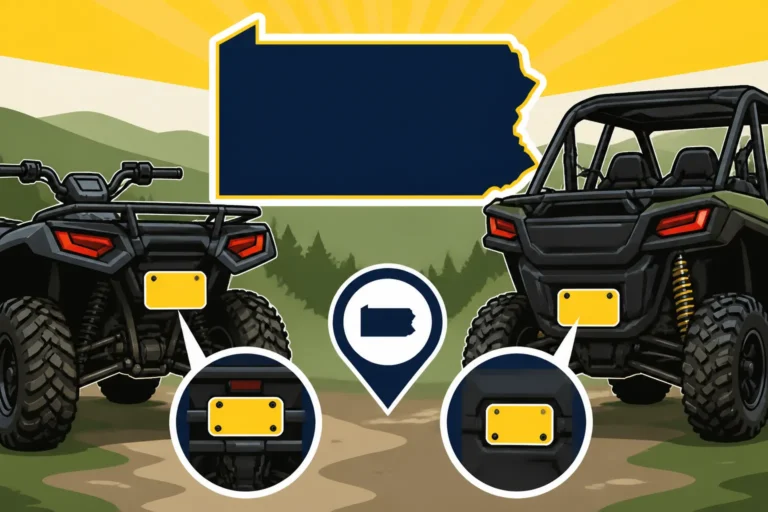
- Check the DCNR Plate and Sticker: Every registered ATV in Pennsylvania receives a DCNR-issued plate and a sticker. Check that the plate numbers match the registration card and that the current year's sticker is affixed, indicating an active registration. You can check [Pennsylvania ATV Plates and Where They Mount] and [Where the Sticker Goes on the Plate] for details.
- Get a Solid Bill of Sale: Even if the registration looks good, a comprehensive bill of sale is crucial, especially in a private transaction. Services like LawDepot offer templates for bills of sale that can help you document the transaction, including the VIN, sale price, and seller's information. While this doesn't verify registration, it provides a legal record of your purchase and the seller's representations.
- Ask for Proof of Sales Tax: If you're buying a machine that was previously unregistered, or even privately sold, you'll need to pay sales tax to register it yourself. Ask the seller for proof they paid sales tax if they were the original owner or acquired it recently. If not, you'll be responsible for it. More on this at [Proving Pennsylvania Sales Tax Was Paid].
- Use the VIN to Check for Stolen Status (Indirectly): While you can't access DCNR records, you can check national databases. There are services (often paid) that compile information from various law enforcement agencies to see if a VIN has been reported stolen. This isn't a DCNR lookup, but it's a critical step for your protection.
- Look for Red Flags: Be wary of sellers who insist on meeting in unusual locations, won't let you see the ATV at their home address, or are unwilling to provide detailed personal information. A reluctance to show official paperwork or provide the VIN for your inspection is a major warning sign.
- [Checking a VIN Before You Buy Used] is another resource that can help.
-
If Your Machine is Stolen:
- File a Police Report Immediately: This is your absolute first step. Provide the police with the ATV's VIN, make, model, year, color, and any identifying features. Also, provide the DCNR registration plate number and details from your wallet card. The police will then use their access to DCNR records and national crime databases (like NCIC) to flag your machine and look for it. They are your only hope for an "official" lookup in this scenario.
What to Do If You Cannot Find the Information
Facing a situation where you can't easily look up an ATV's registration can be frustrating, but it's important to understand your options and the potential risks.
For Prospective Buyers: Walk Away or Protect Yourself
If you're trying to buy an ATV and the seller can't or won't provide clear, matching registration paperwork (the DCNR card, and potentially a title), you're facing a significant risk. This is a huge red flag.
- Consider the Risk: Buying a machine without proper documentation is like buying a mystery box. You could be purchasing a stolen ATV, one with a hidden lien, or simply one that you won't be able to legally register yourself. If you can't register it, you can't ride it on state trails or any public access areas, effectively limiting it to private property, and even then, its legal ownership is questionable.
- The Power of "No Paperwork": A machine without proper paperwork often sells for less precisely because of these risks. If you choose to proceed, understand that you are taking on that risk. Registering a machine that was previously bought with no paperwork can be a real headache, sometimes requiring a bond or a court order, especially if the VIN history is unclear. You might find guidance in [Buying a Quad With No Paperwork] or [Buying When the Seller Cannot Find the Title].
- Insist on a Solid Bill of Sale: If you absolutely decide to go through with the purchase despite the registration issues, you must protect yourself with a detailed bill of sale. Make sure it includes:
- Full names and addresses of both buyer and seller.
- The complete VIN of the ATV.
- Make, model, year, and engine size.
- The purchase price.
- A statement from the seller confirming they are the legal owner and the machine is free of liens and not stolen.
- Signatures of both parties and, ideally, a witness.
You can find customizable templates online, such as those provided by LawDepot, to ensure all necessary fields are covered and legally sound. This document, while not a registration, is your only proof of purchase and can be critical if legal issues arise later.
- The Best Advice? Walk Away: Honestly, if the paperwork isn't solid, your safest bet is often to walk away. There are plenty of other ATVs out there with clear titles and registrations, and the peace of mind is worth the wait.
For Stolen Machines: Follow Up with Law Enforcement
If your ATV has been stolen, and you're struggling to get answers about its whereabouts or registration status, remember that law enforcement is your primary and most effective channel for looking up the machine.
- Provide All Details: Make sure you've given your local police department, state police, or DCNR rangers every piece of information you have:
- The full VIN.
- The DCNR registration plate number (even if you only have your wallet card).
- Your full name and contact information as the registered owner.
- A detailed description of the ATV (make, model, year, color, any unique modifications or damage).
- The date, time, and location of the theft.
- Ongoing Communication: Follow up periodically with the investigating officer. While they cannot give you direct access to DCNR's database or national crime databases, they can provide updates on their search efforts. They are the only ones authorized to "look up" the machine using its identifiers in official systems. Remember that the DCNR system is specifically designed to aid in the recovery of stolen machines by law enforcement.
| Scenario for Lookup | Can a Private Citizen Look Up Directly? | How to Proceed as a Private Citizen | Official Channels for Lookup (Not Public) |
|---|---|---|---|
| Buying a Used ATV | No | Demand to see current DCNR registration card, title (if applicable), and DCNR plate. Match VINs. Get a robust bill of sale (e.g., from LawDepot). | Law enforcement (if suspected stolen), lienholders (for their specific interest) |
| Suspecting a Stolen ATV | No | Do NOT confront. Report your suspicions and any available VIN/plate info to local police or DCNR rangers. | Law enforcement (primary), DCNR internal staff |
| Your ATV is Stolen | No | File a police report IMMEDIATELY with VIN, plate number, and all identifying details. | Law enforcement (primary) |
| Confirming Your Own Registration | No, not via public search | Refer to your DCNR wallet card and physical DCNR plate/sticker. Contact DCNR directly if lost or unsure. | DCNR internal staff |
| Insurance Claim/Verification | No, not via public search | Provide your registration card to your insurance company. They may verify internally. | Insurance companies (for their policyholders), DCNR internal staff |
| After an Accident | No | Provide all details (plate, description) to law enforcement at the scene. They will investigate. | Law enforcement (primary) |
Disclaimer
This article is for general informational purposes only and does not constitute professional advice. Laws, prices and regulations vary by location and change over time. Consult a qualified professional for guidance on your specific situation.