Riding Unregistered Brings an Automatic $300 Fine
It’s a thought that crosses the mind of many ATV and UTV enthusiasts in Pennsylvania, especially if you’re just riding on your own land or perhaps a friend's property: "Do I really need to register this machine?" Maybe you figure you're flying under the radar, or that the chances of getting caught are slim. But let me tell you, that line of thinking can lead to a rude awakening. Riding an unregistered ATV or UTV in Pennsylvania isn't just a minor infraction; it comes with an automatic, non-negotiable $300 fine that can quickly escalate. This guide is here to shed light on exactly what happens when you decide to take that risk, helping you understand the financial hit and the overall headache you'll face, so you can avoid it altogether.
The Harsh Reality of Unregistered Riding in Pennsylvania
Let's be blunt: Pennsylvania does not mess around when it comes to ATV and UTV registration. The rules are in place for good reasons, and the enforcement reflects the state's commitment to those reasons. Many riders think they can skirt the system, but the consequences are swift and, frankly, expensive.
The Automatic $300 Fine: No Exceptions, No Warnings
Imagine this: you're out enjoying a beautiful afternoon ride, maybe you've just put air in the tires, topped off the fuel, and you're feeling the freedom of the trail. Suddenly, you round a bend and there’s a DCNR ranger, or maybe a local law enforcement officer, doing a spot check at a popular staging area or a trail intersection. They ask for your registration, and you come up empty. That's it. No warning, no "get it registered next week," no discretionary judgment on their part. You're looking at an automatic $300 fine.
This isn't a "maybe" situation; it's written into Pennsylvania's regulations. The fine for riding an unregistered ATV is fixed, meaning the officer doesn't have the option to give you a lesser penalty, unlike some other violations. This flat rate is applied whether you're caught on a state forest trail, a designated joint-use road, or even if you've just pulled off a township road onto what you thought was private property without proper access. This immediate and significant financial penalty is designed to deter unregistered riding and emphasize the importance of compliance. Many riders are caught by surprise, thinking they might just get a warning, but the state takes this seriously. Riding Unregistered Brings an Automatic $300 Fine is a hard truth.
Beyond the Fine: Additional Costs and Legal Headaches
That $300 fine is just the beginning, a kind of entry fee into a world of further expenses and profound inconvenience. Once you receive that citation, you’re not just paying the fine; you’re also typically on the hook for what's known as the "cost of prosecution." This phrase covers various administrative fees, court costs, and other bureaucratic charges associated with processing your violation through the legal system. These additional costs can add another significant chunk of money on top of the initial $300, sometimes pushing the total close to $500 or more, depending on the specific circumstances and local jurisdiction.
Then there's the inconvenience factor. If your ATV or UTV is found to be unregistered, especially on public land or a designated trail system, the enforcing officer has the authority to impound your machine. This means your fun day ends abruptly, and you're left figuring out how to get your pride and joy out of impound. Impound fees can be steep, often accruing daily, and retrieving your machine can be a bureaucratic nightmare. You might need to arrange for a tow, present proof of ownership (which, if you don't have proper registration, might be harder than you think), and still pay all outstanding fines and fees. All of this translates into lost riding time, lost wages if you have to miss work to deal with the situation, and a colossal amount of stress. It’s a stark reminder that [Being Cited for No Registration] is far more than just a piece of paper; it’s a cascade of problems.
Why Pennsylvania Is So Strict About ATV Registration
Pennsylvania's strict stance on ATV and UTV registration isn't about collecting revenue just for the sake of it. There are fundamental reasons behind these regulations, all aimed at fostering a safe, sustainable, and enjoyable riding environment for everyone. Understanding these reasons can help you appreciate why adherence to the rules is so crucial.
Funding Trails and Safety Initiatives
One of the primary reasons Pennsylvania mandates ATV and UTV registration is to generate crucial funds for the very infrastructure that riders enjoy. The fees collected from registrations go directly into a dedicated fund managed by the Department of Conservation and Natural Resources (DCNR). This money is then reinvested into maintaining and expanding the state's extensive network of ATV trails, ensuring they remain safe, accessible, and enjoyable. Think about all the trail grooming, bridge repairs, signage, and erosion control that needs to happen – that all costs money. Without registration fees, these vital services simply wouldn't exist or would be severely curtailed.
Beyond trail maintenance, a portion of these funds also supports important safety and educational programs. These initiatives teach riders proper etiquette, safe operating procedures, and environmental responsibility, which are essential for minimizing accidents and preserving the natural beauty of Pennsylvania’s forests and lands. The $300 fine for unregistered riding, while punitive, serves as a strong deterrent, helping to ensure that the user-pay system remains robust. Every dollar from registration contributes to the overall health and future of ATV and UTV recreation in the state. If you're ever curious about the specifics, DCNR has details on [What Pennsylvania ATV Fees Pay For].
Accountability and Enforcement
Registration also plays a critical role in accountability and enforcement. When an ATV or UTV is registered, it's tied to an owner, creating a clear line of responsibility. This is invaluable in several scenarios. For instance, in the event of an accident on a public trail, a registered machine makes it far easier for authorities to identify the parties involved, conduct investigations, and ensure that any necessary follow-up, such as insurance claims or legal actions, can proceed efficiently. Without registration, identifying an owner could be a lengthy and complicated process, if not impossible.
Furthermore, registration aids significantly in the recovery of stolen machines. A unique registration number and accompanying title documentation help law enforcement track ownership and prove a machine's rightful owner, making it much harder for thieves to sell or use stolen ATVs and UTVs. DCNR rangers and local police regularly conduct checks at trailheads and along popular routes, relying on registration plates and wallet cards to quickly verify compliance. This system not only ensures that riders are adhering to state laws but also helps manage trail capacity, monitor usage patterns, and address any environmental concerns that might arise from irresponsible riding. It's a fundamental aspect of why [Why DCNR Registers Pennsylvania ATVs] is so important for the state.
Understanding Pennsylvania's Registration Options to Avoid Fines
The good news is that avoiding that hefty $300 fine is straightforward: register your machine. Pennsylvania offers two main types of registration, each designed for different riding scenarios. Knowing which one applies to you is key to staying legal and enjoying your off-road adventures without worry.
Limited vs. General Registration: Knowing the Difference
Pennsylvania offers two distinct registration categories: Limited and General. It’s crucial to understand which one applies to your riding habits to ensure you’re always compliant.
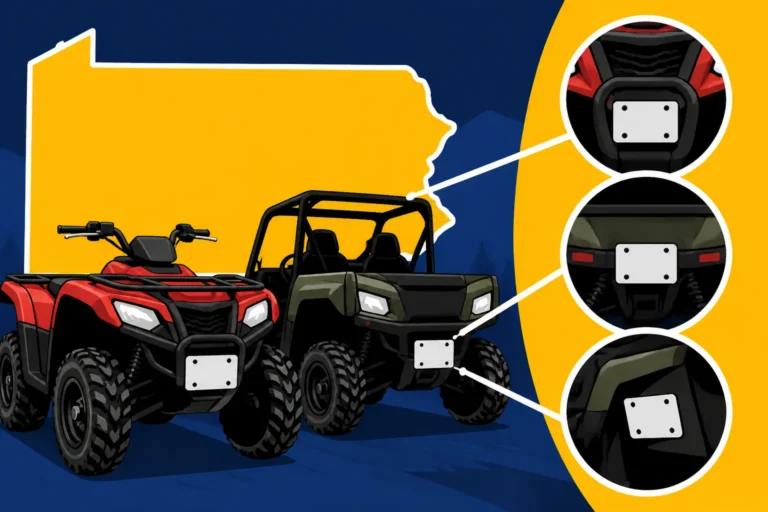
Limited Registration is specifically for machines that will only be operated on land owned or leased by the registrant, or on private property where permission has been granted. This type of registration recognizes that some riders primarily use their ATVs or UTVs for utility purposes on their own land, for hunting, or for other activities confined to private parcels. It's a more restricted permit, signaling that the machine isn't intended for public trails. While it's called "limited," it still requires full registration, complete with a registration plate and wallet card. The distinction here is where you can legally ride with it. If you have a [Pennsylvania's Limited Registration for Your Own Land], you are expected to stay off state-designated trails and joint-use roads.
General Registration, on the other hand, is for machines that will be operated on state-designated ATV trails, approved joint-use roads, or land not owned or leased by the registrant, where permission has been granted. This is the registration you need if you plan to visit state forests like Sproul or Tioga, or ride at places like the Anthracite Outdoor Adventure Area (AOAA). It grants you broader access but still requires you to adhere to all other state and local regulations for trail use. Both types of registration come with specific plates and stickers, so it's visibly clear to enforcement officers which type of registration your machine carries. Understanding these differences, outlined further in [Pennsylvania's Limited and General Registrations], is your first step to legal riding.
The Registration Process: Getting Legal and Staying Legal
Getting your ATV or UTV legally registered in Pennsylvania isn't overly complicated, but it does require attention to detail and specific documentation. The process can typically be handled in a few ways:
-
Through a Dealer: If you purchase a new or used ATV from a Pennsylvania dealer, they will often handle the registration and titling paperwork for you. This is usually the easiest route, as dealers are familiar with the forms and requirements. They'll ensure you have everything needed, including proving [Pennsylvania Sales Tax on a Private Purchase] was paid if applicable, and often provide you with a temporary tag to ride while your official registration is processed.
-
Online via the DCNR Portal: Pennsylvania offers an online portal through DCNR where you can apply for initial registration or renew an existing one. This method is convenient and allows you to submit your information and payment from home. You'll need access to certain documents, such as your bill of sale and VIN information, to complete the process accurately. The DCNR portal can be found at [Registering Online at Pennsylvania's DCNR Portal].
-
By Mail: You can also download the necessary forms from the DCNR website and submit them by mail. This is a good option if you prefer paper documentation or if you're registering after a private sale. Ensure you have all the required information, including proof of ownership, a bill of sale (which you can easily generate using a service like LawDepot if buying from a private party), and proof of sales tax payment.
Regardless of the method, you'll need essential paperwork, including a completed DCNR-43 form (the application for ATV/Snowmobile registration and title), proof of ownership (like a manufacturer's certificate of origin or a bill of sale, especially if you're [Registering After a Private Sale in Pennsylvania]), and often [VIN Proof for a Pennsylvania Registration]. Remember, once registered, your Pennsylvania ATV registration typically lasts for two years. Keeping track of your expiration date and ensuring you [Renewing Every Two Years in Pennsylvania] is crucial to avoid those pesky fines. LawDepot can be a useful resource for documenting private sales and ensuring you have all the proper forms.
Preventing Future Citations and Riding Smart
Getting caught riding an unregistered ATV or UTV in Pennsylvania is a costly and frustrating experience that nobody wants to repeat. The good news is that it’s entirely avoidable with a few simple habits and a commitment to staying informed. Riding smart means more than just wearing a helmet; it means understanding and respecting the laws that govern our beloved sport.
Carrying Your Proof of Registration
This might sound like a minor detail, but it's incredibly important. Simply having your ATV or UTV registered isn't enough; you must be able to prove it when requested by law enforcement or a DCNR ranger. Pennsylvania issues a physical wallet card with your registration information, which includes your machine's details, registration type, and expiration date. This card is your official proof of registration and needs to be carried with you whenever you operate your ATV or UTV off your own private property.
Think of it like your driver's license for a car – you wouldn't drive without it, and you shouldn't ride your ATV without its registration card. If you have a plate displayed on your machine but cannot produce the wallet card, you could still face issues, as the card provides immediate verification that the plate belongs to that specific machine and is current. It's a common oversight, especially when riders swap gear between machines or simply forget their essentials. A small, waterproof pouch attached to your machine or carried in your riding gear is a smart investment to keep your [Why Both Pennsylvania Registrations Include a Wallet Card] dry and accessible. Should you ever lose this card, DCNR provides a process for replacement, which is much simpler than dealing with a citation.
Regular Checks and Updates
Life happens, and sometimes paperwork gets misplaced, or dates slip our minds. That’s why making regular checks on your ATV’s registration status is a vital part of responsible ownership. You can easily check the status of your registration through the DCNR's online portal or by contacting their registration section directly. This quick verification can save you a world of trouble by ensuring your registration is current and valid before you hit the trails.
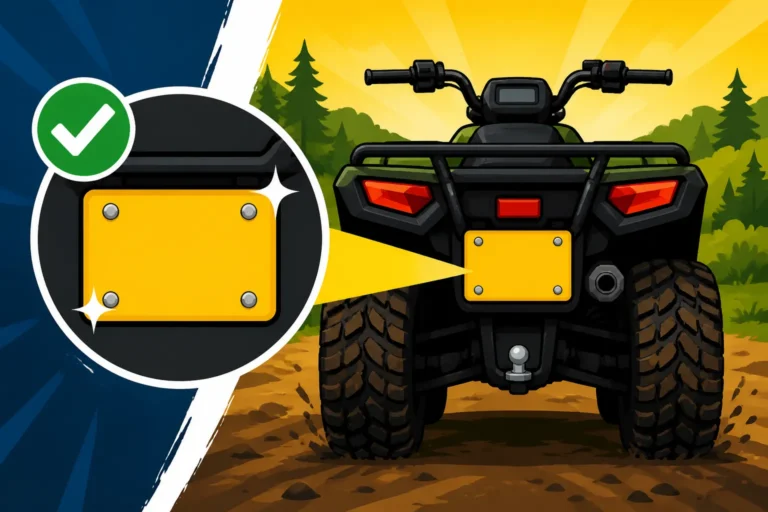
It's also essential to keep DCNR updated on any changes to your information, such as a change of address. While these changes might not directly impact your registration validity, outdated information could cause you to miss important renewal notices or other critical communications. Furthermore, regularly inspecting your physical registration plate and sticker is crucial. These items can become damaged, obscured by mud, or even fall off during aggressive riding on Pennsylvania's diverse terrain. If your plate is unreadable or missing, you could still be cited. If you find yourself in this situation, don't just hope for the best; actively seek to replace it. A lost or damaged plate can be replaced through DCNR, a process detailed in [Replacing a Lost Pennsylvania ATV Plate]. Keeping good records, perhaps even using a digital system or templates from LawDepot to track maintenance, ownership changes, or document your riding log, ensures you always have the necessary proof readily available.
Pennsylvania ATV Registration Types and Fees Comparison
To help you visualize the cost of doing things right versus the costly alternative, here's a quick comparison of Pennsylvania's main ATV registration types and what they generally involve, contrasted with the steep price of non-compliance.
| Feature | Limited Registration | General Registration | Riding Unregistered (Penalty) |
|---|---|---|---|
| Primary Use | Private land owner/lease, explicit consent | State forest trails, joint-use roads, other private property with permission | Illegal everywhere |
| Cost (DCNR Fee) | Minimal fee (historically free) | ~$20.00 (two-year term) | $300.00 (automatic fine) |
| Duration | Two years, renewable | Two years, renewable | Immediate and ongoing |
| Plate Issued | Yes (distinct color/design) | Yes (distinct color/design) | No (leads to fine) |
| Wallet Card Issued | Yes | Yes | No (lack of proof leads to fine) |
| Additional Potential Costs | None (if used legally) | State Trail Permit (Northcentral, Allegheny) | Cost of Prosecution, Impound Fees, Towing |
| Legal Status | Legal (within limits) | Legal | Illegal |
| Enforcement Action | None (if compliant) | None (if compliant) | Citation, impoundment, fines |
Remember, the initial DCNR fee for General Registration is a small investment compared to the $300 automatic fine and the accompanying headaches of riding unregistered. Don't let a small fee turn into a major financial and logistical problem.
Disclaimer
This article is for general informational purposes only and does not constitute professional advice. Laws, prices and regulations vary by location and change over time. Consult a qualified professional for guidance on your specific situation.