Being Cited for No Registration
There’s nothing quite like the feeling of hitting a Pennsylvania trail on your ATV or UTV, the engine humming beneath you, the landscape flying by. It's a freedom many of us cherish. But that feeling can instantly turn to dread when you see an official vehicle, and the next thing you know, you're being handed a citation for an unregistered machine. This guide is all about understanding what happens when you're cited for no registration in Pennsylvania, what that means for your wallet and your riding, and how to navigate the steps to get back on the legal side of the trail.
The Immediate Reality: What Happens When You're Cited on the Trail
Picture this: you're out enjoying a perfect day on the Whiskey Springs trails, maybe just cruising along, feeling the stress melt away. Then, in your rearview mirror, you spot the tell-tale green and white of a DCNR ranger's truck, or perhaps even a state police cruiser. Your heart sinks a little, right? It's a scenario no one wants to experience, but it’s a very real possibility if your ATV or UTV isn't properly registered.
The Unexpected Stop and the Ranger's Questions
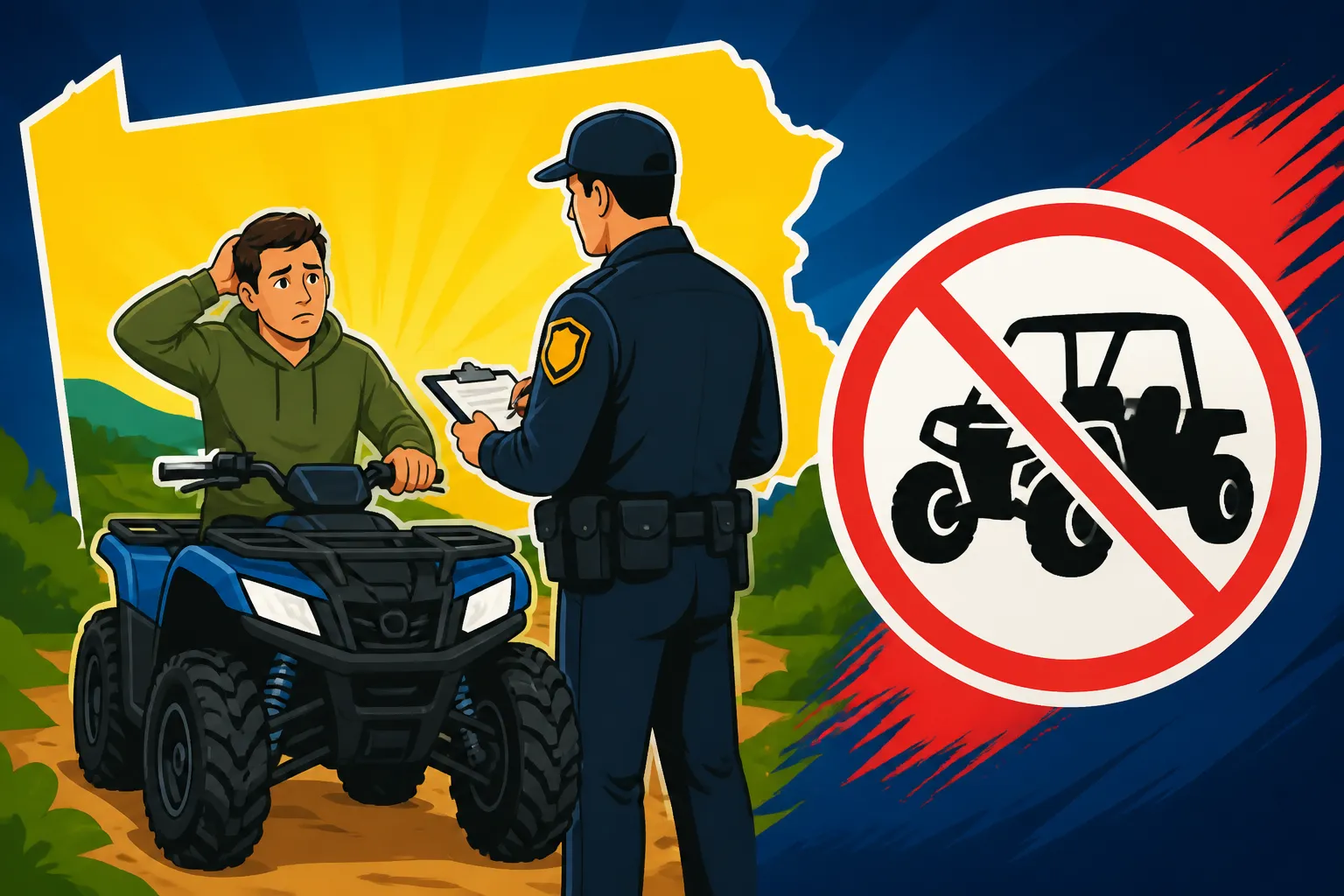
When an enforcement officer signals you to stop, it’s best to comply immediately and calmly. They’ll usually approach, introduce themselves, and state the reason for the stop. Often, the first thing they'll ask for is your registration and proof of insurance, along with your ATV safety certificate if you’re under a certain age. They might ask where you started your ride, where you're headed, and who owns the machine. It’s a moment designed to check compliance, and if your plate isn't clearly visible, or if they have reason to believe it might be expired or non-existent, these questions will quickly get to the heart of the matter.
It can be a really intimidating experience, especially if you're caught off guard. You might genuinely believe your machine is registered, or perhaps you just forgot to renew. The officer, however, is simply doing their job to ensure everyone on the public trails is following the rules that keep the trails funded and safe for all riders.
Sometimes, the stop might seem random, but often officers are on the lookout for specific issues, like missing plates or riders who appear too young. They might also be conducting routine checks at popular staging areas or trailheads, like those at Bloody Skillet. This isn’t personal; it’s about enforcing regulations that apply to everyone.
Receiving the Citation: What It Looks Like and What It Means
If the officer determines your ATV or UTV is unregistered or improperly registered, they will issue a citation. This isn't just a friendly warning; it's a legal document, much like a traffic ticket. It will clearly state the date, time, and location of the incident, along with the specific violation you're being charged with, which in this case would be operating an unregistered ATV. You'll also see the officer's name and identification number, and instructions on how to respond.
This citation isn't something to ignore or toss in the glove box. It’s a formal charge that requires a response, either by paying the specified fine or by appearing in court to contest it. The document will typically outline the fine amount, often with an option to plead guilty by mail or online. Missing the deadline to respond can lead to even more serious consequences, including additional fines or even a warrant for your arrest in some extreme cases, so it’s critical to address it promptly.
Understanding what you’re holding in your hand is the first step. It's not a suggestion; it's an official summons that demands your attention and a timely course of action. It means the state of Pennsylvania believes you have violated the law, and there will be consequences if not handled correctly.
The Automatic $300 Fine and Other Potential Penalties
In Pennsylvania, the penalty for [Riding Unregistered Brings an Automatic $300 Fine]. This isn't a "might be" or "could be" fine; it's the baseline, the automatic starting point for operating an unregistered ATV or UTV. And let me tell you, that $300 isn't just for fun; it's the Commonwealth making it clear that registration is not optional. This fine is specifically outlined in Pennsylvania's ATV and Snowmobile Law, and it applies whether you're riding on state forest trails, approved municipal routes, or even crossing a public road where allowed.
But here’s the kicker: that $300 is often just the beginning. On top of the fine, you'll almost certainly incur additional court costs and administrative fees. These "cost of prosecution" fees can add a significant amount to your total bill, sometimes pushing the total well over the initial fine. It's not uncommon for a rider to face a total bill closer to $400 or $500 once all is said and done. [Cost of Prosecution on Top of a Fine] can really sting, turning a fun day into a very expensive lesson.
Furthermore, if this isn't your first offense, or if there are other violations involved (like riding without a helmet if required, or on closed trails), the penalties can escalate. Repeat offenders can face even higher fines and more severe legal repercussions, including potential loss of riding privileges. In some instances, depending on the severity and circumstances, an unregistered machine could even be impounded, though this is less common for a first-time registration offense on its own.
Understanding the Fine Print: Pennsylvania's Laws on ATV Registration
It's easy to think of registration as just another hoop to jump through, but in Pennsylvania, it's foundational to how our incredible trail system is maintained and managed. The laws aren't just there to create bureaucracy; they serve a real purpose in supporting the very places we love to ride.
Why Pennsylvania Requires ATV Registration
The primary reason Pennsylvania requires ATV and UTV registration, managed by the Department of Conservation and Natural Resources (DCNR), is to ensure a dedicated funding source for the state’s extensive network of trails. When you pay your registration fee, a portion of that money goes directly into the DCNR Snowmobile and ATV Fund. This fund is crucial for things like trail maintenance, acquiring new land for riding, publishing maps, and even funding safety and enforcement programs. [What Pennsylvania ATV Fees Pay For] is directly tied to the health and expansion of our riding opportunities.
Beyond funding, registration provides a vital means of identification. In the unfortunate event of an accident, a theft, or if a machine is found abandoned, the registration plate and associated DCNR records allow authorities to identify the owner. This helps in investigations and ensures accountability, making the trails safer for everyone. Without registration, it would be much harder to track down owners or stolen machines, creating a Wild West scenario that benefits no one.
It’s about community and shared responsibility. Every registered machine contributes to the greater good of the Pennsylvania ATV and UTV riding experience. It helps preserve access and ensures future generations have places to ride. [Why DCNR Registers Pennsylvania ATVs] boils down to stewardship and sustainability for the sport.
The Two Main Types of Registration: Limited vs. General
Pennsylvania offers two distinct types of ATV and UTV registration, each with specific uses and limitations. Understanding the difference is crucial to avoid a citation, because having the wrong type of registration for where you're riding is akin to being unregistered in the eyes of the law.
The first is [Pennsylvania's Limited Registration for Your Own Land]. This option is designed for riders who primarily operate their ATVs or UTVs on their own private property or land where they have express permission from the landowner. It's a "free" registration, meaning there's no biennial fee, but you still need to go through the process to get your plate and wallet card. The catch? You cannot operate a limited-registered machine on any DCNR-managed trails, state forest roads open to ATVs, or any other public riding areas. Trying to ride a DCNR trail with a limited registration is a direct path to a citation. [Pennsylvania's Free Limited Registration] is great for a farm quad, but not for hitting the public trails.
The second, and most common for trail riders, is [Pennsylvania's General Registration for Everywhere Else]. This registration is for machines that will be operated on state-owned trails, approved municipal trails, and other public access areas throughout the Commonwealth. This is a paid registration, renewed every two years, and comes with a standard plate and sticker. If you plan to ride anywhere off your own property and where ATVs are permitted, this is the registration you need. The fees associated with general registration are what directly feed into the DCNR Snowmobile and ATV Fund mentioned earlier, supporting the trails you ride. [Pennsylvania's General Registration Cost] is a small price to pay for access to hundreds of miles of trails.
| Registration Type | Cost (Biennial) | Allowed Riding Areas | Plate Type | Wallet Card Issued |
|---|---|---|---|---|
| Limited | Free | Private Land Only | White Plate | Yes |
| General | Check DCNR for current fee (approx. $20) | State Forest Trails, Approved Public Trails, Permitted Private Clubs | Yellow Plate | Yes |
Exemptions to Registration: When a Plate Isn't Needed
While most ATVs and UTVs in Pennsylvania require some form of registration, there are specific exemptions where a machine does not need to be registered with the DCNR. Understanding these can help clarify if you truly fell outside the rules or if there was a misunderstanding.
One primary exemption is for [The Farm and Business Exemption in Pennsylvania]. If an ATV or UTV is used exclusively for agricultural purposes on a farm, or solely for business purposes on private property (like a construction site), it generally does not need to be registered. The key here is "exclusively." If that farm quad ever leaves the farm for a joyride on a public trail, it needs general registration. Similarly, [Township Machines on the Exempt List] are typically not required to be registered if they are used by a local government unit for official duties, such as maintaining parks or roads within their jurisdiction.
Another exemption applies to [Dealer Inventory and the Dealer Certificate]. Machines held by a dealer for sale, or used as demonstration models, do not require individual registration plates. Dealers operate under a special dealer certificate. However, once a machine is sold to a private individual, the new owner is responsible for registering it. There's usually a [The Forty-Five Day Dealer Sticker in Pennsylvania] that allows a new owner to ride legally while their permanent registration is being processed by the DCNR.
Finally, very specific circumstances, such as machines used solely for competition on a closed course, might also fall under an exemption. However, these are rare and typically involve very strict conditions. It's always best to assume your machine needs to be registered unless you have clear, documented proof of an exemption. When in doubt, call the DCNR to confirm.
Navigating the Aftermath: Steps After Receiving a No-Registration Citation
Getting a citation is a bummer, no doubt about it. But panicking won't help. The important thing is to understand your options, address the underlying issue, and move forward. Taking proactive steps can help mitigate further problems and get you back on the right side of the law.
Reviewing Your Citation and Understanding Your Options
The very first thing you need to do once you've calmed down is carefully read every word on the citation you received. Look for the issuing authority, the date by which you need to respond, the exact charge, and the stated fine amount. Sometimes, details are miswritten, or there might be an error that could be helpful if you decide to contest the ticket.
You essentially have two main options:
- Plead Guilty and Pay the Fine: This is often the simplest and quickest route. If you know your machine was unregistered and you have no valid defense, paying the fine and associated court costs by the specified deadline will close the matter. The citation will usually provide instructions on how to pay, whether by mail, online, or in person. While it means shelling out money, it also means avoiding further court appearances and the potential for increased penalties.
- Plead Not Guilty and Contest the Citation: If you believe you were wrongly cited, or if there's a misunderstanding (e.g., you had a valid general registration but the officer misread your plate, or you qualify for an exemption), you have the right to contest the citation in court. This means you will need to appear before a district judge, present your case, and potentially have the officer who issued the citation testify. This path can be more time-consuming and might require legal advice, but if you have a strong defense, it could result in the citation being dismissed or reduced.
Consider the time and effort involved in contesting it versus the cost of simply paying. For a clear-cut case of an unregistered machine, often paying the fine is the most practical solution. However, if you genuinely believe an error was made, don't hesitate to gather your paperwork and stand your ground.
Addressing the Unregistered Status: Getting Your ATV Legal
Regardless of whether you choose to pay or contest, the most critical step you need to take immediately is to get your ATV or UTV properly registered. Continuing to ride an unregistered machine will only lead to more citations and escalating fines. This is a chance to correct the problem and prevent future issues.
Start by gathering all necessary documentation. This typically includes your bill of sale (if it's a new purchase or recent private sale), proof of sales tax paid, and a completed DCNR-43 form. If you bought it from a private seller, you'll need [Pennsylvania ATV Bill of Sale Requirements] to ensure you have clear proof of ownership. Resources like LawDepot can be incredibly helpful for creating a legally sound bill of sale that includes all the necessary information, which will be essential when you try to register. Having a professional-looking and complete bill of sale can expedite the process and prevent questions down the road.
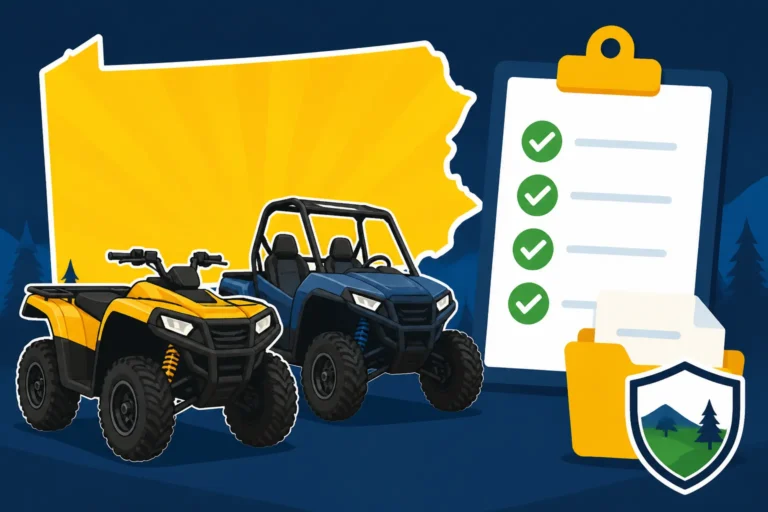
If you don't have a title for an older machine, you might still be able to register it, but it adds another layer of complexity. The DCNR will require clear proof of ownership. You can find a detailed [Pennsylvania ATV Registration Paperwork Checklist] on the DCNR website, which outlines exactly what you'll need. Don't forget that your VIN will need to be verified as part of the process, especially if there's any doubt about the machine's history. [VIN Proof for a Pennsylvania Registration] is crucial.
Potential Consequences Beyond the Initial Fine
While the initial $300 fine plus court costs is a significant hit, it's important to understand that the consequences for operating an unregistered ATV in Pennsylvania can extend beyond that single payment. The DCNR and local authorities take these regulations seriously, and repeat offenses can lead to a compounding of penalties that can quickly become very burdensome.
For instance, if you get caught again without proper registration, you won't just face another $300 fine. [Pennsylvania Fines for a Second Offense] are often higher than the first, and subsequent violations can increase even further. It demonstrates a pattern of disregard for the law, and the enforcement agencies will likely treat it with less leniency. It’s not simply a matter of getting another "ticket"; it reflects poorly on your responsibility as a rider.
Beyond monetary penalties, repeated violations could lead to more severe administrative actions. While not as common for a first-time offense, persistent violations could result in a temporary or permanent suspension of your ability to register ATVs in Pennsylvania, or even a ban from state forest trails. In serious cases, particularly if combined with other reckless behavior or damage to property, there could even be the possibility of your machine being impounded, leading to storage fees and a complicated process to get it back. The [Cost of Prosecution on Top of a Fine] can really add up, making it exponentially more expensive to deal with a second or third citation than it would have been to just register the machine properly from the start.
Prevention is Key: Ensuring Your ATV is Properly Registered
The best way to avoid the headache, the fines, and the stress of a no-registration citation is, quite simply, to ensure your ATV or UTV is always properly registered and that you understand the rules. A little proactive effort goes a long way in keeping your riding experience enjoyable and legal.
The Registration Process: From Title to Plate
Getting your ATV or UTV registered in Pennsylvania involves a few key steps, starting with proving ownership. If you bought your machine new from a dealer, they will typically handle most of the paperwork for you, submitting it to the DCNR on your behalf. They'll also issue you a temporary 45-day sticker so you can ride while waiting for your permanent plate. [What a Pennsylvania Dealer Handles for You] simplifies the process greatly.
If you bought your machine via a private sale, the responsibility falls squarely on you. You'll need the original title, signed over by the previous owner. If the machine is old enough that it was never titled in Pennsylvania (for machines registered before February 1987, for example), you'll need to provide other proof of ownership like a bill of sale. Again, a comprehensive bill of sale, perhaps drafted using a template from a service like LawDepot, can be invaluable here. It proves the transaction and the legal transfer of ownership, which is paramount for registration.
Once you have proof of ownership and have paid any applicable Pennsylvania sales tax, you'll need to complete [What Pennsylvania Asks on Form DCNR-43]. This form collects all the necessary information about you and your machine. You'll then submit this form, along with your proof of ownership, proof of tax payment, and the appropriate fee for general registration, to the DCNR. You can often do this online through the [Registering Online at Pennsylvania's DCNR Portal], by mail, or in person at certain DCNR offices.
Keeping Your Registration Current and Accessible
Once you have your registration, your general registration is valid for two years. It's incredibly important to know [When a Pennsylvania ATV Registration Expires] and mark your calendar for renewal. The DCNR will typically send you a renewal notice, but it's ultimately your responsibility to ensure it's renewed on time. [Renewing Every Two Years in Pennsylvania] is a simple step that prevents big problems.
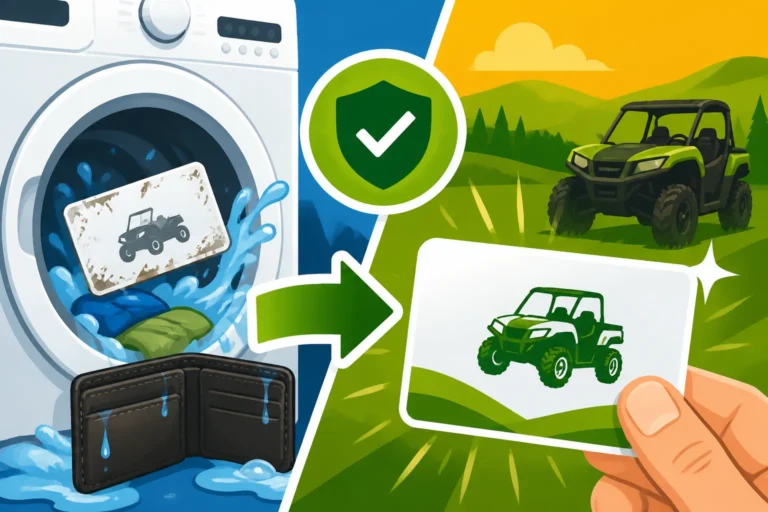
When you renew, you'll receive a new sticker to place on your plate, indicating the current validity. You'll also get an updated wallet card. This small card, often tucked away in your wallet or a waterproof pouch on your machine, is critical. It serves as your immediate proof of registration and insurance. [Why Both Pennsylvania Registrations Include a Wallet Card] is for quick verification by law enforcement on the trails. Make sure it's always with you when you ride.
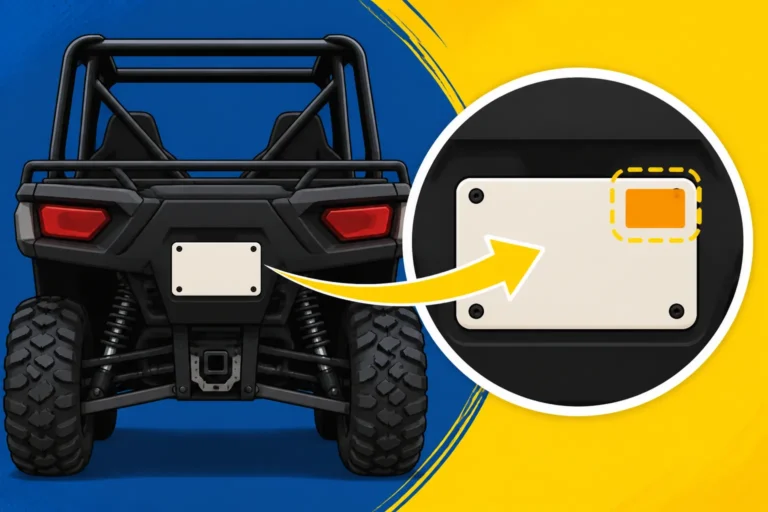
Your registration plate itself needs to be properly mounted and clearly visible from the rear of the machine. It can't be obscured by mud, gear, or anything else. A dirty, unreadable plate is just as problematic as no plate at all. Keep it clean and secure to avoid any unnecessary stops or citations.
Verifying Your ATV's Status Before You Ride
It's a really good habit to get into: before you head out for a day of riding, especially if it’s been a while, quickly verify your ATV or UTV's registration status. This is particularly important if you've recently renewed, bought the machine used, or if there's any question about its current registration. The DCNR has online tools that allow you to [Looking Up a Pennsylvania ATV Registration] by plate number or VIN. This simple check can confirm that your registration is active and prevent any nasty surprises on the trail.
If you've just purchased a machine in a private sale, even if the seller showed you proof of their registration, your ownership is new, and you still need to complete the transfer and registration in your name. Don't assume the seller's registration automatically transfers or that you can ride on their old plate. Using a service like LawDepot to create a robust [Pennsylvania ATV Bill of Sale Requirements] will provide you with the documentation you need to complete the transfer quickly and accurately. This helps avoid any confusion or delays when dealing with the DCNR.
Make it part of your pre-ride checklist: check fluids, tire pressure, helmet, and registration. Taking five minutes at home can save you hundreds of dollars and a whole lot of stress on the trail. It's about being a responsible rider and respecting the laws that allow us to enjoy the great outdoors here in Pennsylvania.
Disclaimer
This article is for general informational purposes only and does not constitute professional advice. Laws, prices and regulations vary by location and change over time. Consult a qualified professional for guidance on your specific situation.