Where the Registration Sticker Goes on Your Plate
There's nothing quite like the feeling of hitting a Pennsylvania trail on your ATV, the engine humming, the dirt flying, and the fresh air filling your lungs. But before you can really let loose and enjoy the ride, you've got to make sure all your ducks are in a row, and that includes your ATV's registration. One small but often confusing detail for many riders is exactly where that little DCNR registration sticker is supposed to go on your plate. It might seem minor, but getting it wrong can lead to unnecessary hassles or even a chat with a DCNR ranger you'd rather avoid. This guide is here to clear up all that confusion, walking you through not just where to put that sticker, but why it matters and how to keep it looking good for the long haul.
Understanding Pennsylvania's ATV Registration Plate and Sticker
When you first get your ATV registered in Pennsylvania, you receive a few key pieces of identification: a durable plate, a registration sticker, and a handy wallet card. Each plays a vital role in proving your machine is legally ready for the trails. Let's break down what each of these means for you as a rider.
The Physical Plate Itself: What DCNR Issues
Your Pennsylvania ATV registration plate isn't just a piece of metal; it's your machine's official identity on the trail. Issued by the Department of Conservation and Natural Resources (DCNR), these plates are designed to be robust enough to withstand the rigors of off-road riding. They're typically smaller than a standard vehicle plate, often made of aluminum, and clearly feature "PA DCNR" along with a unique registration number. This number is directly tied to your machine's specific registration, so it's a critical identifier for law enforcement and DCNR rangers.
These plates are built tough because they have to be. They face everything from mud splashes and water crossings to vibrations, impacts from low-hanging branches, and even direct hits from flying debris on rocky trails. Because of this, it's not uncommon to see plates that are a bit scuffed or dinged up over time. What's important is that the plate remains legible and securely attached, allowing quick identification of your machine. Ensuring it's in good condition is part of your responsibility as a registered rider.
The Purpose of the Registration Sticker
So, why do we need a sticker when we already have a plate? The registration sticker is essentially a visual stamp of approval, indicating that your ATV's registration is current and valid for the specified period. Think of it like the inspection sticker on your car, but for your ATV's legal right to ride. Pennsylvania ATV registrations operate on a [Pennsylvania's Two-Year ATV Registration] cycle, meaning you'll get a new sticker every two years. This sticker typically displays the expiration date, making it incredibly easy for DCNR personnel to see at a glance if your machine is properly registered without needing to pull up records immediately.
The sticker serves as a primary, quick verification method. Rangers conducting trailside checks can rapidly assess the validity of your registration by simply looking at the sticker. It's a visible declaration that you've paid your dues, contributed to the trail system (as registration fees often help fund trail maintenance and development), and are riding legally. Without it, or with an expired one, you could be setting yourself up for an uncomfortable conversation, even if you have your wallet card handy.
Why Proper Placement Matters
You might be thinking, "It's just a sticker, who cares where it goes?" But proper placement of your registration sticker is actually more important than you might realize. The DCNR has specific guidelines for a reason: standardization and visibility. When every rider places their sticker in the same designated spot, it makes trailside enforcement swift and unambiguous. Rangers know exactly where to look, reducing delays and potential misunderstandings during compliance checks.
Beyond ease of enforcement, correct placement also helps ensure the sticker's longevity and legibility. Placing it in an obscure spot, or somewhere it's prone to damage, defeats its purpose. If your sticker gets ripped, faded, or covered in mud to the point of being unreadable due to poor placement, it's effectively the same as not having a valid sticker at all in the eyes of an enforcement officer. This could lead to a citation for an improperly displayed registration, which nobody wants when they're out enjoying the beautiful Pennsylvania wilderness.
The Official Guidance: Where Pennsylvania Wants That Sticker
Now, let's get down to brass tacks. You've got your shiny new sticker in hand, and you want to make sure you put it in the right place the first time. The DCNR is pretty clear about this, and following their guidance will save you a lot of potential headaches.
The Top Right Corner: The Designated Spot
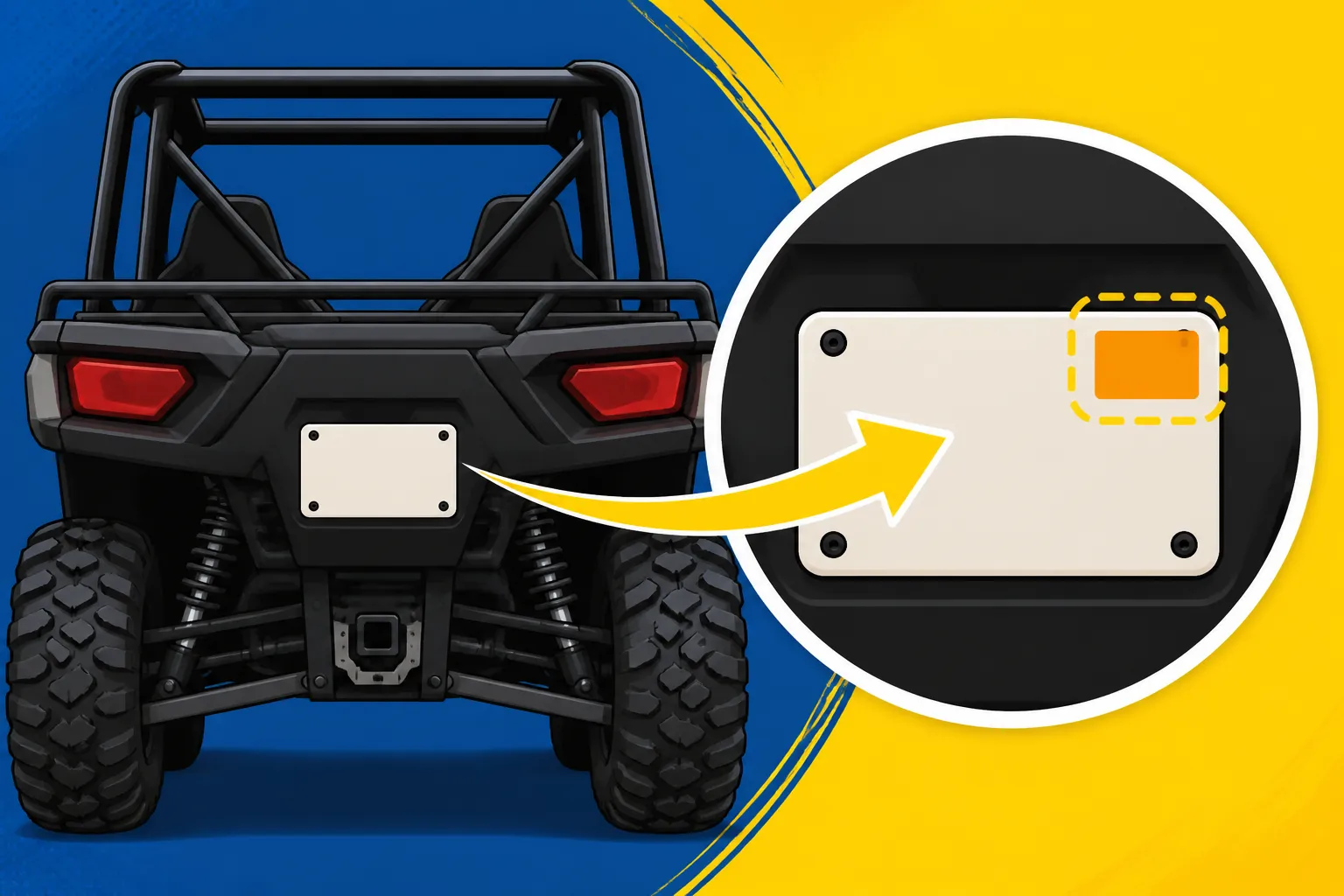
For all Pennsylvania ATV registration plates, the DCNR specifies that the registration sticker must be affixed to the upper right-hand corner of the plate. This isn't just a suggestion; it's the standard. This particular spot is chosen for several practical reasons. Firstly, it's a universally recognized location for such identifiers across many vehicle types, making it intuitive for enforcement personnel. Secondly, it ensures the sticker is prominently displayed without obscuring any other vital information printed on your plate, such as the DCNR logo or your unique registration number.
When you're applying it, visualize the plate from the rear of your ATV. The sticker should go into that corner on the top, furthest to the right. This consistent placement means that whether a ranger is approaching your machine from behind on a trail, or examining it at a trailhead, they know exactly where to look to confirm your current registration status. It leaves no room for ambiguity, ensuring a smooth and quick visual check of your compliance.
Applying the Sticker Correctly for Durability
Getting the sticker in the right spot is one thing, but making sure it stays there and remains legible through all your adventures is another. Pennsylvania's trails can be brutal on equipment, and your sticker is no exception. A little bit of care during application can significantly extend its life.
First, clean and dry the area thoroughly where the sticker will go. Any dirt, dust, grease, or moisture will prevent the adhesive from bonding properly, making your sticker vulnerable to peeling. A quick wipe with rubbing alcohol and a clean cloth works wonders, followed by allowing it to air dry completely. Second, apply the sticker smoothly. Peel back one edge of the backing and align it carefully in the top right corner. Once positioned, slowly peel away the rest of the backing while simultaneously pressing the sticker firmly onto the plate, working from one side to the other. This technique helps push out any air bubbles, ensuring a flat, secure attachment.
Finally, press out all air bubbles. Use the edge of a credit card or a similar flat object to firmly smooth the sticker from the center outwards, expelling any trapped air. This maximizes contact between the adhesive and the plate surface. Regularly inspect your plate and sticker, especially after particularly muddy or wet rides, and if you see any edges lifting, try to press them back down before they can completely peel off. These simple steps ensure your sticker holds up against the elements and keeps you legal on the trails.
What Not to Do: Common Mistakes to Avoid
While the instruction to place the sticker in the top right corner seems straightforward, riders sometimes make mistakes that can lead to issues. One common error is simply putting the sticker in the wrong corner – perhaps the top left, or even one of the bottom corners. This might seem minor, but it deviates from the standard, potentially causing a ranger to take a second look, which can interrupt your ride.
Another mistake is neglecting to remove old, expired stickers. While DCNR issues biennial stickers, if you've somehow ended up with multiple layers from previous years, it can create confusion. It's always best to remove the old sticker completely before applying a new one. This keeps your plate clean, unambiguous, and ensures the new sticker adheres properly to the plate itself, not to a decaying old sticker. Overlapping stickers can also make it harder to read the current expiration date. Also, avoid placing the sticker over any critical information on the plate, like the plate number, as this can make your plate unreadable. Remember, the goal is clarity and compliance.
Beyond the Sticker: Other Registration Proof You Need
While the registration sticker is a quick visual cue, it's just one part of your complete compliance package. Pennsylvania requires you to carry additional proof of registration, and the physical plate itself needs to be displayed correctly. Thinking about the bigger picture will ensure you're always fully prepared for any trailside checks.
The Wallet Card: Your Essential Paperwork
Beyond the physical plate and sticker, every registered ATV in Pennsylvania is issued a DCNR wallet card. This card is arguably the most crucial piece of documentation you possess for your ATV. It contains detailed information about your machine, your registration number, and the valid registration period, essentially serving as your machine's identification card. [Why Both Pennsylvania Registrations Include a Wallet Card] is a question many ask, and the answer is simple: it's your primary proof of ownership and registration, particularly when off the machine or if for some reason your plate or sticker is damaged.
You must carry this wallet card with you every time you ride your ATV off your own private property. DCNR rangers will almost certainly ask to see it during any trailside stop. Losing it or forgetting it can be just as problematic as having an expired sticker. My best advice for keeping it safe on the trail is to store it in a waterproof baggie or a dedicated, secure compartment on your ATV, perhaps alongside your driver's license and insurance card. That way, if you take an unexpected plunge in a water crossing, your vital paperwork stays dry and readable. [What the DCNR Wallet Card Is For] is to protect you, the rider, by providing clear proof of your legal status.
Mounting the Plate: Keeping It Visible
The sticker goes on the plate, but where does the plate go? Pennsylvania law is clear that your ATV registration plate must be securely attached to the rear of the vehicle and displayed in such a way that it is clearly visible and legible from behind. This means no mounting it underneath a fender where it's obscured by mud, or tucking it into a storage box. The intent is for the plate to be easily seen by anyone following you or by a DCNR official conducting checks. [Pennsylvania ATV Plates and Where They Mount] is a common query, and the rule is to ensure it's always exposed.
The biggest challenge for many riders is finding a spot that keeps the plate visible while also protecting it from the abuse of the trail. Plates often get bent, torn off, or otherwise damaged by rocks, logs, or even getting snagged by another rider's machine. Try to mount it in a location that minimizes its exposure to direct impacts, perhaps using a sturdy mounting bracket. Some riders even add a small piece of rubber behind the plate to absorb vibrations. Just make sure that in your efforts to protect it, you don't inadvertently obscure it. [Mounting a Plate Away From the Tires] is always a good idea to prevent mud and debris from being thrown onto it constantly.
Consequences of Missing or Improper Registration Display
Ignoring these seemingly small details can lead to bigger problems down the trail. If your ATV is found to be unregistered, or if your registration is improperly displayed (e.g., missing sticker, expired sticker, plate not visible), you could face significant fines. DCNR rangers are regularly patrolling designated ATV trails, especially during peak riding seasons, and they do conduct compliance checks. An unregistered or improperly registered machine is a clear violation.
The penalties can vary, but generally, riding an unregistered ATV can result in substantial fines. For instance, [Pennsylvania Fines for an Unregistered ATV] typically start around $300 for a first offense, plus court costs. That's a hefty price tag for something that costs much less to renew every two years. Beyond the monetary fine, you'll also endure the inconvenience of being stopped, potentially having your ride cut short, and dealing with the administrative process. It's simply not worth the risk. Always double-check your plate, sticker, and wallet card before heading out.
Navigating Registration: Tips and Resources
Keeping your ATV's registration in good standing doesn't have to be a chore. With a little organization and awareness of the processes, you can ensure you're always legal and ready to ride. Let's look at some practical tips and where to turn for help.
Renewing Your Registration and Getting New Stickers
Pennsylvania's ATV registrations are valid for two years, meaning you'll need to renew them biennially. [When a Pennsylvania ATV Registration Expires] is usually on a specific date two years after your initial registration or last renewal, and the DCNR typically sends out renewal notices well in advance. Don't wait until the last minute! Renewing online through the DCNR's Snowmobile and ATV Registration Portal is often the quickest and easiest way to ensure continuous coverage. You can also renew by mail, but that process takes longer to process and for you to receive your new sticker and card. [Renewing Every Two Years in Pennsylvania] is a simple process that keeps you compliant.
What if you lose your sticker or plate during a particularly rough ride? It happens to the best of us. If your plate or sticker is damaged, lost, or stolen, you'll need to apply for a replacement. The DCNR has a process for this, usually involving a specific form and a small fee. Getting a new sticker will naturally come with your renewal. If you need a replacement plate outside of renewal, [Replacing a Lost Pennsylvania ATV Plate] is possible by contacting DCNR directly. There is typically a nominal [Pennsylvania ATV Plate Replacement Cost], but it’s far less than a fine for riding without a proper plate.
Dealing with Private Sales and Sticker Transfers
When you buy or sell an ATV in Pennsylvania, especially through a private sale rather than a dealer, the registration process changes a bit. The existing registration sticker is tied to the previous owner's registration, not directly to the machine in a way that allows it to transfer to a new owner. The new owner must obtain their own new registration and thus, a brand-new sticker and wallet card. The old sticker should ideally be removed when the machine changes hands to avoid confusion.
For the new owner, registering an ATV bought in a private sale involves submitting an application to DCNR, providing proof of ownership (like a bill of sale or previous title), and paying the necessary fees. If you're buying or selling privately, having a solid bill of sale is crucial, and services like LawDepot can help you generate comprehensive legal documents to ensure a smooth transfer and proper documentation for registration. A detailed bill of sale protects both the buyer and seller and streamlines the new registration process. [Selling an ATV and Transferring in Pennsylvania] requires careful attention to detail to ensure the new owner can register the machine without issue.
Getting Help and Staying Informed
The DCNR is your go-to resource for all things Pennsylvania ATV registration. Their website is packed with information, forms, and the online portal for renewals. If you have specific questions or run into unique situations, don't hesitate to reach out to them directly. There's a dedicated [Pennsylvania ATV Registration Help Line] that can provide personalized guidance.
Staying informed about any changes to regulations, trail closures, or registration processes is key to being a responsible rider. Many local ATV clubs also share valuable information and can be a great resource for practical advice, as they often have members who are very knowledgeable about state rules. By keeping your registration up-to-date, correctly displaying your plate and sticker, and carrying your wallet card, you're doing your part to ensure safe and legal riding for everyone on Pennsylvania's incredible trails.
Disclaimer
This article is for general informational purposes only and does not constitute professional advice. Laws, prices and regulations vary by location and change over time. Consult a qualified professional for guidance on your specific situation.