Registration Checks at Whiskey Springs
Riding the trails at Whiskey Springs is an incredible experience – those long, winding miles of dirt and rock can be pure bliss. But nothing snaps you back to reality faster than seeing a DCNR officer at the trailhead, ready to do a registration check. It’s a common scenario that catches many riders off guard, leading to fines, disappointment, and a ruined day. This guide is here to walk you through exactly why these checks happen, what officers are looking for, and most importantly, how to ensure you're always prepared so your riding day stays on track.
Why Registration Checks Happen at Whiskey Springs
Whiskey Springs, like many of Pennsylvania’s incredible state forest trails, isn't just a place to let loose; it's a managed recreational area. The Pennsylvania Department of Conservation and Natural Resources (DCNR) works hard to maintain these trails, and part of that responsibility involves ensuring that every machine out there is operating legally and safely. These checks aren't about singling anyone out; they're about upholding the rules that keep the trails open and enjoyable for everyone.
The DCNR's Role in Trail Enforcement
The DCNR is the primary agency responsible for managing Pennsylvania's state forests and parks, which includes our beloved ATV trails. When you see a DCNR ranger or conservation officer at a trailhead like Whiskey Springs, they're not just there to wave hello. Their presence is crucial for several reasons, all aimed at protecting the resource and ensuring a positive experience for riders. They're tasked with enforcing the state's ATV laws and regulations, which cover everything from proper registration to rider safety.
A significant portion of the funds collected from ATV registrations goes directly back into the trail system. These fees help pay for trail maintenance, mapping, signage, and even the salaries of the folks who patrol and oversee these areas. So, when an officer checks your registration, they're essentially ensuring that you're contributing to the system that allows you to ride. It's a fundamental part of the quid pro quo: you register your machine, and that money helps keep the trails in top shape. Without these checks, the integrity of the funding system would crumble, and so would the trails. The DCNR needs to verify that every machine on the trail is helping to cover the costs, which directly relates to [What Pennsylvania ATV Fees Pay For].
Common Reasons for Trailhead Inspections
It’s easy to think a registration check is just about seeing if you have a plate, but it’s much more comprehensive than that. DCNR officers at locations like Whiskey Springs are looking for a variety of compliance issues. They're on the lookout for riders who might unintentionally (or intentionally) be skirting the rules, which could jeopardize safety or damage the environment. This means they're assessing more than just your paperwork.
Officers are checking for overall legal operation. This includes making sure your ATV or UTV has a spark arrester to prevent wildfires, that your muffler isn't excessively loud, and that your machine itself isn't obviously modified in a way that makes it unsafe or environmentally harmful. They’re also verifying that riders meet age restrictions, especially when minors are involved, and that proper supervision is in place. And, of course, they want to see proof of insurance, which is a non-negotiable requirement for riding off your own private land. These checks are designed to be a holistic review, ensuring that every aspect of your riding experience aligns with state regulations.
What Rangers Look For During a Check
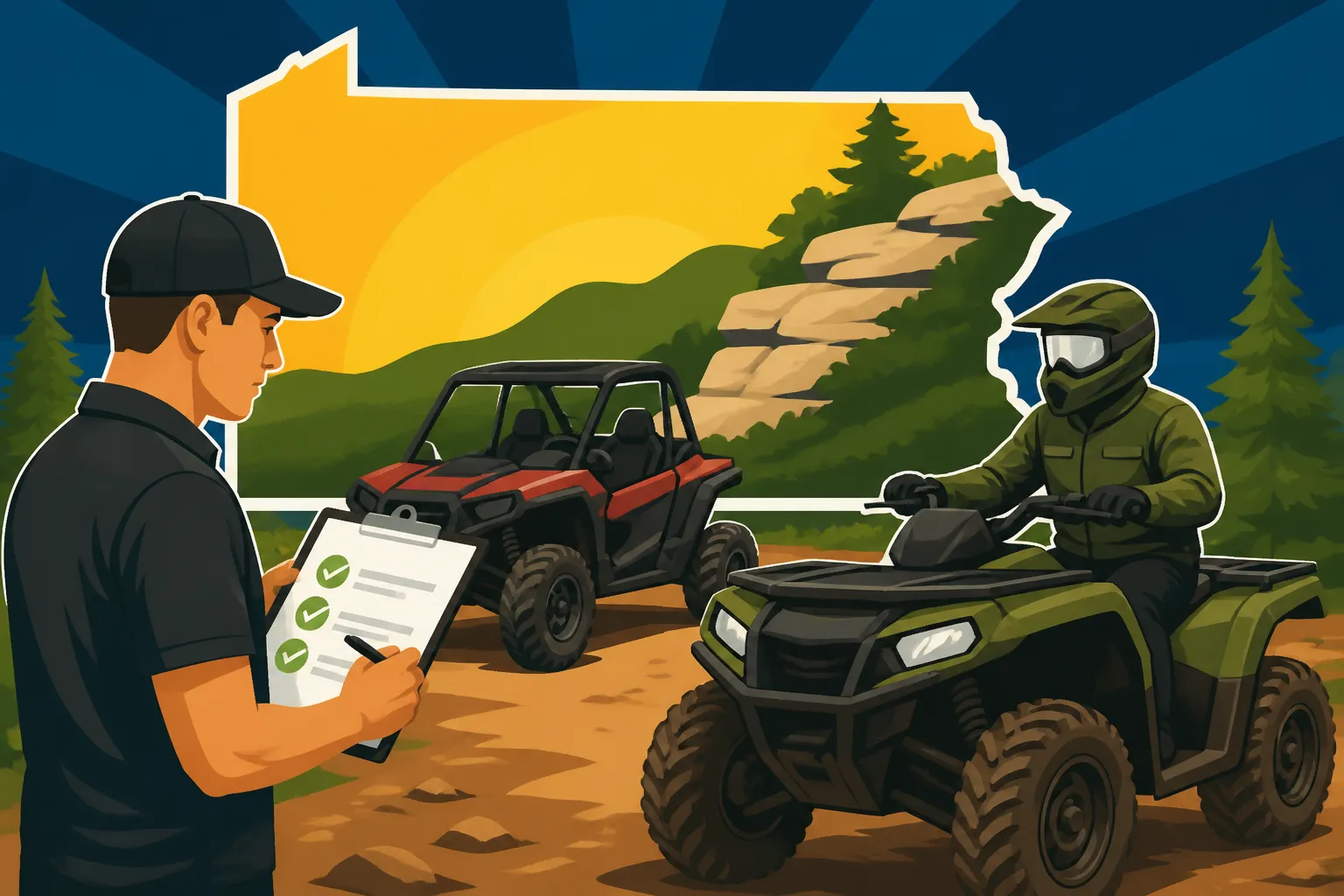
When you pull into a staging area at Whiskey Springs and see a DCNR officer, you might wonder what exactly they're scrutinizing. It's more than just a quick glance. They have a checklist in mind, ensuring that both you and your machine are fully compliant with Pennsylvania law. Knowing what they're looking for can help you prepare and avoid any last-minute surprises or disappointments.
Your ATV's Physical Registration and Plate
This is often the first thing an officer will check, and it's the most visible sign of compliance. Your ATV or UTV needs to display a valid Pennsylvania registration plate, and it needs to be mounted correctly. This isn't just an aesthetic detail; proper mounting ensures the plate is visible and readable, which is important for identification and enforcement.
Officers will specifically look for the metal plate issued by the DCNR. They'll check that it's current, often by looking at the registration sticker affixed to it. For machines with a general registration, you'll have a specific sticker indicating its validity. If you have a [The Plate Pennsylvania Gives Limited Registrants], it will look different from a generally registered plate. Make sure the plate is securely fastened and free from excessive mud or damage that might obscure the numbers or the [The Sticker Pennsylvania Adds to General Registration]. Remember, the rules are clear about [Where Pennsylvania Wants the Plate Mounted] – it should be on the rear of the machine, visible from behind, and not tucked away where tires or mud might easily cover it.
Proof of Ownership and Insurance
Beyond the physical plate, DCNR officers will also want to see the paperwork associated with your machine and your riding privileges. This is where your wallet card and proof of insurance come into play. It's not enough to have a registration; you need to be able to prove it on the spot.
Every registered ATV or UTV in Pennsylvania comes with a wallet-sized registration card. This card contains essential information about your machine and its registration status. This is why [Why Both Pennsylvania Registrations Include a Wallet Card]; it's your portable proof. Officers will ask for this, along with a valid form of personal identification. They will also absolutely require proof of insurance. Pennsylvania law mandates that you carry liability insurance when riding on public lands or anyone else's property. This protects you and others in case of an accident. Make sure you have your current insurance card or declaration page readily available. This is a critical aspect of [Pennsylvania ATV Registration and Insurance Proof].
If you've recently purchased your ATV in a private sale, ensuring you have a proper bill of sale is crucial for future registration and proving ownership. While not always asked for at a trailhead, having a complete paper trail can save you headaches later. Tools like LawDepot can provide templates for comprehensive bills of sale, ensuring all the necessary details are captured, making your registration process smoother and reducing questions during checks.
Safety Equipment and Machine Compliance
Finally, officers will often conduct a quick visual inspection of your machine and yourself for basic safety compliance. These checks are fundamental to minimizing risks on the trail. They want to ensure you're riding a machine that's equipped for safe operation and that you, as the operator, are following basic safety protocols.
This includes checking that all riders are wearing a helmet. [Pennsylvania Helmet Law for ATV Riders] is very specific: anyone under 18 must wear a helmet, and while adults over 18 with a valid driver's license are exempt on their own land, it's always wise (and often required by specific trail systems or parks) to wear one. Officers will also look for eye protection, which is equally important. Beyond personal gear, they'll check the machine itself for critical components like a working headlight and taillight (especially if it's getting dark or you're riding in low-visibility conditions), and confirm your machine has a functioning [Pennsylvania Spark Arrester Requirement]. These small details can make a big difference in preventing accidents or wildfires, and officers take them seriously.
What Happens If You're Unregistered or Non-Compliant
Getting stopped for a registration check at Whiskey Springs can feel like a minor inconvenience when you're prepared, but if you're caught without proper registration or in violation of other rules, it can quickly turn into a significant headache. The consequences can range from being turned away from the trail to incurring hefty fines and other legal repercussions. It's a situation no rider wants to find themselves in, especially when a fun day of riding is on the line.
Immediate Consequences at the Trailhead
The most immediate and likely consequence of being found unregistered or non-compliant is that you will not be allowed to ride the trail. Officers have the authority to turn you away, effectively ending your riding day before it even properly begins. This alone is frustrating, especially if you've traveled a long distance. However, simply being turned away is often the best-case scenario.
More often, being caught unregistered will result in a citation. Pennsylvania law is quite clear: [Riding Unregistered Brings an Automatic $300 Fine]. This isn't a suggestion; it's a mandatory penalty. There's usually no leeway or "warning" for this particular offense, as it's considered a fundamental breach of the rules governing ATV operation on public lands. Officers are trained to enforce this, and ignorance of the law is not an acceptable defense. [Being Cited for No Registration] means you'll walk away with a ticket, and your day is definitely over. If you don't have proper insurance, that's another citation and another fine on top of the registration issue.
The Cost Beyond the Fine
While the initial fine for an unregistered ATV is significant, the true cost often extends far beyond that $300 figure. When you receive a citation, you're not just paying the fine; you're also likely to incur what's known as "cost of prosecution." This includes administrative fees, court costs, and other charges that pile on top of the base fine. It's not uncommon for a $300 fine to balloon into a $500 or $600 expense once all the associated fees are tallied. [What Cost of Prosecution Means] is that the legal system isn't free, and you're responsible for covering its operational expenses related to your infraction.
Furthermore, if your machine is deemed entirely unfit to be on the trail (for instance, if it's illegally modified or poses a severe safety risk), there's a possibility it could be towed, adding another layer of expense and hassle. The time lost dealing with a citation – whether it's waiting for a tow, figuring out transportation for yourself and your machine, or even appearing in court to contest the ticket – also has a tangible cost. Imagine getting a [Getting a Citation Written at a Pennsylvania Trailhead] and having your entire weekend plans derailed, not to mention the potential stress and anxiety that comes with legal trouble.
Issues often arise from incorrect or incomplete paperwork when buying a used ATV privately. If you bought your machine without a robust bill of sale and can’t prove proper ownership or tax payment, it can complicate registration and subsequently lead to problems during a trailside check. This is where using a service like LawDepot to create a detailed and legally sound bill of sale upfront can prevent significant future headaches and ensure you have all the documentation needed to verify your purchase history.
Steps to Ensure Future Compliance
Nobody wants to face fines or be turned away from the trails. The good news is that avoiding these situations is entirely within your control. It simply requires a bit of proactive planning and attention to detail before you ever load your ATV onto a trailer.
First and foremost, always verify your registration status well in advance of any planned ride. Check the expiration date on your plate and wallet card. Pennsylvania ATV registrations are typically good for two years, so it's easy for them to lapse if you don't keep an eye on them. The DCNR provides easy ways to check your status and renew your registration online. Make it a habit to put a reminder on your calendar for when your registration is due for renewal. Information on [Renewing a Pennsylvania ATV Registration] is always available through DCNR.
Next, always carry all required documents with you when you ride. This includes your DCNR wallet card, a valid photo ID, and proof of insurance. A waterproof pouch or a dedicated compartment on your machine is a great way to keep these vital papers safe and dry. Finally, perform a quick pre-ride check of your machine. Make sure your plate is visible, your spark arrester is in place, and all your lights are working. Confirm that everyone in your riding group has a helmet and eye protection. Being prepared isn't just about avoiding a ticket; it's about ensuring a safe, legal, and enjoyable experience for everyone on the trail. By taking these simple steps, you can ride the amazing trails at Whiskey Springs with confidence, knowing you're fully compliant. For all important legal documents, including comprehensive bills of sale for private purchases, using a reliable service like LawDepot can provide peace of mind by ensuring your paperwork is thorough and correct.
Here's a quick reference guide to what DCNR officers typically look for during a registration check:
| Item Checked | Required for Compliance | Potential Consequence of Non-Compliance |
|---|---|---|
| Physical Registration Plate | DCNR-issued plate, properly mounted, visible, current sticker | Turned away, Citation for Unregistered Machine |
| Wallet Registration Card | Current DCNR wallet card for the specific machine | Turned away, Citation for Unregistered Machine |
| Proof of Insurance | Valid liability insurance card/declaration page | Turned away, Citation for No Insurance |
| Photo Identification | Valid driver's license or state-issued ID | Delays, further questioning |
| Spark Arrester | Functional, properly installed spark arrester | Citation for Violation |
| Muffler Noise | Compliant noise level, no excessive aftermarket mods | Citation for Violation |
| Helmets | Required for all riders under 18; recommended for all others | Citation for Helmet Violation |
| Eye Protection | Required for all riders; recommended for all others | Citation for Eye Protection Violation |
| Lights (Head/Tail) | Functional lights (if riding after dark or low visibility) | Citation for Lighting Violation, Safety Hazard |
Disclaimer
This article is for general informational purposes only and does not constitute professional advice. Laws, prices and regulations vary by location and change over time. Consult a qualified professional for guidance on your specific situation.