Mounting a Plate Away From the Tires
There's nothing quite as frustrating as pulling up to a trailhead, ready for a day of ripping through Pennsylvania's amazing scenery, only to find your ATV's registration plate bent, caked in mud, or even missing entirely. It’s a common headache for riders, especially with our diverse terrain, but a visible and intact plate isn't just about aesthetics – it's a legal requirement. This guide will walk you through the pitfalls of poor plate placement and offer practical, real-world advice to mount your plate securely and visibly, keeping you compliant and on the trails without unexpected interruptions.
Why Your ATV Plate Location Matters So Much
Navigating Pennsylvania's ATV trails, whether it's the rocky climbs of Whiskey Springs or the muddy sections of Bloody Skillet, puts your machine through a lot. Every bump, splash, and jostle can take a toll, and one of the first things to suffer is often that little metal rectangle we call a license plate. But its placement isn't just about avoiding damage; it's about staying on the right side of the law.
The DCNR's Visibility Requirement
The Pennsylvania Department of Conservation and Natural Resources (DCNR) is pretty clear: your ATV's registration plate needs to be visible. What does "visible" truly mean out on the trail? It means a DCNR Ranger, a State Trooper, or even local law enforcement on designated [Pennsylvania's Designated ATV Roads] should be able to clearly read your plate number from behind your machine without having to get too close or wipe off excess mud. Imagine rolling into the staging area at the Anthracite Outdoor Adventure Area (AOAA), and an officer can't tell if you're registered. That's an immediate flag.
The struggle is real. We've all been there: you hit a particularly juicy mud bog, and by the time you're through, your entire rear end, plate included, is indistinguishable. Or perhaps you're on a tight, wooded trail, and a low-hanging branch whips across your rear fender, bending your plate into an unreadable mess. These aren't minor inconveniences; they can lead to citations. Law enforcement isn't always looking for trouble, but they are looking for compliance, and a visible plate is step one. Having your plate mounted correctly is just as important as having your [Pennsylvania ATV Safety Certificates].
Protecting Your Plate from Trail Hazards
Beyond visibility for the authorities, proper plate mounting is crucial for the plate's physical survival. Our Pennsylvania trails are notorious for throwing everything at your machine: loose rocks, deep ruts, sharp sticks, and of course, plenty of mud. A plate mounted incorrectly is a prime target for damage. Think about the roost your rear tires kick up – a constant bombardment of dirt, gravel, and small stones. If your plate is directly in that line of fire, it's going to get sandblasted, bent, or even torn off its fasteners.
I’ve seen riders lose plates entirely, leaving them with the headache of filing for a replacement. [Pennsylvania ATV Plate Replacement Cost] isn't astronomical, but it's an unnecessary expense and a waste of your valuable riding time. A damaged or missing plate also means you're technically operating an unregistered machine until you get it sorted, potentially opening you up to fines if you keep riding. The goal is to make sure your plate is securely attached and positioned to withstand the rigors of off-road riding, not just for a casual cruise down a dirt road, but for serious trail action.
Common Mistakes in ATV Plate Mounting
When it comes to attaching that little metal square, it's easy to fall into some common traps. Many riders, eager to get out and ride, just slap the plate on the first convenient spot without truly thinking through the implications. These seemingly minor errors can lead to big headaches down the trail.
Mounting Too Low or Directly Behind a Tire
One of the most frequent mistakes is mounting the plate too low on the machine or, even worse, directly in the path of the rear tire's spray. If your plate is tucked right behind your rear tire, every bit of mud, water, and debris that tire flings upwards is going to coat your plate. Within minutes of hitting a wet section, your registration numbers will be completely obscured, making it impossible for anyone behind you – or any patrolling DCNR officer – to read. It's a guaranteed way to fail the "visibility requirement" discussed earlier.
Beyond mud, a low-mounted plate is also incredibly vulnerable to physical damage. Consider cresting a hill and dropping into a rocky creek bed, or powering through a deep rut. A plate that hangs too low can easily catch on a rock, a log, or even the ground itself, bending, tearing, or ripping clean off. It's like putting a target on your plate for every trail obstacle you encounter. The whole point of [Keeping Your ATV Plate Readable From Behind] is to ensure it can be seen, and mounting it in the "splash zone" or "impact zone" defeats that purpose entirely.
Using Flimsy Mounting Hardware
Another common oversight is skimping on the hardware. Many ATVs don't come with pre-drilled, reinforced locations for a registration plate, so riders often improvise. While a few zip ties might seem convenient in the garage, they are absolutely no match for the constant vibration, jarring impacts, and aggressive riding that a Pennsylvania trail demands. Zip ties can snap from sudden jolts or degrade over time with exposure to sun, mud, and chemicals.
Even if you use bolts, cheap, small-gauge bolts without proper washers or lock nuts can vibrate loose surprisingly quickly. You might be riding along, completely unaware, while your plate slowly works its way free until it's gone forever. The last thing you want is to be halfway through a fantastic ride in Sproul State Forest and discover your registration plate has abandoned ship. Investing a little extra time and a few dollars in robust, secure mounting hardware can save you a lot of hassle and potential fines later on.
Best Practices for Mounting Your Pennsylvania ATV Plate Away From the Tires
So, you've learned what not to do. Now, let's talk about the smart way to mount that plate so it stays visible, secure, and out of harm's way. The goal is to make it as resilient as your machine itself.
Identifying Safe Mounting Locations
The key is to find a spot that is high enough to avoid tire roost, protected from direct impacts with trail obstacles, and still clearly visible from the rear. This often requires a bit of creativity, as stock mounting points aren't always ideal for aggressive trail riding.
-
For ATVs:
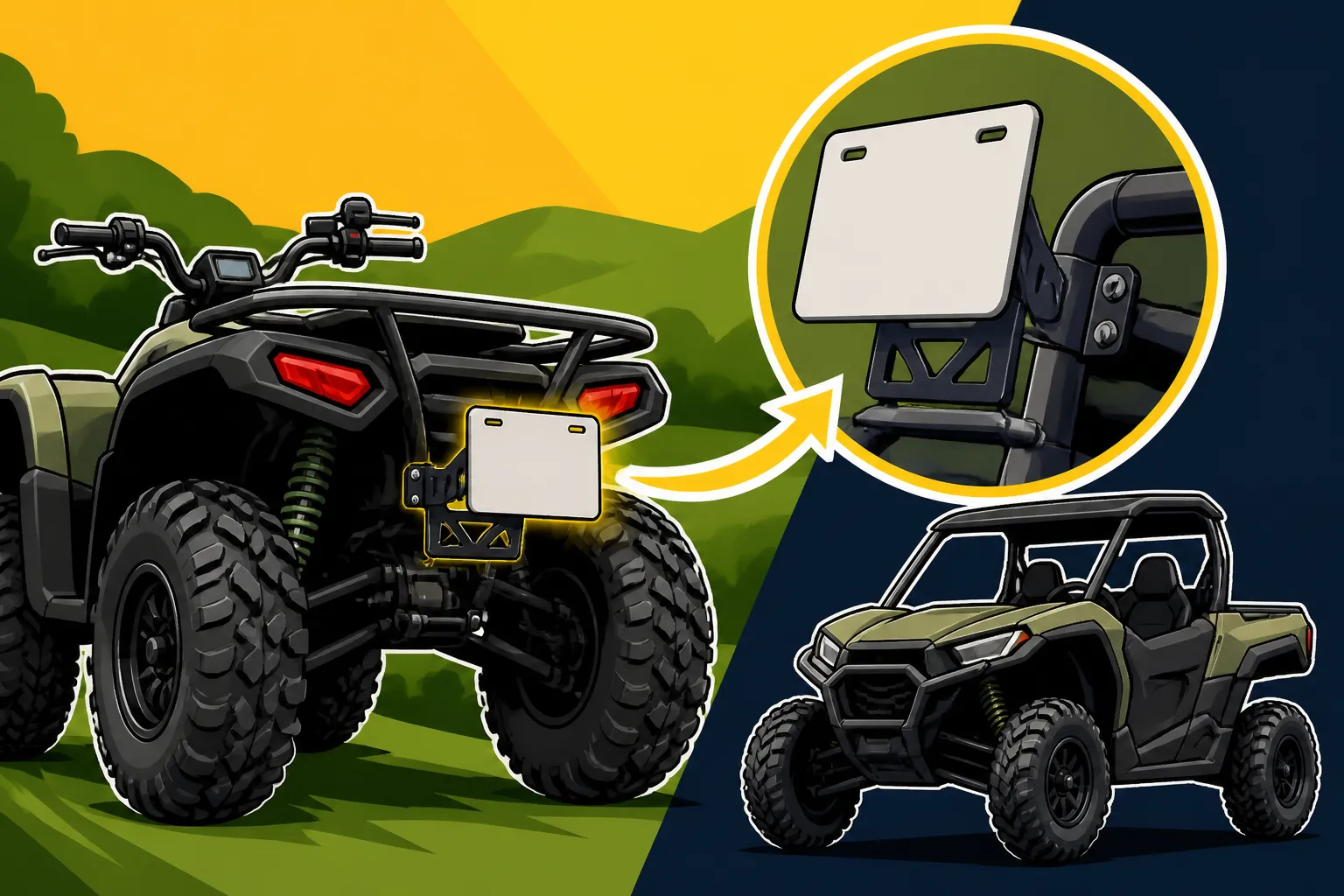
- Rear Grab Bar: This is often the most popular and effective location. Many grab bars are sturdy metal and sit high enough to clear most tire spray. You might need to drill holes in the grab bar or use a clamp-on bracket, but it provides a very secure and visible position.
- Upper Rear Fender: While some ATVs have a flat section on the upper rear fender, be cautious here. Plastic fenders can vibrate, and if not reinforced, the plate could eventually tear through the plastic. If you use this spot, make sure to reinforce it from behind.
- Custom Brackets: For a truly custom and bomb-proof solution, some riders fabricate a bracket that extends from the subframe, positioning the plate high and centered.
-
For UTVs (Side-by-Sides):
- Roll Cage: The rear section of the roll cage is an excellent, robust location. Clamp-on brackets designed for roll cages work perfectly here, offering height and protection.
- Rear Bumper: Many aftermarket UTV bumpers are designed with flat sections or attachment points ideal for license plates. These are usually heavy-duty and provide good protection.
No matter your machine, the principle remains the same: think "high and dry." Visualize the trajectory of mud and debris from your tires, and position the plate well above that line. Also consider the angles for [Where Pennsylvania Wants the Plate Mounted], ensuring it's not tilted so much that it's hard to read.
Choosing the Right Hardware and Reinforcement
Once you've picked your spot, the right hardware is paramount. Forget the flimsy stuff. You need components that can withstand constant vibration, moisture, and impact.
- Stainless Steel Bolts, Washers, and Lock Nuts: Stainless steel resists corrosion, which is crucial given the wet and muddy conditions often found on Pennsylvania trails. Use at least 1/4-inch or 5/16-inch diameter bolts. Flat washers should be used on both sides of the plate and the mounting surface to distribute pressure. Crucially, use nylon lock nuts or lock washers to prevent the bolts from vibrating loose. Standard nuts will back off over time.
- Fender Washers or Backing Plates: If you're mounting to plastic fenders, use large fender washers or even a small metal backing plate on the underside of the plastic. This dramatically reinforces the mounting points, preventing the bolts from pulling through the plastic or the plate from tearing around the holes under stress.
- Rubber Grommets or Spacers: Placing rubber grommets between the plate and the mounting surface can help absorb vibrations, further protecting the plate and reducing the chance of hardware loosening. It also helps prevent metal-on-metal rattling.
Take your time when drilling holes. Measure twice, drill once. Make sure the holes are perfectly aligned with your plate and your chosen mounting spot. This attention to detail ensures a secure, long-lasting attachment. If you ever need to replace a damaged plate, having all your initial purchase documentation in order, such as a bill of sale, can make the process smoother with DCNR. For creating such essential documents, services like LawDepot can be very helpful in ensuring you have legally sound paperwork from the start.
Considering Aftermarket Solutions and Custom Brackets
Sometimes, the best solution isn't something you can simply bolt on. Many aftermarket companies recognize the challenges of plate mounting and offer specialized solutions. These can range from simple, reinforced plate brackets to elaborate relocation kits that move the plate to a more protected area, often with integrated LED lighting for visibility in low light conditions or if you happen to ride on designated roads after dusk.
These kits are often designed with trail conditions in mind, using heavy-gauge steel or aluminum and robust mounting hardware. They might attach to the frame, the hitch receiver, or a specific part of the roll cage, specifically engineered to keep the plate safe. If you're not comfortable fabricating something yourself, an aftermarket kit can be an excellent investment.
For those who enjoy a bit of DIY, designing and fabricating your own custom bracket can be incredibly rewarding. This allows you to tailor the solution precisely to your machine and riding style. If you go this route, ensure the material you use (e.g., steel or thick aluminum) is strong enough to withstand impacts and vibrations. Always deburr any cut edges to prevent cuts and make sure the bracket itself doesn't create a new hazard. Remember, if you need to trace your VIN or show proof of ownership for any custom work or future registration needs, especially if you bought your machine used, having proper initial paperwork (like from LawDepot) is key.
What Else You Need to Know About Your Pennsylvania ATV Plate
Getting your plate securely mounted away from the tires is a huge step, but it's part of a larger picture of legal ATV operation in Pennsylvania. There are a few other critical details related to your registration plate that every rider should be aware of to avoid issues.
The Registration Sticker
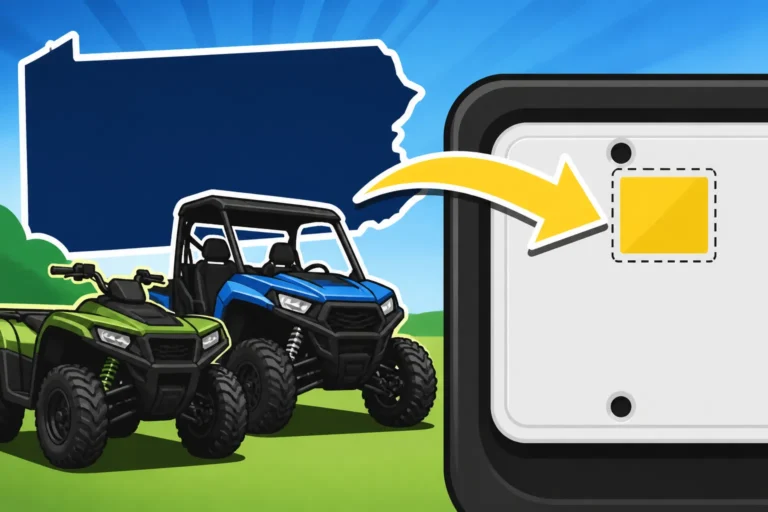
Your physical metal plate isn't the only thing DCNR looks for. When you receive your ATV registration, you also get a small, adhesive sticker that must be applied directly to the plate itself. This sticker usually indicates the year your registration expires, making it quick and easy for officials to see if your machine is currently legal. Most often, you'll see riders place it in one of the lower corners of the plate.
The reason for this sticker is simple: visual confirmation. It's a quick identifier that your registration is active and up to date. If your plate is constantly getting caked in mud or taking hits, that sticker is also going to suffer. A faded, torn, or unreadable sticker can lead to the same scrutiny as an unreadable plate. So, while you're mounting your plate in a protected spot, remember that the sticker needs protection too. Make sure the area you choose for the plate allows the sticker to be placed without obstruction and to remain intact throughout its two-year lifespan. You'll need to remember to replace this when [Renewing Every Two Years in Pennsylvania].
Carrying Your Wallet Card
This is absolutely crucial. Even if your plate is mounted perfectly, gleaming in the sun, and your sticker is crisp and clear, you must carry your DCNR-issued wallet card with you every time you ride off your own private property. This card is your official proof of registration and, if required, proof of insurance. It's what a DCNR Ranger or other law enforcement will ask to see if they pull you over on a state trail or a designated township road.
Think of it like your driver's license for your car; you don't just have a license plate, you carry the physical card. The same applies here. Keep this card in a waterproof pouch or bag, ideally in a secure, easily accessible compartment on your ATV or UTV. Don't just stuff it in your pocket where it can get wet, lost, or damaged. [Why Both Pennsylvania Registrations Include a Wallet Card] are issued for a reason, and they serve different but equally important roles. You don't want to get a citation simply because you left your wallet card at home. Make it a habit to check for it before you head out, right alongside your helmet and other gear. [Keeping Paperwork Dry on a Wet Trail] is a real concern!
Understanding Registration Types and Plate Implications
Pennsylvania offers two main types of ATV registration, and while both result in a plate, it's worth understanding the difference and how it affects your riding privileges and therefore, your plate's journey.
- Limited Registration: This type is specifically for ATVs that are only ridden on your own private property or land where you have permission. You get a plate, but it doesn't grant you access to state-owned trails or designated public roads. For more details, check out [Pennsylvania's Limited Registration for Your Own Land].
- General Registration: This is what most trail riders need. It allows you to operate your ATV on approved state-owned trails, designated roads, and other public access areas. Along with your plate, you'll also receive a special DCNR sticker to affix to the plate, signifying its general registration status. This is the registration type for [Pennsylvania's General Registration for Everywhere Else].
Regardless of which registration you have, the plate itself is required. The rules for visibility and secure mounting apply to both. The key difference lies in where you can legally ride with that plate. Always ensure your machine's registration matches your intended riding location to avoid any legal troubles. If you've just purchased a machine, particularly through a private sale, ensuring you have a complete bill of sale (perhaps one drafted using resources like LawDepot) helps guarantee a smooth registration process for either type.
Comparing ATV Plate Mounting Options
When deciding how to mount your Pennsylvania ATV plate, you have a few options, each with its own pros and cons. Let's break them down to help you make the best choice for your machine and riding style.
| Mounting Option | Pros | Cons | Ideal For |
|---|---|---|---|
| Stock/Fender Mount | Easy to access, often requires no additional parts | Highly vulnerable to mud, roost, and physical damage; often low | Casual riders, machines not seeing aggressive trail use |
| Rear Grab Bar Mount | High visibility, generally out of direct tire roost, sturdy | May require drilling into grab bar, can be slightly exposed | Most ATVs, aggressive trail riders, good balance of protection |
| Roll Cage Mount (UTV) | Very high visibility, extremely protected, secure | Specific to UTVs, requires clamp-on bracket | Most UTVs, maximizes protection for side-by-sides |
| Aftermarket Relocation Kit | Designed for off-road use, often includes lighting, very secure | Can be costly, installation might be more complex, limited options | Serious riders, those wanting maximum protection and features |
| Custom Fabricated Bracket | Fully customizable for optimal placement and protection | Requires fabrication skills/tools, time-consuming | Experienced DIYers, unique machine setups, ultimate durability |
This table should help illustrate why simply bolting it to a stock fender might not be the most practical choice for the rugged trails we enjoy in Pennsylvania. For any option involving a private sale of an ATV, it’s always wise to ensure you have a thorough bill of sale for your records and registration. Services like LawDepot can provide customizable templates, making sure all the necessary details are covered for a smooth transfer and future documentation needs with DCNR.
Remember, the goal is to enjoy your ride without worrying about your registration plate. By taking the time to mount it correctly and securely, away from the immediate threats of the trail, you're setting yourself up for many more hassle-free adventures in the Pennsylvania wilderness.
Disclaimer
This article is for general informational purposes only and does not constitute professional advice. Laws, prices and regulations vary by location and change over time. Consult a qualified professional for guidance on your specific situation.