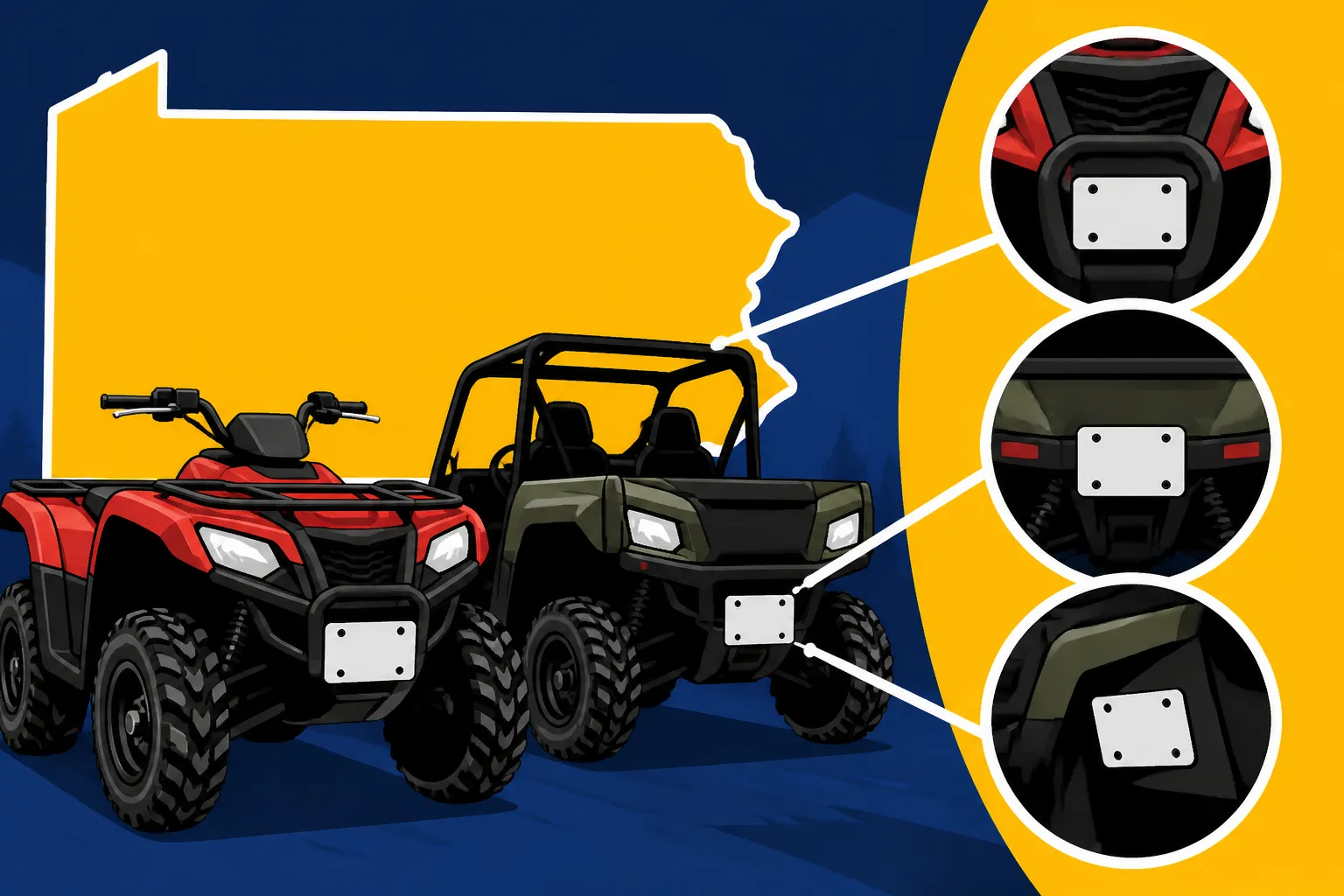
Pennsylvania ATV Plates and Where They Mount
There's nothing quite like the feeling of hitting a Pennsylvania trail on your ATV or UTV, kicking up some dirt, and enjoying the wild beauty of our state. But before you can experience that freedom, there are some nitty-gritty details to sort out, and one of the most common points of confusion (and frustration!) revolves around your ATV plate: what it looks like, what it means, and exactly where it's supposed to go. This guide will cut through the uncertainty, explaining everything you need to know about your Pennsylvania ATV registration plate and ensuring you're compliant and ready to ride without worry.
Understanding the Purpose of Your Pennsylvania ATV Plate
When you get your ATV registered in Pennsylvania, that plate isn't just a random piece of metal or plastic; it's a vital identifier, a small but mighty emblem of your compliance with state regulations. Think of it as your machine's official passport to the trails, carrying crucial information that helps the Department of Conservation and Natural Resources (DCNR) manage and maintain our incredible riding opportunities.
More Than Just a Number: What Your Plate Signifies
Every ATV plate issued by the DCNR carries a unique registration number, specific to your machine, that allows authorities to identify it quickly. Beyond the numbers and letters, you'll see the DCNR logo and the "PA" designation, clearly marking it as a Pennsylvania-registered off-highway vehicle. This isn't just bureaucratic red tape; this system is fundamental to how our state manages its vast network of trails.
The fees collected from registration, partly identified by these plates, contribute directly to the maintenance, development, and enforcement of ATV recreation areas across the Commonwealth. Without a proper registration system and visible plates, it would be nearly impossible to fund trail improvements, provide safety education, or ensure responsible riding practices. So, while it might seem like a small detail, your plate is a direct link to the health and future of Pennsylvania's ATV trails. It helps ensure that future generations of riders will have the same, if not better, experiences than we do today.
The Two Types of Pennsylvania Plates: Limited vs. General
Pennsylvania wisely offers two distinct types of ATV registration, each with its own plate, to accommodate different riding needs: Limited and General. Understanding the difference is key to knowing where you can legally ride and what your plate truly signifies. You can learn more about [Pennsylvania's Limited and General Registrations] in detail.
The plate itself is designed to visually distinguish between these two types of registrations, making it easier for rangers and other riders to understand a machine's allowed use at a glance. Both registrations come with a plate and a wallet card, but the visual cues on the plate are immediate indicators of your machine's status. For example, a yellow-backed plate immediately tells you that the machine is registered for private use only, while a white-backed plate indicates broader trail access.
Each type of registration grants specific privileges. A Limited Registration, identifiable by its distinct plate, restricts your riding to private property, essentially your own land or land where you have explicit permission. A General Registration, with its different plate, opens up access to public DCNR-designated trails and approved riding parks. Choosing the correct registration and ensuring you have the corresponding plate is crucial for avoiding fines and ensuring you're always riding legally. It's not just about having a plate, but having the right plate for where you intend to ride.
Deciphering Your Pennsylvania ATV Plate: What It Looks Like
The physical appearance of your Pennsylvania ATV plate isn't just about aesthetics; it's designed for quick identification and to convey crucial information at a glance. From its size and material to the specific colors and stickers, every detail serves a purpose in the DCNR's comprehensive registration system. Understanding these visual cues helps both riders and enforcement officials.
The Physical Plate Itself: Size, Material, and Markings
Pennsylvania ATV plates are designed to be compact yet durable, capable of withstanding the rigors of off-road riding. Typically, they are made from a sturdy material, often aluminum or a robust plastic, to resist bending, breaking, and fading from sun and weather exposure. They are smaller than a standard vehicle license plate, proportional to the size of an ATV or UTV.
You'll find the state's name, "Pennsylvania," clearly visible, usually at the top or bottom, alongside the DCNR logo, signifying the issuing authority. The most prominent feature, of course, is the unique registration number, a combination of letters and numbers that identifies your specific machine. This number is embossed or printed clearly to ensure legibility, even when covered in a bit of trail dust. These design choices ensure that the plate is not only functional but also consistently identifiable across all registered machines in the state, making it harder for unauthorized or unregistered machines to blend in.
Identifying Your Registration Type: Plate Colors and Stickers
This is where the visual distinction between Limited and General Registration truly comes into play. The DCNR uses a simple yet effective color-coding system for the plates, immediately signaling the type of registration your ATV holds.
If your ATV is registered with a Limited Registration, meaning it's primarily intended for use on private land, you will receive [The Plate Pennsylvania Gives Limited Registrants]. This plate typically features a yellow background with dark lettering. The yellow background is your visual cue that this machine is not permitted on public DCNR trails or designated riding areas. This differentiation is important because it helps enforce the rules of where certain machines can and cannot go, contributing to trail safety and environmental protection.
For those machines with a General Registration, which grants access to public DCNR-managed ATV trails, the plate has a white background with dark lettering. This white plate signifies broader access, but it also comes with an additional identifier: a seasonal sticker. [The Sticker Pennsylvania Adds to General Registration] is typically placed in a designated corner of the white plate and indicates the current valid registration period. This sticker changes color or design each registration cycle, making it easy for rangers to see if your registration is current without needing to read the small expiration date. It's a quick visual check that helps trail monitors ensure all riders are properly registered and contributing to the trail system.
The Rules of Mounting: Where Your ATV Plate Belongs
Once you have your Pennsylvania ATV plate in hand, the next critical step is mounting it correctly. This isn't just about aesthetics; it's a legal requirement designed to ensure your machine can be identified by law enforcement and trail officials. Incorrect mounting can lead to fines and a spoiled riding experience, so it's worth taking the time to do it right.
General Principles for Plate Placement
The fundamental rule for mounting your ATV plate is visibility. Your plate must be clearly visible from the rear of the machine, unobstructed by any gear, fenders, or parts of the ATV itself. This means no strapping it to the side, tucking it under a seat, or allowing mud flaps to obscure it. A ranger or official should be able to read your registration number and identify your plate type quickly and easily, whether you're stationary or slowly passing by.
Security is another paramount concern. Your plate needs to be firmly attached using bolts, screws, or other secure fasteners. Simply zip-tying it on might seem convenient, but vibration from riding, especially on rough trails, can quickly cause it to rattle loose and even fall off. Losing a plate is a hassle to replace and can leave you in a bind if you're stopped on the trail. Investing in a sturdy bracket or using locking hardware can prevent this headache.
Finally, consider protection. While visibility is key, you also want to mount your plate in a location that minimizes its exposure to damage. ATV riding is inherently rugged; mud, rocks, branches, and even other riders can cause damage. Avoid placing it where it's likely to get bent by a tire, ripped off by an errant branch, or smashed by debris thrown up from the ground. A little foresight here can save you the time and expense of replacing a damaged plate.
Specific Requirements for Rear Mounting
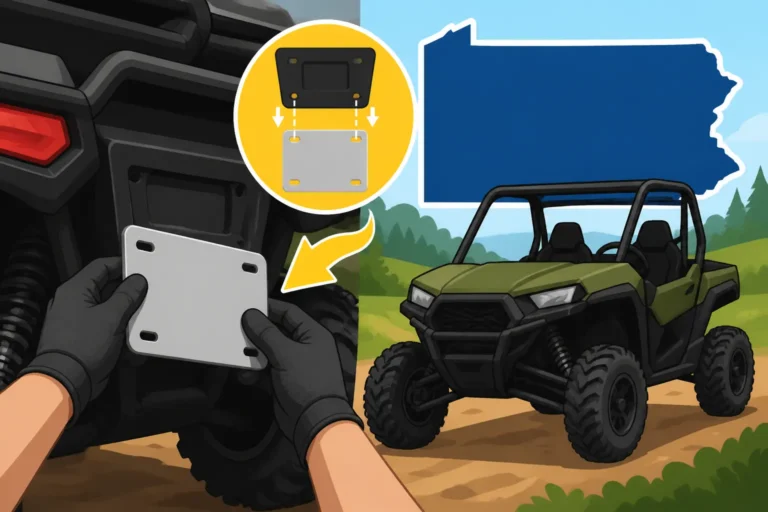
Pennsylvania's DCNR regulations are clear: your ATV plate must be mounted on the rear of the machine. There are no exceptions for mounting it on the front, side, or anywhere else. This standardized placement ensures consistency for enforcement and makes it easy for anyone approaching from behind to see your registration.
While specific minimum and maximum height requirements aren't always explicitly detailed down to the inch, the general expectation is that the plate should be mounted in a reasonable, upright position, horizontally oriented, and easily readable. It shouldn't be so low that it's scraping the ground or constantly covered in mud, nor should it be so high that it's difficult to see from a normal viewing angle. The aim is for the plate to be as visible as possible without being a hazard or unduly exposed to trail hazards.
A key consideration is [Mounting a Plate Away From the Tires]. Placing the plate too close to the rear tires, especially on machines with significant suspension travel or large knobby tires, invites disaster. As the suspension compresses, the tire can come into contact with the plate, bending, tearing, or even completely ripping it off. Similarly, debris thrown up by the tires can constantly batter the plate, leading to premature wear and illegibility. Always ensure there's ample clearance between the plate and any moving parts, especially the tires, throughout the full range of your ATV's suspension travel. This attention to detail will keep your plate intact and visible for many rides to come.
Ensuring Visibility and Legibility: What the Law Demands
Having your Pennsylvania ATV plate properly mounted is only half the battle. The other half is ensuring it remains visible and legible at all times while you're out riding. This isn't just good practice; it's a legal requirement, and failing to meet it can lead to citations and fines. The DCNR prioritizes this for good reason: an unreadable plate undermines the entire registration system and hinders responsible trail management.
Keeping Your Plate Clean and Readable
ATV riding, by its very nature, is a dirty sport. Mud, dust, water, and debris are constant companions on the trail. It's incredibly easy for your registration plate to become completely caked in grime, rendering the numbers and letters indistinguishable. While it might seem like a minor inconvenience, riding with an unreadable plate is a compliance issue. A DCNR ranger or any law enforcement officer needs to be able to identify your machine instantly.
The importance of regular cleaning cannot be overstated. After a particularly muddy ride, a quick spray with a hose to clear the caked-on mud from your plate is essential. Even on dusty days, a build-up of fine dirt can obscure the details. Think of it as part of your post-ride routine, like washing your machine itself. Neglecting this simple step can lead to a roadside stop and a citation, which is an unnecessary interruption to your day and an unwelcome hit to your wallet. You don't want to get caught riding with an illegible plate because a quick rinse could have prevented it. This is directly related to [Keeping Your ATV Plate Readable From Behind].
Lighting Requirements for Night Riding
If your adventurous spirit takes you onto designated trails after dark, or even just requires you to ride back to your camp as dusk settles, the visibility of your ATV plate becomes even more critical. For any nighttime operation, your Pennsylvania ATV plate must be illuminated. This isn't unique to ATVs; most vehicles operating on any public access route during hours of darkness require their rear license plate to be lit.
This requirement ensures that your registration information remains readable under low-light conditions, providing the same level of identification and accountability as during daylight hours. Typically, this means having a small, dedicated light source (often an LED or incandescent bulb) positioned to cast light directly onto the plate without obscuring it or creating glare. These lights are usually wired into your ATV's electrical system, coming on automatically with your headlights.
Ensuring your plate light is functioning properly is just as important as having it. A burnt-out bulb or a loose connection can be just as problematic as a plate caked in mud. Before any night ride, perform a quick check of your lighting system, including the plate light. This simple safety and compliance check enhances your visibility to others, improves safety, and helps you avoid issues with any patrolling officers who might be out after dark. It's all part of being a responsible and prepared rider, especially when the sun goes down.
Common Problems and Troubleshooting Your ATV Plate
Even with the best intentions and careful mounting, ATV plates can encounter issues on the trail. The rugged nature of off-road riding means that plates are constantly exposed to bumps, vibrations, and impacts. Knowing how to deal with common problems like a lost or damaged plate, and how to prevent them in the first place, is a valuable part of being a prepared Pennsylvania ATV rider.
Dealing with a Lost or Damaged Plate
One of the most frustrating moments for an ATV rider is discovering their plate is missing or so severely damaged it's unreadable. Perhaps it vibrated loose on a particularly rocky section, or a rogue branch snagged it, or a rollover unfortunately bent it beyond recognition. Whatever the cause, riding without a visible, legible plate is a violation, and you'll want to address it immediately.
If you lose your plate, your first step should be to contact the DCNR's Snowmobile and ATV Section. You'll typically need to fill out a form to request a replacement. There might be a small fee associated with issuing a new plate. It's important to do this promptly because you cannot legally operate your ATV on DCNR-designated trails or other public access areas without a valid, visible plate. Riding without one could lead to a fine, even if you genuinely just lost it. This is where you'll want to consult the guide on [Replacing a Lost Pennsylvania ATV Plate]. Sometimes, the issue isn't outright loss but rather significant damage, such as when [Replacing a Plate That Fell Off] or was badly bent. In such cases, the process for obtaining a replacement is similar.
While waiting for your new plate, resist the temptation to ride your ATV on public lands. If you absolutely must move it, do so on private property or transport it via a trailer. Explaining to a ranger that your plate "just fell off" without having initiated the replacement process is unlikely to prevent a citation. Being proactive and following the correct channels will save you a lot of grief in the long run.
Preventing Plate Damage on the Trail
An ounce of prevention is worth a pound of cure, especially when it comes to keeping your ATV plate intact. Given the demanding environment of ATV riding, investing a little time and thought into your mounting setup can significantly reduce the chances of damage or loss.
First, choose a robust mounting solution. The small, flimsy brackets that sometimes come with aftermarket fender kits might not be sufficient. Look for heavy-duty metal brackets that can withstand constant vibration and minor impacts. If your ATV's frame or subframe has suitable attachment points, consider fabricating a custom bracket that positions the plate securely and out of harm's way. Using lock washers or thread locker on the mounting bolts can prevent them from vibrating loose over time.
Many riders also opt for aftermarket plate relocation kits. These kits often move the plate to a slightly higher, more tucked-away position on the rear fender or even integrate it into a robust rear grab bar. This gets the plate further away from tire spray, low-hanging branches, and flying debris, offering better protection. Before installing, always ensure the new location still meets the DCNR's visibility requirements. It's about finding that sweet spot where the plate is both protected and perfectly visible.
Finally, be mindful of the impact of specific terrain. We all love to tackle challenging trails, but some terrain is particularly harsh on components like registration plates. [What a Rock Trail Does to Your ATV Plate] is a perfect example. Constant jarring, impacts from loose rocks, and even scraping against obstacles can quickly damage a poorly positioned plate. When navigating these types of trails, exercise extra caution, and if you frequently ride such terrain, consider if your current plate mounting is truly up to the task. Reinforcing the area around the plate or adding a small protective shroud can make a world of difference.
Beyond the Plate: Additional Registration Proof
While your physical ATV plate is the most visible sign of registration, it's not the only piece of documentation you need to carry when you ride in Pennsylvania. The DCNR requires additional proof of registration and other essential information, ensuring that officials have all the necessary details to verify your compliance and for your own safety and peace of mind.
The Importance of Your DCNR Wallet Card
Accompanying your physical registration plate, you will receive a small, durable DCNR registration wallet card. This card is arguably just as important as the plate itself, serving as a portable, immediate record of your ATV's registration. It typically includes your machine's make, model, VIN, and most importantly, your unique registration number and expiration date.
The DCNR mandates that you carry this wallet card at all times when operating your ATV off your private property. Think of it like your driver's license for your off-road machine. If a DCNR ranger or other law enforcement official stops you on a trail, they will almost certainly ask to see this card along with your physical plate. It provides them with comprehensive information quickly, allowing them to verify your registration status efficiently. You can find more details on [Why Both Pennsylvania Registrations Include a Wallet Card].
Given its importance and its small size, the wallet card is susceptible to getting lost or damaged. It's a good idea to keep it in a waterproof bag or a designated pouch on your person or securely attached to your ATV. Getting it soaked or losing it on the trail can be a real headache. If you do find yourself in a situation where [Replacing a Wallet Card That Went Through the Wash] or otherwise lost it, you'll need to contact the DCNR to request a replacement. Don't ride without it, even if you have your plate!
Insurance and Other Documents
Beyond your registration plate and wallet card, there are other documents that you might need to carry, or at least be able to produce upon request, especially if you're riding on public lands. One of the most critical is proof of insurance. Pennsylvania mandates liability insurance for ATVs operated off of private property. While the DCNR doesn't set minimum coverage amounts, it is a legal requirement.
Therefore, you should always carry proof of your ATV's insurance policy. This could be your insurance card, a copy of your policy, or a digital version on your phone (though relying solely on a phone can be risky if you lose signal or battery). A ranger can, and often will, ask for proof of insurance during a trail stop. Failing to provide it can result in significant fines. For more information, check out [Pennsylvania ATV Insurance Requirement].
Additionally, depending on your age or the specific circumstances of your ride, you might need to carry other documents. For younger riders, a Pennsylvania ATV Safety Certificate is mandatory for those aged 8 to 15 when riding on public lands. If you've recently bought your ATV privately, it's always a good idea to carry a bill of sale or other proof of ownership, especially if you're still in the process of transferring the registration. Resources like LawDepot can be incredibly helpful for drafting a formal bill of sale to ensure you have proper documentation during a private sale, which can be invaluable proof of ownership if ever needed. Having all your paperwork in order helps ensure a smooth and legal riding experience.
Registration Logistics and Enforcement
Navigating the world of ATV registration in Pennsylvania might seem daunting at first glance, but understanding the basic logistics and, more importantly, the enforcement aspects can help you ride with confidence. The DCNR has a structured process for getting your machine legally on the trails, and they have equally clear procedures for ensuring those rules are followed.
How Registration Works in Pennsylvania
Getting your ATV registered in Pennsylvania typically involves a few key steps. The process is managed by the DCNR, not PennDOT, which can sometimes be a point of confusion for new riders. You'll need to submit an application, usually DCNR Form 43, providing details about your machine and proof of ownership. You can find out more by exploring [Registering an ATV in Pennsylvania].
There are a couple of primary avenues for registration. Many riders purchase their ATVs from a licensed Pennsylvania dealer, who will handle most of the registration and titling paperwork for you, including collecting sales tax and submitting the forms to the DCNR. This is often the smoothest route. However, if you purchase an ATV in a private sale, you'll be responsible for submitting the paperwork yourself, either by mail or through the DCNR's online portal.
Speaking of online, the DCNR has made it increasingly convenient to register and renew your ATV online. The [Registering Online at Pennsylvania's DCNR Portal] allows you to manage your registration from the comfort of your home, which is a huge convenience. Whichever method you choose, you'll pay a registration fee, which, along with the other fees, contributes directly to the state's ATV program. These funds are vital; they go towards trail maintenance, safety programs, and administrative costs. You can learn more about [What Pennsylvania ATV Fees Pay For] to understand where your money is going.
The Consequences of Non-Compliance
Ignorance of the law is never an excuse, especially when it comes to ATV registration and safety. The DCNR takes compliance seriously, and for good reason: unregistered or uninsured machines pose risks to other riders, the environment, and the financial stability of the trail system. Therefore, there are clear and substantial consequences for riding an unregistered or improperly equipped ATV.
The most common consequence is a fine. Riding an unregistered ATV on public lands will almost certainly result in a citation and a significant financial penalty. For example, [Pennsylvania Fines for an Unregistered ATV] can be quite steep, and these fines often increase for repeat offenses. The same applies to [Pennsylvania Fines for No ATV Insurance], as proof of liability insurance is a non-negotiable requirement for riding off private property. These fines are not just minor inconveniences; they can easily cost hundreds of dollars, significantly more than the cost of proper registration and insurance.
Enforcement typically occurs through trailhead checks by rangers. DCNR rangers, state park officers, and sometimes local law enforcement agencies conduct regular checks at popular trailheads and on the trails themselves. They will often stop riders to verify registration, insurance, safety certificates for minors, and proper safety equipment (like helmets). These checks are common at popular riding spots such as [Registration Checks at Bloody Skillet] and [Registration Checks at Whiskey Springs]. A ranger's job is to ensure everyone is riding safely and legally, and they have the authority to issue citations on the spot. [What a Ranger Checks at a Trailhead] usually includes your physical plate, wallet card, and insurance proof. While it might feel like an inconvenience at the time, these checks are crucial for maintaining order and safety on our shared trails, ultimately benefiting all riders.
UTVs and Other Machines: Specific Plate Considerations
While much of the discussion around plates centers on traditional ATVs, it's important to remember that Side-by-Side (UTV) vehicles and certain other off-highway machines also fall under Pennsylvania's DCNR registration requirements. While the core principles remain the same, UTVs often present unique challenges or considerations when it comes to plate mounting due to their larger size and differing designs.
Plate Mounting for UTVs and Side-by-Sides
For UTVs, the rules regarding registration plates are generally consistent with those for ATVs: the plate must be securely mounted on the rear of the vehicle, clearly visible, and legible. However, the physical design of many UTVs can make this a slightly different task than on a standard ATV.
UTVs typically have a cargo bed, tailgate, or other rear accessories that can potentially obscure a plate if not carefully considered. It's not uncommon for riders to mount the plate directly to the tailgate, the rear bumper, or a dedicated bracket designed to elevate it above the bed. The key is to ensure that even with a full cargo bed or an open tailgate, the plate remains fully visible from behind. This might require some creative mounting solutions or aftermarket brackets specifically designed for UTVs. The general guidance on [Pennsylvania Registration for a UTV] and [Registering a Side-by-Side in Pennsylvania] will confirm these requirements.
When selecting a mounting location, consider the vehicle's articulation and potential for damage. UTVs can be wider and longer than ATVs, and they often encounter different types of obstacles. Ensure the plate isn't vulnerable to being snagged by brush on narrow trails or damaged by debris thrown up from the rear wheels, especially on rocky ascents or descents. A sturdy, protected location, well away from tire contact and moving parts, is paramount for UTVs, just as it is for ATVs.
Exemptions and Special Cases
Not every off-highway vehicle in Pennsylvania requires a DCNR registration plate. The state does have specific exemptions for certain types of machines and uses, which are important for riders to understand to avoid unnecessary registration or, conversely, to ensure they're not riding illegally.
One of the most significant categories of exemptions revolves around farm use. Machines primarily used for agricultural purposes on private land are often exempt from DCNR registration. This is covered in more detail under [The Farm and Business Exemption in Pennsylvania]. However, it's crucial to understand that this exemption applies only if the machine is used exclusively for farming or business on that private property. If a "farm quad" ever leaves the farm and ventures onto public DCNR trails or designated riding areas, it absolutely must be registered and plated. The moment it transitions from a purely agricultural tool to a recreational vehicle on public land, the registration requirement kicks in.
Other exemptions may apply to government-owned machines, certain types of limited-use machines, or dealer inventory. You can review [Machines Pennsylvania Exempts From Registration] for a comprehensive list. It’s important to carefully read and understand the criteria for any exemption, as misunderstanding them can quickly lead to a violation. If there's any doubt about whether your machine qualifies for an exemption, it's always best to err on the side of caution and pursue registration, or contact the DCNR directly for clarification. This ensures you're always operating within the bounds of Pennsylvania law, no matter what type of off-highway vehicle you own or how you intend to use it.
Your Pennsylvania ATV Plate: Quick Reference Guide
To help consolidate the key information about Pennsylvania ATV plates and their mounting requirements, here's a quick reference table. This table summarizes the most important distinctions between Limited and General Registration plates and key mounting considerations, making it easy to quickly recall the essentials.
| Feature | Limited Registration Plate | General Registration Plate | Mounting Requirements |
|---|---|---|---|
| Primary Use | Private land, owner's property, or land with permission | Public DCNR trails, approved riding parks | Rear of the machine |
| Plate Background | Yellow | White | Clearly visible from the rear |
| Key Identifier | Unique registration number | Unique registration number + seasonal sticker | Upright and horizontal |
| Sticker | No seasonal sticker | Yes, seasonal sticker indicating current validity | Securely attached (bolts/screws) |
| Visibility | Must be clean and readable at all times | Must be clean and readable at all times | Away from tires and moving parts |
| Night Riding | Requires illumination if operated at night (where permitted) | Requires illumination if operated at night | Protected from trail damage (rocks, branches, mud) |
| Carried Documents | Wallet card | Wallet card, proof of insurance | No specific height, but "reasonable" and unobstructed |
| Enforcement | Required if leaving private land | Required for all public use; subject to DCNR checks | Must not be obscured by cargo, fenders, or accessories |
| Typical Machines | Farm quads, recreational quads on personal property | Recreational ATVs, UTVs for trail riding | (UTVs: Consider rear bed/tailgate, may need specialized bracket) |
This table provides a snapshot of what you need to know about your plate, helping you quickly identify your registration type and confirm your mounting compliance. Always refer to official DCNR guidelines for the most current and detailed information.
Disclaimer
This article is for general informational purposes only and does not constitute professional advice. Laws, prices and regulations vary by location and change over time. Consult a qualified professional for guidance on your specific situation.