Why Pennsylvania Will Not Plate a Quad
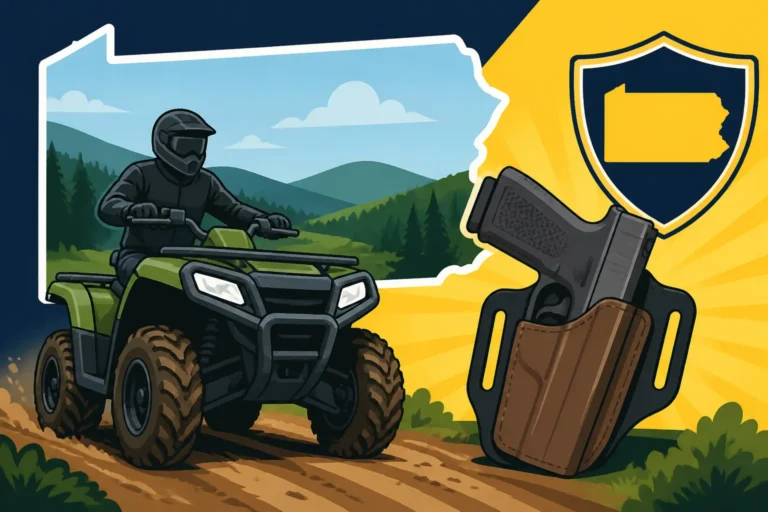
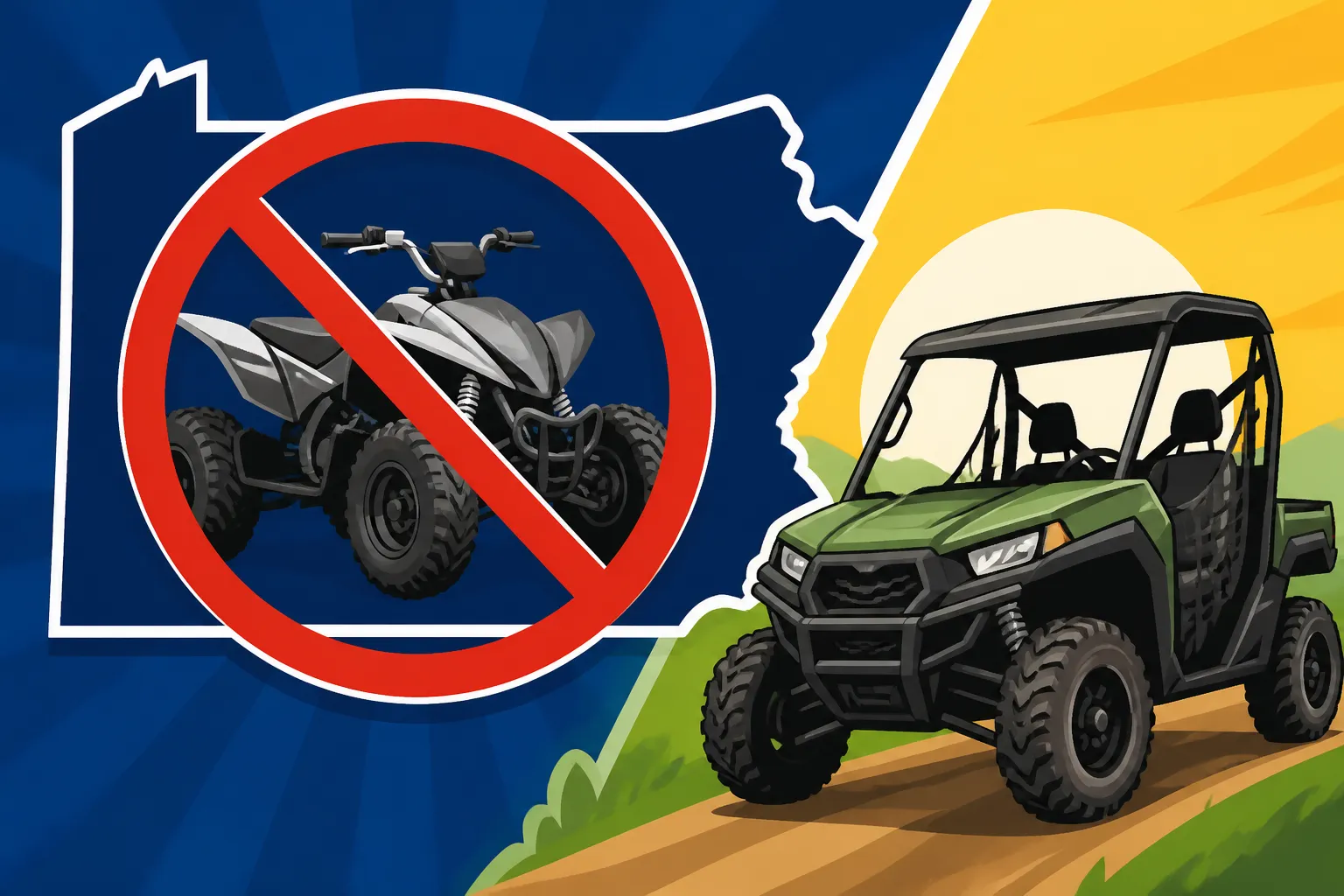
One of the most common questions, and often one of the biggest frustrations, for ATV and UTV owners in Pennsylvania is: "Why can't I just put a license plate on my quad and ride it down the road?" It's a valid question, especially when you see similar-looking machines in other states cruising legally on asphalt. But here in the Keystone State, the answer is almost universally a resounding "no." This guide will unpack the core reasons why Pennsylvania law, vehicle design, and safety concerns converge to keep your ATV firmly off public roads, except for very specific, limited circumstances.
The Fundamental Disconnect: What Defines a Road-Legal Vehicle?
When you look at a car, truck, or motorcycle, it's clear they're built for the road. They have specific features, engineering, and legal classifications that make them suitable for shared public roadways. ATVs, by their very nature, are designed for an entirely different environment, and this fundamental disconnect is the first major hurdle to road legality in Pennsylvania.
Pennsylvania's Vehicle Code Versus Off-Road Machines
Pennsylvania's vehicle code has distinct definitions for different types of motorized vehicles. A "motor vehicle" designed for highways, like your daily driver, must meet a comprehensive set of federal motor vehicle safety standards (FMVSS). These standards cover everything from braking and lighting to emissions, crashworthiness, and occupant protection. These are rigorous tests and design requirements intended to ensure vehicles are safe for high-speed travel, interaction with other traffic, and various road conditions.
ATVs and UTVs, on the other hand, are classified as "off-highway vehicles" (OHVs). They are manufactured to different standards, focusing on durability, traction, and maneuverability over rough terrain. They simply do not undergo the same battery of tests or incorporate the same safety features as a car or truck. For instance, you won't find airbags, crumple zones, or advanced driver-assistance systems on your average quad, because they were never intended for environments where those features are critical. This legal distinction is foundational to why they can't simply be plated like a car.
Designed for Dirt, Not Tarmac
Take a moment to consider the engineering of your ATV. What makes it so good on the trails – the knobby tires, the long-travel suspension, the often locked or limited-slip rear differential – these are precisely the features that make it ill-suited, and frankly, dangerous, for paved roads.
Knobby tires, essential for grip on mud, rocks, and loose dirt, offer poor traction, unpredictable handling, and accelerated wear on asphalt. They squirm and feel floaty, especially at higher speeds. The suspension, designed to absorb massive bumps and articulate over uneven terrain, can feel overly soft and prone to body roll on pavement, leading to instability around corners. Many ATVs have solid rear axles, which are great for traction off-road but cause the inside tire to skip or drag in a turn on pavement, making handling unpredictable and increasing wear. The gearing is often lower, prioritizing torque for climbing over top-end speed, meaning ATVs struggle to maintain highway speeds and consume excessive fuel attempting to do so. These aren't just minor differences; they are fundamental design choices that make a machine excellent for one purpose and hazardous for another.
Safety First: Why ATVs Aren't Equipped for Road Hazards
Beyond the legal classifications and design philosophies, there are undeniable safety concerns that underpin Pennsylvania's stance on street-legal ATVs. Roads are complex environments, and ATVs lack many of the critical safety features and handling characteristics necessary to navigate them safely.
Stability and Handling on Pavement
One of the biggest issues with ATVs on pavement is their inherent instability. Most quads have a relatively narrow track width and a high center of gravity compared to a typical road vehicle. This design makes them nimble off-road, allowing them to squeeze through tight spots and navigate obstacles. However, on smooth, hard pavement, this combination can lead to rollovers, especially during sudden turns, evasive maneuvers, or hitting imperfections like potholes. The knobby tires, as mentioned, don't provide consistent grip on asphalt, which can lead to slides or loss of control, particularly in wet conditions.
UTVs, while wider than traditional quads, still often have a higher center of gravity and suspension tuned for off-road impacts, making them less stable than a car or truck on pavement, especially at speed. The dynamics of cornering are simply different when you're dealing with a vehicle designed to slide over loose dirt versus grip tightly to asphalt. This makes them a hazard not just to the operator, but to other road users as well.
Visibility and Safety Features
Consider the basic safety equipment required on a car: robust headlights, taillights, brake lights, turn signals, multiple mirrors, seatbelts, horns, and sometimes even reflective tape. Now compare that to most stock ATVs. While they have headlights and taillights, they are often not designed for the same level of illumination or visibility required for road use, particularly at night or in adverse weather. Many stock ATVs lack proper turn signals, making it difficult for other drivers to anticipate their movements. Mirrors, if present, might be small and offer limited visibility.
Furthermore, ATVs offer minimal protection in the event of a collision. There's no metal cage, no crumple zones, and often no seatbelts (on quads). In a crash with a much larger and heavier road vehicle, an ATV rider is highly exposed and vulnerable to severe injury or fatality. The lack of standard safety features, combined with the inherent instability, presents an unacceptable risk profile for general road use in Pennsylvania.
The Legal Framework: Pennsylvania's Specific Stance on ATVs
Pennsylvania law is quite clear regarding the status of ATVs on public roads. It's not just an arbitrary rule; it's codified in the state's vehicle regulations, administered by specific agencies.
Pennsylvania's Sixteen-Year-Old Road Rule
The core of Pennsylvania's approach is enshrined in the state's vehicle code, specifically 17 Pennsylvania Code Chapter 51. This chapter explicitly defines ATVs as "off-highway vehicles" and strictly limits their operation on public roadways. The general rule is that ATVs are not permitted on public streets and highways. There are, however, very narrow exceptions, primarily for crossing roads.
Even these exceptions come with strict conditions. For instance, a rider must be at least sixteen years old to legally cross a highway. This isn't permission to ride along the road, but rather to traverse it from one side to the other. This strict regulation highlights the state's commitment to keeping these machines in their intended off-road environment. You'll find more details on these specific regulations in articles like [Pennsylvania's Sixteen-Year-Old Road Rule].
Why PennDOT Does Not Register Pennsylvania ATVs
One of the key distinctions that frustrates many ATV owners is understanding which state agency handles what. Here in Pennsylvania, the Department of Conservation and Natural Resources (DCNR) is responsible for the registration and titling of ATVs and snowmobiles. This means you get a DCNR-issued registration sticker and a metal plate. This registration signifies that your machine is legal to operate on approved DCNR trails and other legal off-road areas.
The Pennsylvania Department of Transportation (PennDOT), on the other hand, is the agency that registers and titles vehicles intended for public road use – cars, trucks, motorcycles, etc. PennDOT requires vehicles to meet all those aforementioned federal safety standards and state-specific equipment requirements to be issued a traditional highway license plate. Because ATVs do not meet these standards, PennDOT simply doesn't have a category for them as road-legal vehicles, and therefore, will not issue them a plate for general road use. It's a clear division of responsibility and legal classification. You can delve deeper into this distinction by reading [Why PennDOT Does Not Register Pennsylvania ATVs].
Limited Exceptions and Designated Use Cases
While the general rule is "no ATVs on roads," Pennsylvania does acknowledge a few very specific, highly restricted situations where an ATV might legally touch pavement. These are not open invitations for joyriding but tightly controlled exceptions.
Crossing a Highway on an ATV in Pennsylvania
The most common and understood exception is the ability to cross a public road. This is not about traveling on the road, but rather moving from one side to the other, often to access another section of a trail system or private property. However, even this simple act comes with strict rules:
- Ninety-Degree Angle: You must cross the road at a right angle, as directly as possible, without traveling along the shoulder or road surface.
- Complete Stop: You must come to a complete stop before entering the roadway and yield to all oncoming traffic.
- Safety First: The crossing must be made in a safe manner, only when the path is clear.
- Operator Age: As mentioned, the operator must be at least sixteen years old.
These rules emphasize that crossing is a necessary evil, not a right of way. It’s a momentary intrusion into the road system to facilitate off-road travel. You can find more comprehensive details on this in [Crossing a Highway on an ATV in Pennsylvania].
Pennsylvania's Designated ATV Roads
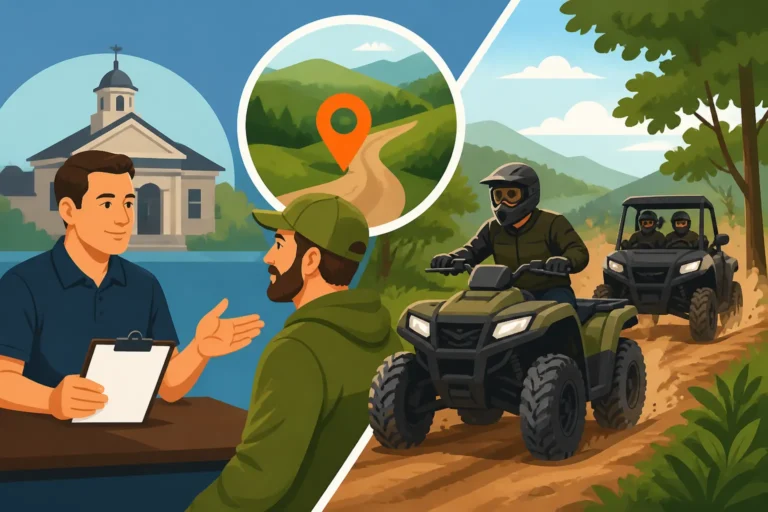
In some very rare instances, a local municipality – typically a township or borough – might designate a specific section of a local road as open for ATV use. These are often referred to as "joint-use" roads or "connector routes." These roads are usually unpaved or lightly trafficked, and their designation is almost always to link two segments of an approved ATV trail system, allowing riders to get from point A to point B without having to trailer their machines.
It's crucial to understand that these are local ordinances, not statewide permissions. You cannot assume a road is open unless it is specifically posted as such by the municipality. These roads are the exception, not the rule, and they typically come with their own set of rules, such as speed limits, hours of operation, and sometimes even specific permits. Riders should always check with the local township or borough before attempting to ride on any public road not explicitly part of a state-designated trail. For more on this, check out [Pennsylvania's Designated ATV Roads] and [How a Pennsylvania Township Designates a Road].
Agricultural and Emergency Exemptions
Beyond recreational use, there are very narrow exemptions for ATVs used in specific work-related capacities. For example, farmers can sometimes use ATVs on public roads for agricultural purposes, such as moving between fields that are separated by a road. Similarly, certain emergency services, like fire departments or search and rescue teams, may use ATVs on roads during official operations.
These exemptions are not for general use, nor do they grant full street legality. They are highly specific, utilitarian exceptions to facilitate essential work. They require the ATV to be used strictly for the purpose of the exemption and often come with requirements for additional lighting or slow-moving vehicle signs. If you operate a farm quad, understanding [The Farm and Business Exemption in Pennsylvania] is key.
The UTV Conundrum: Wider, But Still Off-Road
Side-by-sides (UTVs) have exploded in popularity, and their often more car-like appearance, with steering wheels, bench seats, and roll cages, frequently leads owners to believe they might have an easier path to street legality than traditional ATVs. Unfortunately, in Pennsylvania, this is largely not the case.
Can You Plate a UTV in Pennsylvania?
Just like ATVs, UTVs are classified as "off-highway vehicles" in Pennsylvania. Despite their wider stance, higher weight capacities, and sometimes more robust lighting systems, they still do not meet the federal motor vehicle safety standards required for registration as a street-legal vehicle by PennDOT. They lack the necessary crashworthiness, emissions certifications, braking performance, and other features that a car or truck must have.
Many UTV owners, seeing them used on roads in other states, mistakenly believe that Pennsylvania operates under similar laws. However, each state sets its own rules. Here, a UTV, whether it's a recreational model from Polaris or a utility model from John Deere, is still primarily an off-road machine in the eyes of the law. You can register it with DCNR for trail use, but that DCNR registration does not magically transform it into a street-legal vehicle for general road travel. For a deeper dive into this specific challenge, see [Can You Plate a UTV in Pennsylvania?].
Why There Is No Conversion Path in Pennsylvania
This is often the most disheartening news for those dreaming of street-legal riding. In some states, there's a "conversion" process where you can add aftermarket parts – like proper turn signals, DOT-approved tires, windshields, and horns – to an off-road vehicle and then have it inspected and registered as a "low-speed vehicle" or "assembled vehicle" for street use.
Pennsylvania does not have a viable, recognized conversion path for ATVs or UTVs to achieve general street legality. While you can certainly buy conversion kits or individual components from companies like SuperATV to enhance your machine's capabilities or add safety features, these modifications do not change the vehicle's fundamental legal classification as an off-highway vehicle in Pennsylvania. Adding turn signals, a horn, or a rearview mirror might make your machine safer on the trail, or even necessary for certain designated roads, but it will not allow PennDOT to issue you a highway license plate for unrestricted road use. The legal framework simply doesn't exist for such a conversion. This immutable fact is a significant hurdle for riders here; reading [Why There Is No Conversion Path in Pennsylvania] clarifies this issue.
What This Means for Riders and Alternatives
Given the strict regulations and the absence of a conversion path, it's essential for Pennsylvania riders to understand the consequences of operating an ATV or UTV illegally on public roads and to embrace the vast network of legal off-road riding opportunities available.
Pennsylvania Fines for Riding Illegally
Ignoring the rules and riding your ATV or UTV on undesignated public roads in Pennsylvania can lead to significant penalties. Law enforcement, including DCNR rangers and local police, are generally well-versed in these regulations. If caught, you could face substantial fines, typically starting at several hundred dollars for a first offense. These fines can escalate for repeat offenses. In some cases, your machine could even be impounded, adding towing and storage fees to your financial burden.
Beyond the immediate financial hit, there's the risk of civil liability if you're involved in an accident while illegally operating your machine on a public road. Your standard ATV insurance policy may not cover incidents that occur while operating outside the legal parameters for your vehicle, leaving you personally responsible for damages and injuries. Understanding the gravity of these penalties, as detailed in [Pennsylvania Fines for Riding Illegally] or [Pennsylvania Fines for an Unregistered ATV], is crucial for every rider.
Focus on Trail Systems and Permitted Areas
The good news is that Pennsylvania offers an incredible variety of legal and exciting places to ride your ATV or UTV. Instead of trying to force a square peg into a round hole with street legality, focus your energy on exploring the state's fantastic trail systems. Pennsylvania boasts nearly 1,000 miles of state forest trails, as well as renowned private parks.
Consider these options:
- DCNR State Forest Trails: These trails are managed by the Department of Conservation and Natural Resources and offer hundreds of miles of diverse riding experiences, from challenging rocky climbs to scenic forest paths. You'll need a DCNR registration and often a [Pennsylvania ATV Trail Permits Explained] for specific regions like the Northcentral area.
- Private Riding Parks: Places like the Anthracite Outdoor Adventure Area (AOAA) and Rock Run Recreation Area offer extensive, well-maintained trail networks with varying levels of difficulty. These parks often have amenities like restrooms, food vendors, and even rental opportunities.
- Club Trails: Many local ATV clubs lease private land or work with landowners to develop and maintain their own trail systems, offering a more community-focused riding experience.
To ensure you're riding legally and safely on these trails, make sure your machine is properly registered with DCNR, you have any necessary trail permits, and that you (and any youth riders) possess the required [Pennsylvania ATV Safety Certificates]. Companies like SuperATV offer plenty of gear and accessories to make your off-road adventures more enjoyable and safe.
The Importance of a Trailer
Given that your ATV or UTV is largely confined to designated off-road areas, a reliable way to transport it becomes an indispensable part of the hobby in Pennsylvania. Unless you live right next to a designated trail, you'll need a truck, SUV, or even a car capable of towing, along with an appropriate trailer.
Investing in a good trailer, equipped with proper tie-downs and any necessary accessories for securing your machine, is just as important as the machine itself. This allows you to safely and legally get your ATV from your home to any of Pennsylvania's fantastic riding destinations without risking fines or accidents on the public roads. Think of it as part of the cost of entry for enjoying the vast off-road opportunities this state has to offer.
Here's a quick comparison of key aspects between road-legal vehicles and off-highway vehicles:
| Feature | Road Legal Vehicle (Car, Truck, Motorcycle) | Off-Highway Vehicle (ATV, UTV) |
|---|---|---|
| Primary Design Intent | Public highways, shared with other traffic | Unpaved trails, rough terrain, private land |
| Regulatory Agency | PennDOT (Pennsylvania) | DCNR (Pennsylvania) |
| Registration Type | Highway license plate, VIN-based title | Off-road sticker, DCNR-issued plate |
| Safety Standards | Federal Motor Vehicle Safety Standards (FMVSS) | Industry standards for off-road use |
| Tires | Smooth tread, designed for pavement traction | Knobby tread, designed for dirt/mud grip |
| Suspension | Tuned for comfort & stability on pavement | Long travel, tuned for absorbing impacts |
| Crash Protection | Airbags, crumple zones, reinforced chassis | Roll cages (UTV), minimal (ATV) |
| Lighting | DOT-approved headlights, turn signals, brake lights | Basic headlights/taillights, often no turn signals |
| Stability on Pavement | High, engineered for diverse road conditions | Lower, prone to instability due to design |
| Legal Road Use | General, unrestricted (with valid license) | Highly restricted (crossings, designated roads only) |
| Conversion to Road Legal | Not applicable (already road legal) | Generally not possible in Pennsylvania |
Disclaimer
This article is for general informational purposes only and does not constitute professional advice. Laws, prices and regulations vary by location and change over time. Consult a qualified professional for guidance on your specific situation.