Asking a Township to Open a Road
It can feel incredibly frustrating when you're out exploring the vast beauty of Pennsylvania on your ATV or UTV, only to hit a dead end because a crucial connector road, or even just an access point to a local business, isn't legally open to off-road vehicles. Many riders dream of smoother access, connecting existing trails, or simply being able to ride into a small town for gas and a bite to eat. This guide will walk you through the realistic, step-by-step process of how you might approach your local township with a proposal to open a road for ATV use, covering what you need to know and how to make your case effectively.
Understanding the Landscape: Why Roads Are Usually Closed
Before you even think about approaching your township, it’s vital to understand the default rules of the road in Pennsylvania and why they're set up the way they are. This isn't just about what you want to do; it's about understanding the legal and practical framework your local government operates within.
The Default Position: Closed to ATVs
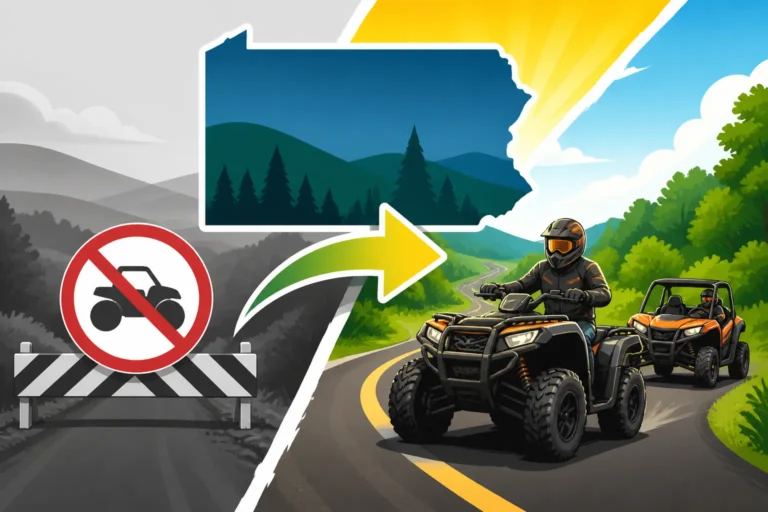
In Pennsylvania, it's not a matter of "unless posted closed," but rather "unless specifically designated open." This means that virtually every public road in the Commonwealth is, by default, off-limits to ATVs and UTVs. This isn't arbitrary; it's rooted in how these machines are classified. Unlike cars, trucks, or motorcycles, which are designed and legally registered for highway use, ATVs are considered off-highway vehicles. They lack many of the safety features, like sealed cabins, seatbelts (in the same context as cars), or robust signaling systems, that are mandated for road-going vehicles. Because of this fundamental difference, there's actually [Street Legal ATVs in Pennsylvania: The Short Answer], which means the state doesn't provide a path to convert your quad into a street-legal vehicle like you might with some dirt bikes in other states.
This default closure means that your township isn't being difficult for the sake of it; they're simply adhering to the state's established legal framework for different types of vehicles. When a road is open, it's because a specific action has been taken by the local government, creating a specific exception to this general rule. The burden of proof, therefore, rests on those who wish to see a road opened, not on those who wish it to remain closed. It requires a formal process and a clear justification that addresses the numerous concerns that local officials will naturally have.
Township Concerns and Legal Authority
Township supervisors aren't just thinking about whether riders want to connect a trail; they're grappling with a multitude of legal and practical considerations. Their primary concerns will almost always revolve around public safety, liability, and the practical impact on local infrastructure and residents. They'll worry about potential accidents involving ATVs and other vehicles, pedestrians, or even children. The noise, dust, and general disruption that ATV traffic could bring to residential areas will also be a major point of contention for many citizens and, by extension, their elected officials.
Legally, townships do have the authority to enact ordinances that designate certain roads or portions of roads for ATV use. This authority is granted under state law, but it comes with a significant amount of responsibility. Any decision to open a road must be carefully considered, ensuring it aligns with public safety, doesn't create undue liability for the township, and is supported by the community. They must also consider the cost of signage, enforcement, and potential wear and tear on roads not designed for ATV traffic. When you see [Pennsylvania's Designated ATV Roads], understand that a considerable amount of thought, debate, and legal process went into making that designation happen.
Building Your Case: What Townships Look For
So, you understand the hurdles. Now, how do you clear them? Approaching your township isn't about demanding; it's about presenting a well-researched, compelling case that demonstrates thought, responsibility, and tangible benefits for the community.
The Power of Community and Organization
One voice, no matter how passionate, can easily be overlooked. A chorus of voices, however, is much harder to ignore. Your absolute best chance of success lies in organizing and presenting a unified front. Start by reaching out to other riders in your area. Are there local ATV clubs? Connect with them. If not, consider forming a small, informal group of like-minded individuals who are committed to this effort. This organization shows the township that this isn't just a personal whim, but a shared interest within the community.
A formal petition, while important, is only one piece of the puzzle. What's more impactful is demonstrating active community engagement. Attend township meetings. Write letters. Engage in civil conversations with neighbors who might be skeptical. Show that local riders are responsible, engaged members of the community who are willing to collaborate. The sheer volume of local support, combined with a responsible attitude, goes a long way in swaying public opinion and, ultimately, township supervisors.
Safety, Responsibility, and Economic Benefits
This is where you directly address the township's core concerns and flip them into opportunities. Your proposal needs to emphasize how opening the road can be done safely and responsibly, while also bringing benefits to the township.
When it comes to safety, don't just say riders will be safe; propose concrete measures. This might include:
- Mandatory Helmets: Reiterate that riders would adhere to [Pennsylvania Helmet Law for ATV Riders] on any designated road sections.
- Insurance Requirements: Stress that all machines would carry the legally required [Pennsylvania ATV Insurance Requirement] to cover any potential incidents.
- Speed Limits: Suggest appropriate, lower speed limits for ATV traffic on the designated roads.
- Visible Signage: Propose clear signs indicating ATV presence and rules.
- Rider Education: Highlight that many riders have completed [Pennsylvania ATV Safety Certificate Requirements] and that responsible riding is paramount.
To show responsibility, you can talk about riders' commitment to staying on designated routes, respecting private property, and minimizing noise and dust. For instance, many riders already utilize aftermarket accessories from companies like SuperATV to enhance their machine's visibility, like adding brighter lights, turn signals, or even street-legal mirrors, which could be emphasized as a commitment to safety if roads are opened. This proactive approach can help mitigate some of the township's inherent concerns.
Finally, present the economic benefits. Think about local businesses: gas stations, convenience stores, restaurants, hardware stores, and even small general stores in rural areas. When riders can connect trails or access these services via a designated road, they spend money. This influx of cash, especially in smaller communities, can be a significant boost. You might even compile anecdotal evidence from local business owners who have seen increased traffic from ATV riders when trail access is nearby. This economic argument can be a very powerful motivator for local officials looking to support their community's prosperity.
The Process: From Idea to Ordinance
Once you've rallied your local riding community and clearly defined your arguments, it's time to formally engage with the township. This isn't a quick sprint; it's a marathon that requires patience and persistence.
Initial Outreach and Research
Don't just show up at a township meeting with a demand. Start with informal conversations. Reach out to individual township supervisors, the road master, or even local law enforcement if they're approachable. Explain your idea, listen to their initial feedback, and most importantly, ask about their concerns. This initial outreach is crucial for understanding the political landscape and identifying potential allies or significant roadblocks. It allows you to tailor your formal proposal to address their specific worries head-on.
Simultaneously, do your homework. Research other townships in Pennsylvania that have successfully opened roads for ATVs. What were their ordinances like? What were the key factors in their success? Understand the specific state laws governing ATVs, particularly [What Pennsylvania's ATV Chapter Covers], to ensure your proposal is legally sound. Identify the exact roads you'd like to see opened, their length, their connectivity to existing trails or amenities, and whether they are residential, rural, or industrial. Specificity is key. Are you looking for a small connector between two large trail systems, or access to the local pizza shop? The scope of your request will greatly influence its feasibility.
Presenting Your Proposal
Once you have a solid plan and some initial feedback, it’s time to prepare a formal presentation for a township meeting. This should be professional, concise, and compelling. Your presentation should clearly state your request, outline the specific roads you wish to open, and detail all the proposed safety and responsibility measures we discussed earlier. Use maps to illustrate the proposed routes and explain how they connect the riding community to services or other trail networks.
Provide data, even if it's estimated. How many riders live in the township? How much money could they potentially bring to local businesses? Show that you've thought about enforcement—perhaps suggesting clear signage like [The Green Sign on a Pennsylvania Township Road] would be required. Consider proposing a phased approach, perhaps starting with a very short, low-traffic connector road as a pilot project before suggesting broader access. This demonstrates flexibility and a willingness to prove the concept before a full-scale implementation.
To help the supervisors visualize the pros and cons, consider a summary table:
| Consideration | Potential Pro for Township | Potential Con/Challenge for Township |
|---|---|---|
| Economic Impact | Increased revenue for local businesses (gas, food, lodging) | Minimal impact if rider numbers are low; potential for increased litter |
| Community Engagement | Improved relationship with local ATV/UTV enthusiasts | Potential for division among residents (pro vs. anti-ATV) |
| Safety & Liability | Riders committing to safety measures (helmets, insurance, speed) | Risk of accidents; increased burden on local emergency services |
| Infrastructure | Potentially reduced unauthorized off-road riding if legal routes exist | Increased wear and tear on roads not built for heavier ATV traffic |
| Environmental Impact | Concentrating riding on designated routes, reducing random damage | Potential for noise, dust, and emissions in new areas |
| Tourism | Attracting visitors who use local services and lodging | Management of increased traffic and potential conflicts |
The Ordinance and Ongoing Stewardship
If your proposal gains traction, the next step will be the legal drafting and passing of a specific ordinance by the township. This is a formal legislative process that involves public readings, opportunities for public comment, and a final vote by the supervisors. It’s not something that happens overnight, and it’s important to stay engaged and present throughout this period. You'll want to ensure the final ordinance truly addresses the needs of riders while satisfying the township's requirements.
Once a road is opened, your work isn't done. Ongoing stewardship is crucial. This means that riders must consistently demonstrate responsible behavior, adhere to all posted rules, and maintain open lines of communication with the township. Show up for road cleanups, volunteer for trail maintenance, and be an advocate for safe and legal riding. This long-term commitment reinforces the trust between the riding community and the local government, which is vital for maintaining the privilege of riding on designated roads and for future expansion of riding opportunities. Remember, the way riders act on an opened road directly impacts the township's willingness to open more, or even to keep existing ones open.
Realistic Expectations and Potential Hurdles
It’s easy to get excited about the prospect of new riding opportunities, but it’s important to temper that enthusiasm with a realistic understanding of the challenges ahead. This process is rarely quick or easy.
The Long Road Ahead
Let's be blunt: asking a township to open a road is a significant undertaking that can stretch out over many months, or even years. Township meetings happen on a set schedule, public comment periods are required, and legal drafting takes time. There will be multiple opportunities for residents, both in favor and opposed, to voice their opinions. [Who Votes to Open a Road] are local elected officials, and they often move cautiously, especially when dealing with something as potentially controversial as opening roads to ATVs.
You might face delays due to changes in township administration, unexpected budget constraints, or simply a crowded agenda. Don't get discouraged by slow progress. Think of it as a marathon, not a sprint. Every meeting, every conversation, every letter is a step forward, even if it feels small. The key is consistent, respectful engagement.
Addressing Opposition and Compromise
No matter how well-reasoned your proposal, you will almost certainly face opposition. Residents might raise concerns about noise, dust, increased traffic, decreased property values, or the safety of their children. It’s important to anticipate these objections and be prepared to address them calmly and constructively. Instead of dismissing their concerns, acknowledge them and explain how your proposal mitigates these issues. For example, if noise is a concern, you could emphasize that DCNR-registered machines typically have stock mufflers that meet noise regulations, and advocate for strict enforcement against modified, excessively loud exhausts.
Be prepared to compromise. The township might not agree to open every road you initially propose. They might suggest shorter segments, specific hours of operation, or seasonal restrictions. Be flexible and willing to negotiate. A small victory—a short connector road, for example—can build trust and set a precedent for future discussions. Remember, the goal is to expand riding opportunities legally and safely, and sometimes that means taking incremental steps. Sometimes, despite your best efforts, a township might still say no. Understanding [Why Most Roads Stay Closed] can help you manage your expectations and prepare for potential setbacks. It's not a failure to be denied; it's an opportunity to learn and perhaps refine your approach for a future attempt.
Disclaimer
This article is for general informational purposes only and does not constitute professional advice. Laws, prices and regulations vary by location and change over time. Consult a qualified professional for guidance on your specific situation.