Pennsylvania Rules for a Child Passenger
One of the biggest questions I get from folks who are just getting into ATV riding, or even seasoned riders who are becoming parents or grandparents, is about bringing the little ones along. There’s a natural desire to share the outdoor experience, but the thought of safety, especially when it comes to carrying a child passenger on an ATV, can be a real head-scratcher. It’s not as simple as just hopping on and going, and understanding Pennsylvania's specific rules and, more importantly, the underlying safety principles, is crucial. This guide will walk you through everything you need to know to make informed, safe, and legal decisions about having your child as a passenger on an ATV or UTV in the great outdoors of Pennsylvania.
The Core Rule: One Rider Per Seat
Let’s get right to the heart of the matter: most ATVs are designed for one person, and one person only. That "seat" you're sitting on is engineered for a single operator to maintain balance, control, and react quickly to changing terrain. Trying to squeeze another person on there, especially a child, changes the entire dynamic of the machine. It’s not just uncomfortable; it’s genuinely dangerous.
Why the "One Rider" Rule Exists
Imagine trying to ride a bicycle with someone sitting on the handlebars or standing on the rear fender. It would be incredibly difficult to steer, balance, and stop, right? The same principle, amplified by engine power and rugged terrain, applies to ATVs. When an ATV is designed for a single rider, the weight distribution, suspension, and steering geometry are all calibrated for that specific load. Adding a passenger, particularly a child who might shift their weight unpredictably, throws everything off.
The risks are substantial. You lose the ability to shift your own body weight effectively to navigate turns, climb hills, or avoid obstacles. The ATV becomes top-heavy, making rollovers far more likely. In an emergency braking situation, the child passenger could be propelled forward, hitting the operator or even being thrown clear of the machine. Plus, the operator's control can be compromised if the child blocks their view or restricts their movement. It’s a recipe for disaster, and nobody wants that kind of memory from a family ride.
Identifying a Manufacturer-Designed Passenger Seat
Now, while most ATVs are single-rider, there are exceptions. Some manufacturers produce "tandem" ATVs or "two-up" models that are specifically designed to carry an operator and one passenger. These machines are a completely different beast from their single-rider counterparts. How can you tell the difference? Look for key design features:
- Extended Seat: A tandem ATV will have a visibly longer seat, often with a raised section or separate padded area for the passenger. It's not just a stretched-out version of a single seat; it's structurally reinforced.
- Dedicated Handholds: The passenger will have sturdy, clearly defined handholds, typically integrated into the rear rack or fenders, that they can grip securely. These aren't just bungee points; they're designed for a human to hold onto.
- Separate Footrests: Crucially, a tandem ATV will feature separate, dedicated footrests for the passenger, ensuring their feet aren't dangling or interfering with the operator's control. These are often positioned slightly higher and further back than the operator's footwells.
- Overall Sturdiness: Tandem ATVs often have a longer wheelbase, heavier-duty suspension, and a more robust frame to safely accommodate the extra weight and maintain stability.
If an ATV doesn't have these features from the factory, it's not designed for a passenger. Attaching an aftermarket "buddy seat" or trying to rig something up on a cargo rack is not a safe or legal solution for carrying a child, or any passenger, in Pennsylvania.
UTVs and Their Different Approach to Passengers
Here's where Side-by-Side Utility Vehicles (UTVs) really shine for family riding. Unlike most ATVs, UTVs are built to carry multiple passengers, and they do so in a much safer configuration. Think of them more like a small, rugged off-road car.
UTVs typically feature:
- Multiple Bench or Bucket Seats: They come from the factory with seating for two, three, four, or even six people, depending on the model. These seats are designed for human occupants, not just cargo.
- Seatbelts: Just like in a car, UTVs come equipped with seatbelts – usually three-point harnesses, sometimes even five-point for sport models – for every occupant. This is a massive safety advantage, keeping passengers securely in their seats in rough terrain or during sudden maneuvers.
- Roll Cages: A significant safety feature of UTVs is their integrated roll cage. This provides a protective barrier around the occupants in the event of a rollover, a common concern in off-road riding.
- Steering Wheel and Pedals: The automotive-style controls are often more intuitive for new operators and make the machine feel more familiar and stable than an ATV.
Because of these design differences, UTVs are generally a much more suitable and safer option for families who want to bring children along on their off-road adventures. Pennsylvania's rules for a [Pennsylvania Rules for a UTV on a Road] also acknowledge their different design, though street legality remains limited.
Age, Size, and Supervision: What Pennsylvania Expects for Younger Riders
Beyond the machine itself, there are crucial considerations about the child. Pennsylvania has specific rules regarding age for operators, and while there isn't a direct "minimum age for a passenger" rule, these operator guidelines, combined with common sense and supervision requirements, create a framework for safe family riding.
Minimum Age for Riding as an Operator (and its implication for passengers)
Pennsylvania's DCNR has clear guidelines for who can operate an ATV. For instance, children eight and nine years old are limited to machines with an engine size of 70cc or less. As riders get older, the permitted engine size increases. You can find detailed information on this in guides like [Pennsylvania Minimum Age to Ride an ATV] or [Pennsylvania Rules for a Nine-Year-Old Rider].
While these rules apply to the operator, they strongly inform the safety of having a child as a passenger. If the operator isn't mature enough, skilled enough, or physically capable enough to handle the ATV on their own, adding a child passenger only compounds the risk. Even if a child is legally allowed to ride as a passenger (on a machine designed for it), the operator's age, skill, and judgment are paramount. An inexperienced operator, even a teenager, might struggle to maintain control with the added responsibility of a child behind them. This is why having an experienced, adult operator is almost always the safest choice when carrying a child passenger.
The Role of the ATV Safety Certificate for Operators
Pennsylvania takes ATV safety seriously, and for good reason. Riders between the ages of 8 and 15 are generally required to possess an ATV Safety Certificate to operate on DCNR-managed lands. You can learn more about these requirements in resources like [Pennsylvania ATV Safety Certificate Requirements].
Why does this matter for a child passenger? Because a well-trained operator is a safer operator, and a safer operator means a safer ride for everyone, especially a child passenger. An operator who has gone through a safety course understands:
- Proper Riding Techniques: How to navigate various terrains, handle ascents and descents, and corner safely.
- Risk Assessment: How to identify potential hazards and adjust their riding style accordingly.
- Emergency Procedures: What to do in case of a mechanical issue, a fall, or other unexpected events.
- The Importance of Gear: Why helmets and other protective equipment are non-negotiable.
When an adult or an older, certified youth operates an ATV or UTV with a child passenger, they are better equipped to anticipate problems, make quick decisions, and ultimately, keep everyone safe. The safety certificate isn't just a piece of paper; it represents a foundational understanding of safe riding practices. [Pennsylvania Supervision Rules for Minors] further reinforces this, emphasizing that even certified young operators need supervision.
Supervising Young Riders on Designated Trails
Beyond the operator's skill and the machine's design, constant supervision is absolutely critical when riding with children, whether they are operating their own youth ATV or riding as a passenger. When you're out on the trails, whether it's the [Bloody Skillet's 38 Miles] or a smaller club trail, you need to be fully engaged with the experience and aware of your child's presence.
This means:
- Pre-Ride Briefing: Before you even start the engine, talk to your child passenger. Explain how important it is to sit still, hold on tight to the designated handholds, and keep their feet on the footrests. Tell them not to distract the operator or make sudden movements.
- Frequent Check-ins: On the trail, especially if it's a long ride or particularly bumpy, periodically check on your child. Are they still comfortable? Are they holding on? Are they getting tired or cold?
- Pacing the Ride: The ride should be tailored to the least experienced or youngest member of the group. This means slower speeds, avoiding overly aggressive terrain, and taking more frequent breaks. This is good [Pennsylvania ATV Trail Etiquette on Narrow Trails] as well.
- Leading by Example: Always wear your own safety gear, follow all rules, and ride responsibly. Children learn by watching, and your good habits will instill safe practices in them.
Remember, even on trails designated for ATVs, conditions can change rapidly. A sudden dip, a patch of mud, or an unexpected obstacle can quickly turn a fun ride into a dangerous situation if you're not paying attention to your child passenger.
Gear Up Right: Protecting Your Child Passenger
Just as you wouldn't let a child ride in a car without a seatbelt, they absolutely need proper protective gear when riding on an ATV or UTV. The environment is inherently more exposed and dynamic than a car, meaning the right equipment isn't just recommended; it's mandatory for their safety and often required by Pennsylvania law.
Helmets and Eye Protection: Non-Negotiables
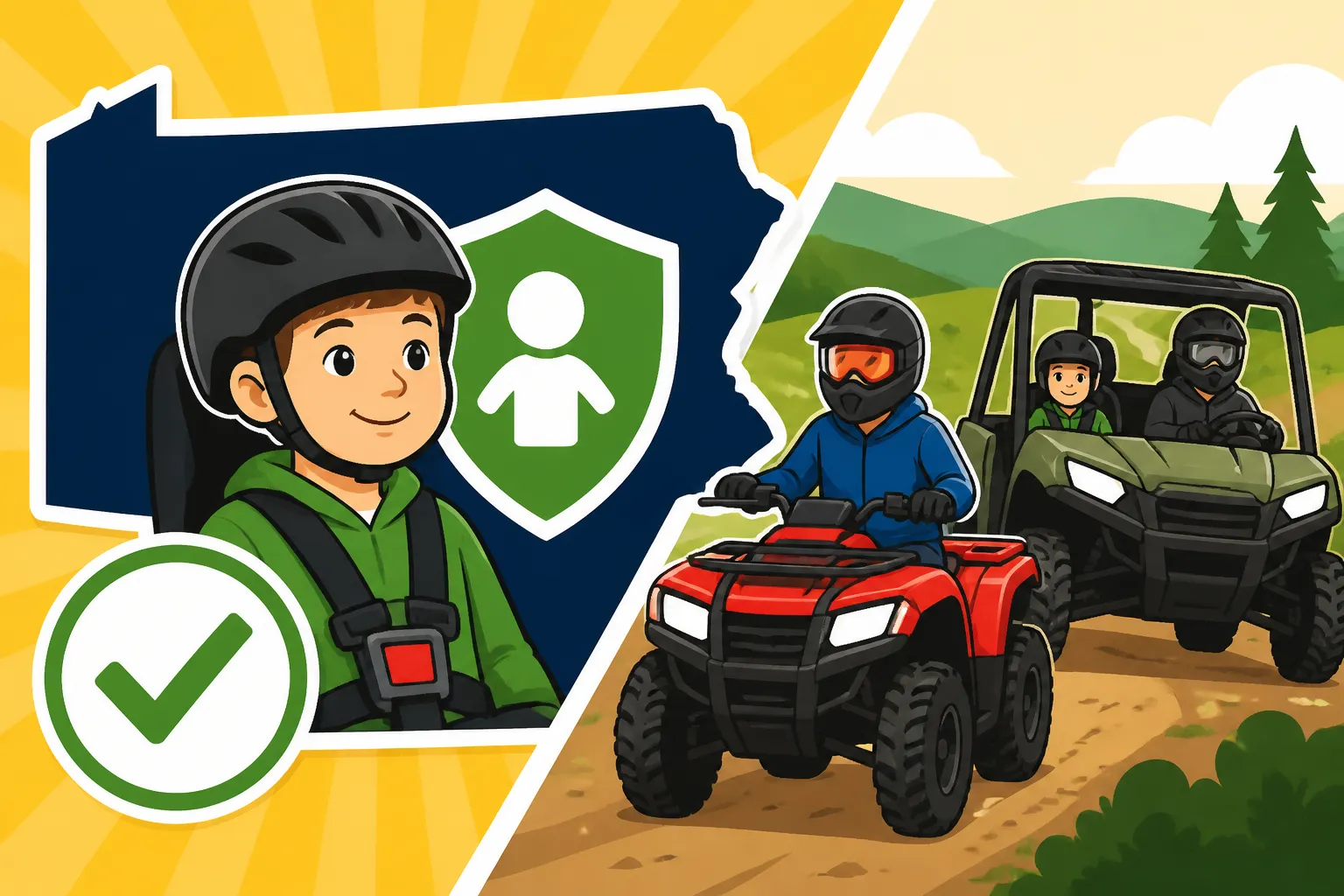
Pennsylvania law is very clear on helmets: "No person shall operate or ride upon an ATV unless wearing a securely fitted helmet" (Title 17, Chapter 51, Subchapter A, Section 5124). This applies equally to operators and passengers, including children. This isn't just a suggestion; it's a critical safety requirement designed to protect the most vulnerable part of the body.
When choosing a helmet for a child passenger, consider these points:
- DOT and Snell Certification: Always look for helmets that are DOT (Department of Transportation) approved. Snell certification is another excellent standard, indicating even higher levels of impact protection. Never buy a toy helmet; it offers no real protection.
- Proper Fit is Key: A helmet that is too large can shift around, obstruct vision, and not provide adequate protection. It should fit snugly but comfortably, without being painful. The child's head should not move independently inside the helmet when the chin strap is fastened.
- Full-Face Design: For children, a full-face helmet offers the best protection, covering the chin and jaw in addition to the head.
- Eye Protection: Goggles or a helmet with a face shield are essential to protect eyes from dust, debris, branches, and insects. Just like the helmet, they need to fit well and provide clear, unobstructed vision.
The importance of [Pennsylvania Helmets for Operator and Passenger] cannot be overstated, especially for impressionable young riders. Make it a routine that no one, especially a child, gets on a machine without their helmet properly secured.
Appropriate Clothing and Footwear
While helmets and eye protection are the stars of the safety show, what a child wears on the rest of their body is equally important for preventing less severe, but still painful, injuries. Think of it as armor against the trail.
- Long Sleeves and Pants: Even on a hot day, long sleeves and pants made of durable material (like denim or specialized riding gear) are crucial. They protect against scrapes from branches, minor falls, sun exposure, and flying debris. Lightweight, breathable materials designed for outdoor activities can help keep them comfortable.
- Sturdy, Over-the-Ankle Boots: Flip-flops, sandals, or even sneakers are absolutely out. Children need boots that cover their ankles to protect against twists, impacts, and heat from the engine. The soles should have good grip to prevent slipping off footrests.
- Gloves: Riding gloves protect hands from blisters, abrasions, and offer a better grip on handholds. They also provide some insulation against cold weather.
- Layering: Depending on the weather, layering is a smart strategy. It allows you to add or remove clothing to keep the child comfortable, preventing both overheating and getting too cold, which can be distracting and dangerous.
Think about the environment you'll be riding in – dirt, rocks, mud, branches – and dress your child accordingly. It’s better to be slightly overdressed than under-protected.
Aftermarket Solutions and Their Limitations
You might see various aftermarket products advertised that claim to make carrying a passenger on a single-rider ATV safer or more comfortable. These can range from extended seats to "buddy seats" that strap onto the rear rack. While some products, like cargo boxes, from reputable brands such as SuperATV, are excellent for carrying gear, it's crucial to understand that accessories designed for cargo are not substitutes for manufacturer-designed passenger seats.
Here's why these aftermarket passenger solutions are often problematic:
- Lack of Engineering: These products typically aren't engineered with the same safety standards or load-bearing capabilities as factory-installed passenger seating. They don't magically change the ATV's weight distribution, suspension, or steering characteristics to handle a second person safely.
- False Sense of Security: They can create a false sense of security, leading operators to believe it's safe to carry a passenger when it's still fundamentally unsafe for that specific machine.
- Legality Issues: Even if a product seems secure, it might not meet the regulatory requirements for passenger transport on public lands or designated trails in Pennsylvania. Enforcement at places like [Bloody Skillet] or [Whiskey Springs] will be looking for proper machine configuration, not aftermarket add-ons.
- Compromised Control: An aftermarket seat can still place the passenger in a position that hinders the operator's ability to move freely, lean into turns, or quickly dismount in an emergency.
When it comes to carrying a child passenger, always prioritize machines specifically designed for the task from the factory. If you're unsure, consult your ATV's owner's manual or a certified dealer. Never compromise on safety when a child's well-being is at stake.
Choosing the Right Machine for Family Riding
Given the complexities and safety concerns surrounding child passengers, making the right choice of machine is perhaps the most important decision for families looking to ride together. It's not just about what's fun; it's about what's safest and most suitable for the entire family.
Why UTVs Are Often the Better Choice for Families
As touched upon earlier, UTVs (Utility Terrain Vehicles, also known as Side-by-Sides) truly stand out as the superior option for families who want to bring children along for the ride. Their fundamental design addresses many of the safety shortcomings of single-rider ATVs when it comes to passengers.
Consider these significant advantages:
- Enhanced Stability: UTVs have a wider stance and a lower center of gravity compared to many ATVs, contributing to greater stability and reduced risk of rollovers, especially on uneven terrain.
- Secure Seating and Restraints: The automotive-style seats and multiple-point seatbelts (often three-point harnesses) keep children securely in place, preventing them from being thrown around or ejected during bumps, turns, or sudden stops. This is a critical safety feature that single-rider ATVs simply don't offer.
- Protective Roll Cages: The integrated roll cage provides a significant layer of protection in the event of a rollover, which is an unfortunate reality of off-road riding. This structural integrity offers peace of mind that a helmet alone on an ATV cannot.
- Passenger Handholds: UTVs often have well-placed handholds for passengers to brace themselves, similar to those found in cars.
- Room for Gear: With larger cargo beds and often more storage compartments, UTVs can easily carry snacks, drinks, first-aid kits, extra clothing, and other essentials for a family outing.
- Comfort and Communication: Side-by-side seating allows for easier communication between the operator and passengers, making the ride more enjoyable and allowing the operator to monitor the child's comfort and well-being.
- More Diverse Trail Access: While [Pennsylvania's Class II Trail Width Limit] means some UTVs might be too wide for certain state forest trails, many UTVs are designed to meet these width requirements, offering access to numerous family-friendly trails across the state.
For families, investing in a UTV designed for multiple occupants offers a significantly safer and more comfortable experience, allowing everyone to enjoy the Pennsylvania wilderness together.
Tandem ATVs: A Specific Design for Two
If a UTV isn't quite what you're looking for, but you still want to ride an ATV, consider a tandem ATV. These are purpose-built for two riders and offer a compromise between the agility of a single ATV and the passenger-carrying capability of a UTV.
Key features to remember for tandem ATVs include:
- Engineered for Two: As discussed, these machines have a longer wheelbase, often a more robust suspension, and specific structural reinforcements to safely accommodate the added weight of a passenger.
- Dedicated Passenger Accommodations: They will have a clearly defined, extended passenger seat, separate footrests, and sturdy handholds designed for a second person.
- Operator Control Still Paramount: While designed for two, the operator still needs to be highly skilled and attentive. Managing the balance and control of a tandem ATV, especially with a passenger, requires experience and a careful riding style. It’s not a license to be reckless.
- Less Protection than a UTV: While safer than riding double on a single-rider ATV, a tandem ATV still lacks the seatbelts and roll cage protection offered by a UTV. Riders are more exposed to the elements and potential impacts.
Tandem ATVs are a viable option for carrying a child passenger if used responsibly and within their design limits. However, always ensure the child is adequately geared up, attentive, and the operator is highly experienced.
Avoiding Risky Practices
To summarize, here are the risky practices that you absolutely must avoid when considering carrying a child passenger on an ATV or UTV in Pennsylvania:
- Riding Double on a Single-Rider ATV: This is perhaps the most common and dangerous mistake. As detailed, it compromises balance, control, and significantly increases the risk of a rollover or ejection. It's against the law on designated trails and state lands in Pennsylvania.
- Carrying Children Between the Operator and Handlebars: This position is incredibly unsafe. The child can obstruct the operator's view and movement, potentially get crushed by the operator in a sudden stop, or fall forward onto the handlebars or off the machine.
- Allowing Children to Stand on Foot Pegs Not Designed for Them: Child passengers need stable, secure footrests that prevent their feet from slipping off or getting caught in moving parts. Standing on non-dedicated pegs or, worse, just dangling their feet, is a serious risk.
- Under-Gearing: Even if you have the right machine, neglecting proper helmets, eye protection, sturdy clothing, and boots is a critical oversight. A minor fall can lead to serious injury without the right gear.
- Overloading the Machine: Even on UTVs or tandem ATVs, respect the manufacturer's weight limits. Overloading can negatively impact handling, braking, and suspension performance.
- Ignoring Age and Size Appropriateness: Just because a machine can carry a child doesn't mean it's appropriate for that specific child. Ensure they can reach handholds, keep their feet firmly on the footrests, and are mature enough to understand and follow instructions. For the operator, always adhere to the [Pennsylvania Rules for a Fifteen-Year-Old Rider] or any younger age group operating their own machine.
The goal is to create lasting, positive memories of outdoor adventures with your children, not to put them at risk. By understanding and adhering to Pennsylvania's safety guidelines and making informed choices about your machine and practices, you can ensure everyone has a safe and enjoyable time.
Here's a quick comparison of machine types for carrying child passengers:
| Feature | Single-Rider ATV | Tandem ATV | UTV (Side-by-Side) |
|---|---|---|---|
| Designed for Passenger? | No | Yes (1 passenger) | Yes (multiple passengers) |
| Primary Use | Single operator sport/utility | Operator + 1 passenger sport/utility | Operator + multiple passengers utility/recreation |
| Seating | Single saddle seat | Extended saddle seat with passenger area | Bench or bucket seats |
| Restraints | None | None (relies on handholds) | Seatbelts (3- or 5-point) |
| Protective Structure | None (operator exposed) | None (operator/passenger exposed) | Integrated Roll Cage |
| Footrests | Operator only | Operator + dedicated passenger footrests | Floorboard for all occupants |
| Handholds | Operator handlebars | Dedicated passenger handholds | Integrated grab handles for all passengers |
| Overall Stability | Designed for single rider | Enhanced for two riders | High (wider stance, lower CG) |
| Suitability for Child Passenger | NO (Highly Discouraged) | YES (with caution/training) | BEST CHOICE (Highly Recommended) |
Disclaimer
This article is for general informational purposes only and does not constitute professional advice. Laws, prices and regulations vary by location and change over time. Consult a qualified professional for guidance on your specific situation.