Why Most Roads Stay Closed
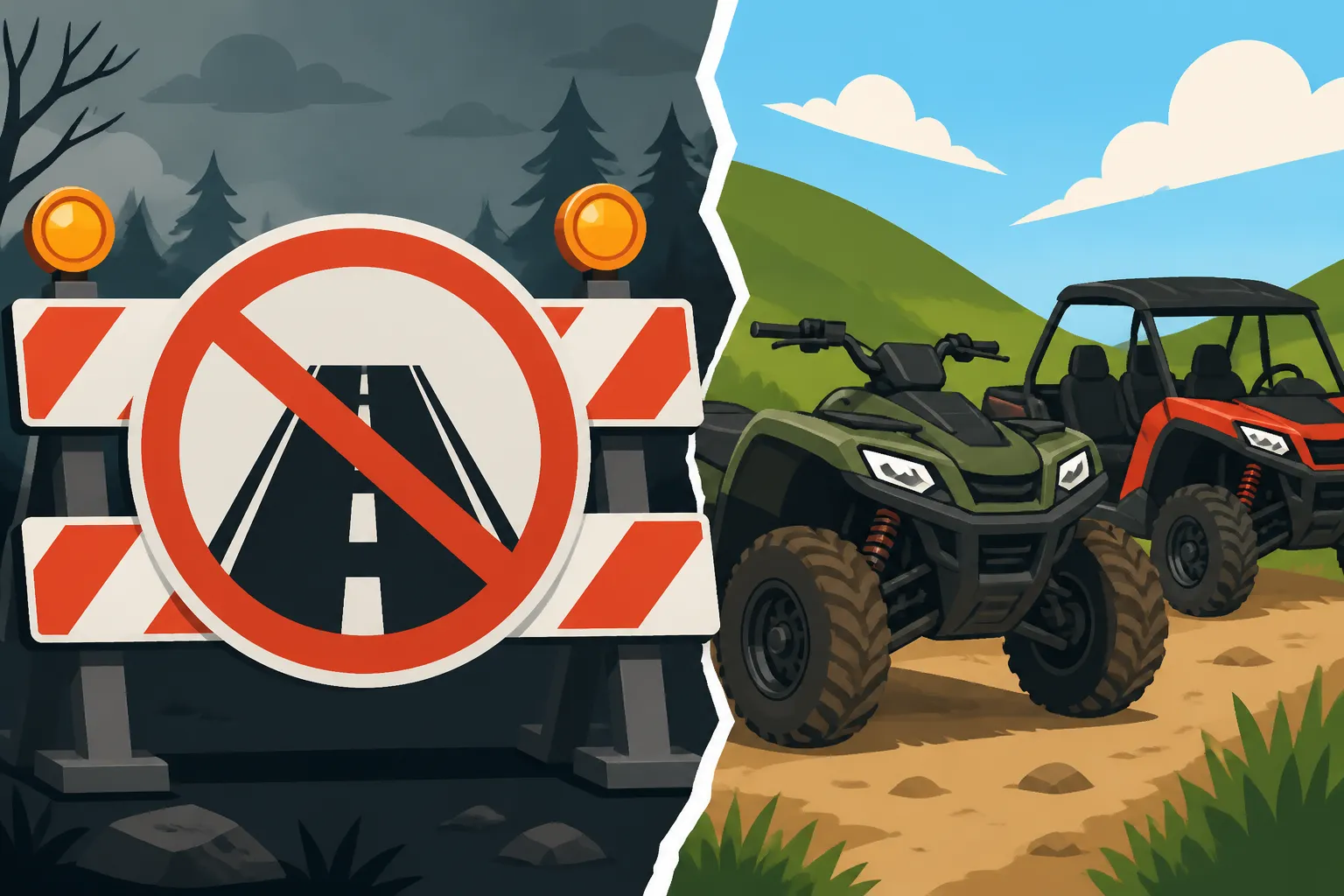
It can be incredibly frustrating to own an ATV or UTV in Pennsylvania, envisioning adventures on scenic backroads, only to find that most roads remain firmly closed to these machines. This guide is here to shed light on exactly why you encounter so many "No ATV" signs, diving deep into the legal landscape, local decision-making, and the practical challenges that keep your ride off the pavement in the Keystone State.
The Underlying Legal Framework: Why ATVs Aren't Road-Legal by Default
Pennsylvania has a very specific stance on where ATVs and UTVs belong, and for the most part, public roads are not on that list. This isn't just an arbitrary rule; it's deeply rooted in state law, establishing a foundational barrier that makes opening roads a significant challenge. Many riders feel a deep sense of injustice or confusion, wondering why their perfectly capable machine isn't allowed where cars, trucks, and even farm equipment can roam.
Pennsylvania's Base Stance: Off-Road by Design
From a legal perspective, Pennsylvania classifies ATVs as "all-terrain vehicles," explicitly designed and intended for off-highway use. This fundamental classification dictates a machine's primary operating environment. Unlike motorcycles or cars, ATVs and UTVs are not manufactured to meet the same safety standards or registration requirements for on-road travel. They lack many features considered essential for highway safety, such as turn signals, rearview mirrors, specific lighting requirements, and even suspension designed for sustained pavement speeds. This isn't to say your machine isn't safe, but rather that it doesn't align with the legal definition of a "motor vehicle" for general highway use. [Street Legal ATVs in Pennsylvania: The Short Answer] goes into more detail on this distinction.
This distinction means that the burden of proof, so to speak, is on local municipalities to open roads, rather than on the state to close them. The default is closed, and any deviation requires deliberate action and justification. Riders often feel this puts them at a disadvantage, as they have to constantly advocate for exceptions rather than starting from a neutral ground.
The "No Conversion Path" Dilemma
One of the biggest frustrations for ATV and UTV owners in Pennsylvania is the absolute lack of a "conversion path." Unlike some states where you might be able to add turn signals, a horn, mirrors, and specific tires to make your machine street legal, Pennsylvania simply doesn't offer that option. There's no process through PennDOT to inspect and title an ATV for road use, effectively locking these machines out of the public road network. [Why Pennsylvania Will Not Plate a Quad] explores this issue in depth.
This means that even if you've invested in aftermarket parts from companies like SuperATV to enhance your UTV's safety features, such as adding a full turn signal kit or a robust horn, these additions, while excellent for trail riding and increasing visibility, won't magically make your machine road-legal in Pennsylvania. The state's Department of Transportation (PennDOT) does not issue vehicle registrations for ATVs, as that responsibility falls to the Department of Conservation and Natural Resources (DCNR) strictly for off-highway use. It's a bureaucratic hurdle that many find incredibly challenging to overcome, as it eliminates the possibility of even meeting a modified set of standards.
Understanding 17 Pennsylvania Code Chapter 51
The core of Pennsylvania's ATV regulations can be found in 17 Pennsylvania Code Chapter 51. This chapter specifically defines ATVs, outlines their permissible uses, and, crucially, restricts their operation on public highways. It establishes the rules for registration, safety certificates, and where these machines can and cannot operate. The language of this code is quite clear: operation on a highway is generally prohibited unless specific exceptions are met or a local municipality has formally designated a road for joint use. [17 Pennsylvania Code Chapter 51] breaks down the specifics.
This comprehensive chapter forms the backbone of all enforcement actions and local decisions. Any local government looking to open a road must do so within the framework of this state code, meaning they cannot simply declare any road open without considering state regulations. It's not just a suggestion; it's the law, and it's designed to regulate the safe and responsible use of ATVs and UTVs across the commonwealth, primarily by keeping them off roads intended for conventional vehicles.
Local Control and the "Opt-In" System: Why Townships Say No
While state law sets the default to "closed," it does grant local municipalities — townships and boroughs — the authority to open certain roads for joint use by ATVs and other vehicles. This "opt-in" system means the decision rests squarely on the shoulders of local officials. However, the process is complex, often contentious, and frequently results in roads remaining closed due to a variety of local concerns and pressures.
The Power of Local Ordinances
To open a road, a township or borough must pass a specific ordinance. This isn't a quick process. It typically involves public meetings, community input, and careful consideration by the local governing body, whether it's the board of supervisors or borough council. These local officials are often caught between passionate ATV riders advocating for access and residents concerned about noise, safety, and property values. [Township Roads Open to Pennsylvania ATVs] provides more context on this municipal power.
The ordinance must clearly define which roads are open, what rules apply (e.g., speed limits, times of operation), and often involves specific signage requirements. Without this formal legal step, a road remains closed, regardless of how suitable it might seem for ATV use. This process ensures that local concerns are addressed, but it also means that advocacy at the local level is absolutely critical if riders want to see more roads open.
The "Green Sign" and Designated Roads
When a road is designated open, it must be clearly marked with specific "Green Signs." These signs are the visual confirmation that you are on a joint-use road where ATV operation is permitted. Without these signs, even if you think a road should be open, it isn't legally. [The Green Sign on a Pennsylvania Township Road] explains what to look for.
The absence of these signs on most rural roads is a clear indicator of the default "closed" status. Townships are often hesitant to erect these signs due to the liability concerns they entail. Once a road is formally designated and signed, the municipality takes on a greater responsibility for ensuring public safety for all users, including ATV riders. This perceived increase in liability is a major deterrent for many local governments who would rather avoid the potential for accidents or lawsuits.
Key Reasons Municipalities Keep Roads Closed
The decision to keep roads closed isn't arbitrary; it's usually based on a combination of very real concerns from residents and local officials alike. Understanding these factors is crucial for any rider hoping to advocate for change.
- Public Safety Concerns: This is often the primary reason. Residents worry about the safety of children, pedestrians, bicyclists, and motorists sharing the road with ATVs. Concerns about speed, blind corners, and the general difference in vehicle dynamics between an ATV and a car lead to calls for caution.
- Noise Pollution: ATVs and UTVs, even with stock exhausts, can be loud, especially when ridden in groups. Residents living along potential ATV routes often express concerns about incessant noise disturbing their peace and quiet, particularly during evenings and weekends. While aftermarket parts from SuperATV can offer quieter exhaust options, the general perception of ATVs as noisy persists. [Pennsylvania Rules for a Loud Exhaust] discusses this.
- Dust and Environmental Impact: Unpaved roads, when used by ATVs, can generate significant dust, affecting air quality for nearby homes and potentially impacting local ecosystems. Concerns about trail widening, erosion, and damage to road shoulders also play a role, especially in environmentally sensitive areas.
- Increased Traffic and Congestion: Opening a road to ATVs could draw more riders, leading to increased traffic on what might be quiet, residential roads. This can be a concern for residents who value the tranquility and low traffic volume of their rural communities.
- Liability and Insurance: As mentioned earlier, municipalities often fear increased liability if an accident occurs on a designated ATV road. The cost of additional insurance coverage or potential legal fees can be a significant deterrent for budget-conscious local governments.
- Law Enforcement and Enforcement Costs: Monitoring and enforcing ATV rules on open roads can strain local police resources. Ensuring riders have proper registration, safety certificates, and are adhering to speed limits and other regulations requires patrols and manpower, which many small townships simply don't have readily available.
Practical Challenges and Public Perception: The Unspoken Barriers
Beyond the legal and municipal reasons, the practical challenges of integrating ATVs onto public roads and the prevailing public perception play a massive role in why most roads stay closed. These factors are often harder to address through legislation alone and require a shift in culture and understanding.
Conflicting Road Users and Safety Perceptions
When ATVs share roads with cars, bicycles, and pedestrians, different expectations and safety standards clash. Drivers of passenger vehicles might not be accustomed to seeing ATVs on the road, leading to misjudgments of speed, turning radius, or braking distances. This can create dangerous situations, especially on winding rural roads with limited visibility. [Pennsylvania Joint-Use Road Rules] highlights the importance of understanding these shared road dynamics.
For many non-riders, the sight of an ATV on a public road instantly raises concerns about safety, even if the rider is being perfectly responsible. This perception is often shaped by isolated incidents or general stereotypes rather than the reality of safe, rule-abiding riders. Overcoming these deeply ingrained perceptions requires consistent, positive examples of responsible riding and a clear understanding of the rules by all road users.
Noise, Dust, and the "Off-Road" Image
As touched upon earlier, noise and dust are significant issues that fuel public opposition. Even if an ATV meets legal sound limits, the distinctive sound can be perceived as much louder and more disruptive than a car, especially in quiet residential areas. The image of a "dirty" off-road vehicle kicking up dust also clashes with the desire for clean, quiet communities.
Furthermore, the very nature of an ATV's design — rugged, aggressive, built for trails — contributes to the public's perception that it doesn't belong on paved roads. Accessories that enhance off-road capability, such as those from SuperATV like large tires or lift kits, while perfectly suited for trails, can reinforce this perception of an "unsuitable" road vehicle in the minds of the general public. While riders understand the utility, the public often sees only the visual contrast.
The Designated Road Versus "Any Road" Mentality
Another challenge lies in the distinction between a specifically designated "joint-use road" and the idea that ATVs should be allowed on "any road." State law is clear that only designated roads are open. However, some riders, perhaps unaware of the nuances of Pennsylvania law or coming from states with more lenient rules, might assume that a dirt road or quiet township road is fair game. This kind of unsanctioned riding reinforces negative stereotypes and can quickly lead to townships clamping down even harder.
The constant need to educate riders on where they can legally ride, and just as importantly, where they cannot, is an ongoing battle. Riding illegally on closed roads only serves to strengthen the resolve of local officials and residents who want to keep ATVs off their public roads altogether. It undermines the efforts of responsible riders and advocacy groups working to expand legal access.
Limited Exceptions and the Path Forward for Riders
Despite the many reasons most roads remain closed, there are specific, limited exceptions, and active steps riders can take to advocate for more access. Understanding these nuances is key to responsible riding and potential future expansion of legal road use.
Crossing a Highway and Agricultural Exemptions
Pennsylvania law does allow for limited circumstances where an ATV can operate on a public road. The most common is the ability to cross a highway at approximately a ninety-degree angle to access another trail or piece of private property, provided it's done safely and legally. This isn't riding on the highway, but merely traversing it. [Crossing a Highway on an ATV in Pennsylvania] explains the specific rules.
Additionally, there are agricultural exemptions for farmers using ATVs for farm-related purposes, allowing them to travel on roads between fields or to market, often with specific safety requirements like an orange triangle. These are very specific carve-outs, however, and do not extend to recreational riding.
Designated Mixed-Use Roads: A Glimmer of Hope
While rare, some municipalities have embraced the idea of mixed-use roads. Windber Borough in Cambria County is a prime example, having actively designated certain borough streets for ATV and UTV use to connect riders to the popular Rock Run Recreation Area. This initiative highlights what is possible when local governments work with the riding community. [Windber Borough's Mixed Use Program] details their approach.
These designated routes are typically well-marked and often have specific rules regarding speed limits, times of operation, and sometimes even require a local permit. They serve as crucial connectors, allowing riders to get from staging areas to trailheads without having to trailer their machines. For UTV owners, the ability to drive through a small town can greatly enhance the overall riding experience, especially when connecting to major trail systems.
Advocating for More Open Roads: Be Part of the Solution
If you want to see more roads open to ATVs and UTVs, the most effective approach is to become an active, responsible advocate at the local level. Here's how you can make a difference:
- Join or Form a Local Club: Strength in numbers is key. Local clubs can present a unified front to municipal governments, demonstrating organized and responsible ridership. They can also educate members on proper riding etiquette and legal requirements.
- Attend Local Meetings: Be present at township or borough council meetings. Politely present your case, focusing on the economic benefits of tourism, responsible riding plans, and addressing concerns proactively.
- Propose Solutions, Not Just Demands: Instead of just asking for roads to be opened, come with solutions. Suggest specific roads that would serve as good connectors without impacting residential areas too heavily. Offer to help with signage, trail clean-up, or even volunteer for enforcement patrols if applicable.
- Emphasize Responsible Riding: Highlight how riders in your group or club adhere to all safety regulations, including wearing helmets, having proper registration and insurance, and riding at appropriate speeds. Emphasize that your machines are equipped with necessary safety features, perhaps mentioning enhanced visibility options from SuperATV.
- Address Concerns Directly: If residents voice concerns about noise, discuss options for quieter exhausts or suggest routes that avoid residential areas. If safety is a concern, highlight rider education and safety courses.
By understanding the complex interplay of state law, local control, public perception, and practical challenges, riders can become more effective advocates for responsible ATV and UTV access on Pennsylvania roads. It's a long road, but with persistent, respectful, and organized efforts, more "green signs" could eventually appear.
| Factor | Description | Impact on Road Opening |
|---|---|---|
| State Law (17 PA Code) | Classifies ATVs for off-highway use; no street-legal conversion path. | High Barrier: Sets default to "closed," requires local ordinances to open roads within strict guidelines. |
| Local Government Authority | Townships/Boroughs can pass ordinances to open roads for joint use. | Mixed: Grants power, but local concerns often outweigh desire for access. Decision is hyper-local. |
| Public Safety Concerns | Worries about collisions, speed, and differing vehicle dynamics. | Significant Barrier: Primary reason for resident opposition; municipalities fear increased liability and accidents. |
| Noise & Environmental Impact | ATVs perceived as loud; dust generation on unpaved roads. | Moderate Barrier: Leads to quality-of-life complaints from residents, pushing local officials to maintain quiet. |
| Enforcement & Costs | Strain on local law enforcement resources for monitoring and citations. | Moderate Barrier: Small municipalities often lack budget/manpower for consistent enforcement. |
| Liability & Insurance Costs | Fear of increased municipal liability for accidents on open roads. | High Barrier: Direct financial concern for local governments, often outweighs potential economic benefits. |
| Rider Advocacy | Organized efforts by local clubs to lobby for access and demonstrate responsibility. | Potential Enabler: Can slowly overcome barriers if done consistently, responsibly, and with clear solutions. |
Disclaimer
This article is for general informational purposes only and does not constitute professional advice. Laws, prices and regulations vary by location and change over time. Consult a qualified professional for guidance on your specific situation.