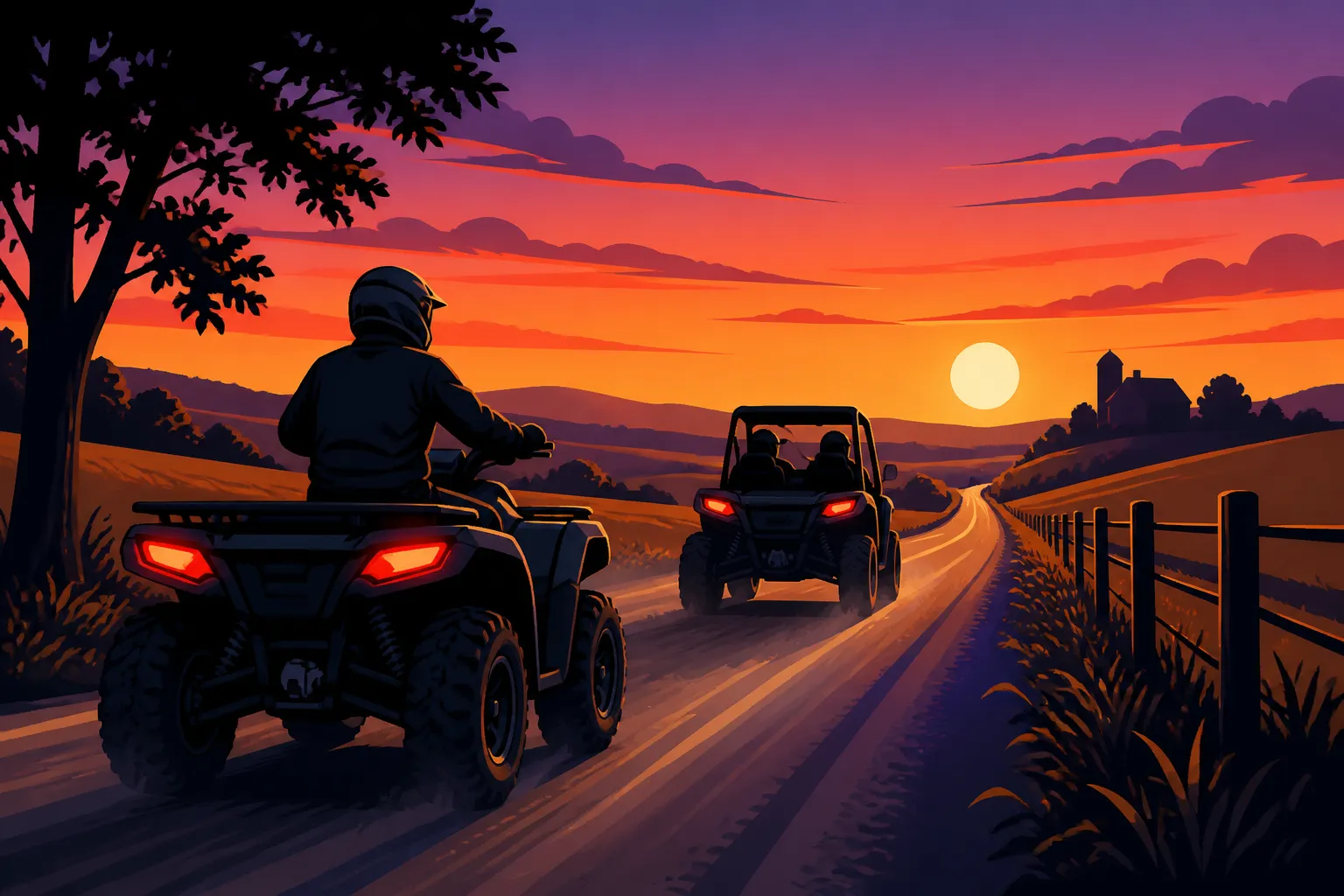
Riding Home After Sunset on a Township Road
We've all been there: a fantastic day out on the trails, the sun starting to dip below the ridge, casting those long, golden shadows, and suddenly you realize you've got a bit of a haul to get back to the truck and trailer. Maybe you're at a friend's cabin, and that dirt road is the quickest way home. The idea of "just riding this township road for a mile or two after sunset" can feel like a reasonable shortcut, but in Pennsylvania, navigating township roads on your ATV or UTV, especially after dark, is a minefield of regulations that can turn a peaceful ride into a costly headache. This guide will help you understand the specific challenges and rules for riding your machine on Pennsylvania's local roads when the stars start to pop out.
The Reality of Riding ATVs on Pennsylvania Township Roads (and Why It's Tricky)
Let's be blunt: Pennsylvania is not generally "street legal" for ATVs and UTVs. This isn't just a DCNR thing; it's deeply rooted in the state's vehicle code. Unlike some other states where you might easily plate your quad for road use, Pennsylvania takes a very different stance. Your typical off-highway vehicle is designed for trails and private land, not asphalt and public thoroughfares. This fundamental distinction is often the source of confusion and frustration for riders.
The state views ATVs and UTVs as off-road machines, and that's where they belong. The problem arises because there's a strong desire among riders to use local roads – often township roads – as connectors between trails, to access fuel, or simply to get to and from their property without trailering. It feels logical, right? These are usually quiet roads, often unpaved, and you're just trying to get from A to B. But logic sometimes clashes with the law.
The state's primary legal framework for ATVs, found in [What Pennsylvania's ATV Chapter Covers], is very clear that ATVs are not meant for public roads. There are extremely limited exceptions, primarily related to designated routes. Most of the time, if you're on a public road that isn't specifically marked as an ATV route, you're technically violating the law. This can be a tough pill to swallow, especially when you see local farmers using their quads for quick trips down the road. Those are generally operating under specific agricultural exemptions, which don't apply to recreational riders heading home from a trail.
Pennsylvania's General Ban on Road Use
The blanket ban means that unless a specific road has been legally designated and signed for ATV use, you cannot ride your ATV or UTV on it. This includes state highways, county roads, and, most frequently, township roads. The reasoning behind this is often safety-related – ATVs lack the safety features of street-legal vehicles, they handle differently on pavement, and they can be harder for motorists to see.
This general prohibition creates a huge inconvenience for many riders. Imagine owning property adjacent to a fantastic trail system, but the only way to get there involves a mile of township road. You'd naturally want to just hop on your machine and go, but doing so could land you a hefty fine. The state's focus is on keeping these machines off roads where they could encounter faster-moving traffic or where they don't meet vehicle code requirements for highway use.
The "Designated Road" Exception
So, when can you actually ride a township road? Only when it has been officially designated and marked for ATV use. This isn't something that happens casually. A township has to go through a formal process to declare certain roads or sections of roads open to ATVs. They'll typically put up specific green signs indicating the road is a [Pennsylvania's Designated ATV Roads]. Without these signs, even if a road looks like a perfect, quiet gravel connector, it's generally off-limits.
These designated roads are usually part of a larger strategy to create connector routes between trail systems or to provide access to trailheads. They are the exception, not the rule. It's not enough for a local municipality to just say "it's okay"; it has to be legally enacted and clearly signed. For a rider heading home after sunset, the first question isn't "Is it dark?" but "Is this road legally open to ATVs at all?" If the answer to that first question is no, then the night riding rules become irrelevant because you shouldn't be there in the first place.
When the Sun Sets: Pennsylvania's Night Riding Rules for ATVs and UTVs
So, let's assume, for a moment, that you are on a legally designated township road. Perhaps you're on one of those rare connector roads, or you're using a legally permissible crossing. The sun has dipped, and now you're faced with the additional layer of rules for operating your machine after dark. This is where visibility and lighting become paramount, not just for your safety, but for staying on the right side of the law.
Pennsylvania has specific requirements for lighting on ATVs and UTVs, particularly when operating on any public thoroughfare, even a designated ATV road. These rules are in place to ensure you can see where you're going and, crucially, that other road users can see you.
Mandatory Lighting Requirements
When riding an ATV or UTV after sunset, or during periods of low visibility (like fog or heavy rain), your machine must be equipped with proper lighting. This isn't just a suggestion; it's a legal mandate designed to prevent accidents. The requirements generally mirror what you'd expect from any vehicle operating at night, focusing on both forward illumination and rear visibility.
Your machine needs:
- Headlights: At least one, but usually two, white headlights that are lit and capable of illuminating objects at a reasonable distance. These need to be on and functioning properly. For many modern machines, the factory headlights are usually sufficient, but if you've got an older quad or one with dim lights, it's worth checking their output.
- Taillights: At least one red taillight, visible from a certain distance to the rear. This is absolutely critical for being seen by any vehicles that might approach from behind, even on a quiet dirt road.
- Brake Lights: A red stop lamp that illuminates when you apply the brakes. This is vital for signaling to anyone behind you that you're slowing down or stopping.
- Reflectors: Additional reflectors are often required to enhance side and rear visibility.
Make it a habit to check all your lights before any ride, but especially before a ride where there's even a remote chance you'll be out after dark. A burnt-out bulb isn't just inconvenient; it's a safety hazard and a potential ticket. This is even more critical on a township road where you might encounter an unexpected car, even if you think you have the road to yourself. [Pennsylvania Lighting Rules for Road Use] covers these requirements in detail.
Visibility and Being Seen
Beyond just having the lights, actually being seen is the goal. Remember, ATVs and UTVs are smaller and often less visible than cars or trucks, even during the day. At night, this challenge is amplified. The noise of your machine can mask your approach, and if your lights aren't bright enough or properly aimed, you become a ghost in the dark.
Consider augmenting your machine's factory lighting, especially if you spend a lot of time riding in low-light conditions. Additional LED light bars can vastly improve your forward vision, helping you spot unexpected hazards like potholes, deer, or downed branches. For rear visibility, bright taillights and plenty of reflective material on your machine and gear can make a huge difference. Reflective tape on the back of your helmet, on your jacket, or even on the rear fenders of your quad is a small investment that can provide a big safety boost.
It's also about your own awareness. When riding at night, slow down. Your reaction time is reduced, and depth perception can be challenging. Be extra vigilant at intersections, driveways, and any place where a vehicle might emerge. Assume you are invisible, and ride defensively. After all, getting home safely is the ultimate goal, and that often means taking extra precautions.
The Role of Your Helmet and Gear After Dark
While [Pennsylvania Helmet Law for ATV Riders] is a general requirement, its importance is amplified after sunset. A clear visor is essential; a tinted one that worked perfectly in the bright sun will be a dangerous hindrance at night. If you ride with a tinted visor during the day, make sure you carry a clear one or protective goggles for when the light fades.
Beyond the helmet, reflective gear can literally save your life. Many riding jackets, pants, and even gloves now incorporate reflective piping or panels. Wearing blaze orange or bright colors is great for daytime hunting season, but at night, reflectivity is what catches the light from other vehicles and makes you stand out. Think about adding reflective strips to your backpack, chest protector, or anywhere else that might be visible to drivers. [Being Seen on a Rural Road at Dusk] offers more insights into this critical aspect of safety.
Navigating Local Ordinances and State Law: The Township Road Conundrum
The biggest hurdle for riding home after sunset on a township road isn't just the darkness; it's the legality of being on that road in the first place. Pennsylvania's system is very decentralized when it comes to local roads, which means what's allowed in one township might be strictly forbidden in the next. This creates a confusing patchwork of rules that can trap even experienced riders.
State law generally prohibits ATVs on roads. However, there's a provision that allows townships to pass ordinances that open specific roads or sections of roads for ATV use. This is where the term [Pennsylvania Rules for Riding a Township Road] comes into play. It's not up to you or your neighbor; it's a formal, legislative decision by the local governing body.
How a Township Road Becomes "Open"
For a township road to be legally open to ATVs, the township supervisors (or borough council) must pass an ordinance specifically allowing it. This isn't a casual decision; it often involves public hearings, debates about safety, noise, and environmental impact. Once an ordinance is passed, the township is then responsible for properly signing the open roads.
You'll see distinct green signs that specifically state the road is open to ATVs, often indicating the specific hours or types of vehicles allowed. Without these signs, even if an ordinance exists, you might struggle to prove you were allowed to be there. This is why checking official township websites, contacting the DCNR Snowmobile and ATV Section, or looking for those green signs is so important. Never assume. A "gentleman's agreement" or "everyone rides this road" is not a legal defense.
The Importance of Posted Signs
If you're on a township road after dark, and there's no official green sign, you are almost certainly riding illegally. The burden is on the township to post the road as open, and it's on you, the rider, to only ride where it's legally permitted. Many riders get into trouble because they ride unposted roads that connect to their private property or a trail system, thinking it's a minor infraction. It's not. It's riding on a prohibited road.
It's also important to note that even if a road is designated for ATV use, that designation might come with specific restrictions. For example, some designated roads might have speed limits, noise restrictions, or even specific hours of operation. Just because a road is open during the day doesn't automatically mean it's open after sunset. Always look for accompanying signage or check the specific ordinance for any limitations.
| Road Type | General ATV Legality in PA | Night Riding Considerations |
|---|---|---|
| State Highways (e.g., SR) | Generally Illegal | Absolutely no night riding (or day riding) except for specific, short, perpendicular crossings. |
| County Roads | Generally Illegal | Same as state highways. |
| Township Roads (Unposted) | Generally Illegal | No night riding (or day riding). This is the most common scenario for citations. |
| Township Roads (Posted) | Legal if designated | Must comply with [Pennsylvania Rules for Night Riding] and lighting requirements. Check ordinance for specific hours. |
| Private Land | Legal with permission | No state lighting requirements, but good practice for safety. Ensure proper permission. |
| State Forest Trails | Legal with permit | Most state trails have specific operating hours, often closing at dusk. Check trail regulations carefully. |
| AOAA/Rock Run (Parks) | Legal with fees | Specific park hours apply; generally no night riding unless for a special event. Check park rules. |
This table provides a general overview. Always confirm specific rules with local authorities and trail management before riding.
Consequences of Illegal Road Use
Riding an unregistered or unpermitted ATV on an undesignated township road, especially after dark, can lead to significant penalties. [Pennsylvania Fines for Riding Illegally] can be substantial, often starting with a base fine of a few hundred dollars, plus court costs and fees. And remember, ignorance of the law is not a valid excuse.
A DCNR Ranger or local police officer doesn't care if you were "just going home" or "only a mile." If you're on a road you shouldn't be on, you're breaking the law. These citations can disrupt your riding season, hit your wallet hard, and in some cases, could even lead to your machine being impounded. It's simply not worth the risk. Always consult the DCNR website or your local township for specific rules if you're unsure about a particular road.
Making Your Night Ride Safer and Legal: Practical Steps for Pennsylvania Riders
So, what's a responsible rider to do if they find themselves needing to get home as the light fades? The best strategy is always prevention: avoid riding on unposted township roads entirely, and if you must be on a designated road, be fully prepared for night operation.
Plan Your Route and Timing Carefully
The absolute best way to avoid riding home after sunset on a township road is to not put yourself in that situation. Plan your rides so you're off the trails and back at your staging area or property well before dusk. Always factor in potential delays – a flat tire, a breakdown, getting turned around, or just taking longer than expected at a scenic overlook. The sun sets quickly in the mountains!
If you know your route involves a short stretch of legally designated township road, make sure you understand the specific rules for that road. Are there any time restrictions? Speed limits? Is it a [Pennsylvania Joint-Use Roads] where you might encounter cars, horses, or pedestrians? Knowledge is your first line of defense against both accidents and citations.
Gear Up for Visibility, Always
Whether you're on a designated road or legally crossing one, good visibility is non-negotiable after dark.
- Lights, Lights, Lights: Ensure all your factory lights (headlights, taillights, brake lights) are in perfect working order. Carry spare bulbs if your machine uses them.
- Auxiliary Lighting: Consider adding an aftermarket LED light bar from a brand like SuperATV for dramatically improved forward visibility. These not only help you see better but also make you more noticeable to others. Just be mindful of aiming them so you don't blind oncoming traffic on a shared road. [Aiming Your Headlight for a Gravel Road] properly is crucial here.
- Reflective Clothing: Wear a high-visibility vest or jacket with reflective strips. The more reflective material you have on, the better. This isn't just for looking cool; it's for survival.
- Clear Visor/Goggles: As mentioned earlier, switch out any tinted visors for clear ones before the sun goes down. Your eyes will thank you, and you'll be safer.
Carry Your Paperwork
If you are on a legally designated road, make sure you have all your necessary paperwork with you. This includes your [Pennsylvania ATV Registration Wallet Card] and proof of insurance, as [Pennsylvania ATV Insurance Requirement] is mandatory off your own property. Even on a designated township road, law enforcement may still check these documents. It’s always best to keep them in a waterproof pouch to protect them from the elements.
Remember, a designated township road is still a public thoroughfare, and you might encounter law enforcement. Being prepared and compliant with all regulations, not just lighting, helps ensure a smoother interaction.
When in Doubt, Don't Ride It Out
This is the golden rule for riding on Pennsylvania roads after sunset. If you're unsure if a township road is legally open to ATVs, or if you're not confident in your machine's lighting or your own visibility gear for night riding, don't risk it. Find an alternative way home, even if it means calling for a pickup or trailering your machine.
The hassle and cost of a citation, combined with the inherent risks of riding an ATV or UTV on a public road in the dark, simply aren't worth the perceived convenience of a shortcut. Stay safe, stay legal, and enjoy those beautiful Pennsylvania trails in the daylight.
Disclaimer
This article is for general informational purposes only and does not constitute professional advice. Laws, prices and regulations vary by location and change over time. Consult a qualified professional for guidance on your specific situation.