Where Pennsylvania’s Automatic $300 Fine Applies
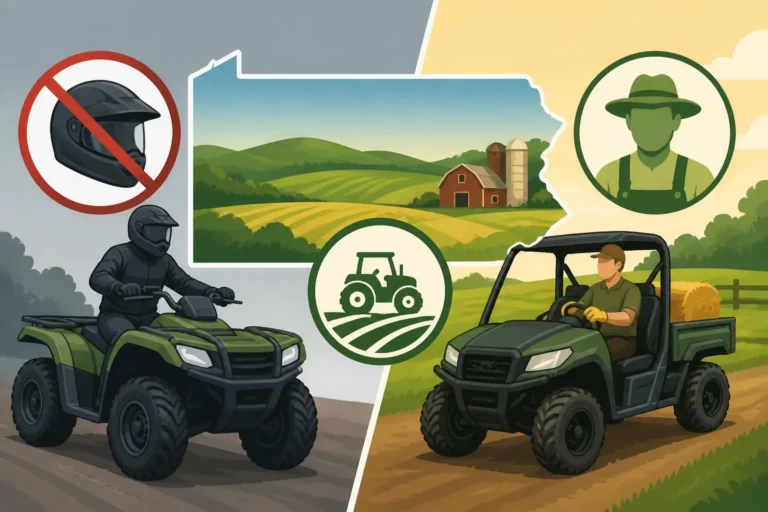
There's nothing quite like the open air and the thrill of exploring Pennsylvania's beautiful landscapes on your ATV or UTV. But let's be real, that feeling can quickly turn to dread if you're caught riding where you shouldn't be, especially with the looming threat of an automatic $300 fine. It's a common frustration for riders trying to navigate the sometimes complex rules and regulations, and nobody wants to unexpectedly lighten their wallet or, worse, lose their riding privileges. This guide is here to unravel the mystery of Pennsylvania's automatic $300 fine, showing you exactly where and why it applies, and how you can ride smart to avoid it.
The Foundation of the Fine: Unregistered Operation in Pennsylvania
Let's start at the very beginning, because understanding why the fine exists is the first step to avoiding it. Pennsylvania, through its Department of Conservation and Natural Resources (DCNR), is serious about managing its trails and ensuring that all off-highway vehicles (OHVs) operating on public lands are accounted for. The automatic $300 fine primarily targets what's known as "unregistered operation." This isn't just a technicality; it's a fundamental requirement for legal riding in most situations.
Imagine you've just bought a fantastic new machine, maybe you even got some awesome upgrades from a place like SuperATV, ready to hit the trails. You're all geared up, but if you haven't taken the crucial step of registering that machine with the DCNR, you're immediately putting yourself at risk. It doesn't matter if you're a seasoned rider or a newbie; the law applies to everyone. The intent behind this is clear: to fund trail maintenance, safety programs, and administrative costs, and to have a record of who is operating on public land. Without registration, the system breaks down. It's a key piece of the puzzle for responsible riding.
This initial fine often catches riders off guard because they might think, "I'm just going for a quick spin," or "I'm only on a short connector road." But the regulations are quite specific about where and when registration is required. There are exemptions, of course, but the vast majority of riders who venture beyond their private property need to have their machine registered. [Registering an ATV in Pennsylvania] covers the different types of registration available.
What Constitutes "Unregistered" in the Eyes of the Law?
When we talk about an "unregistered" machine, it's more than just never having applied for a plate or sticker. It can also mean your registration has expired, or perhaps you're using a limited registration in an area that requires a general registration. Pennsylvania has a two-tiered registration system for ATVs: Limited and General.
A Limited Registration, often obtained for free, allows you to operate your ATV only on your own private property or land for which you have written permission. It's fantastic for landowners or those with specific access agreements, but it doesn't give you free rein on state trails or designated public roads. If you're riding with a Limited Registration on a state forest trail, for example, that machine is considered "unregistered" for that specific purpose, and you could be facing the $300 fine. It's a common mistake, born from a misunderstanding of the two categories. Many riders assume "registered is registered," but the type matters greatly depending on where you intend to ride.
Then there's the General Registration, which comes with a fee and a visible plate and sticker. This is what allows you to ride on designated state forest trails, DCNR-approved private trails, and any roads specifically opened for ATV use. If your General Registration has expired, even by a day, your machine is technically unregistered. Rangers and law enforcement officers often check for these details, especially at trailheads or during patrols. An expired sticker, a missing plate, or a wallet card that doesn't match the machine or operator can all lead to trouble. [Riding Unregistered Brings an Automatic $300 Fine] is a crucial read if you're concerned about this.
The Specifics of Pennsylvania's Fine Structure
The automatic $300 fine isn't just a number pulled out of thin air; it's explicitly written into Pennsylvania's legal code concerning ATVs. It's intended to be a clear deterrent, a significant enough penalty to encourage compliance. This isn't like a parking ticket where the amount might vary based on how long you've overstayed. For certain core violations, particularly unregistered operation, the $300 figure is fixed and immediate.
This fine is often referred to as a "summary offense," which means it's generally handled in a magisterial district court, similar to a traffic ticket. While it might not carry the same weight as a felony, it's not something to dismiss lightly. The automatic nature means there's little room for discretion at the point of citation if the violation is clear. Officers aren't usually in a position to negotiate the fine on the spot. Their job is to enforce the law as written. The state legislature determined this amount as an appropriate penalty for the severity of the offense, balancing the need for compliance with the impact on the individual.
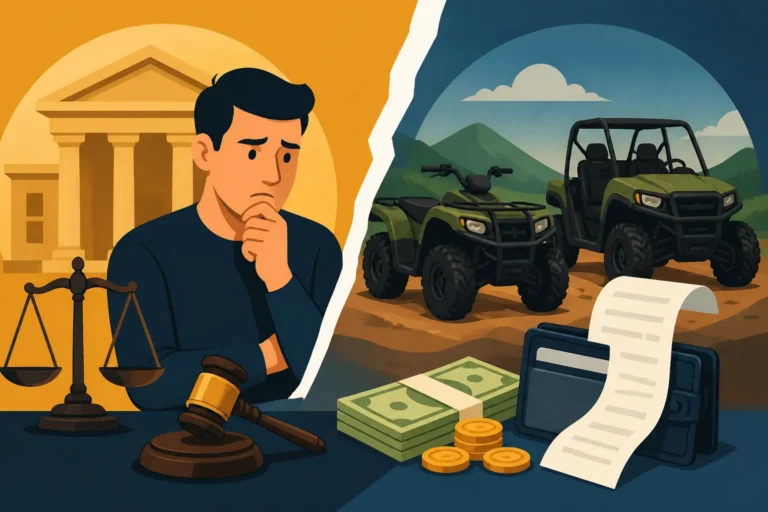
It’s important to realize that this $300 fine is often just the beginning. There can be additional costs, known as "cost of prosecution," which are tacked on by the court system. These can add a substantial amount to the initial fine, pushing the total much higher. So, while the ticket might state $300, the final bill could be considerably more once court fees and administrative charges are applied. This is why validating your registration status and ensuring all your paperwork is in order before every ride is so critical. [What Cost of Prosecution Means] elaborates on these extra charges.
Common Scenarios Leading to a $300 Fine
Now that we understand the legal framework, let's look at the real-world situations where riders most commonly encounter that dreaded $300 fine. It's usually when intent and regulation collide, often due to a misunderstanding of where you can and cannot ride.
Imagine pulling up to a trailhead on a beautiful Saturday morning, excited for a full day of riding. You've got your machine, your gear, and your buddies, but you skipped that last registration renewal. Or maybe you're cutting across a quiet township road to get from one section of trail to another, thinking it's harmless. These are exactly the kinds of moments where the law, and the fine, can come knocking. These scenarios highlight the need for riders to be not just enthusiastic, but also incredibly well-informed about the local rules.
It's a common story: a rider who has always ridden on private land with a [Pennsylvania's Free Limited Registration] decides to try a state trail for the first time. They don't realize the limited registration isn't valid for state lands. The assumption that all "registered" machines are equal across all terrains is a costly one. This is where places like the AOAA or Rock Run Recreation Area, even though they are private parks, still adhere to state registration guidelines for machines riding on their property, often requiring proof of general registration.
Riding an Unregistered Machine on State Lands
This is perhaps the most straightforward path to a $300 fine. Pennsylvania boasts some incredible state forest trails and designated ATV areas. These lands are managed by the DCNR, and their rules are clear: if you're operating an ATV or UTV on a designated state trail, it must have a current, valid Pennsylvania General Registration. There's no wiggle room here.
Let's say you're exploring the vast trails in Sproul State Forest or hitting up Bloody Skillet. At any point, a DCNR ranger or State Trooper can stop you and ask for your registration. If your machine isn't registered, if the registration has expired, or if you only possess a Limited Registration, you're looking at that automatic $300 fine. It's not uncommon for officers to set up checkpoints at trailheads, particularly on busy weekends, specifically to ensure compliance. They're looking for valid plates, current stickers, and that all operators and passengers are adhering to safety regulations. [Pennsylvania ATV Registration and Trail Access] delves into the specifics of accessing these public lands.
Even if you're not on a "designated trail" but still on state-owned land where ATV use is permitted (perhaps a forest road temporarily opened for a specific purpose, or an access road for hunters during a specific season), the registration requirement typically remains. The rule of thumb is simple: if you're on public land, assume your machine needs a General Registration. This isn't just about revenue; it's about control, safety, and managing the environmental impact of thousands of ATVs on these sensitive ecosystems.
Riding on Public Roads Without Proper Designation
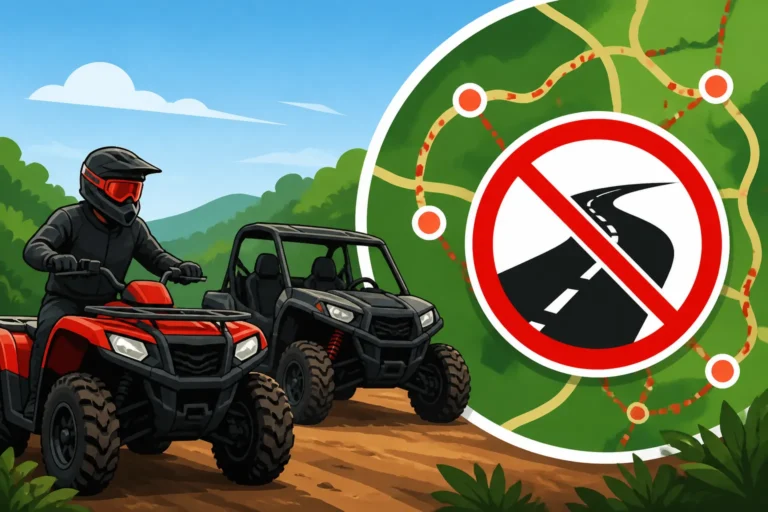
This is another major flashpoint for fines. In Pennsylvania, ATVs are generally not street legal. This means you cannot simply ride your ATV down a public road, be it a township road, a state route, or a borough street, as if it were a car. There are very specific exceptions for designated joint-use roads or roads that townships and boroughs have explicitly opened to ATV traffic.
If you're caught riding your ATV on an undesignated public road, even just to get to a gas station or to connect to another trail, you can absolutely face a $300 fine for unregistered operation. The reasoning is that without registration, your ATV is not recognized for highway use, and you're operating an unregistered vehicle on a public roadway. This often comes with additional charges for operating an illegal vehicle on a highway, potentially escalating the penalties. This scenario can be particularly frustrating for riders who live close to trail systems and just need to cross a short stretch of pavement.
Some townships, like Windber Borough, have actively created programs for mixed-use roads, even publishing lists of roads that are open and closed to ATVs. These are the rare exceptions. For the vast majority of public roads in Pennsylvania, assume they are off-limits for ATV travel. Always look for the specific green "ATV ACCESS" signs that indicate a road has been designated for shared use. Without that sign, you're taking a significant risk. [Pennsylvania's Designated ATV Roads] explains how these roads are opened and what to look for.
Private Property Riding Without Landowner Permission
While the $300 fine is primarily for unregistered operation, riding on private property without permission can also quickly lead to legal trouble, even if your machine is registered. While the fine for trespassing itself might be different, the circumstances can still bring you into contact with law enforcement who might then identify other violations. If you're caught on someone else's property, the landowner can press charges. If, during that interaction, it's discovered your ATV isn't registered, then the $300 fine comes into play.
The general rule is this: riding on any land that isn't yours, or publicly designated for ATV use, requires explicit, preferably written, permission from the landowner. A casual handshake might feel sufficient, but it leaves you vulnerable. Without that permission, you're trespassing, and landowners in Pennsylvania are serious about protecting their property. A citation for trespassing often opens the door for officers to check for other violations, including valid registration and proof of insurance.
Let's say you spotted a cool-looking field or woodlot that looks perfect for a ride, but you didn't seek out the owner. A vigilant landowner calls the Game Commission or State Police. When they respond, not only could you face charges for trespassing, but if your machine isn't properly registered for any scenario off your own private land, you could be hit with that automatic $300 fine. Always get permission, and always carry it with you. This simple step can save you a lot of grief and money.
Beyond Registration: Other Violations That Can Cost You
While the automatic $300 fine is heavily associated with unregistered operation, it's crucial to understand that there are other significant violations that can also lead to hefty penalties, sometimes just as severe, and often compounded with the registration fine. Riding safely and legally means covering all your bases, not just the registration sticker.
Think of it like driving a car: you need your license, registration, and insurance. Missing any one of those can lead to a ticket, and often, more than one. The same principle applies to ATVs in Pennsylvania. While the specific "automatic $300 fine" often targets registration, a lack of a safety certificate, insufficient insurance, or even helmet violations can bring significant financial penalties, and could be discovered in the same roadside stop that uncovers an unregistered machine.
These additional regulations are in place for critical safety and liability reasons. Pennsylvania wants to ensure that riders are educated, insured, and protected. Ignoring these aspects not only puts you at risk of a fine but, more importantly, puts your safety and financial well-being at stake in the event of an accident. It's not just about avoiding a ticket; it's about responsible riding for everyone involved.
Operating Without a Valid Safety Certificate
For many riders, a safety certificate is a mandatory requirement in Pennsylvania. Specifically, all ATV operators between the ages of 8 and 15, and any operator of any age who wishes to ride on state forest trails, must possess a valid Pennsylvania ATV Safety Certificate. Even if you're an adult and feel confident in your riding skills, if you plan to hit the DCNR-managed trails, you need this certificate.
If a DCNR ranger or law enforcement officer stops you on a state trail and you, or a youth rider under your supervision, do not have the required safety certificate, you can face a fine. While the initial fine might not always be the automatic $300 specific to registration, it will still be a significant penalty. Furthermore, if the lack of a certificate is discovered alongside an expired registration, you're looking at multiple violations and compounding fines. For youth riders, the supervising adult is often held responsible.
Think of the safety certificate as your "driver's license" for the trails. It proves you've received basic training in safe ATV operation. Courses are available online for older riders and in-person through certified instructors for youth. Carrying proof of this certificate, often a small card, is just as important as carrying your registration wallet card. [Pennsylvania ATV Safety Certificate Requirements] explains who needs it and how to get one.
Lack of Mandatory Insurance Coverage
This is another critical area where riders can get into serious trouble. In Pennsylvania, if you ride your ATV anywhere off your own private property, you are legally required to carry liability insurance. This isn't just a suggestion; it's the law. The purpose of this insurance is to protect others from damages or injuries you might cause while riding.
If you are stopped by law enforcement on a state trail, a designated road, or even private land where you have permission (but isn't your own property), and you cannot produce proof of liability insurance, you could be facing a fine. Similar to the safety certificate, while the initial fine might be separate from the automatic $300 for unregistered operation, it's still a substantial penalty. And again, if you're also riding an unregistered machine, you're now accumulating multiple, costly citations.
The state doesn't specify a minimum coverage amount, which can be a point of confusion for riders, but it does mandate that you have some liability insurance. It's always wise to check with an insurance provider to ensure you have adequate coverage for your specific riding habits and machine. Carrying your insurance card, much like your vehicle registration, is essential. [Pennsylvania ATV Insurance Requirement] details these obligations, emphasizing that off-road liability is key.
Helmet and Other Equipment Violations
While not typically triggering the "automatic $300 fine" directly linked to unregistered status, safety equipment violations can lead to separate fines and are often identified during the same stop. In Pennsylvania, all ATV operators and passengers under the age of 16 are required to wear a helmet. Furthermore, if you're riding on public roads (even designated ones), anyone under 18 must wear a helmet. Adults aged 16 and over are generally exempt from the helmet law unless they are riding on designated public roads.
If you, or a passenger, are caught riding without the appropriate helmet, a fine will be issued. The amount can vary, but it's a penalty that could easily be avoided. Beyond helmets, other equipment like spark arresters (required on public land to prevent wildfires) and proper lighting for night riding are also mandated. Operating a machine with an overly loud exhaust or one that lacks a functioning spark arrester on state trails can also lead to citations.
Think about the importance of proper lighting if you're out past dusk on a designated township road. An officer will be looking for not just your registration, but also that you have working headlights and tail lights. It's all part of ensuring safe operation for everyone sharing the trails and roads. Many riders add aftermarket lighting from SuperATV, which is a great upgrade, but ensure it complies with state requirements. [Pennsylvania Helmet Law for ATV Riders] outlines the age and location specific requirements.
| Violation Type | Typical Fine (Excluding Costs of Prosecution) | Primary Enforcement Location | Key Prevention Action |
|---|---|---|---|
| Unregistered ATV (General Riding) | $300 (Automatic) | State Trails, Designated Roads | Obtain/Renew General DCNR Registration |
| Expired Registration | $300 (Automatic) | State Trails, Designated Roads | Check expiration date; Renew every two years |
| Limited Reg. on General Use Land | $300 (Automatic) | State Trails, Designated Roads | Understand registration types; Upgrade if needed |
| No Mandatory Liability Insurance | Significant Fine (Variable) | Anywhere off private property | Purchase and carry proof of ATV insurance |
| No ATV Safety Certificate (Youth/Adult) | Significant Fine (Variable) | State Trails, DCNR-managed areas | Take required safety course; Carry certificate |
| No Helmet (Under 16 or on Public Roads) | Significant Fine (Variable) | State Trails, Public Roads | Always wear an approved helmet if required |
| No Spark Arrester | Significant Fine (Variable) | State Trails, Public Lands | Ensure your ATV has a functioning spark arrester |
Navigating the Law: Avoiding the Fine
The good news is that avoiding the automatic $300 fine, and other related penalties, is entirely within your control. It comes down to being proactive, informed, and diligent about your responsibilities as an ATV or UTV operator in Pennsylvania. Don't let a moment of forgetfulness or a misunderstanding lead to a costly citation.
Imagine the peace of mind knowing that when you pull up to Bloody Skillet or Windber Borough, you've got all your paperwork in order and your machine is ready to roll legally. That feeling is priceless compared to the stress of a roadside stop that ends in a citation. It's about taking a few simple steps upfront to protect your wallet and your passion for riding.
This isn't just about avoiding penalties; it's also about supporting the sport you love. The fees collected from registration and permits directly contribute to maintaining the very trails you enjoy. So, being compliant means you're not just staying out of trouble, you're actively investing in the future of ATV riding in Pennsylvania.
Ensuring Your Machine is Properly Registered
This is your first and most important line of defense against the $300 fine. Before you even think about loading your ATV onto a trailer, double-check its registration status. Does it have a current Pennsylvania General Registration? Is the plate securely mounted and visible? Is the current year's sticker affixed in the correct location on the plate? [Pennsylvania ATV Plates and Where They Mount] offers clear guidance on plate placement.
If you've just bought a machine, especially in a private sale, make sure you complete the registration transfer process immediately. Don't rely on a temporary sticker or a handshake deal; get the official paperwork filed with DCNR. If you're nearing your registration's expiration date, get it renewed. Pennsylvania ATV registrations are valid for two years, and it's easy to lose track. Set a reminder in your calendar! [Renewing a Pennsylvania ATV Registration] can walk you through the process.
Always carry your DCNR-issued wallet card with you when you ride. This card is your proof of registration and is what officers will ask to see. Keep it in a waterproof holder to protect it from the elements. This proactive step ensures that if you are stopped, you have all the necessary documentation ready to present, demonstrating your compliance.
Verifying Trail Legality and Road Designations
Before you head out, know exactly where you're permitted to ride. Pennsylvania has clear guidelines on state forest trails, which usually have specific seasonal openings and closings. Check the DCNR website for current trail conditions and opening dates, especially after heavy rain or during hunting seasons. Ignorance of trail closures is not an excuse for illegal riding.
When it comes to roads, be extremely cautious. Unless a road is explicitly marked with an official "ATV ACCESS" sign, assume it is closed to ATV traffic. Don't rely on hearsay or what "everyone else does." Townships and boroughs have to go through a formal process to open roads, and those decisions are usually publicly available. If you're unsure, contact the local township or borough office for clarification. Riding just "a little bit" on a closed road can still result in a significant fine. [Pennsylvania's Joint-Use Roads] explains how these shared roads work.
If you're riding a UTV, be extra vigilant about width restrictions on state trails. Many Pennsylvania state forest trails have a 64-inch width limit. If your UTV, even one accessorized by SuperATV, exceeds this limit, it's not permitted on those specific trails. Riding a machine that is too wide on a restricted trail can lead to fines and potentially damage the trail system. Always measure your machine and check trail rules before you go.
What to Do if You Receive a Citation
Even if you're incredibly careful, sometimes things happen. If you receive a citation for an ATV violation in Pennsylvania, stay calm and be respectful to the issuing officer. Arguing on the spot is unlikely to change anything and can escalate the situation. Accept the citation and understand that you will have an opportunity to address it in court.
Review the citation carefully to understand the specific charges. It will list the violation, the fine amount, and instructions on how to respond, usually by pleading guilty and paying the fine, or pleading not guilty and requesting a hearing. If you believe the citation was issued in error, or if you have mitigating circumstances, you have the right to challenge it in court. This will involve appearing before a magisterial district judge.
Gather all your documentation – your valid registration, safety certificate, and insurance proof – to present at your hearing. Sometimes, a misunderstanding can be cleared up with the right paperwork. If you do plead guilty, be prepared for the stated fine plus any applicable court costs of prosecution. Addressing the citation promptly is crucial; ignoring it can lead to additional penalties, including license suspension or even a warrant for your arrest. [Pennsylvania ATV Registration Fines] offers more context on how these fines are handled.
The Long-Term Impact: Beyond the Initial Fine
While the initial $300 fine (or any other significant penalty) is certainly a sting to the wallet, the consequences of an ATV violation in Pennsylvania can extend far beyond that immediate cost. It's not just about one day's ride being interrupted; it can have ripple effects on your finances, your ability to ride in the future, and even your peace of mind.
Imagine having to budget for not just the original fine, but court costs, potential legal fees, and then higher insurance premiums. It paints a much larger and more sobering picture than just that initial $300. This is why understanding and adhering to the rules isn't just a recommendation; it's a strategic move to protect your long-term enjoyment of the sport.
These long-term impacts are often overlooked by riders who might view a fine as just a "slap on the wrist." But the system is designed to discourage repeat offenses and ensure compliance, and it has mechanisms in place to make non-compliance increasingly inconvenient and expensive.
Cost of Prosecution and Subsequent Penalties
As mentioned earlier, the $300 automatic fine for unregistered operation is rarely the total amount you'll pay. When a citation goes through the magisterial district court system, administrative fees, court costs, and sometimes a "judicial computer project" fee are added. These "cost of prosecution" charges can easily add another $50 to $100 or more to your bill, significantly increasing the financial burden.
Furthermore, repeat offenses carry increasingly severe penalties. While a first offense might result in a fine, subsequent violations could lead to higher fines, mandatory safety courses, or even the temporary suspension of your ATV registration or riding privileges. Pennsylvania wants to see riders learn from their mistakes, and the escalating penalties are designed to enforce that. These additional costs and potential penalties underscore the importance of getting it right the first time.
Consider the cumulative impact: a $300 fine, plus $75 in court costs, for unregistered operation, might seem like a one-off. But if you then get another citation for riding without insurance, and perhaps a third for a helmet violation, those costs quickly multiply. It can become a significant financial drain that takes away from funds you could use for upgrades, fuel, or future riding trips.
Potential Impact on Future Riding Privileges
This is perhaps the most serious long-term consequence for avid riders. While an ATV citation doesn't typically impact your standard driver's license (PennDOT and DCNR operate separately in this regard), it can absolutely affect your DCNR ATV registration status and your ability to legally ride on state-managed lands.
For serious or repeat violations, the DCNR has the authority to suspend or revoke your ATV registration. This means your machine would be illegally operated anywhere off your private property. Imagine having your prized ATV, perhaps with all its SuperATV accessories, sitting in the garage because you're prohibited from taking it out on public trails. That's a real possibility for those who continually disregard the rules. A suspension could last for a period of months or even years, depending on the severity and frequency of the offenses.
Such a suspension isn't just an inconvenience; it can be a devastating blow for someone who truly loves the sport. It cuts off access to the very trails and experiences that make ATV riding in Pennsylvania so special. It's a powerful reminder that responsible riding isn't just about safety; it's about preserving your access to the sport itself.
The Financial Ripple Effect
Beyond fines and potential suspensions, there's a broader financial ripple effect that can occur. If you receive a citation and it's linked to an accident where damages or injuries occurred, your insurance premiums could skyrocket. Even if no accident happened, a pattern of violations could make it more difficult or expensive to obtain ATV insurance in the future.
Legal fees, if you choose to contest a citation, can also add up quickly. While you have the right to representation, hiring an attorney will incur costs, even for a summary offense. These costs can easily eclipse the initial fine amount, making a $300 citation turn into a $1,000+ headache. It makes a strong case for simply following the rules from the start.
Finally, there's the lost opportunity cost. Money spent on fines and court fees is money that cannot be spent on machine maintenance, new gear, trail permits, or family riding trips. Every dollar paid in penalties is a dollar taken away from enhancing your riding experience. The overall cost of riding in Pennsylvania, while generally affordable, can become exorbitant if fines become a regular part of your budget. Staying compliant is not just the right thing to do; it's the economically smart choice for any Pennsylvania ATV enthusiast.
Disclaimer
This article is for general informational purposes only and does not constitute professional advice. Laws, prices and regulations vary by location and change over time. Consult a qualified professional for guidance on your specific situation.