Pennsylvania Lighting Requirements for ATVs
Riding an ATV or UTV in Pennsylvania is an incredible experience, letting you explore vast state forest trails and designated parks. But let's be real: navigating all the rules and regulations can feel like trying to find your way through a dense thicket without a map. One area that often leaves riders scratching their heads is lighting requirements. You want to be safe, stay legal, and avoid those frustrating fines, but figuring out exactly what's needed for your headlights, taillights, and reflectors can be a real pain. This guide is here to untangle the confusion, helping you understand Pennsylvania's lighting laws for your ATV or UTV so you can ride with confidence and keep those wardens happy.
The Core Lighting Requirements for Pennsylvania ATVs
When you're out on the trails, especially as the sun begins to dip below the ridge lines or the clouds roll in, your machine's lighting isn't just a suggestion—it's absolutely critical for safety and compliance. Pennsylvania has specific, non-negotiable requirements for ATVs and UTVs operating off private land, and understanding these basics is your first step to a worry-free ride. It’s not about having the brightest setup, but the right setup.
Headlights: When and How Many
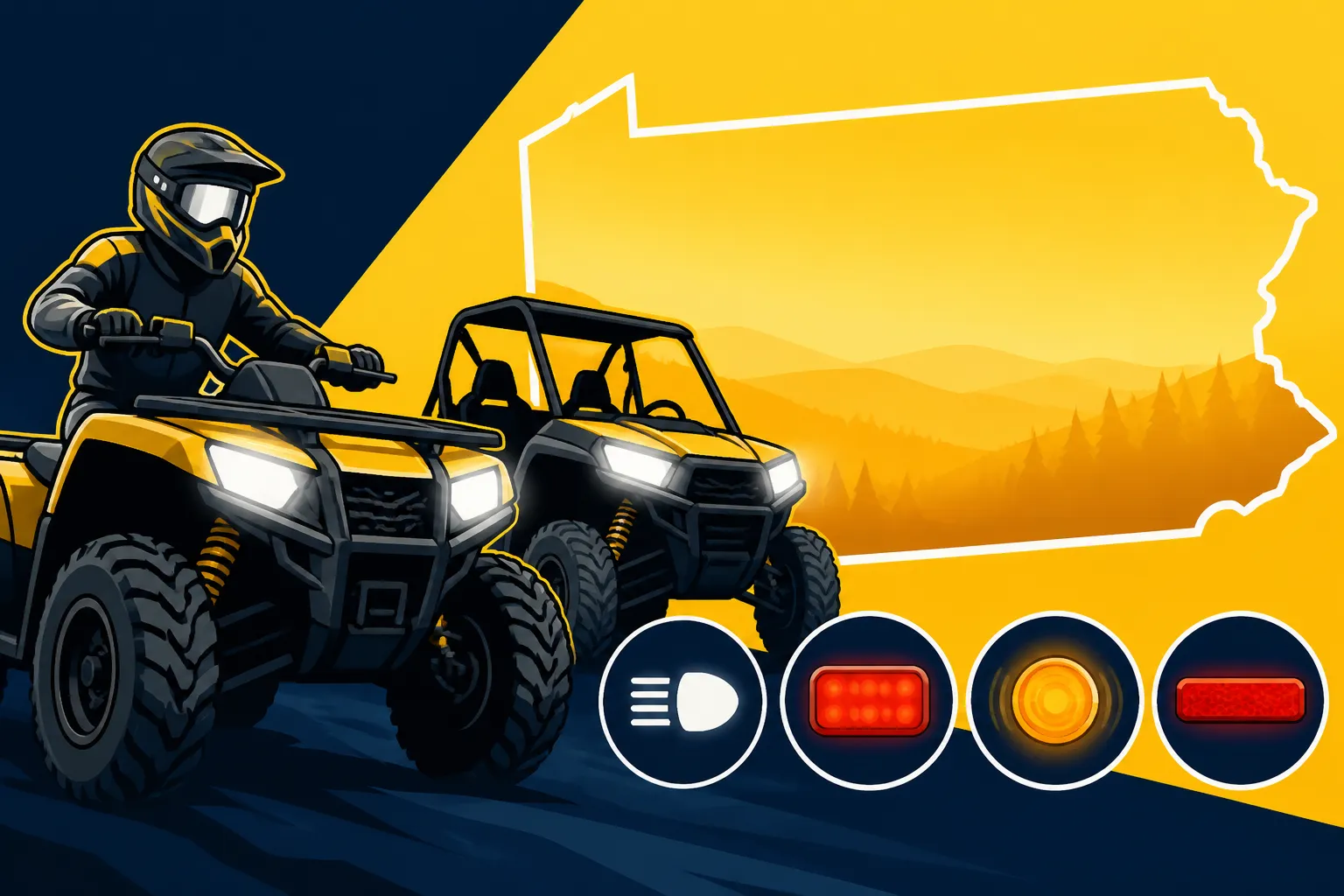
Pennsylvania law is pretty clear: your ATV or UTV must have at least one working white headlight. This isn't just for looking cool as you blast down the trail; it's about seeing where you're going and, just as importantly, being seen by others. This headlight needs to be powerful enough to illuminate objects in front of you for a substantial distance, generally around 100 feet. Think about it: hitting a sudden dip, a fallen log, or even a deer in the trail in dim light can turn a fun ride into a very bad day in a hurry. You need to be able to react, and that requires sufficient light.
The "when" is just as important as the "how many." Your headlight must be on during periods of low visibility. This explicitly means from a half-hour after sunset to a half-hour before sunrise. But don't let those specific times fool you; if you're riding in heavy fog, a torrential downpour, or even under a dense tree canopy that makes it feel like dusk at noon, your headlights should be on. It's about common sense and safety. Many riders opt for modern LED headlights that offer brighter, whiter light than older halogen bulbs. When choosing an upgrade, ensure it's durable enough for off-road abuse and, critically, that it projects its light effectively without blinding oncoming riders. Companies like SuperATV offer a range of headlight options designed for the rigors of off-road use, which can be a great way to meet and exceed these basic requirements.
Taillights: Red, Visible, and Always On
Just as important as seeing where you're going is ensuring others can see you, especially from behind. Pennsylvania law mandates that your ATV or UTV be equipped with at least one red taillight. This isn't just any red light; it must be illuminated whenever your headlight is required, and it needs to be visible from a distance of at least 500 feet to the rear. Imagine a group ride: if the rider behind you can't see your taillight through dust or around a bend, you're putting both of you at risk.
The challenges of off-road riding, particularly in muddy or dusty conditions, mean your taillight can quickly become obscured. A common frustration for riders is how easily mud splatters and cakes onto the rear of the machine, rendering that vital taillight almost useless. This means you need to regularly check and clean your taillight, especially during and after a messy ride. Some riders even install aftermarket taillight guards or higher-mounted lights to keep them clear. Ensure your taillight is securely mounted and wired to withstand vibrations and impacts, because a flickering or broken taillight is just as bad as no taillight at all when a warden is checking your machine, or more importantly, when another rider is trying to avoid colliding with you.
Reflectors: The Passive Safety Layer
Beyond active lights, Pennsylvania law also requires passive safety elements: reflectors. Specifically, your ATV or UTV must have at least one red reflector on the rear and one amber reflector on each side, positioned towards the front. These might seem like minor details, but they play a crucial role, especially if your active lighting system fails or you're parked off the trail in low light. Reflectors catch and bounce back light from other sources, like another rider's headlights, making your machine visible even when it's otherwise unlit.
Think of reflectors as your backup plan. If your battery dies, a fuse blows, or a wire gets ripped out by a stray branch, these simple pieces of plastic can still give a warning to others. They're particularly important when you're taking a break on the side of a trail or if your machine becomes disabled. Ensuring they are clean and securely attached is vital. Mud, dirt, and even fading from sun exposure can drastically reduce their effectiveness. A quick wipe-down before each ride, especially after a wash, ensures they're doing their job. Don't overlook these small but mighty safety features; they're there for a reason and are part of the legal requirements for riding in Pennsylvania.
Specific Scenarios and Additional Lighting Considerations
While the basic requirements cover the bare minimum, riding an ATV or UTV often presents a variety of conditions that warrant a closer look at your lighting setup. It’s not just about staying legal; it’s about making smart choices for your own safety and the safety of everyone else on the trail. From navigating pitch-black trails to making sure your machine stands out, there’s more to consider than just a single headlight and taillight.
Riding at Night and in Low Visibility Conditions
The state's requirements for [Pennsylvania Rules for Night Riding] exist for very good reasons. Riding at night, or in conditions like heavy fog, dense dust, or even a sudden downpour, significantly ratchets up the risk factor. Your primary headlight, while legally sufficient, might feel completely inadequate when you're truly pushing through darkness. It’s one thing to see 100 feet ahead on a wide-open gravel path; it’s another entirely on a narrow, winding, rock-strewn trail where shadows play tricks on your eyes. The dangers are numerous: hidden obstacles, unexpected turns, and the very real possibility of meeting another rider or even wildlife head-on.
This is where supplemental lighting becomes not just a luxury, but a wise investment. Many riders add powerful LED light bars or auxiliary spotlights to their machines, greatly expanding their field of vision and throwing light further down the trail and to the sides. However, with great power comes great responsibility: these powerful lights can be incredibly dazzling to oncoming riders. Always be courteous and dim or turn off your auxiliary lights when approaching other riders or when you're on [Pennsylvania's Designated ATV Roads] where other vehicles might be present. It’s about balance: ensuring you have ample light for your own safety, but not at the expense of someone else's.
Accessories and Aftermarket Lighting
The world of aftermarket ATV and UTV accessories is vast, and lighting is a huge part of it. From light bars and rock lights to underglow kits and strobes, there are endless ways to customize your machine. While the basic requirements are just that – basic – many riders choose to go above and beyond, both for performance and aesthetics. Companies like SuperATV specialize in producing rugged, high-performance aftermarket lighting solutions that can dramatically improve your visibility and riding experience. These can include powerful LED light bars that transform night into day, or floodlights that illuminate the periphery of your machine, helping you spot trail hazards more easily.
However, it's crucial to remember that while these additions can enhance your ride, they must not interfere with your legally required lights or create a hazard for others. For instance, excessively bright or flashing lights not designed for off-road use could actually attract unwanted attention or even lead to a citation if deemed distracting or dangerous. Always ensure that any auxiliary lights are properly aimed and can be controlled independently. You don't want to be the rider who blinds everyone on the trail, or whose "cool" underglow gets them pulled over for violating basic road etiquette, even if you’re only [Crossing a Highway on an ATV in Pennsylvania]. Research and choose accessories that not only fit your machine but also align with responsible riding practices.
Crossing Roads and Designated Routes
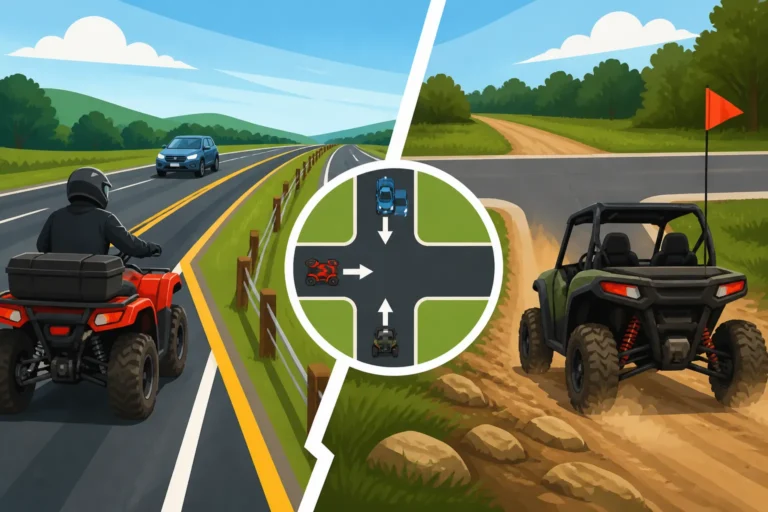
While ATVs are generally not considered street legal in Pennsylvania, there are specific situations where you might find yourself on or crossing a public road. This could be a brief crossing of a state route, utilizing [Pennsylvania's Joint-Use Roads], or riding on a specifically designated township road. In these instances, your machine's lighting becomes even more critical, as you are now interacting with vehicular traffic that expects certain standards of visibility. The moment your wheels touch public asphalt, you need to be highly visible.
Your standard headlight and taillight must be fully operational, clean, and bright. The intent here is clear: other drivers need to see you, often at speed, and quickly understand your presence and direction. Reflectors are also incredibly important in these scenarios, acting as passive alerts to approaching headlights. If you're on a joint-use road during twilight hours, the low-light visibility of your machine against a backdrop of cars, trucks, and other vehicles is paramount. Make sure your headlights are aimed correctly—not too high to blind oncoming traffic, but high enough to illuminate the road ahead. This attention to detail can be the difference between a safe crossing and a dangerous encounter, underscoring why road rules for ATVs are so strict, even for brief interactions.
Enforcement, Fines, and Best Practices for Lighting
Nobody wants a citation when they're out enjoying the trails. Understanding how Pennsylvania's DCNR (Department of Conservation and Natural Resources) or local law enforcement checks for lighting compliance, and what happens if you're found to be in violation, can save you a lot of grief. Beyond just avoiding fines, developing good lighting habits is a cornerstone of responsible and safe ATV and UTV operation.
What an Officer Checks Roadside
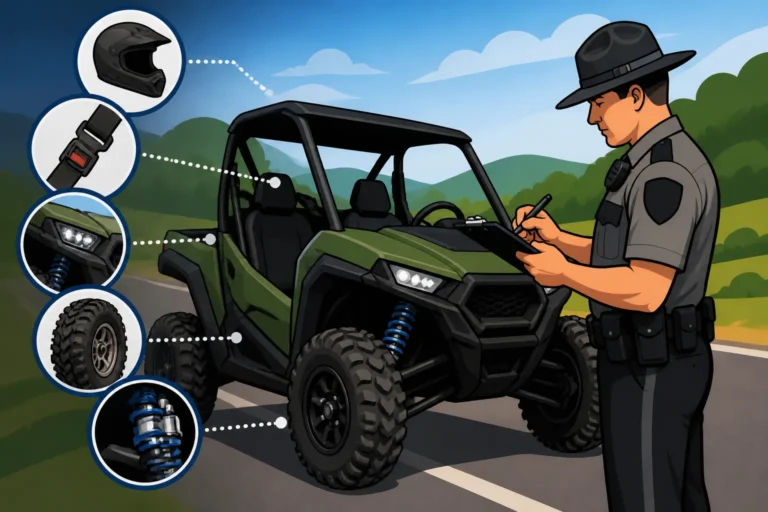
When a DCNR ranger or local police officer conducts a trailside check, they're not just looking for registration or safety certificates. Your machine's physical condition, especially its safety equipment like lighting, is often a primary point of inspection. They’ll quickly look to see if you have the required white headlight and red taillight, and if they are both functional and clearly visible. They'll likely also check for the presence and condition of your red rear reflector and amber side reflectors. It's a quick visual assessment, but if something is missing, broken, or obscured, it will stand out.
Imagine getting checked at a popular trailhead like Bloody Skillet or Whiskey Springs. If your taillight is caked with mud, or your headlight bulb is blown, that’s an immediate red flag. Such deficiencies can lead to a citation for [Pennsylvania Fines for Riding Illegally] or [Pennsylvania Fines for a Trail Violation]. The wardens aren't out to ruin your day, but they are there to enforce regulations designed to keep everyone safe. Proving that you routinely check your lights and maintain them is crucial. A simple pre-ride inspection can prevent a costly and frustrating interaction.
Common Lighting Problems and Troubleshooting
The off-road environment is brutal on electrical components. Vibrations, impacts, water, mud, and extreme temperatures can all take their toll on your ATV or UTV's lighting system. Common problems include blown bulbs, corroded wiring connections, faulty switches, and even a drained battery if your charging system isn't keeping up with your electrical demands. A common frustration is a light that works fine in the garage but fails once you hit a big bump on the trail.
Before every ride, make it a habit to do a quick walk-around and test all your lights: turn on your ignition, hit the brake (if you have brake lights), and make sure everything glows as it should. If a light isn't working, start with the easiest fix: check the bulb. If it's good, move on to fuses. Keep a spare set of common fuses in your toolkit; they're cheap and can save your ride. Inspect wiring harnesses for frayed wires or loose connections, especially where they might rub against the frame or come into contact with water. Dielectric grease can be your best friend for protecting electrical connections from moisture and corrosion. For those more complex issues, a shop visit might be necessary, but many minor problems can be resolved trailside with a little preparation.
Maintaining Your ATV's Lighting System
Preventative maintenance is the key to avoiding lighting issues on the trail. Beyond just checking if the lights work, you need to think about the longevity and reliability of the entire system. Regular cleaning is a must; mud and dirt can not only obscure your lights but also trap moisture and accelerate corrosion on wiring and connectors. After a particularly muddy ride, a thorough cleaning, followed by an inspection of all electrical components, is highly recommended.
Periodically, inspect your battery terminals for corrosion and ensure they are tight. A weak battery can cause lights to dim or flicker. If you frequently add aftermarket accessories, like a powerful SuperATV light bar, ensure your charging system can handle the extra load. Upgrading to a heavier-duty stator or a larger battery might be necessary to prevent strain on your electrical system. Also, consider investing in weatherproof connectors and wire loom to protect exposed wiring. Remember, your lights are your lifeline on the trail after dark or in poor visibility, so treating them with care is paramount to both safety and compliance.
Differences for UTVs and Road-Legal Considerations
While many of the basic lighting principles apply to both ATVs and UTVs, there are nuances, especially when we start considering what constitutes "road legal" in Pennsylvania – which, for ATVs and UTVs, is a very limited concept. Understanding these distinctions is crucial, particularly as UTVs become more sophisticated and riders might try to push the boundaries of where they can legally operate.
UTV Lighting vs. ATV Lighting
From the factory, UTVs often come equipped with a more comprehensive lighting package than their ATV counterparts. Many UTVs, even those not intended for road use, will feature multiple headlights (often high and low beams), distinct taillights, and sometimes even basic brake lights and turn signals. While turn signals and brake lights aren't strictly mandated for off-road-only ATV use in Pennsylvania, their presence on a UTV is a definite advantage for safety and visibility, especially on shared-use trails.
However, the legal requirements for a UTV operating off-highway generally mirror those for an ATV: at least one white headlight, one red taillight, and appropriate reflectors. If your UTV comes with more, that's just an added bonus for safety. The distinction becomes more pronounced if you're contemplating riding your [Pennsylvania Rules for a UTV on a Road]. Pennsylvania is very clear that ATVs and UTVs are not street legal for general road use. While some municipalities might designate specific roads for limited use, this is a rare exception and not the norm. If you're riding a UTV that has features like turn signals, ensure they are functional and used appropriately on any designated route, as this will enhance your visibility to other drivers.
Beyond Basic Trail Lighting: The "What If" Scenarios
It's tempting to think that once you meet the minimum requirements, you're all set. But for riders who frequently hit the trails, especially those who participate in [Night Riding on a Joint-Use Road] or explore vast areas like the Sproul State Forest trails, thinking beyond the minimum is a smart move. While Pennsylvania law doesn't convert an ATV into a street-legal vehicle, there are specific situations, like crossing a road or using a designated connector route between trails, where superior lighting significantly improves your safety.
Consider a situation where you're using a township road as a connector route, even for a short distance. While you're not cruising down a state highway, you're sharing the space with cars. Having a well-aimed, bright headlight and a clearly visible taillight makes you a much less dangerous presence for motorists who aren't expecting off-road vehicles. Many riders invest in reflective tape for their machines, or wear high-visibility gear, to further enhance their profile, especially during twilight hours. It’s all about creating the largest, brightest, and most undeniable presence possible. So, while you're not aiming to make your ATV a car, you are aiming to be as visible as one whenever you share any piece of pavement. It’s about proactive safety, not just reactive compliance.
| Lighting Component | Pennsylvania Requirement | Purpose | Key Considerations |
|---|---|---|---|
| Headlight(s) | At least one white, visible 100 ft forward | Illuminates path, makes rider visible from front | Required from 1/2 hour after sunset to 1/2 hour before sunrise, or in low visibility. Keep clean and aim properly. |
| Taillight(s) | At least one red, visible 500 ft rearward | Makes rider visible from behind | Required whenever headlights are on. Prone to mud obstruction; clean frequently. |
| Rear Reflector | At least one red | Passive visibility from rear | Essential backup if lights fail. Keep clean, securely mounted. |
| Side Reflectors | At least one amber on each side, forward-facing | Passive visibility from sides | Crucial for cross-traffic visibility, especially on joint-use roads. |
| Brake Light | Not required for ATVs/UTVs off-road | Signals slowing/stopping (if equipped) | Common on UTVs; if present, ensure functionality for enhanced safety. |
| Turn Signals | Not required for ATVs/UTVs off-road | Signals direction change (if equipped) | Common on UTVs; use on designated roads for clear communication. |
Disclaimer
This article is for general informational purposes only and does not constitute professional advice. Laws, prices and regulations vary by location and change over time. Consult a qualified professional for guidance on your specific situation.