What a Pennsylvania Officer Checks Roadside
Picture this: you're out enjoying a beautiful day on the trails or a designated joint-use road in Pennsylvania, feeling the freedom of your ATV or UTV, when suddenly you see those flashing lights behind you. It's a moment that can make any off-road enthusiast's heart pound, wondering if everything is in order. This guide is here to walk you through exactly what a Pennsylvania officer might be looking for during a roadside stop, helping you ride with confidence and keep your machine legal.
The Foundation: Essential Paperwork and Identification
When an officer pulls you over, whether it's on a state forest trail or a township road, the first things they'll almost always ask for are your identification and your machine's documentation. It's the equivalent of a traffic stop for a car, but with specific nuances for off-highway vehicles.
Operator's Personal Identification
Just like driving any other vehicle, you need to be able to identify yourself. This usually means a valid driver's license or a state-issued photo ID. It's not necessarily about whether you need a driver's license to operate an ATV in all situations – that's a different discussion for private land versus public trails – but rather about establishing who you are.
Imagine you're riding with friends on the Bloody Skillet trails, and a DCNR ranger sets up a check station. They'll greet you, ask how your ride is going, and then typically request your ID. This is a standard procedure to ensure you're not operating the vehicle illegally, like if you're under an age restriction for certain trails or you have outstanding warrants, though the latter is certainly less common in these situations. Keeping your ID in a waterproof wallet card holder, perhaps with your [What the DCNR Wallet Card Is For], is a smart move, especially if you anticipate splashing through a few puddles.
Machine Registration and Title
Pennsylvania has specific requirements for registering ATVs and UTVs, depending on where you intend to ride. An officer will absolutely be checking for current and valid registration. You'll need to show proof that your machine is properly registered with the Department of Conservation and Natural Resources (DCNR).
For those riding on state forest trails, DCNR-managed facilities, or designated joint-use roads, a general registration is typically required, indicated by a plate and a sticker. If you only ride on your own private land and don't venture onto public access, you might have a limited registration, which is [Pennsylvania's Free Limited Registration]. An officer will want to see that physical plate properly mounted, as described in [Pennsylvania ATV Plates and Where They Mount], and the current sticker affixed. They’ll also verify that the VIN on your machine matches the VIN on your registration card. If you've just bought your quad, you might still be using [The Forty-Five Day Dealer Sticker in Pennsylvania] while your official registration is being processed, which is perfectly acceptable, but you'll still need the temporary paperwork.
Proof of ATV Insurance
This is a big one. While you don't need insurance to ride on your own private property, if you venture onto any public land, including state forest trails or designated roads, Pennsylvania law requires you to carry liability insurance.
An officer will ask for proof of this insurance. This means your insurance card or declaration page, showing that you have the minimum required coverage. It’s not uncommon for riders to forget this, tucking their insurance card into a glovebox that might not be on their quad at the moment. However, it's just as crucial as your driver's license. The state doesn't set a minimum coverage amount, so you'll want to ensure you have enough to cover potential damages. [Pennsylvania's Mandatory Insurance Off Your Own Land] explains this in more detail. Failing to have proof of insurance can lead to a significant fine, often around the automatic $300 mark, even if you are insured but just don't have the proof with you.
ATV Safety Certificate for Younger Riders
For younger riders, specifically those between the ages of 8 and 15, a Pennsylvania ATV Safety Certificate is mandatory when operating an ATV on any public land or designated trail. An officer will definitely check for this.
If you're supervising a 12-year-old on a state trail system like Whiskey Springs, that child needs to have completed an approved safety course and carry the certificate with them. This isn't just a suggestion; it's a critical safety measure. [Pennsylvania ATV Safety Certificate Requirements] details who needs it and why. It ensures that younger operators understand the basic rules of the trail, safe operation techniques, and environmental responsibilities. Even if you, as the parent, have your own certificate, your child needs theirs.
Machine Condition and Equipment Checks
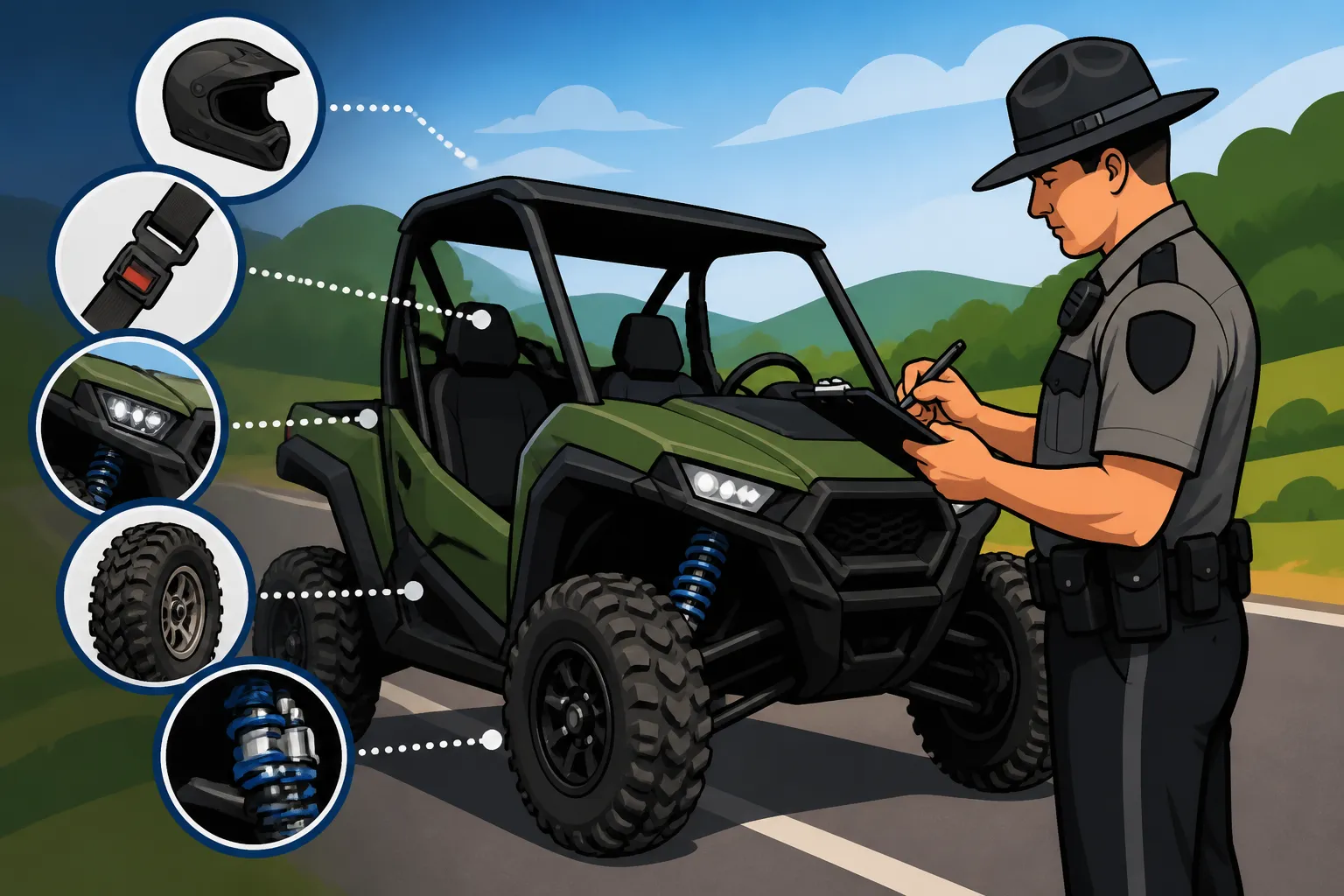
Beyond the paperwork, a Pennsylvania officer will conduct a visual and sometimes functional inspection of your ATV or UTV. This isn't about looking for mud (unless it's obscuring your plate!), but ensuring your machine meets essential safety and environmental standards.
Functional Lighting Systems
Visibility is paramount, especially if you're riding in low light conditions, crossing roads, or even just on trails where dust or shadows can reduce visibility. Officers will check that your headlights, taillights, and brake lights are all in working order.
For riding at night, this means having at least one headlight that can illuminate obstacles from a reasonable distance, and a taillight that is visible from behind. If you've added aftermarket lighting, ensure it's properly installed and doesn't interfere with the vehicle's electrical system or blind other riders. Many riders opt for brighter LED light bars, and companies like SuperATV offer a wide range of reliable, high-performance lighting solutions that can significantly improve your visibility and meet state requirements for [Pennsylvania Lighting Rules for Night Riding] without causing issues for others on the trail. Just remember to use appropriate light modes when approaching other riders or crossing roads.
Muffler and Spark Arrester
These are critical environmental and safety components. Pennsylvania is serious about noise regulations and preventing wildfires.
An officer will inspect your exhaust system to ensure it has a functional muffler to keep noise levels within acceptable limits. Aftermarket exhausts that are significantly louder than stock are often non-compliant and can draw unwanted attention, not just from officers, but from fellow riders and nearby residents who value quiet natural areas. Equally important is the spark arrester. This device prevents hot carbon particles from escaping the exhaust and potentially igniting dry leaves or grass, which is a major concern in forested areas. [Pennsylvania Spark Arrester Requirement] specifies this. If your machine is missing a spark arrester or it's been modified or removed, you will likely face a citation. Many stock machines come equipped, but if you've done any exhaust work, double-check this component.
Machine Width and Modifications
Pennsylvania state forest trails have specific width restrictions, usually 64 inches. This is particularly relevant for UTVs or heavily modified ATVs.
An officer, especially a DCNR ranger, will be aware of these limits, particularly in areas like Sproul State Forest or Whiskey Springs. If your machine appears wider than the posted limit, they might physically measure it. This is not uncommon at trailheads or designated checkpoints. If your UTV, for example, has an extra-wide stance due to aftermarket wheels or suspension, and it exceeds the [Pennsylvania's Class II Trail Width Limit], you could be turned away or cited. Before heading out, especially if you've upgraded your machine with wider A-arms or offsets, it's wise to double-check your measurements to ensure compliance with [Pennsylvania Rules for a Machine Over 64 Inches]. Companies like SuperATV offer specific product lines designed to enhance performance while keeping machines within trail width limits, which can be a relief for riders concerned about compliance.
Other Safety Equipment
While not as frequently checked as lights or mufflers, officers may also glance at other safety features. This could include mirrors (especially for road crossings), a working horn (useful for alerting others), and general machine integrity (no obviously broken or dangerous parts).
It's about common sense safety. If your machine has loose components, bald tires, or appears unsafe, an officer has the discretion to address those concerns. While Pennsylvania doesn't mandate specific mirror types for ATVs, having them can improve your situational awareness, particularly on shared-use roads. Think about your brakes, too. A machine with faulty brakes isn't just illegal; it's an extreme hazard to yourself and others.
Rider Behavior and Compliance
Beyond the machine itself, how you operate your ATV or UTV and your personal conduct are under scrutiny. Officers are looking for safe, responsible riding that respects both the environment and other trail users.
Helmet and Eye Protection Requirements
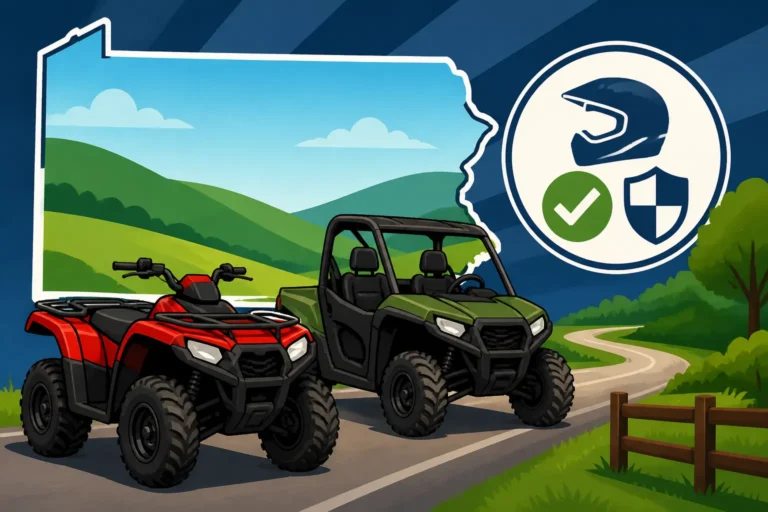
Pennsylvania has clear helmet laws for ATV riders. If you're under 16, a helmet is absolutely mandatory. For riders 16 and older, a helmet is still required when riding on public roads or public access routes, but there's a specific exemption if you're riding on your own private land and are over 16.
However, many experienced riders would tell you that wearing a helmet is always a good idea, regardless of age or location. Officers will observe if you and your passengers are wearing appropriate helmets. Eye protection, typically goggles or a face shield, is also highly recommended and often enforced alongside helmet rules for safety. [Pennsylvania Helmet Law for ATV Riders] details these requirements. It's about protecting yourself from impacts, flying debris, and the elements.
Age Restrictions and Supervision
Pennsylvania law has specific age restrictions for operating ATVs and UTVs on public land. An officer will be aware of these and will pay attention to the age of the operator.
For example, a child under 8 years old cannot operate an ATV on state-managed land, even with supervision. Riders aged 8-15 must have a valid safety certificate and be under direct supervision if they are on state land. If an officer observes an underage rider without the proper certification or supervision, or a child riding a machine too powerful for their age group (e.g., an 8-year-old on a machine over 70cc), they will intervene. This is a critical safety enforcement point to prevent accidents involving inexperienced young riders. [Pennsylvania Minimum Age to Ride an ATV] provides a full breakdown.
Operating Under the Influence (OUI)
Just like driving a car, operating an ATV or UTV under the influence of alcohol or drugs is strictly prohibited and heavily enforced. An officer will be looking for signs of impairment.
This includes erratic riding, slurred speech, the smell of alcohol, or any behavior that suggests impaired judgment. Pennsylvania's DUI laws extend to ATVs, and the consequences are just as severe, including fines, license suspension, and even jail time. [Pennsylvania DUI Rules for ATV Riders] makes it clear: if you plan to enjoy some beverages, leave the quad parked. There are no exceptions for "just a quick ride down the road" or thinking that because it's off-road, the rules don't apply. They absolutely do.
Adherence to Trail and Road Rules
Officers aren't just checking for basic legality; they're also ensuring you're following the specific rules of the trail system or road you're on. This includes speed limits, staying on marked trails, and respecting closures.
Riding off-trail, known as "going rogue," is a common reason for citations and can cause significant environmental damage. Ignoring posted speed limits, especially in designated areas or near campgrounds, is also a definite no-no. If you're on a joint-use road, you're expected to follow traffic laws relevant to that road, such as stopping at stop signs or obeying traffic signals. [Pennsylvania Rules for Riding a Closed Trail] and [Pennsylvania Fines for a Trail Violation] highlight the seriousness of these infractions. A DCNR ranger at a location like the AOAA or Rock Run Recreation Area will be vigilant about these rules to preserve the trails for everyone.
Road Use and Crossing Specifics
When you take your ATV or UTV from pure off-road trails onto any type of road, even for a brief crossing, a different set of rules and an officer's focus shifts significantly.
Designated Joint-Use Roads and Crossings
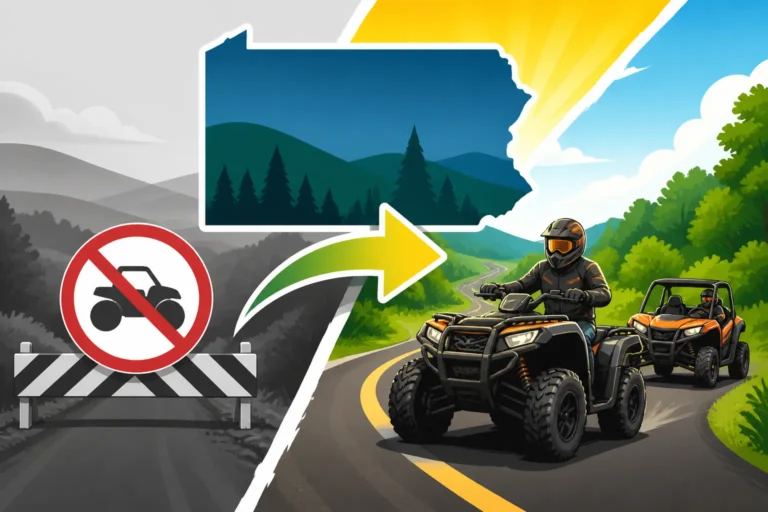
Pennsylvania has designated specific township roads and even some state forest roads as "joint-use" or "designated ATV roads," allowing ATVs and UTVs to legally operate on them to connect trails or access services. However, this isn't a free-for-all.
An officer will check if you are on an actual designated road. They know which roads are open and which are not. Look for the green signs that say "ATV Designated Route." [What the Green Sign on a Pennsylvania Township Road Means] is your cue. If you're on a road that isn't designated, even for a short distance, you're riding illegally. When crossing a highway, officers will also ensure you adhere to strict crossing procedures: stopping completely, crossing at a 90-degree angle, and yielding to all traffic. [Crossing a Highway on an ATV in Pennsylvania] covers these rules. This is where many riders get caught, assuming any small road is fair game.
Prohibited Roadways
It’s crucial to understand that most state routes, numbered highways, and interstates in Pennsylvania are strictly off-limits to ATVs and UTVs, with no exceptions for short stretches or quick crossings.
An officer will unequivocally stop you if you are operating on a prohibited roadway. There's no "gray area" here. The intention of Pennsylvania law is clear: ATVs and UTVs are primarily for off-road use, and their use on public roads is highly restricted to designated areas only. Attempting to ride your quad into town on a state route, even if it seems like a shortcut, will almost certainly result in a citation and fines. [Are ATVs Street Legal in Pennsylvania?] clarifies the definitive answer: no, not in the way cars are.
Passenger Rules on Roads
Pennsylvania has specific rules about carrying passengers on ATVs, and these rules are often more strictly enforced when on or crossing public roads.
Generally, an ATV is designed for one rider unless it's specifically manufactured and equipped to carry a passenger. If you're carrying a passenger on a single-rider ATV, an officer will likely issue a citation. UTVs are designed for multiple passengers, but everyone must have a designated seat and seatbelt. Also, ensure passengers, especially children, meet age and supervision requirements. [Pennsylvania Rules for a Passenger on a Quad] outlines what you need to know to ensure everyone on your machine is riding legally and safely.
Common Offenses and What They Mean
Understanding the potential consequences of not meeting these requirements can help reinforce why it's so important to be prepared.
Fines and Penalties
The most immediate consequence of a roadside stop that reveals non-compliance is a fine. These aren't usually minor tickets; Pennsylvania takes ATV regulations seriously.
For instance, riding an unregistered ATV on public land can result in an automatic $300 fine, plus additional court costs. [Pennsylvania Fines for an Unregistered ATV] is a good read. Operating without insurance also carries a substantial penalty. Repeated offenses or more serious infractions like OUI can lead to higher fines, impoundment of your machine, and even the loss of your privilege to operate an ATV. These costs add up quickly and can make a fun day out turn into a very expensive lesson.
Machine Impoundment and Revocation of Privileges
In serious cases, an officer has the authority to impound your ATV or UTV. This typically happens for severe violations such as operating under the influence, riding a stolen machine, or repeated unregistered operation.
Beyond impoundment, you could face revocation of your ATV registration or permit privileges. If you're a nonresident relying on reciprocity, certain violations could affect your ability to ride in Pennsylvania in the future. It's not just about the monetary fine; it's about the ability to continue enjoying the sport. Pennsylvania's DCNR, through its Snowmobile and ATV Section, has the authority to enforce these regulations to protect public safety and natural resources.
Example: Roadside Checklist
To help you remember all the details, here's a quick table summarizing what an officer might check during a roadside stop.
| Category | Specific Item Checked | What the Officer Looks For |
|---|---|---|
| Documentation | Operator ID (Driver's License/State ID) | Valid, matches operator |
| ATV/UTV Registration Card | Current, matches VIN, correct type (General/Limited) | |
| Registration Plate/Sticker | Properly mounted, current sticker, visible, matches card | |
| Proof of Insurance | Valid liability coverage, current dates | |
| ATV Safety Certificate (for 8-15 year olds) | Valid, matches rider, carried on person | |
| Machine Condition | Headlights, Taillights, Brake Lights | Functional, proper illumination, visible |
| Muffler | Present, functional, not excessively loud | |
| Spark Arrester | Present, functional, un-modified | |
| Machine Width (especially for UTVs) | Within designated trail limits (e.g., 64 inches on DCNR trails) | |
| General Safety (brakes, tires, horn) | Functional, safe operating condition | |
| Rider Conduct | Helmet | Worn by all riders under 16; all riders on public roads/crossings (exceptions apply) |
| Eye Protection | Worn by all riders under 16 (highly recommended for all) | |
| Age Compliance | Rider meets minimum age for machine/trail type; proper supervision if required | |
| Signs of Impairment (OUI) | No alcohol/drug use; clear speech, steady operation | |
| Adherence to Trail/Road Rules | Staying on marked trails, obeying speed limits, no reckless riding, respecting closures | |
| Road Use (if applicable) | Designated Road Use / Crossing Procedures | On a legally designated route; proper stop, 90-degree crossing, yielding to traffic |
| Prohibited Roadways | Not operating on state routes, highways, or non-designated roads | |
| Passenger Compliance | Designated seats for all passengers; proper safety equipment for passengers; age-appropriate |
Getting stopped by an officer on your ATV or UTV doesn't have to be a stressful experience if you're prepared and compliant. By understanding [What a Pennsylvania Officer Checks Roadside], you can ensure all your documentation is in order, your machine meets safety and environmental standards, and you're riding responsibly and legally. Stay safe out there, Pennsylvania riders!
Disclaimer
This article is for general informational purposes only and does not constitute professional advice. Laws, prices and regulations vary by location and change over time. Consult a qualified professional for guidance on your specific situation.