Gated Forest Roads in Hunting Season
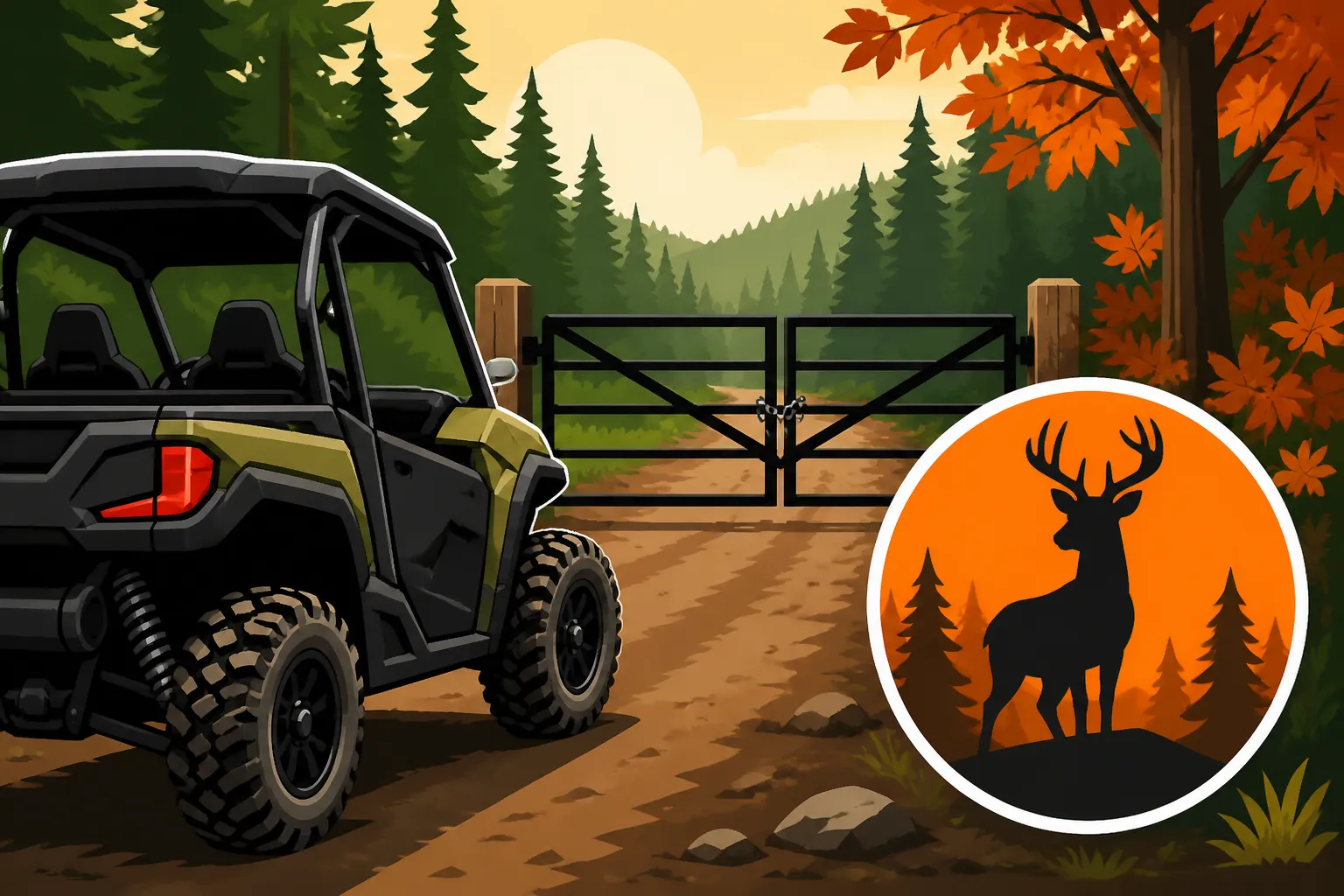
It's a familiar scenario for many of us who love to hit the trails in Pennsylvania: you've planned a fantastic fall ride, packed your gear, trailered your machine, only to arrive at your favorite forest access point and find a heavy chain and a stern-looking gate blocking your path. This frustrating experience often hits hardest during hunting season, leaving riders wondering why these roads are suddenly off-limits. This guide will help demystify the closures, explain the reasons behind them, and give you practical advice for navigating Pennsylvania's state forest roads when hunters are in the woods.
The Reality of Gated Forest Roads During Hunting Season
For many years, state forest roads have been a topic of discussion among various user groups. While ATV riders might see them as valuable access points to extended trail systems or scenic overlooks, the Pennsylvania Department of Conservation and Natural Resources (DCNR) has a much broader mandate to manage these lands. During hunting season, these roads often become central to safety and conservation efforts, leading to temporary closures that can catch even seasoned riders off guard.
Protecting Wildlife and Ensuring Hunter Safety
One of the primary reasons you'll find gates across forest roads during hunting season is directly tied to wildlife management and public safety. Hunters depend on quieter, less disturbed environments, and the presence of motorized vehicles can disrupt game patterns, making ethical hunting more challenging. Imagine a deer hunter who has patiently scouted a location for weeks, only to have a quad or side-by-side roar past, flushing game from the area. It creates conflict and detracts from the hunting experience that so many Pennsylvanians cherish.
Beyond disturbance, there's a significant safety element. With firearms being actively used in the woods, minimizing unexpected encounters between fast-moving ATVs and hunters—especially in low-visibility conditions or dense foliage—is paramount. DCNR aims to create distinct zones and times for different activities to reduce the risk of accidents. While many [Pennsylvania Trails That Reopen for Winter] are clearly marked for ATV use, general forest roads are a different category entirely, often shared by hunters, hikers, and timber operations.
Preserving Infrastructure and Mitigating Impact
Another critical, though perhaps less obvious, reason for seasonal road closures is the preservation of the forest road infrastructure itself. Many forest roads are unpaved, gravel, or dirt surfaces. The heavy use by vehicles, especially after periods of rain or during freeze-thaw cycles common in late fall and early winter, can cause significant damage. Ruts, washouts, and erosion not only make these roads difficult to navigate but also contribute to sedimentation in streams and rivers, impacting water quality and aquatic ecosystems.
By closing these roads, DCNR helps to reduce wear and tear, minimizing the need for costly maintenance and repairs. This protective measure ensures that when the roads are open, they remain in a more stable and usable condition for their intended purposes, such as timber harvesting, emergency access, and administrative functions. It’s about balancing access with long-term sustainability, and sometimes, a temporary closure is the most effective tool for that balance. It also helps to prevent off-trail riding, which is strictly prohibited and can cause irreparable damage to sensitive forest habitats.
Pennsylvania's Approach to Forest Road Access
Pennsylvania's state forest system is vast and diverse, and so are the regulations governing its use. It's not a one-size-fits-all situation, which can be part of the confusion for riders. Understanding the DCNR's role and the different categories of roads can help clarify why some gates are locked and others are not, or why access might change with the seasons.
DCNR's Role in Managing Seasonal Closures
The DCNR is the primary steward of Pennsylvania's 2.2 million acres of state forest land. Their mandate includes conservation, public recreation, and sustainable resource management. This means they are constantly balancing competing interests and ecological needs. For ATV and UTV riders, DCNR designates specific trail systems, like those found in [Pennsylvania State Forest Trails], which have specific seasons and permits. However, most forest roads are not part of the designated ATV trail system.
DCNR forest districts often implement specific road opening and closing schedules. Many roads, especially those that primarily serve as hunter access or administrative routes, will open just before the general deer season and then close again shortly after. This allows hunters to retrieve game and access remote areas, but it's a very targeted, temporary opening. It's crucial not to confuse these temporary openings with general ATV access. Forest districts publish these schedules, and riders should always check the relevant district's website for current information. Think of it as a carefully choreographed dance between various user groups, all managed by DCNR.
Understanding Different Types of Forest Road Access
Not all "gated" roads are created equal, and not all roads are gated for the same reasons or duration. There are generally a few categories of roads you might encounter:
- Designated ATV Trails: These are the clearly marked and permitted trails where you are allowed to ride your ATV or UTV, provided you have the proper registration and permits, such as [Pennsylvania's Northcentral Regional Trail Permit]. These trails have specific open and closed seasons, but they are distinct from the general forest road network.
- Administrative/Maintenance Roads: These roads are primarily for DCNR personnel, timber operations, or emergency services. They may be gated year-round or opened only for very specific, limited purposes. General public vehicle access, including ATVs, is typically prohibited.
- Hunter Access Roads: This is the category most relevant to hunting season closures. These roads are sometimes opened temporarily to provide hunters with access to deeper parts of the forest for hunting and game retrieval. However, this access is usually for highway-legal vehicles only, and ATVs are generally not permitted on these temporarily opened roads unless explicitly stated and part of an official ATV trail system.
- Joint-Use Roads: Some township or local roads that pass through state forest land may be designated as "joint-use" roads, meaning they are shared by vehicles and ATVs. These are rare and will be clearly marked with specific signage. This is covered in more detail in articles like [Pennsylvania's Joint-Use Roads].
It's vital for riders to understand that a gate being temporarily open for hunting access for highway vehicles does not automatically mean it's open for ATVs. Always assume that if a road is not explicitly part of a designated ATV trail system, it is closed to ATV use. If you're looking for quality parts to keep your ATV or UTV trail-ready, regardless of the season, checking out reputable brands like SuperATV can ensure your machine is always performing at its best when the trails are open.
Navigating the Woods as an ATV Rider During Hunting Season
So, hunting season is here, and you're itching to ride. Does this mean you're out of luck completely? Not necessarily, but it does mean you need to be extra vigilant, plan carefully, and prioritize safety above all else. Your usual approach to trail riding might need some adjustments to account for the presence of hunters and varying road access rules.
Planning Your Ride and Staying Informed
The single most important piece of advice for riding during hunting season is to do your homework before you even load your machine. You simply cannot show up to a state forest without checking current conditions and expecting to ride freely.
- Check DCNR District Websites: Every state forest district in Pennsylvania has its own section on the DCNR website. This is where you'll find maps, news releases, and, crucially, specific information about road openings and closures for their particular area. These updates can be very timely, sometimes changing based on weather or operational needs. Articles like [Pennsylvania Trail Conditions Before You Go] highlight the importance of this.
- Consult Official Trail Maps: Stick to the designated ATV trails, like those you can access with a [Pennsylvania ATV Trail Permit Cost]. These trails have set seasons and are managed specifically for ATV use. Do not venture off these marked routes onto forest roads that are not explicitly designated for ATVs.
- Call Ahead: If you're unsure about specific access points or road conditions, don't hesitate to call the local DCNR district office. A quick phone call can save you a wasted trip or, worse, a citation.
- Understand Permit Requirements: Make sure your machine is properly registered with [Pennsylvania ATV Registration and Trail Access] and that you have any required permits for the specific trail system you plan to ride. Even on open trails, rangers will be out and about, especially during busy seasons.
| Planning Step | Description | Benefit |
|---|---|---|
| Check DCNR Websites | Regularly visit the DCNR website for the specific state forest district you plan to visit. Look for news releases, road status reports, and seasonal closure information. | Avoids arriving at a closed gate, ensures compliance with current regulations, and prevents wasted travel time. |
| Study Official Trail Maps | Obtain and review the most current official ATV trail maps for your intended riding area. Pay close attention to designated ATV routes versus general forest roads. | Guarantees you're on legal trails, helps plan your route efficiently, and prevents accidental trespassing or entering restricted areas. |
| Verify Permit Status | Ensure your ATV registration is current and you possess any necessary regional or state trail permits (e.g., Northcentral Regional Permit). | Legalizes your ride, avoids fines for improper documentation, and ensures you contribute to trail maintenance. |
| Contact Local Forest Office | If in doubt, call the specific DCNR State Forest District office directly to ask about current road and trail access during hunting season. | Provides real-time, authoritative answers to specific questions, clarifying ambiguities from online sources. |
| Plan Alternate Routes | Have a backup plan or alternative riding location in mind if your primary choice is closed or too busy with other users. | Reduces frustration, maximizes riding time, and provides flexibility in case of unexpected closures or conditions. |
Essential Safety Practices and Rider Etiquette
When riding during hunting season, even on designated ATV trails, you are sharing the woods with others, particularly hunters. This requires an elevated sense of awareness and specific safety precautions.
- Wear Blaze Orange: This isn't just for hunters! Wearing plenty of blaze orange, even if not legally required on ATV trails, makes you much more visible to anyone in the woods. A bright orange vest, helmet, or even flags on your machine (especially if you're navigating dense woods) can be a literal lifesaver. You can find more specific advice on [Blaze Orange on a Pennsylvania Fall Ride].
- Be Heard, But Not Disruptive: While mufflers are regulated for sound, your machine still makes noise. Be aware of your surroundings. If you encounter hunters, give them space and minimize unnecessary noise. A courteous wave goes a long way.
- Stay on Marked Trails: This cannot be stressed enough. Veering off a marked trail onto a closed forest road or into an undesignated area can lead to serious fines (see [Pennsylvania ATV Registration Fines]), environmental damage, and create dangerous situations with hunters who may not expect an ATV in that location.
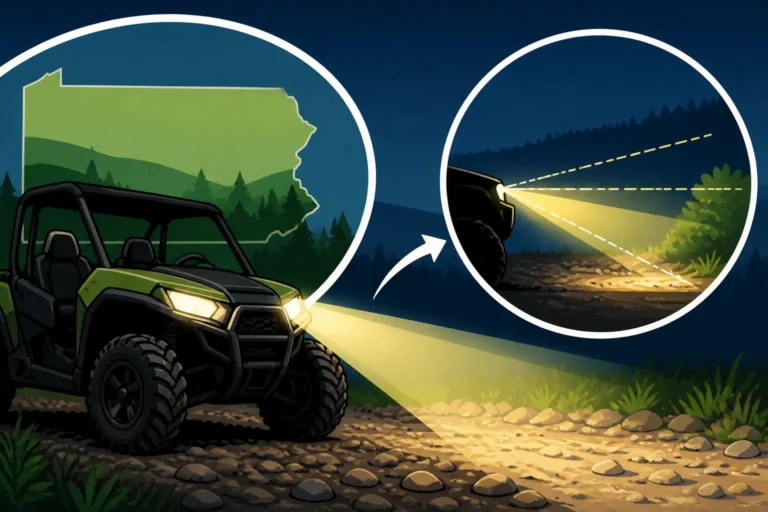
- Lights On: Even during the day, running your headlights and taillights improves your visibility, especially in wooded areas or at dusk.
- Carry a First Aid Kit and Emergency Supplies: Always be prepared for breakdowns or minor injuries. When sharing the woods, help might not be as readily available. Equipping your machine with robust accessories, like a reliable winch from SuperATV, can be a game-changer if you find yourself stuck far from help.
- Yield to Others: Whether it's a hiker, a hunter, or another rider, practice good trail etiquette. Slow down, be polite, and remember that everyone has a right to enjoy the outdoors safely. If you meet another vehicle on a narrow forest road, remember articles like [Meeting a Log Truck on a Forest Road] – good trail manners are key.
What to Do When You Encounter a Closed Gate
It's going to happen to every rider at some point: you arrive at a trailhead or forest road, and it's gated and locked. Your reaction in that moment is crucial, not just for your own safety and legal standing, but for the reputation of all ATV riders.
Respecting Closures and Avoiding Costly Mistakes
First and foremost, never, ever attempt to go around, under, or through a locked gate. This is not only illegal but also incredibly dangerous. Gates are put in place for specific reasons, whether it's safety, environmental protection, or simply designating property boundaries. Ignoring them can lead to severe consequences:
- Fines and Legal Penalties: DCNR rangers and local law enforcement actively patrol state forest lands. Tampering with gates, trespassing, or riding on closed roads will almost certainly result in a substantial fine, vehicle impoundment, and potentially more serious charges. These penalties are designed to be a deterrent, and they are enforced.
- Damage to Your Reputation: Every time a rider ignores a closure, it reinforces negative stereotypes about the ATV community. This makes it harder for advocates to secure future access or maintain existing trail systems. Be a responsible ambassador for the sport.
- Environmental Impact: Riding on closed roads, especially during wet conditions or fragile seasons, can cause significant and lasting environmental damage. This includes soil erosion, habitat destruction, and disruption to sensitive ecosystems.
If you encounter a gate, take a moment to double-check your map and any local signs. If the gate is locked, and it's not a designated ATV trail, it means no entry. Period. Turn around and find an alternative.
Finding Alternatives and Advocating for Future Access
Finding a closed gate doesn't have to ruin your entire day, but it does require flexibility.
- Have a Backup Plan: This goes back to planning. Always have a few potential riding spots or routes in mind. If your primary destination is closed, switch to your secondary. Pennsylvania has many designated ATV trails, and while they might not be as remote as some forest roads, they offer legal and exciting riding. Check out trail systems like the Anthracite Outdoor Adventure Area or Rock Run Recreation, which operate on different management models and often have more consistent access.
- Explore Designated ATV Parks: Consider heading to one of Pennsylvania's dedicated ATV parks. These parks often have different operating hours and rules than state forests and might offer a reliable riding option when other areas are closed.
- Rethink Your Activity: If riding isn't an option, perhaps it's a good day for hiking, mountain biking, or fishing in a permitted area. Enjoying other aspects of Pennsylvania's beautiful outdoors can still be fulfilling.
- Engage in Advocacy: If you feel strongly about increasing ATV access or modifying road closure policies, get involved with local riding clubs or state advocacy groups. These organizations work directly with DCNR and other agencies to represent riders' interests. Educate yourself on the rules, demonstrate responsible riding, and become part of the solution rather than contributing to the problem. Groups like these often work on initiatives to open more trails or clarify access.
Remember, the goal is to enjoy our incredible outdoor resources responsibly and safely. Understanding why roads are gated, respecting the rules, and planning ahead are your best tools for a successful ATV riding experience in Pennsylvania, especially during hunting season.
Disclaimer
This article is for general informational purposes only and does not constitute professional advice. Laws, prices and regulations vary by location and change over time. Consult a qualified professional for guidance on your specific situation.