What Pennsylvania’s ATV Chapter Covers
It's incredibly frustrating trying to enjoy your ATV or UTV in Pennsylvania when the rules about where you can and can't ride feel like a moving target. Many of us have heard conflicting advice about designated roads, private land, and what the state even considers an ATV, leaving us scratching our heads and worried about fines. This guide will cut through the confusion by diving deep into 17 Pennsylvania Code Chapter 51, the foundational law that governs all aspects of ATV and UTV use in our state.
Understanding Pennsylvania's Core ATV Law: 17 PA Code Chapter 51
Navigating the legal landscape for ATV and UTV riding in Pennsylvania can feel like trying to find your way through a dense forest without a map. That's why understanding 17 Pennsylvania Code Chapter 51 is so crucial. This isn't just some dry, dusty legal text; it's the blueprint that dictates almost everything you need to know about operating your machine in the Commonwealth, from basic definitions to where you can put a tire down. Without a solid grasp of this chapter, you're essentially riding blind, risking citations, and missing out on legal opportunities to explore our beautiful state.
The Legislative Intent: Why This Chapter Matters
When the state legislature crafted 17 Pennsylvania Code Chapter 51, their primary goal wasn't to make riding more difficult, but to create a framework that balances the enjoyment of off-highway vehicles with public safety and environmental protection. Think about it: without clear guidelines, we'd have ATVs on every highway, sensitive natural areas getting torn up, and a general free-for-all that would quickly lead to injuries and closures. This chapter exists to prevent that chaos, ensuring that the trails and roads we can legally ride remain open and safe for everyone. It's about establishing order and responsibility so that the sport can thrive sustainably.
The chapter also aims to streamline the administration of ATV activities. Before this cohesive law, regulations might have been piecemeal or ambiguous, leading to confusion among riders, law enforcement, and land managers alike. By consolidating these rules into one comprehensive chapter, Pennsylvania provides a single point of reference for all parties involved. This clarity helps DCNR manage state forest lands, assists townships in designating local roads, and most importantly, gives riders a clear understanding of what's expected of them. It's truly the backbone of responsible off-highway vehicle operation here.
How the Law Defines Your Off-Road Machine
One of the most fundamental aspects of 17 PA Code Chapter 51 is how it legally classifies what we commonly call ATVs and UTVs. You might think "it's just a quad," but the law is quite specific, and those definitions have huge implications for registration, where you can ride, and even who can operate the machine. It's not just about what it looks like, but its specifications – engine size, weight, width, and how many wheels it has. Get this wrong, and you might accidentally be operating a machine that falls outside the legal parameters for certain trails or designated roads, even if you thought you were compliant. This legal precision is what guides enforcement and access.
For instance, the chapter draws clear lines between an ATV and other vehicles, ensuring that machines not designed for off-road use aren't mistakenly registered or operated under ATV rules. This helps maintain the integrity of our trail systems and keeps riders safe by categorizing machines according to their intended capabilities. Understanding these definitions is the first step in ensuring your machine is properly registered and legally operated within Pennsylvania's extensive trail network, preventing any nasty surprises down the line. We'll delve deeper into these specific definitions shortly, but know that this chapter sets the stage for those crucial distinctions. [17 Pennsylvania Code Chapter 51] provides the specific legal language that underpins these rules.
The DCNR's Role in Administering the Chapter
While the state legislature writes the laws, it's the Pennsylvania Department of Conservation and Natural Resources (DCNR) that breathes life into 17 PA Code Chapter 51. They are the agency responsible for the day-to-day administration and enforcement of these regulations. This means DCNR handles everything from processing your ATV registration to maintaining the state's designated ATV trail systems and issuing safety certificates. Without DCNR, the chapter would just be words on a page; they are the boots on the ground, making sure the system works.
Their involvement ensures consistency across the state, from the northern forests to the southern mountains. DCNR rangers patrol trails, offer educational programs, and are often the first point of contact for riders with questions or concerns. They also play a critical role in developing and managing new riding opportunities while protecting Pennsylvania's natural resources. So, when you're thinking about official ATV matters, whether it's getting your plate or finding out about trail conditions, your mind should immediately turn to the DCNR. [Why DCNR Registers Pennsylvania ATVs] further explains their crucial role in the process.
Unpacking ATV and UTV Definitions Under State Law
Before you even think about hitting a trail or crossing a road, it's absolutely vital to understand how Pennsylvania law defines your specific off-road machine. This isn't just academic; a slight difference in classification can determine where you can ride, what kind of registration you need, and even the safety equipment required. The common terms "quad" or "side-by-side" are often used interchangeably, but legally, there are distinctions that matter. Chapter 51 spells these out clearly, often setting parameters around engine size, weight, and configuration that directly impact how you interact with the regulations.
What Qualifies as an All-Terrain Vehicle (ATV)
Under Pennsylvania law, an All-Terrain Vehicle (ATV) is specifically defined. Generally, it's a motorized off-highway vehicle designed to travel on four or more low-pressure tires, having a seat designed to be straddled by the operator and handlebars for steering control. It's not designed for use on public roads. The law often includes parameters like dry weight and width to further delineate what falls under the ATV umbrella. For instance, most ATVs are single-rider machines, though some may be designed to carry a passenger, provided it has a designated passenger seat and handholds.
This precise definition ensures that machines with different operating characteristics aren't lumped together, which could create safety hazards or regulatory loopholes. It's why your standard quad, whether it's a utility model or a sport machine, fits neatly into this category. The legal definition also helps distinguish ATVs from other motorized recreational vehicles like dirt bikes, which have different sets of rules and operational guidelines. Riders often get confused here, thinking that any off-road machine is simply an "ATV," but the specifics matter greatly when you're talking about legal compliance on trails or designated roads.
How Utility Terrain Vehicles (UTVs) Are Classified
Utility Terrain Vehicles (UTVs), often called side-by-sides, present a slightly different classification challenge because they share some characteristics with ATVs but are also distinctly different. While 17 PA Code Chapter 51 primarily focuses on ATVs, UTVs are generally regulated under the same framework as ATVs when it comes to registration and trail use in Pennsylvania. The key difference from an ATV is that a UTV typically has a steering wheel, side-by-side seating for two or more occupants, and often a roll-over protection structure (ROPS). They're designed for both utility work and recreational use.
Because UTVs can be wider and heavier than traditional ATVs, there are often specific trail restrictions that apply to them. Many state forest trails have a width limit, for example, of 64 inches, which some wider UTVs may exceed. Riders of larger side-by-sides need to be particularly diligent in checking trail-specific regulations before heading out. While they provide fantastic comfort and carrying capacity, their size can limit access on narrower trails. [Can You Plate a UTV in Pennsylvania?] further clarifies the registration path for these popular machines, which, like ATVs, are generally not street-legal.
Machines Exempt From Registration and Regulation
Not every off-highway vehicle in Pennsylvania requires registration or falls under the full scope of 17 PA Code Chapter 51. There are specific exemptions carved out, primarily for machines used in certain agricultural, business, or governmental capacities. For instance, an ATV or UTV used exclusively for farming operations on land owned or leased by the operator, and not operated on designated ATV trails or public roads (except for crossing), may not need to be registered. This exemption acknowledges that these machines are essential tools for specific industries, not primarily recreational vehicles.
Similarly, machines used by townships, boroughs, or other government units for official purposes, like maintaining public lands or plowing snow, are often exempt. Dealer inventory machines, those held for sale by a licensed dealer, also have a temporary exemption or special certificate that allows them to be demonstrated. It’s crucial to understand that these exemptions are typically very narrow and specific. If you plan to take your "farm quad" out on a state forest trail or even across a designated township road for recreational purposes, that exemption often evaporates, and you'll need to register it. Always double-check if your specific use case truly qualifies for an exemption. [The Farm and Business Exemption in Pennsylvania] provides more details on these specific carve-outs.
The Strict Rules for Riding on Pennsylvania Roads
This is where a lot of the confusion and frustration for Pennsylvania ATV and UTV riders really hits home. The vast majority of roads in the Commonwealth are strictly off-limits to ATVs and UTVs. While you might see people riding them on roads in other states, Pennsylvania's laws are much more restrictive, and for good reason—safety. The difference in speed, braking, and visibility between an off-road machine and a passenger vehicle makes most public road operation incredibly dangerous. 17 PA Code Chapter 51 makes this very clear, and violating these rules can lead to significant fines and penalties.
When Highways and Streets Are Strictly Off-Limits
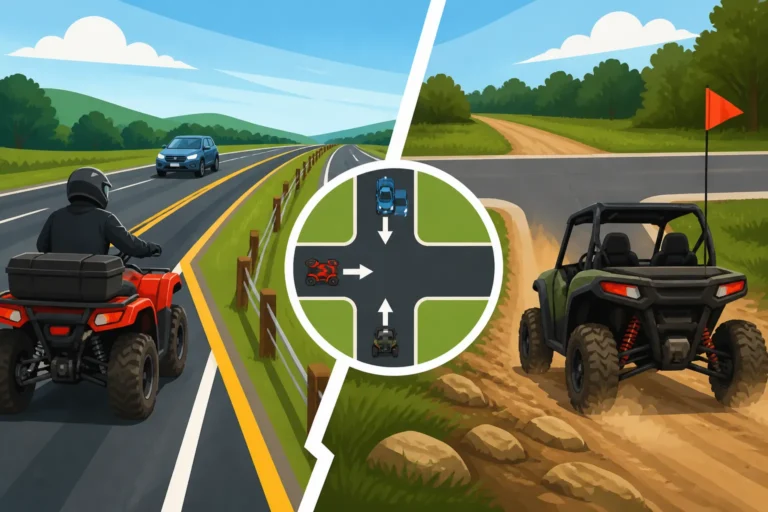
The general rule in Pennsylvania is unequivocal: you cannot operate an ATV or UTV on a highway or street that is open to the public and maintained by PennDOT or local municipalities. This includes state routes, most township roads, and borough streets. These machines are designed for off-road use, not for sharing pavement with cars, trucks, and motorcycles. Many riders get caught unaware, thinking a quiet country road is fair game, only to be met by law enforcement. The chapter explicitly prohibits this, underscoring the state's commitment to public safety on its road network.
This blanket prohibition is a major point of confusion for new riders or those visiting from other states with more lenient road-use laws. It's easy to assume that if a road is unpaved or lightly traveled, it must be okay. However, unless a road is specifically designated and signed for ATV use, it remains off-limits. There's no gray area for riding "just a little bit" on a paved road to get to a trail. Even riding on the shoulder is considered illegal operation on a highway. This is a hard-and-fast rule that riders must internalize to avoid legal trouble. [Are ATVs Street Legal in Pennsylvania: The Short Answer] unequivocally states this prohibition.
The Limited Exceptions: Crossing and Designated Roads
While the general rule is strict, 17 PA Code Chapter 51 does allow for very specific and limited exceptions to road use. The most common exception is for crossing a highway or street. This must be done at approximately a ninety-degree angle to the road, after coming to a complete stop, and only when it can be done safely without impeding traffic. You can't ride down the road, even briefly, to find a crossing point; you must cross directly from one off-road area to another.
The other, perhaps more exciting, exception is for "designated" roads. Some townships and boroughs have the authority to open certain roads to ATV and UTV traffic, but these roads must be clearly identified with official signage. These are typically local, low-traffic roads that connect trail systems or allow access to a trailhead from a staging area. If you see a green sign indicating ATV use is permitted, you're in a designated area. However, always check local ordinances, as even designated roads may have specific hours or other restrictions. [What the Green Sign on a Pennsylvania Township Road Means] is your visual cue for these special routes. [Pennsylvania's Designated ATV Roads] lists areas where these exceptions are common.
Understanding Fines and Penalties for Illegal Road Use
Operating an ATV or UTV illegally on a Pennsylvania road isn't just a minor infraction; it can come with significant financial penalties and other consequences. The fines for riding where you're not supposed to can quickly add up, often starting with an automatic fine for riding unregistered, even if that wasn't your primary violation. Beyond the initial citation, you could also face costs of prosecution, which can escalate the total amount you owe substantially. This isn't just a slap on the wrist; it's designed to be a strong deterrent against unsafe and illegal road operation.
Furthermore, repeated offenses can lead to even harsher penalties. A second offense might carry an even higher fine. These violations are typically handled by the DCNR, not PennDOT or the regular traffic courts, though local police can certainly issue citations for illegal operation. It's also important to remember that if an accident occurs while you're operating illegally on a public road, your insurance might not cover damages, leaving you personally liable for extensive costs. It's simply not worth the risk to ride on undesignated roads. [Pennsylvania Fines for Riding Illegally] outlines the steep costs involved.
Operator Requirements and Essential Safety Mandates
Beyond knowing where you can ride, 17 PA Code Chapter 51 also lays out critical requirements for who can ride and how they must operate their machine safely. These aren't just suggestions; they are mandates designed to protect riders, passengers, and the public. Ignoring these rules can lead to serious injury or even worse, and will certainly result in legal consequences. From age restrictions to mandatory safety gear and insurance, the chapter covers the essentials for responsible ATV and UTV operation within Pennsylvania.
Age Restrictions for Riders and Passengers
Pennsylvania law is very clear about the minimum age for operating an ATV or UTV, especially on public lands or designated routes. Generally, a rider must be at least eight years old to operate an ATV on state-managed lands or designated trails. However, there are engine size restrictions for younger riders, with those aged eight and nine typically limited to machines with an engine displacement of 70cc or less. Riders between the ages of 10 and 15 often have higher engine displacement caps, but still require direct supervision by an adult or successful completion of a safety training course.
Perhaps the most significant age restriction applies to designated roads. Pennsylvania law states that an operator must be at least sixteen years of age to ride an ATV or UTV on any designated road or joint-use highway. This is a critical distinction that many riders overlook, thinking that if they can ride a trail, they can ride a designated road connector. The added risks of road use demand a higher level of maturity and experience. Always ensure that the operator meets the age requirements for the specific area and type of riding being done. [Pennsylvania's Minimum Age of Sixteen on Roads] details this important rule.
Mandatory Helmet and Eye Protection Rules
Safety is paramount in off-road riding, and 17 PA Code Chapter 51 includes strict requirements for helmets and eye protection. For anyone operating or riding as a passenger on an ATV or UTV on public lands or designated trails in Pennsylvania, a helmet approved by the Department of Transportation (DOT) is mandatory. This is not a negotiable item; it's a critical piece of safety gear that can literally save your life in the event of a rollover or collision. Even on private property, while not legally mandated by the state, wearing a helmet is highly, highly recommended.
In addition to helmets, eye protection is also required. This could be goggles, a face shield integrated into your helmet, or even safety glasses, as long as they provide adequate protection from debris, dust, and branches. It's easy to forget goggles on a sunny day, but a rogue branch or a splash of mud can quickly impair your vision and lead to an accident. These rules apply to all riders, regardless of age, underscoring the universal need for head and eye protection in the dynamic environment of off-road riding. [Pennsylvania Helmet Law for ATV Riders] specifies these important safety requirements.
Insurance: Protecting Yourself and Others Off Your Own Land
While Pennsylvania does not require ATV or UTV owners to carry liability insurance for machines operated exclusively on private property, the rules change significantly the moment you leave your own land. If you plan to ride your ATV or UTV on any public land, designated trails, or even cross a public road, you are legally required to carry liability insurance. This is a non-negotiable part of responsible riding in Pennsylvania, designed to protect you and others in the event of an accident.
This requirement ensures that if you are involved in a collision that causes injury or property damage to another party, there is a financial safety net in place. Many riders assume their existing auto or homeowner's policy will cover their ATV, but this is rarely the case for off-road operation. You typically need a dedicated ATV or UTV insurance policy. Always carry proof of your insurance with you when riding, as DCNR rangers or other law enforcement may ask to see it. It's a small investment for peace of mind and legal compliance. [Pennsylvania ATV Insurance Requirement] explains this in detail.
Registration and Titling: Your Machine's Legal Identity
Just like a car, your ATV or UTV needs a proper legal identity to be operated anywhere beyond your private land. 17 PA Code Chapter 51 meticulously outlines the requirements for both registration and titling in Pennsylvania. These two processes, while related, serve different purposes: titling establishes legal ownership, while registration permits legal operation. Understanding these distinctions and knowing which type of registration applies to your riding habits is crucial for staying on the right side of the law.
Limited Versus General Registration: Choosing the Right Path
Pennsylvania offers two main types of ATV registration, and your choice depends entirely on where you intend to ride. "Limited Registration" is designed for ATVs that will only be operated on private property or on designated ATV trails within state forests or parks. It's a more restricted registration that implies the machine won't be used to connect trails on designated roads or frequently cross public roads. This type of registration comes with a specific plate, often of a different color, which signals its limited use.
"General Registration," on the other hand, is for machines that will be operated on designated ATV roads, joint-use roads, or that require more flexibility in terms of where they can be ridden legally. This registration allows for greater access to the state's expanding network of ATV opportunities, including connector roads between trail systems. Both registrations are typically valid for two years, and it's essential to pick the one that accurately reflects your intended riding activities to avoid issues. [Pennsylvania's Limited and General Registrations] provides a full comparison of these options.
Here's a quick comparison of the two main registration types:
| Feature | Limited Registration | General Registration |
|---|---|---|
| Primary Use | Private property, designated state forest/park trails | All of Limited, plus designated ATV roads, joint-use roads |
| Road Use Allowed | Crossing public roads at 90-degree angle (limited) | Crossing public roads, and riding on designated roads |
| Plate Type | Distinct plate (e.g., specific color) | Standard DCNR ATV plate |
| Trail Access | State forest/park trails, private land | State forest/park trails, private land, and connector roads |
| Cost Implications | Typically free (for the registration itself) | Involves a fee (funds trail maintenance) |
| Primary Identifier | Plate, DCNR wallet card | Plate, DCNR wallet card, validation sticker |
| Duration | Two years from date of issue | Two years from date of issue |
The Titling Process: Establishing Ownership
While registration permits operation, titling is about proving who legally owns the ATV or UTV. In Pennsylvania, all ATVs and UTVs purchased after a certain date (often February 1987) are required to have a title. This document is a legal certificate of ownership and is distinct from the registration. When you buy a new machine from a dealer, they will typically handle the initial titling and registration paperwork for you. For a private sale, however, the responsibility falls on the buyer and seller to properly transfer the title.
Having a clear title is crucial for several reasons. It protects you as the owner by providing undeniable proof of your purchase. It's also essential when you eventually sell the machine, as a buyer will want to see a clear title to ensure they are purchasing it legitimately. Without a title, selling an ATV can be difficult, and you might encounter issues with registration. The DCNR oversees the titling process, which typically involves submitting an application and proof of sale, often with a fee. [Titling an ATV in Pennsylvania] offers a step-by-step guide to this process.
What Registration Fees Fund in Pennsylvania
Many riders wonder where their registration fees go, especially for general registration. 17 PA Code Chapter 51 stipulates that these funds are specifically earmarked for the ongoing maintenance, development, and administration of the state's ATV and snowmobile trail systems. This means that when you pay your registration fee, you're directly contributing to the very trails you enjoy. These funds are vital for everything from grading and clearing trails to maintaining staging areas and producing maps.
This dedicated funding mechanism ensures that the resources needed to keep Pennsylvania's extensive network of riding opportunities in top condition are consistently available. It helps to cover the costs associated with DCNR staff time, equipment, signage, and environmental impact studies, all of which are crucial for sustainable recreational access. So, your registration isn't just a fee; it's an investment in the future of off-road riding across the Commonwealth, making sure there are always great places to ride for years to come. [What Pennsylvania ATV Fees Pay For] provides a detailed breakdown of where these contributions are directed.
Disclaimer
This article is for general informational purposes only and does not constitute professional advice. Laws, prices and regulations vary by location and change over time. Consult a qualified professional for guidance on your specific situation.