Spotting a Posted ATV Road
Navigating Pennsylvania's vast network of roads on your ATV or UTV can feel like a labyrinth, especially when you're just trying to figure out where you're actually allowed to ride. It's incredibly frustrating to want to connect trails, access a local business, or simply get from point A to point B without worrying about a hefty fine, only to find confusing or absent signage. This guide is here to cut through that confusion, helping you understand precisely what a "posted ATV road" looks like in Pennsylvania and how to confidently identify legal riding routes.
The Reality of Street Legal ATVs in Pennsylvania
Let's clear the air right upfront, because this is where a lot of riders get tripped up and end up in hot water. The dream of a fully "street legal" ATV that you can just plate and ride anywhere in Pennsylvania, much like a car or motorcycle, is generally just that: a dream. Pennsylvania's laws are very specific, and they don't allow for ATVs and UTVs to be registered for general highway use. This fundamental truth shapes everything about where and how you can ride.
The General Rule: No Street Legal ATVs
When you hear people talk about a "street legal ATV in Pennsylvania," it usually refers to a very specific and limited scenario, not a blanket permission to ride on any public road. Unlike some other states where you can modify your machine, get it inspected, and receive a standard vehicle registration for road use, Pennsylvania doesn't offer that path. Your ATV or UTV is categorized as an "off-highway vehicle" by the state, and that designation comes with strict limitations on where it can operate. It's a common misconception, and one that can lead to significant headaches, including fines and even impoundment, if you're caught riding on a non-designated public road. Trying to navigate this can be bewildering, especially for new riders or those moving into the state from areas with different regulations. It's why understanding designated roads is so critical.
Why Designated Roads Are Your Only Option
Because your machine isn't considered "street legal" in the traditional sense, your only recourse for riding on public roads is to seek out those that have been specifically designated as open for ATV or UTV use. These aren't just any old backroads; they are roads that local municipalities (like townships or boroughs) have formally opened through an ordinance or resolution. These designated roads often serve as crucial connectors between larger trail systems, access routes to staging areas, or provide a way for riders to reach services in nearby towns. Without these specific designations, riding on any public road is strictly prohibited. It's not about how many mirrors you have or if your horn works; it's about whether that particular stretch of pavement or gravel has been legally sanctioned for ATV traffic. You can learn more about [Pennsylvania's Designated ATV Roads] and why they exist.
Understanding Pennsylvania's Laws
Pennsylvania's laws regarding ATVs and UTVs are primarily found under Title 17, Chapter 77, of the Pennsylvania Consolidated Statutes, managed by the Department of Conservation and Natural Resources (DCNR). This framework defines ATVs, mandates registration for riding off your own private land, and outlines where you can and cannot ride. The key takeaway for road use is that ATVs are generally prohibited on streets and highways, with the exception of those "designated and posted as open to ATV use by the governmental agency having jurisdiction." This isn't just a suggestion; it's the law. Violating these rules can lead to significant penalties, making it essential for every rider to be intimately familiar with the legal landscape. It also highlights why you need to know exactly what you're looking for when you see a sign.
What a Posted ATV Road Looks Like
Alright, so if designated roads are your only option, how do you actually spot one? It's not always as obvious as you might hope, but there are definite signs (literally!) to look for. These signs are your official green light to ride. Without them, assume the road is closed to ATV traffic, regardless of how many tire tracks you might see or what a friend of a friend told you.
The Official Green and White Sign
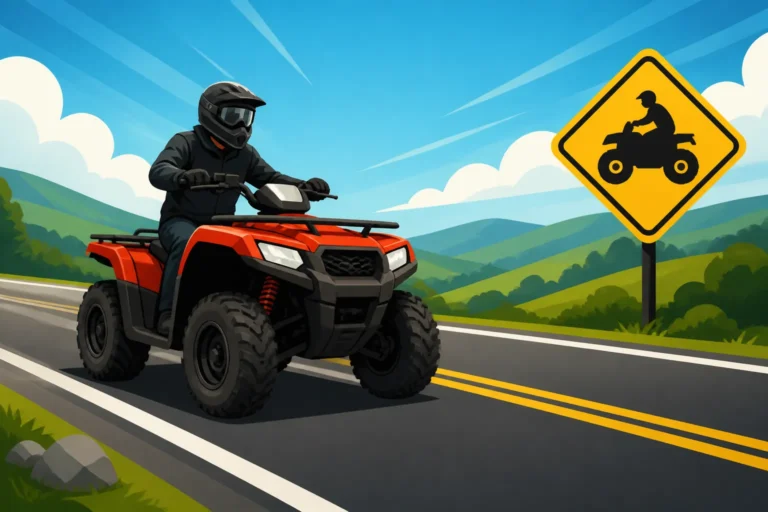
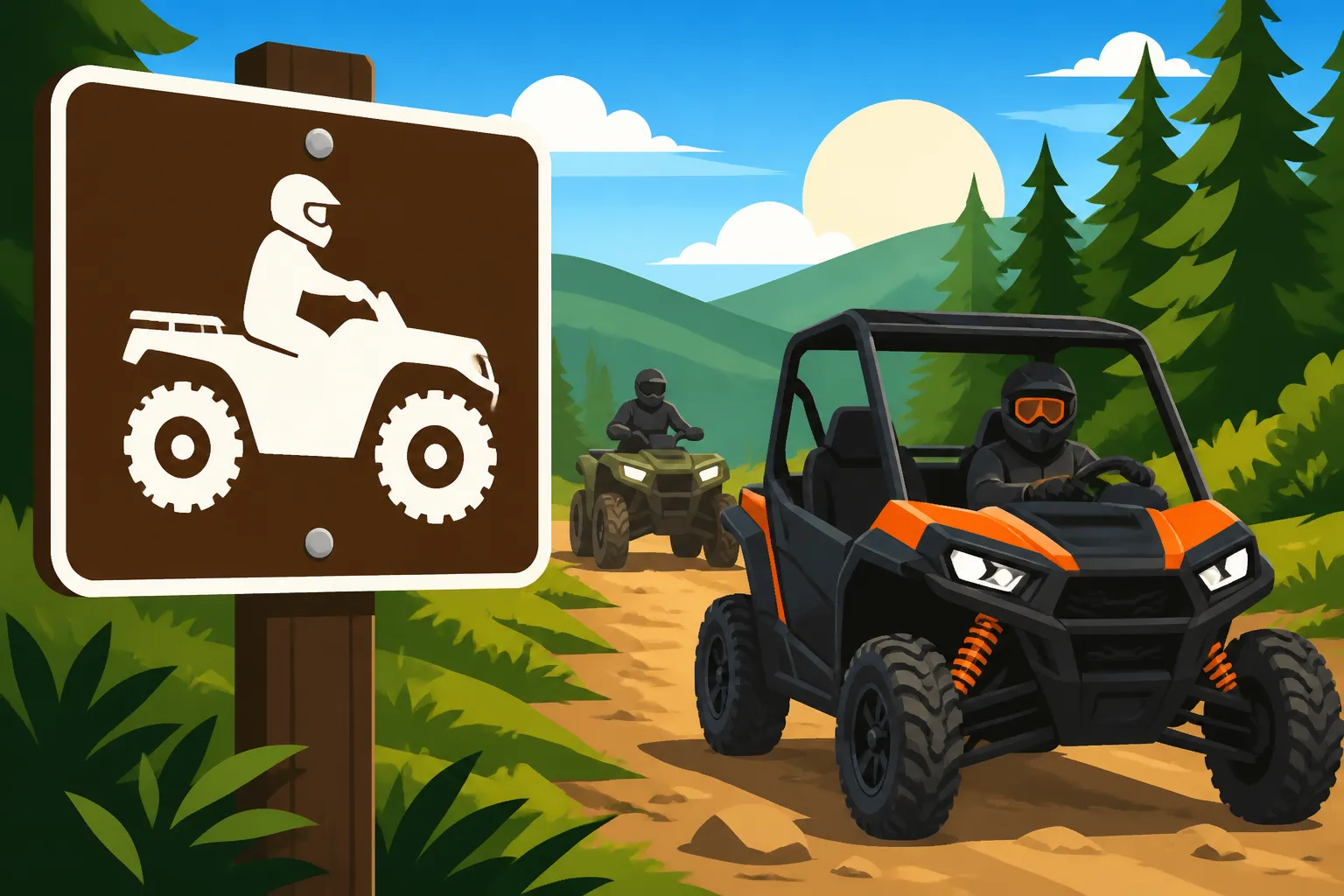
The most definitive indicator of an open ATV road in Pennsylvania is the official green and white sign. These signs are typically rectangular, featuring a white ATV symbol and white text on a green background. They explicitly state something to the effect of "ATV USE PERMITTED" or "DESIGNATED ATV ROUTE." Sometimes, they'll also include specific dates or hours of operation if the road isn't open year-round or 24/7.
These signs are usually placed prominently at the entrance points to the designated road, at intersections where the designated route turns, and sometimes periodically along longer stretches to reassure riders. If you don't see this specific type of sign, especially at the start of a road, be very cautious. This is the state's and local municipality's official way of communicating that ATV use is permitted here. Anything else is unofficial and should not be relied upon for legal riding. Look for these signs, much like you'd look for a [Green Sign on a Pennsylvania Township Road] to confirm your route.
Beyond the Sign: Other Indicators
While the official green and white sign is paramount, there can be other indicators that might suggest a road is designated, though these should never replace the need for the official signage or verification.
- Road Markings or Pavement Type: Sometimes, designated roads might change in character. For example, a paved township road might transition to a gravel forest road that's part of a larger ATV trail system. The change in surface itself isn't a sign, but it might alert you to look for a posted sign nearby.
- Proximity to Trailheads: If you're near a known, legal ATV trailhead, the roads leading to and from it might be designated connector routes. Again, this is a "hint," not a guarantee. Always search for the actual signs.
- Information from Local Clubs or Maps: ATV clubs and published trail maps often highlight designated connector roads. While these resources are valuable for planning, they should be used in conjunction with on-the-ground verification. A map could be outdated, or a sign might have been removed.
It's important to remember that these "other indicators" are secondary. They should prompt you to look harder for the official sign, not assume permission in its absence. For example, if you're looking to upgrade your machine for better trail riding, you might consider some heavy-duty A-arms from SuperATV, but that doesn't mean the road to the trail is open just because your machine is now more capable.
Roads That Are NOT Posted Open
Just as important as knowing what an open road looks like, is knowing what a closed road looks like – or more accurately, what it doesn't look like.
- Absence of Signage: This is the most critical point. If there's no green and white "ATV USE PERMITTED" sign, assume the road is closed to ATVs. Period.
- "No Trespassing" or "Private Property" Signs: These are clear indicators that you absolutely cannot ride here. Even if a private road looks like a perfect shortcut, if it's marked as private or restricted, stay off it.
- Standard "Street Name" Signs: These signs, typical for any public road, only indicate the road's name. They do not indicate ATV permission. Unless an official ATV designation sign is present alongside it, assume no ATV use.
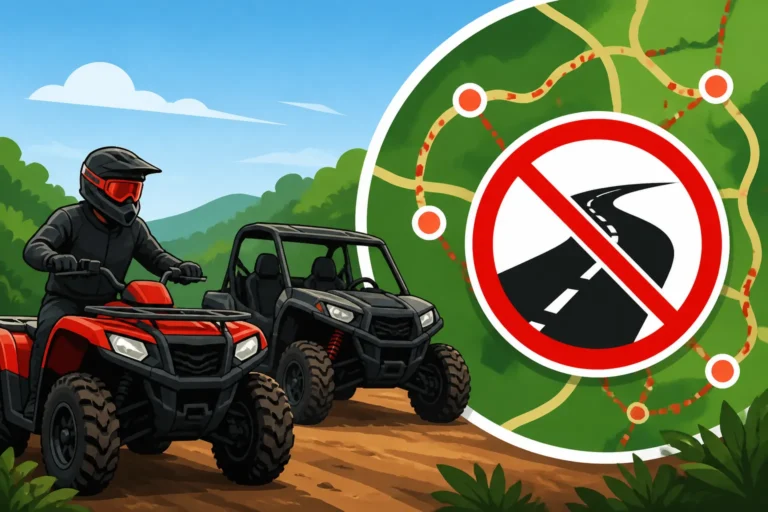
- "No Motorized Vehicles" or "Trail Closed" Signs: These are explicit warnings to stay off. They are often found on hiking trails, rail trails, or state game lands, where ATV use is generally prohibited or restricted to specific access points. Pennsylvania Game Lands are, in fact, largely off-limits to ATVs, with very few exceptions. You can explore [Pennsylvania Game Lands and Why Quads Are Banned] for more context.
Riding on a non-posted road, even inadvertently, can lead to fines ranging from hundreds of dollars to much more, plus potential court costs and damage to your reputation as a responsible rider. It's simply not worth the risk.
How to Confirm a Road is Designated for ATV Use
Sometimes the signs are missing, obscured, or you're just unsure. In these situations, simply guessing is never a good idea. Proactive verification is always the safest and most responsible approach. There are several ways to confirm the status of a road before you even load up your quad.
Checking Local Township or Borough Ordinances
Since local municipalities are the ones that designate these roads, their official records are the ultimate source of truth. Most townships and boroughs have websites where they post their local ordinances and resolutions. Look for sections related to "Code Enforcement," "Public Works," or "Recreation" to find information regarding ATV use on local roads.
This might require a bit of digging, but it's the most authoritative way to confirm. If you can't find it online, a polite phone call to the township or borough office during business hours can often yield the answer. Remember, the person on the phone might not know offhand, so be patient and ask to be directed to someone who handles municipal codes or road designations. This approach is especially useful for understanding [Township Roads Open to Pennsylvania ATVs].
Online Resources and Maps
The Pennsylvania DCNR website is an excellent starting point for general information on ATV trails and designated riding areas. While they might not list every single township-designated road, their resources can help you identify official state forest trails and the general areas where riding is permitted.
Many ATV clubs in Pennsylvania also maintain websites or social media pages where they share maps and information about local riding opportunities, including designated connector roads. These can be fantastic resources for discovering new legal riding spots and confirming routes. Just be sure to cross-reference with official sources or visual confirmation of signage whenever possible, as club information can sometimes be a few steps behind official changes. For example, SuperATV often provides general guides on how to make your machine more trail-ready, which might include discussions of various road types, but for specific road legalities in Pennsylvania, you still need to consult official DCNR or local municipal resources.
Asking Local Authorities DCNR, Township Officials
If you're planning a ride in an unfamiliar area, don't hesitate to reach out to the local DCNR office for that specific state forest district, or the local township/borough office. They are the authorities responsible for managing these areas and can provide the most accurate and up-to-date information.
When calling or emailing, be specific about the road or area you're inquiring about. Provide road names, GPS coordinates, or clear descriptions if possible. This will help them give you a precise answer. This is also a good opportunity to ask about any specific local rules or restrictions that might apply, such as speed limits, hours of operation, or seasonal closures. Remember, a friendly inquiry before your trip is far better than a surprised interaction with law enforcement during your ride. The [Pennsylvania ATV Registration Help Line] can sometimes point you in the right direction for DCNR-managed areas.
The Importance of Knowing the Rules of the Road
Understanding where you can and cannot ride on a road isn't just about avoiding a ticket; it's about safety, respect for the community, and ensuring the long-term viability of ATV riding opportunities in Pennsylvania. Being a responsible rider means more than just having the right gear or a well-maintained machine.
Safety First: Sharing the Road with Cars
When you ride a designated ATV road, you are often sharing that road with cars, trucks, and other vehicles. Unlike a dedicated ATV trail, these roads are not solely for off-highway vehicles. This means you must operate your ATV or UTV with the same level of caution, awareness, and adherence to traffic laws as any other vehicle operator.
This includes obeying speed limits, stopping at stop signs, yielding to oncoming traffic, and signaling turns where applicable. Your ATV or UTV is smaller, often less visible, and handles differently than a car. Always ride defensively, anticipate the actions of other drivers, and ensure your machine is equipped with proper lighting and mirrors for visibility. The reality of [Sharing a Pennsylvania Road Open to ATVs and Cars] means everyone has a responsibility.
Avoiding Costly Fines and Citations
The penalties for riding an unregistered ATV, or riding a registered ATV on a non-designated road, can be severe. Fines can quickly add up, and in some cases, your machine could even be impounded. This financial hit is often coupled with legal fees, court appearances, and the hassle of recovering your vehicle.
Beyond the immediate financial costs, receiving citations can also tarnish the reputation of ATV riders as a whole. Every illegal act on a public road makes it harder for responsible riders and ATV clubs to advocate for more designated riding opportunities. Always check the rules, know the route, and avoid the automatic [Pennsylvania Fines for an Unregistered ATV] or other violations.
Being a Responsible Rider and Community Member
Ultimately, knowing and respecting the rules of designated ATV roads is about being a responsible member of the riding community and the larger Pennsylvania community. When riders adhere to the rules, they demonstrate that ATVs and UTVs can coexist safely and respectfully with other forms of traffic and with local residents.
This positive image helps pave the way for future trail expansion, new designated routes, and continued access to the incredible riding opportunities Pennsylvania has to offer. By contrast, a pattern of illegal riding only serves to fuel public opposition and tighten restrictions, limiting options for everyone. So, next time you're planning a ride, take that extra step to confirm your route. It benefits everyone. For example, ensuring your SuperATV winch is in good working order for the trails is great, but ensuring you're legally on the trails (or designated roads) is even more important.
Table: Spotting ATV Road Designations – What to Look For
| Feature / Indicator | What it Looks Like | Interpretation (Pennsylvania) | Action for Rider |
|---|---|---|---|
| Official Green & White Sign | Rectangular sign, green background, white ATV symbol & "ATV USE PERMITTED" text. | DEFINITIVE: Road is officially designated and open for ATV use (check for specific hours/dates). | Ride with confidence, obeying all traffic laws and posted restrictions. |
| Standard Road Name Sign | Blue/green rectangular sign with white text showing road name (e.g., "Maple Lane"). | NON-INDICATIVE: This only names the road. It does NOT mean ATV use is permitted. | Assume road is closed to ATVs unless an official ATV designation sign is also present. |
| "No Trespassing" Sign | Varies, but clearly states "No Trespassing," "Private Property," or similar. | PROHIBITED: Entry is forbidden. This is private land. | Do NOT enter. Find an alternate legal route. |
| "No Motorized Vehicles" Sign | Often a circle with a diagonal line through a vehicle symbol, or text stating prohibition. | PROHIBITED: Motorized vehicle use, including ATVs, is explicitly forbidden. | Do NOT enter. This applies even if it looks like a trail. |
| Paved Roads (no other sign) | Any typical paved state route, county road, or township road without ATV signage. | PROHIBITED: ATVs are not street legal for general use. | Do NOT ride here. Use a trailer to transport your ATV. |
| Gravel/Dirt Roads (no other sign) | Any unpaved road, often found in rural or forest areas, lacking ATV signage. | PROHIBITED: Despite appearance, still considered a public road. | Do NOT ride here unless officially designated and signed. |
| Information from Club Maps/Online | Maps or lists provided by ATV clubs or other online resources. | GUIDANCE ONLY: Useful for planning, but always verify with on-site signage or local officials. | Use for planning; double-check with physical signs or official municipal sources before riding. |
Disclaimer
This article is for general informational purposes only and does not constitute professional advice. Laws, prices and regulations vary by location and change over time. Consult a qualified professional for guidance on your specific situation.