What the Green Sign on a Township Road Means
If you've ever spent time riding your ATV or UTV in Pennsylvania, you've probably encountered that frustrating feeling of not quite knowing where you can and can't legally ride. The rules around road use for our machines can feel like a tangled knot, and it's easy to get confused. One minute you're having a blast on a designated trail, the next you're on a public road, wondering if you're breaking the law. This guide is all about one specific, often misunderstood, beacon of hope for riders: the green sign on a township road. We’ll break down exactly what that green sign means, how it impacts your ride, and what other rules you need to follow to stay legal and safe.
The Conundrum of ATVs and Public Roads in Pennsylvania
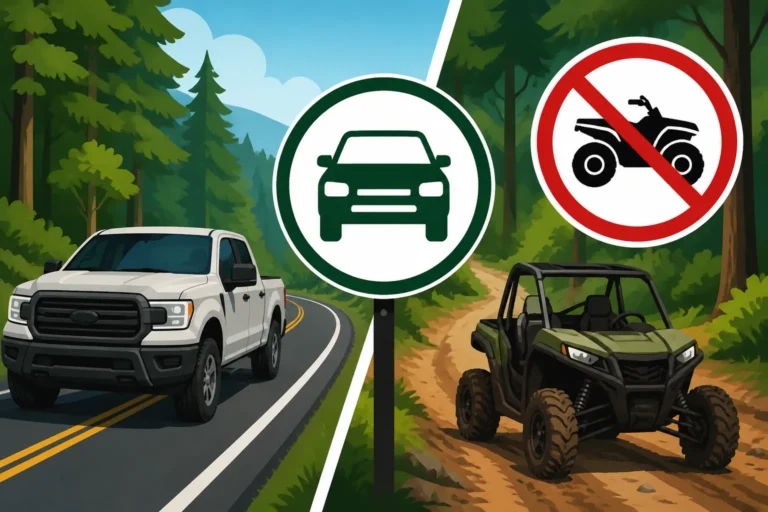
Let's be real, Pennsylvania isn't exactly known for being ATV-friendly when it comes to public roads. The default stance across the Commonwealth is pretty clear: ATVs and UTVs are not permitted on state highways, local roads, or any other public thoroughfare. This rule exists for a host of safety reasons, given that our machines are designed for off-road environments, not for sharing asphalt with cars, trucks, and all the hazards that come with them.
Why Most Roads Are Off-Limits by Default
The primary reason most roads are off-limits boils down to state law. Pennsylvania's Vehicle Code generally classifies ATVs and UTVs as "unlicensed motor vehicles" for highway purposes, meaning they don't meet the requirements for street-legal operation. This isn't just a quirky rule; it's rooted in the design and safety features of our machines. ATVs and UTVs often lack the turn signals, mirrors, horn, and other safety equipment that traditional automobiles require for road use. Beyond the equipment, there's the matter of rider visibility, speed differentials, and the general handling characteristics that make off-road machines less suited for pavement. This overarching restriction is often a source of frustration for riders who just want to connect trails or access a local store without having to trailer their machine everywhere. [Street Legal ATVs in Pennsylvania: The Short Answer] offers a deeper dive into this initial barrier.
The state's Department of Conservation and Natural Resources (DCNR) manages the registration of ATVs and UTVs, but this registration is specifically for off-road use, not for making your machine street-legal. It's a critical distinction that sometimes trips up new riders. While you absolutely need to have your machine properly registered if you plan to ride anywhere off your own private property, that registration doesn't grant you carte blanche to cruise down Main Street. The DCNR's role is focused on trail management and responsible off-road recreation, not highway safety or vehicle licensing.
How Townships Can Open Specific Roads to ATVs
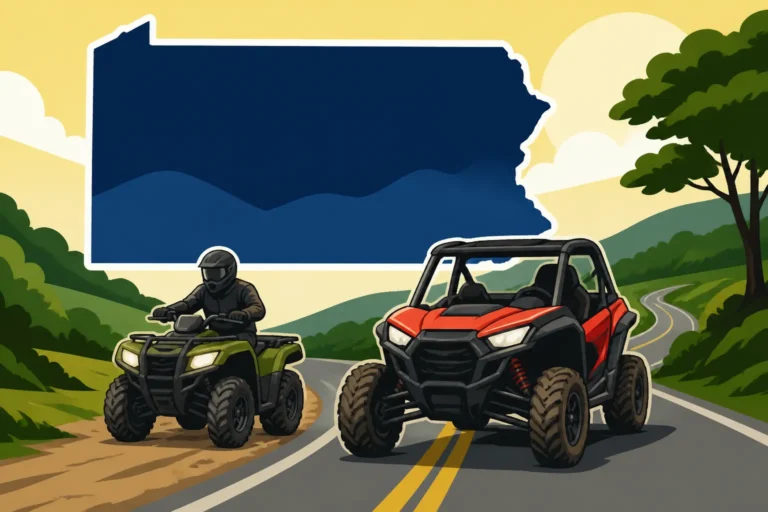
Despite the general prohibition, there's a glimmer of hope, and that's where local townships come in. Pennsylvania law grants local municipalities—townships and boroughs—the authority to designate specific roads within their jurisdiction for ATV and UTV use. This isn't a blanket decision; it's a careful, deliberate process. A township board of supervisors or borough council must pass an ordinance specifically opening certain roads. They don't just put up a sign on a whim; there's usually a public hearing, consideration of traffic patterns, safety concerns, and often input from local residents and ATV clubs.
This local control is a vital aspect of Pennsylvania's ATV landscape. It allows communities to tailor rules to their unique circumstances. For example, a rural township with long stretches of gravel road and limited vehicular traffic might be more inclined to open connector roads than a densely populated suburban borough. These designated roads are typically chosen to connect existing trail systems, provide access to trailheads, or allow riders to reach local businesses like gas stations or restaurants. The power to open roads is a recognition that responsible ATV use can be a positive economic and recreational force in a community, but it's always balanced against the needs of other road users and public safety.
Deciphering the Green Sign: Your Green Light to Ride
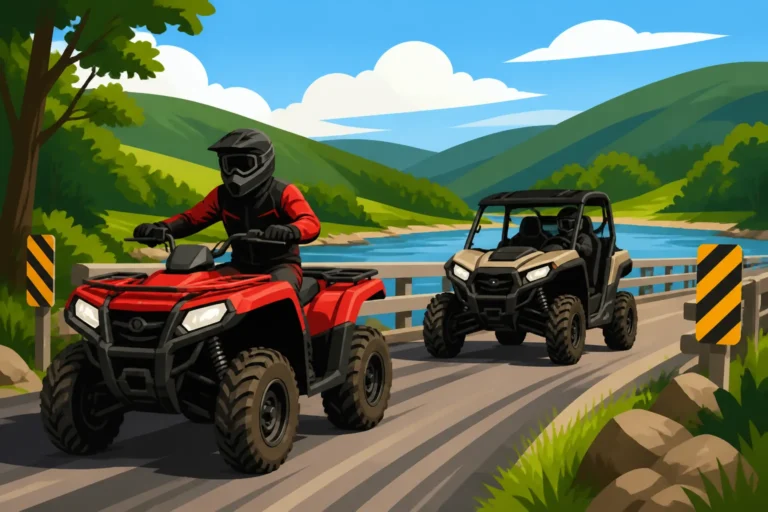
So, you’re riding along, maybe connecting one section of a state forest trail to another, or heading towards a small town for gas, and suddenly you see it: a green sign. This isn't just any old road sign; it's a specific designation that, for Pennsylvania ATV and UTV riders, is a welcome sight. It’s the visual cue that this particular stretch of road has been officially opened for ATV and UTV use by the local municipality.
What the Sign Physically Looks Like
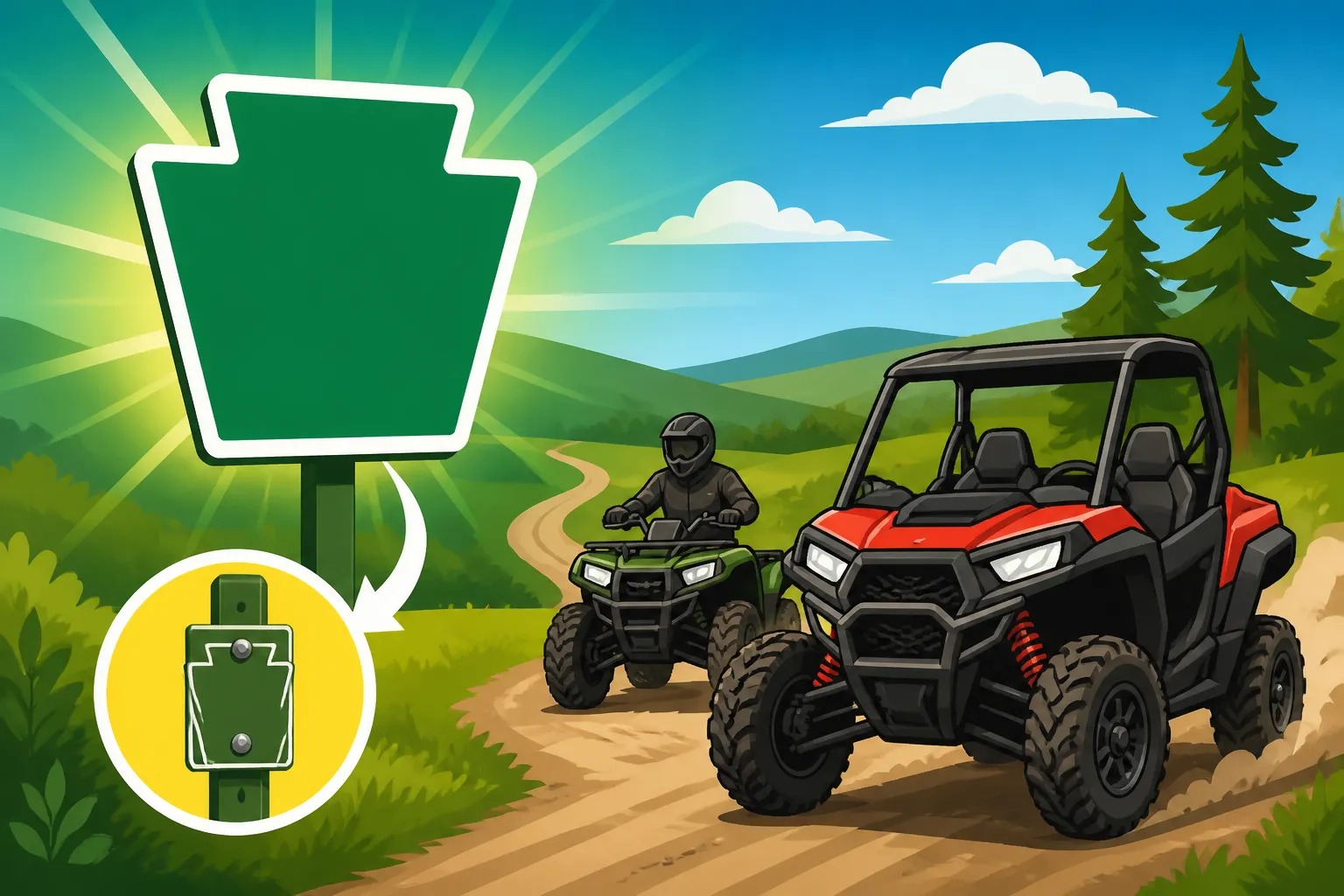
The "green sign" we're talking about isn't a universal standard in terms of exact dimensions or font, but it generally adheres to a clear format. You'll typically see a green background with white lettering. The key information on the sign will usually state something to the effect of: "ATV ROUTE" or "JOINT USE ROAD," often accompanied by a more specific directive like "OPEN TO ATVs AND UTVs." Sometimes, there might be additional text specifying hours of operation, speed limits, or other pertinent local regulations. Think of it as a clear, unmistakable indicator that the road you are on, or about to enter, has been designated for off-highway vehicle traffic. You might also spot similar signs that say "PENNSYLVANIA JOINT-USE ROAD" which further reinforces the idea of shared use. [The Green Sign on a Pennsylvania Township Road] provides more context on these signs.
These signs are strategically placed at the entry points of designated roads and often at key intersections to ensure riders are well aware of when they are on an approved route and when they are not. They serve as a clear boundary marker, preventing riders from inadvertently straying onto prohibited roads. They aren't meant to be subtle; they're designed to be easily seen by riders, signaling a legal passage.
Beyond the Sign: What Else You Need to Know
While spotting a green sign is fantastic, it's not a free pass to ignore all other rules. These signs indicate a specific privilege, but that privilege comes with responsibilities and adherence to a whole host of other regulations. Think of it like a designated swimming area: you can swim there, but you still have to follow the pool rules.
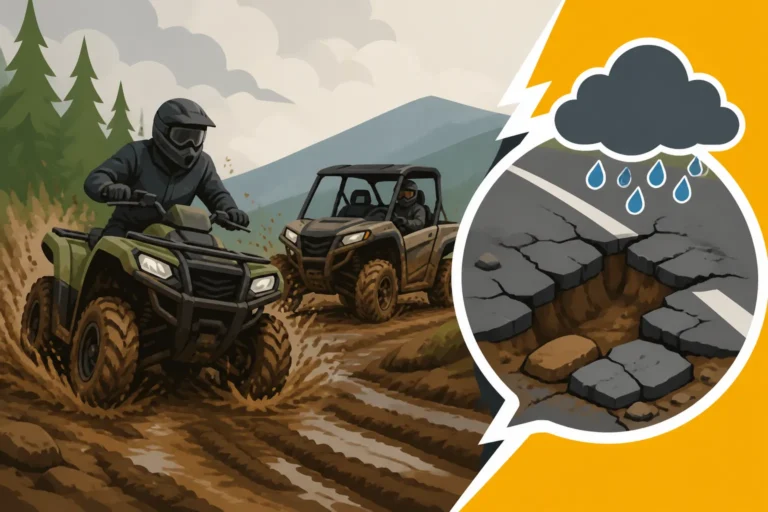
Even on a green-signed road, you are generally still required to adhere to standard traffic laws that apply to all vehicles. This includes things like obeying posted speed limits, stopping at stop signs, yielding to oncoming traffic, and not driving recklessly. Remember, these are "joint-use" roads, meaning you'll be sharing them with cars, trucks, and possibly even bicycles or pedestrians. Your machine needs to be operated safely and predictably. Also, keep in mind that these roads are rarely maintained with off-road vehicles in mind, so expect potholes, gravel, and other conditions that might not be ideal for high-speed travel. [Pennsylvania Joint-Use Road Rules] covers many of these shared-road scenarios.
Beyond traffic laws, you still need to meet specific ATV and UTV requirements. For instance, your machine must be registered with DCNR and you must carry proof of that registration, often in the form of the wallet card DCNR issues. You are also typically required to carry proof of liability insurance if you are riding off your own private property, which definitely includes designated township roads. This is not just a suggestion; it's a legal requirement to protect yourself and others in case of an accident. [Pennsylvania ATV Insurance Requirement] goes into detail about the necessary coverage.
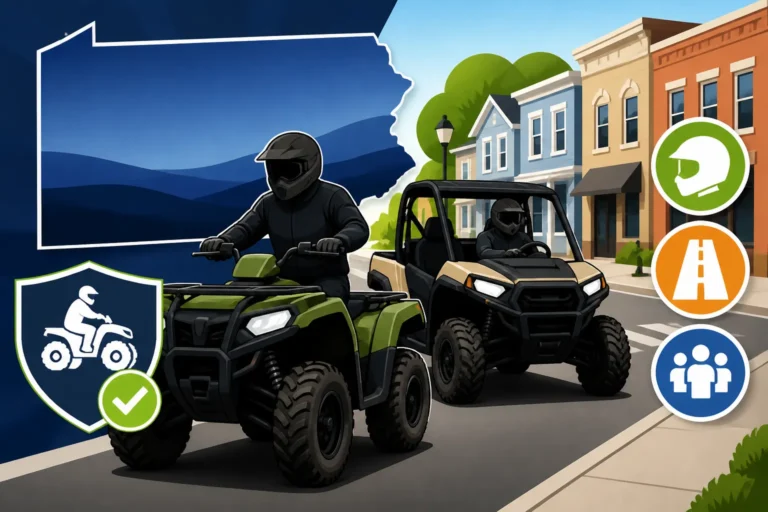
And don't forget personal safety equipment! Even on a designated road, helmets are mandatory for all ATV and UTV operators and passengers in Pennsylvania, unless a specific exception applies (like farming). Your off-road helmet is perfectly fine, but make sure it's in good condition and properly fitted. Eye protection is also a smart idea, even if not explicitly mandated in every scenario, to protect against dust, debris, and insects. A solid pair of goggles or a face shield is always recommended. When you're riding on public roads, even designated ones, visibility is paramount. Many riders install aftermarket mirrors, additional lights, or flags on their machines to make themselves more noticeable to other drivers. This is where products from brands like SuperATV can come in handy, offering a wide range of accessories to enhance safety and visibility on mixed-use routes.
Here's a quick comparison of what a green sign means versus a non-designated road:
| Feature | Designated Green-Signed Road | Non-Designated Public Road |
|---|---|---|
| ATV/UTV Use | Generally Permitted | Generally Prohibited (Illegal) |
| Registration | Required (DCNR) | Required (DCNR) for off-property use |
| Insurance | Required (Liability) | Required (Liability) for off-property use |
| Helmet | Required for all riders | Required for all riders |
| Speed Limit | Must obey posted road limits | Not applicable (cannot ride) |
| Traffic Laws | Must obey all traffic laws (stop signs, etc.) | Not applicable (cannot ride) |
| Sharing Road | Expect to share with cars, trucks, pedestrians | Not applicable (cannot ride) |
| Enforcement | DCNR Rangers, State Police, Local Police can cite | State Police, Local Police can cite |
| Typical Purpose | Connect trails, access amenities, local travel | Strictly prohibited |
Practical Implications for Riders
Understanding the green sign isn't just about avoiding a ticket; it's about unlocking more riding opportunities and enhancing your overall experience in Pennsylvania. These designated roads become critical arteries in the larger network of trails and riding areas.
Planning Your Route Around Green Signs
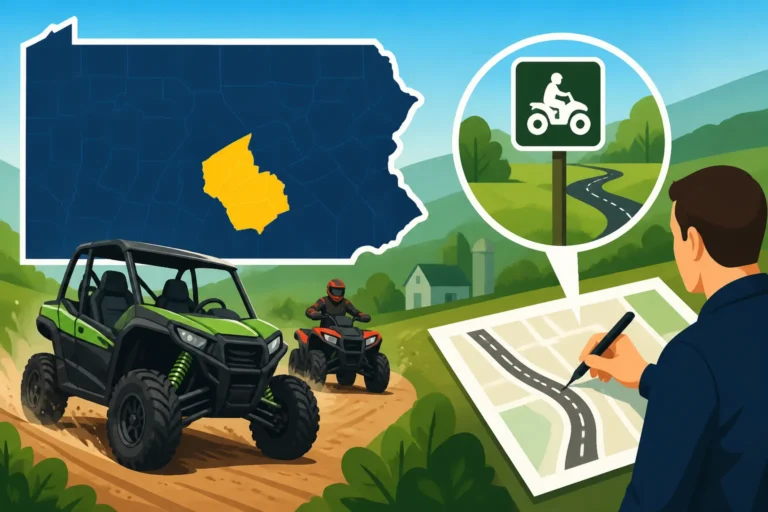
For many Pennsylvania riders, green-signed township roads are invaluable for connecting otherwise isolated trail systems. Imagine you have two fantastic state forest trails, but they're separated by a few miles of public road. Without a designated connector, you'd have to trailer your machine, pack up, drive a short distance, and then unload again. The green sign eliminates this hassle, allowing for seamless travel between trails. This transforms what could be a disjointed day of riding into a much more expansive and enjoyable journey. [Riding a Connector Between Two Trail Systems] highlights the value of these routes.
These roads also provide crucial access to local amenities. Need to refuel your tank, grab a bite to eat, or pick up a forgotten item at a convenience store? A green-signed road can be your path to civilization. This is particularly beneficial in rural areas where towns might be nestled close to trailheads. It allows riders to support local businesses, which in turn can foster a more positive relationship between the riding community and local residents. You can ride your machine directly to a gas pump, making for a much more convenient stop than trying to push your quad a mile to the nearest station.
When planning a multi-day trip, identifying these designated roads on a map can help you string together longer routes. It allows you to create loops or through-routes that might otherwise be impossible. Always consult official DCNR maps or local township ordinances to confirm current designations. While a green sign is a physical indicator, having a map that clearly shows these routes can be incredibly helpful for navigation and peace of mind.
The Risks of Unmarked Roads
Riding on a public road that is not designated by a green sign (or explicit ordinance) is a serious offense in Pennsylvania. The laws are clear on this, and the consequences can be significant, far beyond just a slap on the wrist. You're not just risking a fine; you're risking impoundment of your machine and potentially much worse. [Pennsylvania Fines for an Unregistered ATV] delves into the specific financial penalties.
A typical fine for riding an unregistered or otherwise illegal machine on a public road can be steep, often starting at several hundred dollars. But it doesn't stop there. You could also be charged with reckless driving, operating an uninsured vehicle, or other traffic violations. If you're involved in an accident while illegally riding on a road, your insurance company might deny coverage, leaving you personally liable for damages and medical expenses that could be astronomical. Beyond the legal and financial repercussions, there's the very real danger to yourself and others. An ATV or UTV is not designed for pavement, and riding one on a busy road can lead to unpredictable handling, especially at higher speeds or during emergency maneuvers. The risk of collision with a larger, faster-moving vehicle is ever-present.
This is why it's so important to respect the green signs and the absence of them. If you don't see one, assume the road is off-limits. It's a simple rule that can save you a lot of grief and keep you safe. Law enforcement, including DCNR rangers, State Police, and local police, are well aware of the regulations and will enforce them. They regularly patrol areas known for ATV activity, especially near trail systems and rural roads. Ignoring the rules is a gamble that's simply not worth taking. [Being Cited for No Registration] is a grim reminder of what can happen.
Gear Considerations for Road Sections
When you're riding on roads, even designated ones, your machine transforms from a pure trail warrior to a mixed-use vehicle, and your gear choices should reflect that. While your off-road helmet is perfect, think about other accessories that can make you more visible and safer. SuperATV offers a variety of products that are specifically designed for utility and safety, which are excellent for machines that will see mixed road and trail use.
Consider adding extra lighting to your machine. Stock headlights and taillights might be sufficient for trails, but on a road, especially at dusk or in adverse weather, more powerful LED light bars or auxiliary lights can significantly increase your visibility to other drivers. Many riders also install turn signals and brake lights if their UTV or ATV doesn't have them integrated, further enhancing safety and communication with traffic. Mirrors are another crucial addition; being able to see what's behind you without constantly turning your head is vital for safe road operation.
Depending on the conditions, a windshield on a UTV can make road riding much more comfortable by protecting you from wind, dust, and debris. For ATVs, handguards can offer similar protection. And don't forget your attire! While blaze orange is primarily for hunting season, wearing bright, high-visibility colors on the road is always a good idea. Think about reflective elements on your helmet or jacket. The goal is to make yourself as conspicuous as possible to other road users, minimizing the chances of an accident.
Common Misconceptions and What Comes Next
Even with clear signs and rules, misconceptions can linger, and the future of ATV road access is always a topic of discussion among riders. It's important to clarify what a green sign doesn't mean and how riders can be part of shaping future opportunities.
When a Green Sign Isn't Enough
One of the biggest misconceptions is that a green sign instantly makes your ATV or UTV "street legal" in the same way a car is. This is absolutely not the case. A green sign only designates that specific stretch of road for ATV use; it does not change the fundamental classification of your machine under state law. You're still operating an off-highway vehicle on a public thoroughfare, albeit a specially designated one. This means you still cannot, for example, ride your ATV down a state route or into a neighboring borough that hasn't passed a similar ordinance, even if you just rode off a green-signed township road.
Furthermore, a green sign does not exempt you from other laws that might apply. If that designated road has a 25 MPH speed limit, you must obey it. If it leads into a town where certain areas are off-limits to ATVs, you must respect those boundaries. It's not a blanket permission slip. You also cannot assume that just because one township has opened a road, all adjacent townships have done the same. Each municipality acts independently, and their ordinances can vary significantly. Always know the local rules of the area you are riding in. [Pennsylvania's Designated ATV Roads] covers the specifics of these varied designations.
Advocating for More Open Roads
Many riders and ATV clubs are passionate about expanding the network of legal riding opportunities in Pennsylvania, including the designation of more township roads. This isn't about promoting reckless riding; it's about creating logical, safe connections for responsible recreation. If you're interested in seeing more green signs in your area, getting involved with local ATV clubs is a fantastic first step. These clubs often serve as the primary advocates for riders, working directly with local governments, the DCNR, and other stakeholders.
Advocacy often involves attending township meetings, presenting well-researched proposals, and demonstrating the positive economic impact of ATV tourism. It's about showing that riders are responsible, respectful of the rules, and eager to contribute to the local economy. Sometimes, it's about identifying specific roads that would serve as ideal connectors, perhaps low-traffic gravel roads that see minimal vehicular use but are critical for linking trails. Education is also key: helping township officials understand the difference between responsible, designated road use and illegal, dangerous joyriding. By becoming an active and informed voice in your community, you can play a role in advocating for more legal and enjoyable riding experiences in Pennsylvania. [Asking a Township to Open a Road] is a great resource if you're looking to get involved.
Disclaimer
This article is for general informational purposes only and does not constitute professional advice. Laws, prices and regulations vary by location and change over time. Consult a qualified professional for guidance on your specific situation.