Sharing a Pennsylvania Road Open to ATVs and Cars
The thought of ATVs and traditional vehicles sharing the same stretch of road can make many folks nervous, whether you're behind the wheel of a truck or the handlebars of a quad. It's a scenario that carries a unique set of challenges and responsibilities, and misunderstanding the rules or expectations can quickly lead to frustration or worse. This guide is here to shed light on how both ATV/UTV operators and conventional car drivers can safely and respectfully navigate Pennsylvania's designated joint-use roads, ensuring everyone gets to their destination without incident.
Understanding Pennsylvania's Approach to Shared Roads
Pennsylvania has a distinct way of handling off-road vehicles, and it's not always intuitive, especially for those accustomed to other states' rules. The state generally prohibits ATVs and UTVs from public streets and highways, but there's a crucial exception: roads specifically designated by townships or boroughs as "joint-use" or "connector" routes. These aren't just random stretches of asphalt; they serve a specific purpose and come with their own set of guidelines.
The Rationale Behind Joint-Use Roads
For ATV and UTV enthusiasts, these joint-use roads are a lifeline. They're often created to connect existing trail systems, allowing riders to travel between two separate riding areas without having to load their machines onto a trailer. Imagine being able to ride from one section of a state forest trail to another, or even ride into a small town to grab a bite or refuel, all while legally operating your ATV. These designated roads also provide access to services like gas stations, restaurants, or lodging, boosting local economies in rural areas. It's about enhancing the overall riding experience and integrating ATV tourism into community life, rather than isolating it.
Townships make the decision to open these roads for various reasons, always with public input and consideration for safety. They often aim to support local businesses, provide easier access for residents who ride, or create a more comprehensive trail network. It's a balancing act, weighing the benefits for the riding community and local economy against potential safety concerns and impacts on residents. Understanding this intent can help foster patience and respect from all road users, knowing that these roads serve a purpose beyond just getting from point A to B. You might wonder, [Why Pennsylvania Will Not Plate a Quad] for general street use, and these designated roads are the specific exceptions to that rule.
Identifying Legally Shared Roads
You can't just assume any rural road is open to ATVs and UTVs. Pennsylvania's system is very clear: roads must be explicitly designated. This designation is typically marked by official signage, often a green sign indicating that the road is open to ATVs. These signs are critical, serving as the official notification to both off-roaders and conventional drivers that this particular stretch of road is a shared space. [What the Green Sign on a Pennsylvania Township Road Means] is not just a suggestion, but a legal indicator.
It's absolutely vital for riders to know their route and understand that only roads bearing these official signs are legal for ATV or UTV operation. Riding an ATV or UTV on any other public road, even if it looks quiet and unused, is illegal and can result in significant fines. Likewise, car drivers should become familiar with these signs, especially in areas known for ATV trails, so they know when to expect shared traffic. Checking local township or DCNR maps for designated routes before heading out is always a smart move, as [Roads Posted Open Versus Roads That Are Not] is a distinction that carries legal weight.
Rules for ATV and UTV Riders on Shared Roads
When you bring your ATV or UTV onto a shared road, you're not just taking a joyride; you're joining a diverse flow of traffic and are expected to adhere to specific rules designed to keep everyone safe. It's a completely different environment than a dedicated trail system, and your responsibilities increase significantly. Riding on these roads is a privilege, and maintaining that privilege depends on every rider acting responsibly and by the book.
Essential Equipment and Rider Requirements
First and foremost, your machine needs to be properly registered and you must carry proof of insurance. Just like a car, your ATV or UTV needs to be registered with the Pennsylvania DCNR, and you'll need a current registration plate displayed on the rear of your machine. [Pennsylvania ATV Plates and Where They Mount] is a crucial detail, as visibility is key. Beyond registration, [Pennsylvania ATV Insurance Requirement] is not optional; you must have liability insurance to operate off your own property, which definitely includes public roads. Always carry proof of insurance and registration with you, often in the handy wallet card provided by DCNR, as rangers or police officers can and will check.
Safety gear is non-negotiable. Pennsylvania law requires all ATV and UTV operators and passengers to wear an approved helmet when riding. This isn't just a suggestion; it's a critical safety measure, especially when sharing roads with heavier, faster vehicles. Your machine also needs to be properly equipped for road use, which means having functioning headlights, taillights, and brake lights. If you're going to be out near dusk or after dark, additional lighting like LED light bars, perhaps from a reputable brand like SuperATV, can significantly improve your visibility to other drivers. A well-maintained exhaust system with a spark arrester is also required to control noise and prevent wildfires, and if your machine is particularly loud, it could draw unwanted attention. Consider adding mirrors, too, for better situational awareness— SuperATV offers a variety of durable mirrors designed for off-road vehicles that can greatly enhance your ability to see traffic behind you.
Operating Your Machine Safely
Once you're on a designated road, you're expected to behave like any other vehicle operator, but with an added layer of caution due to the unique characteristics of ATVs and UTVs. Always drive on the right side of the road and obey all posted speed limits, which are often much lower than what you might be used to on trails. Be especially mindful of pedestrians, cyclists, and horse-drawn buggies, which are common in many rural parts of Pennsylvania. Your machine handles differently than a car – it's lighter, has a higher center of gravity, and can react more abruptly, especially on paved surfaces.
When you encounter other vehicles, common courtesy and defensive driving are paramount. Always yield the right-of-way to conventional vehicles, especially when entering a roadway or making turns. If you need to cross a highway, state law requires you to do so at an angle of approximately 90 degrees to the roadway, stopping completely before proceeding. [Crossing a Highway on an ATV in Pennsylvania] is a maneuver that demands your full attention. Passengers must be seated and hold on properly, as [Pennsylvania Rules for a Passenger on a Quad] are strictly enforced. Avoid any stunts, excessive speed, or aggressive maneuvers; not only is this dangerous, but it reflects poorly on the entire riding community and could jeopardize future road access. Think about a SuperATV horn kit to give you an extra way to signal your presence to other drivers, especially on blind curves.
Tips for Car Drivers on Shared Roads
It's not just ATV riders who have responsibilities; if you're driving a car in areas where joint-use roads exist, you also need to be aware and adjust your driving habits. The sudden appearance of an ATV or UTV can be startling if you're not expecting it, so knowing what to look for and how to react can prevent mishaps and foster a more harmonious environment for everyone.
Expecting Off-Road Vehicles
The first step for car drivers is awareness. If you see [The Green Sign on a Pennsylvania Township Road], it's your cue that you might encounter ATVs or UTVs. These signs aren't just for riders; they're a notification for everyone using that road. In many rural or state forest areas, these joint-use roads connect popular trailheads or allow access through small towns. Be particularly vigilant around known riding areas, especially on weekends or during peak riding seasons.
Remember that ATVs and UTVs are smaller than most cars, making them harder to spot, especially in hilly or winding terrain, or in low light conditions. Their lights may not be as bright or positioned as high as a car's, and they might not have turn signals that are as easily visible. Furthermore, they can behave differently; their acceleration and braking characteristics vary from a car, and they might react to road conditions like gravel or potholes in ways a car wouldn't. Maintaining a heightened sense of awareness and scanning the road far ahead can give you precious extra seconds to react safely.
Sharing the Road Safely
When you encounter an ATV or UTV, the same rules of the road apply, but with extra caution. Always maintain a safe following distance. ATVs and UTVs can kick up dust or small rocks, especially on unpaved sections of shared roads, which can obscure your vision or even damage your vehicle. They also might need to slow down more abruptly for road imperfections that a car could easily glide over.
Passing should be done with extreme care. Ensure there's ample room, visibility, and no oncoming traffic. ATVs and UTVs might not be able to pull as far to the shoulder as a car, so be patient. A quick honk of your horn to signal your presence before passing can be helpful, but avoid prolonged or aggressive honking, which can startle a rider and lead to an accident. Remember that the rider might not have the same peripheral vision as a car driver, especially if they are wearing a full-face helmet. If you are sharing a road that is rough or muddy, a product like a SuperATV full windshield on a UTV can help protect the driver from the elements and debris, but it doesn't reduce the need for car drivers to be cautious.
Fostering a Culture of Mutual Respect and Safety
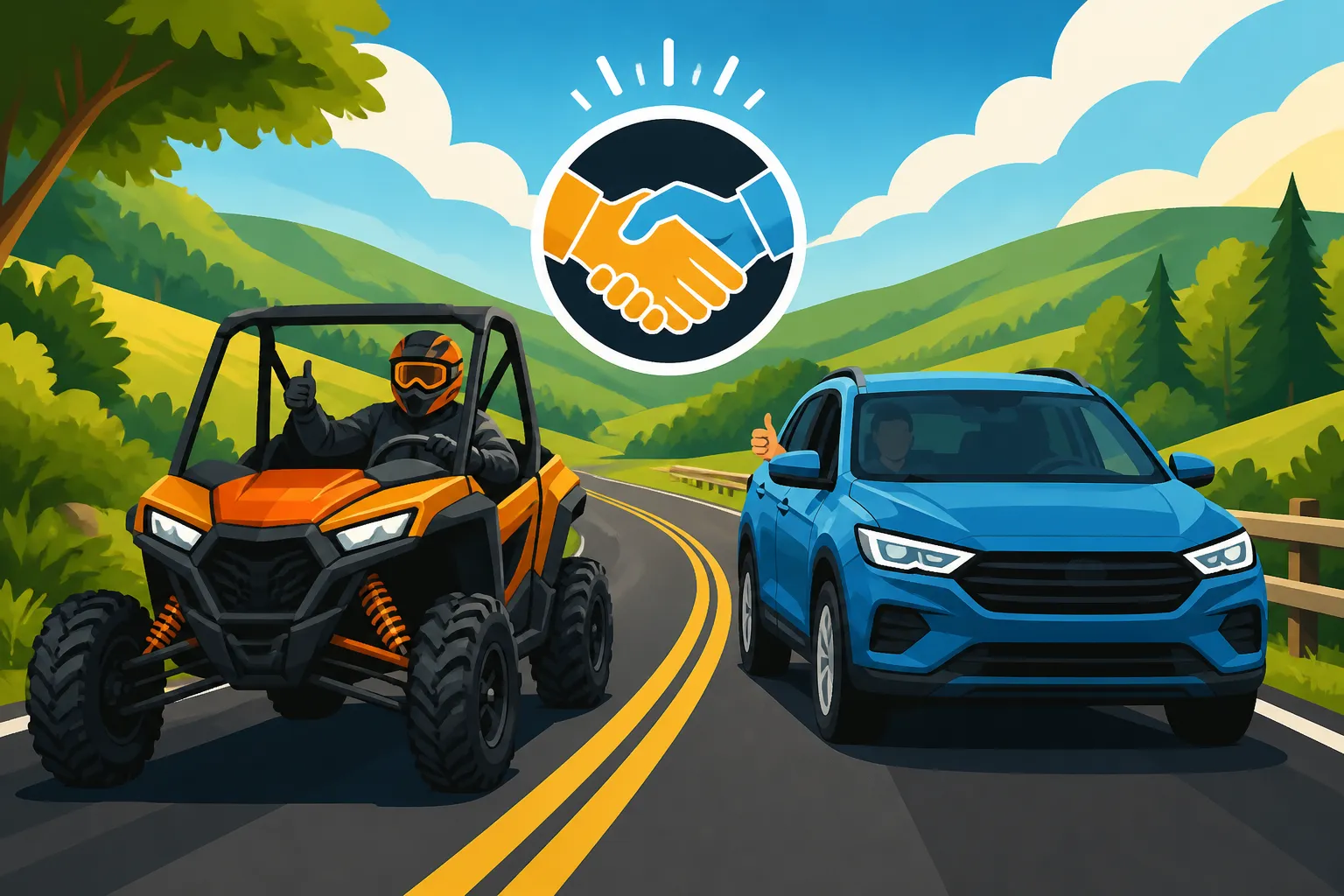
Ultimately, the success of Pennsylvania's joint-use road system hinges on both ATV/UTV riders and conventional car drivers embracing a culture of mutual respect and shared responsibility. It's about more than just following the law; it's about common courtesy and understanding that everyone has a right to use these public thoroughfares safely.
Communication and Common Courtesy
For riders, this means making your presence known without being aggressive. Utilizing your machine's lights, wearing bright clothing, and even adding accessories like safety flags can increase your visibility. If your machine allows, hand signals for turns or slowing down can also be very effective in communicating your intentions to other drivers. For car drivers, it means understanding that these smaller vehicles are not "just playing" but are legitimately using a designated road. A friendly wave or a nod can go a long way in de-escalating potential tension and fostering goodwill.
Patience is a virtue for everyone. An ATV or UTV might travel at a slower speed than you're used to, especially on winding rural roads. Give them space. Likewise, riders should be mindful of traffic behind them and, if safe and practical, consider pulling over to let faster traffic pass. This give-and-take approach builds a positive reputation for the riding community and helps ensure these valuable road connections remain open for years to come.
The Consequences of Non-Compliance
It's important to remember that riding an ATV or UTV on a non-designated public road is illegal, and the consequences can be severe. [Pennsylvania Fines for an Unregistered ATV] can be substantial, and fines for riding where prohibited can also be significant, often starting with an automatic $300 fine, plus court costs. These citations aren't just an inconvenience; they can lead to court appearances and points, just like a traffic violation in a car. More importantly, riding irresponsibly or illegally jeopardizes the safety of yourself and others.
Beyond legal penalties, irresponsible behavior can lead to serious accidents, resulting in injuries, property damage, and significant liability. Such incidents also damage the reputation of the entire ATV/UTV community. When accidents occur or public complaints rise, townships and boroughs may be pressured to close existing joint-use roads or reconsider future designations, which is a loss for everyone who enjoys legal, responsible riding. By adhering to the rules and showing respect for all road users, we collectively ensure that these shared spaces can continue to be enjoyed safely by everyone for years to come.
| Aspect | ATV/UTV Rider Responsibilities | Car Driver Responsibilities |
|---|---|---|
| Legal Compliance | Must be registered, insured, and wear a helmet. Operate only on designated roads. Obey all traffic laws. | Be aware of designated roads. Understand ATVs/UTVs are legally present. Obey all traffic laws. |
| Visibility | Ensure machine has working lights, consider additional lighting (e.g., SuperATV LEDs), wear bright clothing. Mount plate correctly. | Actively look for smaller, less visible vehicles. Be aware of dust kick-up. |
| Speed & Position | Drive on right side of road, obey posted speed limits. Anticipate slower speeds and different handling. | Adjust speed for conditions and expect slower-moving vehicles. Maintain safe following distance. |
| Communication | Use hand signals for turns, use horn sparingly. Maintain predictable movements. | Be patient. Use horn only when necessary for safety. Be aware of potential communication limitations from riders. |
| Passing | Maintain steady line, allow ample room. | Pass with extreme caution, ensuring clear visibility and ample space. |
| Courtesy & Respect | Be mindful of noise, dust, and other road users. Pull over when safe to let faster traffic pass. | Treat ATVs/UTVs as legitimate road users. Avoid aggressive driving or honking. |
| Accident Prevention | Drive defensively, anticipate hazards, know your machine's limits. Be prepared for varying road conditions. | Anticipate sudden stops or maneuvers. Understand ATVs/UTVs react differently to road conditions. |
Disclaimer
This article is for general informational purposes only and does not constitute professional advice. Laws, prices and regulations vary by location and change over time. Consult a qualified professional for guidance on your specific situation.