Pennsylvania Helmet Law for Passengers
Navigating the world of ATV and UTV riding in Pennsylvania can feel like a maze, especially when you want to share the adventure with a passenger. One of the most common questions that comes up, and rightfully so, is about helmets – specifically, whether your passenger needs to wear one and what the rules actually say. It’s frustrating trying to decipher legal jargon when all you want to do is hit the trails safely and legally with your friends or family. This guide is here to cut through the confusion and give you a clear, empathetic look at Pennsylvania's helmet law as it applies to passengers, ensuring you can ride with peace of mind.
The Essentials of Pennsylvania's ATV Helmet Law for Passengers
Let's get right to the heart of the matter. When you're out enjoying the beautiful Pennsylvania landscapes on your ATV or UTV, safety is paramount, and the law reflects that, especially when you have a passenger along for the ride. It’s not just about what feels right; it’s about what’s legally required to protect everyone.
Who is Considered a Passenger?
First, it's important to understand who the law defines as a "passenger." Simply put, a passenger is anyone riding on an ATV or UTV who is not the operator. This might seem obvious, but sometimes distinctions can get blurry, especially with different types of machines. If someone is sitting behind you on a two-up ATV, riding in the back seat of your side-by-side, or simply any occupant who isn't actively controlling the machine, they are a passenger.
This distinction matters because the rules for passengers are tied directly to their status as non-operators. They are relying on your skill as a driver and the machine's safety features. Whether it's your child, a friend, or a spouse, once they're on board and not at the controls, they fall under the passenger category. It’s a common scenario to have a little one riding behind you, and knowing they are legally considered a passenger helps ensure you're following all the necessary safety protocols.
Even on a UTV designed for multiple occupants, like a four-seater, everyone who isn't the primary driver is a passenger. These machines offer a different riding experience, often with more car-like features, but the basic principle remains: if you're not steering, accelerating, or braking, you're a passenger. This clarity helps us understand the legal obligations that come with sharing your ride.
Mandatory Helmet Use for Passengers
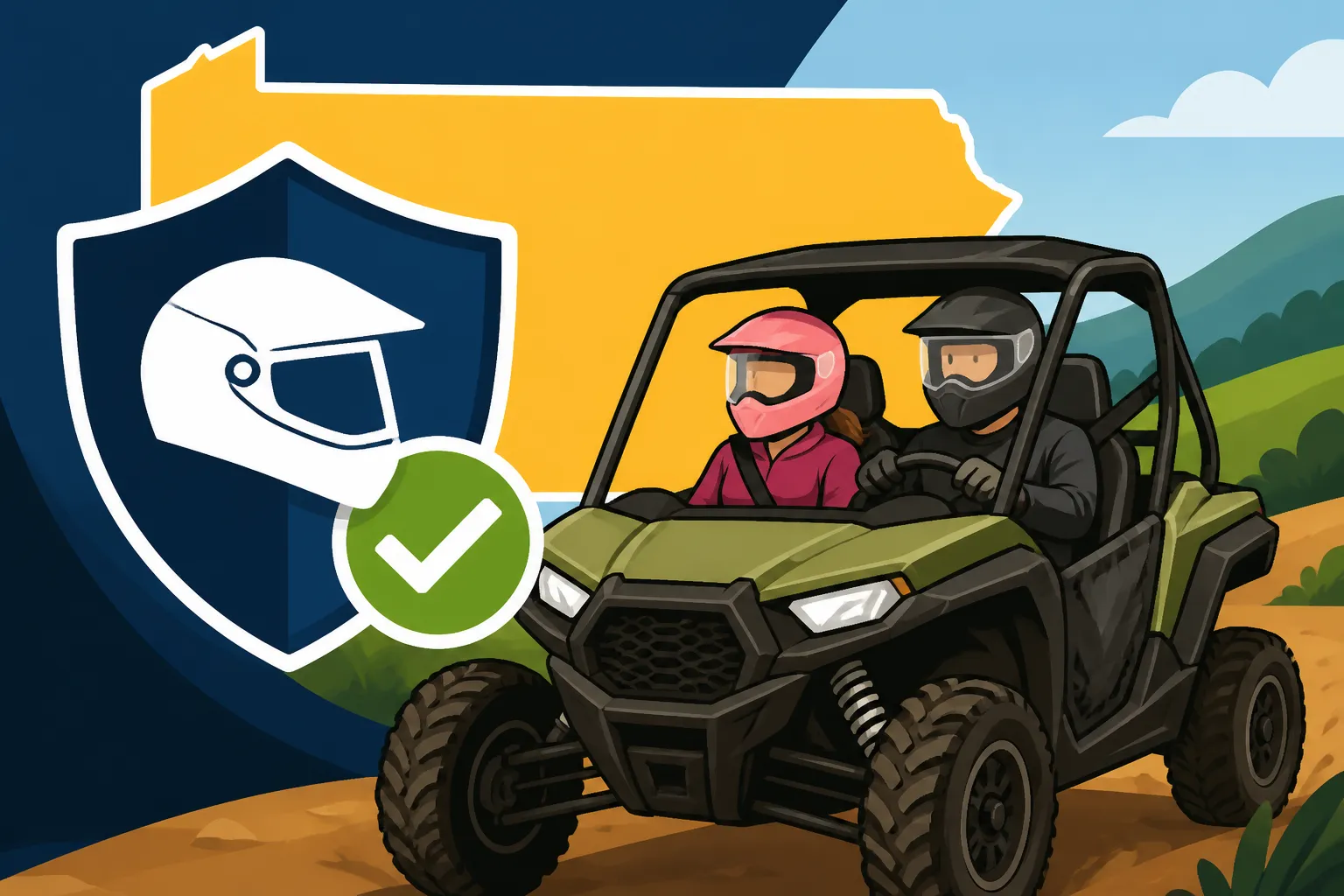
Now for the core rule: every passenger on an ATV or UTV in Pennsylvania is required by law to wear a helmet. This isn't a suggestion, a recommendation, or something you can decide to overlook if the weather is nice. It is a firm legal requirement designed for their protection. Just like the operator must wear one, their passenger must as well. If you want to dive deeper into the operator's requirements, check out [Pennsylvania Helmet Law for ATV Riders].
The "why" behind this rule is critical. Helmets are literally lifesavers. They protect the most vital and vulnerable part of the human body: the brain. In the unpredictable environment of off-road riding, falls, collisions, or rollovers can happen quickly and without warning, even to the most experienced riders. A helmet significantly reduces the risk of severe head injury. For a passenger, who often has less awareness of impending bumps or hazards than the operator, this protection is even more crucial.
It’s important to emphasize that this requirement applies regardless of the passenger’s age, the type of trail you're on (unless specific exemptions apply, which we'll discuss), or the speed you're traveling. From the moment you begin your ride with a passenger off your own private property, that helmet needs to be securely fastened. It’s a non-negotiable aspect of responsible and legal riding in the Commonwealth.
Exceptions and Specific Situations for Passenger Helmets
While the general rule is clear – helmets are mandatory for passengers – there are a few very specific situations where this rule might not apply. However, it's critical to understand that these exceptions are narrow and are not a green light to forgo safety gear during recreational rides.
The Agricultural Exemption
One of the most widely misunderstood exemptions relates to agricultural use. Pennsylvania law does provide an exception for individuals operating or riding as a passenger on an ATV while engaged in agricultural operations on land owned or leased by the operator. This means if you are genuinely using your ATV or UTV for farming tasks – checking fences, moving equipment, herding livestock – on your own or leased farmland, then neither you nor your passenger is legally required to wear a helmet. You can read more about this specific rule in [Pennsylvania's Agricultural Exception to the Helmet Rule].
However, this exemption is incredibly specific. It does not extend to recreational riding on your farm, inviting friends over for a joyride through the fields, or using the ATV for anything other than direct agricultural work. Many riders mistakenly believe that because they own farmland, they can ride helmet-free anytime. That's a dangerous misinterpretation of the law. The moment you transition from legitimate farm work to recreational riding, the helmet requirement snaps back into place for both operator and passenger.
So, if you're driving your side-by-side across your cornfield to check on irrigation lines with your son beside you, you're likely exempt. But if you then decide to take a spin around the property for fun, the helmet rule applies. It’s a very fine line, and if there's any doubt, wearing a helmet is always the safest and most legally sound choice.
Closed Course Competition and Private Land
Another area where the helmet rules can differ is within the confines of private property or at organized, closed-course competitive events. When you are riding entirely on private land that you own or have explicit permission from the landowner, Pennsylvania's DCNR rules regarding helmets generally do not apply. The landowner sets the safety rules for their property. However, this is where personal responsibility truly comes into play. Even if the law doesn't require a helmet on private land, common sense and safety certainly do, especially for passengers. Many landowners, for liability and safety reasons, still insist on helmets for all riders and passengers.
Similarly, at sanctioned closed-course competitions or events, the specific rules of the organizing body often dictate safety gear. These rules frequently exceed state minimums, requiring specific types of helmets and other protective gear. The key here is "closed course" – these are controlled environments with specific safety protocols in place. Again, for general recreational riding, this specific exemption is not applicable. For general rules about riding on private property, see [Pennsylvania Rules for Riding Private Property].
It’s always prudent to ride with a helmet, even when not legally mandated. The forces involved in an ATV or UTV incident are the same whether you're on a public trail or a private one. Protecting your passenger, regardless of the legal setting, should always be the top priority.
Age and Engine Size Considerations for Passengers
When it comes to passengers, their age or the engine size of the machine they are riding on doesn't typically create an exception to the helmet law. If someone is a passenger, they need a helmet, full stop. While Pennsylvania does have rules about the minimum age for operating an ATV and limits on engine size for younger operators, these do not negate the helmet requirement for a passenger. For example, an eight-year-old child riding as a passenger on a quad would still need a helmet, just as an adult would. If you're wondering about rules for younger riders, you can learn more in [Pennsylvania Rules for a Child Passenger].
The focus for passengers is purely on their safety in the event of an impact. It's not about their ability to operate the machine or their experience level. Helmets are a universal safety device for all occupants in off-road vehicles. This means that whether you're taking your young nephew for a gentle ride on a smaller machine, or an adult friend on a larger, powerful UTV, the helmet rule applies equally.
This universal application underscores the state's commitment to safety for all riders, irrespective of the specifics of the machine or the passenger's individual characteristics. There’s no loophole for a passenger just because they are older, or because the machine itself is small. Safety is truly the primary concern here.
Choosing the Right Helmet for Your Passenger and Staying Safe
Ensuring your passenger has the correct helmet and understanding broader safety measures are crucial aspects of responsible riding. It's not just about meeting the legal requirement, but about providing the best possible protection.
Helmet Standards and Fit for Passengers
The most important aspect of a helmet for your passenger, after ensuring they wear one, is that it meets safety standards and fits properly. In Pennsylvania, the law generally requires helmets to be U.S. DOT (Department of Transportation) approved. This certification means the helmet has met rigorous testing standards for impact protection. Always look for the DOT sticker on the back of the helmet. Without it, the helmet may not provide adequate protection and could lead to legal issues if you're stopped.
A proper fit is absolutely essential. A helmet that's too loose can shift during an impact, compromising its protective ability. One that's too tight can be uncomfortable and distracting. When fitting a passenger's helmet, it should feel snug all around, without excessive pressure points. It shouldn't move side-to-side or front-to-back when they shake their head. The chin strap must be securely fastened, allowing only a finger or two to fit underneath. Ensure their field of vision isn't obstructed. Remember, a helmet can only do its job if it's worn correctly and fits well. This attention to detail is just as important for your passenger as it is for you, the operator.
Consider the different styles of helmets. A full-face helmet offers the most comprehensive protection, including the chin and face, which is often recommended for off-road use due to flying debris and potential impacts. Open-face helmets are lighter but require separate eye protection like goggles. Whatever style you choose, ensure it's in good condition, free of cracks or significant damage, and regularly inspected. When investing in safety gear, reputable brands like those found at a SuperATV retailer often carry high-quality, DOT-approved helmets and accessories designed for rigorous off-road use, ensuring you get gear that meets crucial safety standards.
Beyond the Helmet: Other Passenger Safety Gear
While the helmet is non-negotiable, it's just one piece of the safety puzzle. To truly protect your passenger, you should also equip them with other essential safety gear. This includes eye protection (if their helmet isn't full-face), which prevents dust, mud, branches, and insects from impairing their vision or causing injury. Sturdy gloves protect hands from scrapes and improve grip on grab handles. Over-the-ankle boots are crucial for protecting feet and ankles, especially from potential impacts or being caught in moving parts. Long pants and long-sleeved shirts, or even specialized riding gear, offer protection against abrasions and branches.
Beyond personal gear, think about the machine itself. Ensure your ATV or UTV is designed to carry a passenger and has appropriate seating and sturdy grab handles or restraints. Many two-up ATVs and multi-passenger UTVs come with these features as standard. If your machine doesn't have secure handholds, consider aftermarket solutions. For UTVs, features like windshields and full doors (often available from trusted brands like SuperATV) can significantly enhance passenger comfort and offer additional protection from trail debris. Always ensure your passenger keeps their feet on the designated footrests and their hands securely on the grab handles, especially over rough terrain. Understanding the full scope of [Pennsylvania Rules for a Passenger on a Quad] can help you prepare.
Ultimately, passenger safety is a holistic approach. It combines adherence to legal requirements like helmet use with smart gear choices and responsible riding practices. Taking these extra steps ensures that your shared adventure is not only fun but also as safe as possible for everyone on board.
Consequences of Non-Compliance
Ignoring Pennsylvania's helmet law for your passenger carries real consequences, both legal and, more importantly, personal. If you are stopped by a DCNR (Department of Conservation and Natural Resources) ranger or a local law enforcement officer and your passenger is not wearing a helmet, you can be cited. The fines for such violations can be substantial. These aren't just minor tickets; they are serious infractions that reflect a disregard for safety and the law. For a broader look at fines, refer to [Pennsylvania Fines for Riding Illegally].
Beyond the monetary fines, there's the cost of prosecution, which can add significantly to the overall expense. More critically, an officer might deem the situation unsafe enough to stop your ride completely, potentially impounding your machine until the safety issue is resolved. Imagine being miles into a trail system and having your day cut short, facing fines, and dealing with the hassle of retrieving your ATV or UTV. When a Pennsylvania officer checks roadside, a missing helmet is an immediate red flag.
However, the most severe consequences are not legal or financial; they are the potential for serious injury or even death. A passenger without a helmet is at an exponentially higher risk of severe brain injury in the event of an accident. Off-road riding, by its nature, involves risks. Helmets are the single most effective piece of gear to mitigate head trauma. No amount of fun is worth the risk of a life-altering injury. Ensuring your passenger is properly geared up, including a correctly fitted, DOT-approved helmet, is an act of responsibility and care that far outweighs any inconvenience.
| Requirement Area | Operator | Passenger | Agricultural Exemption | Private Land (Recreational) |
|---|---|---|---|---|
| Helmet Use (Public) | Mandatory | Mandatory | Exempt (Specific Use) | Recommended (Not State Law) |
| Eye Protection (Open-face Helmet) | Mandatory | Mandatory | Exempt (Specific Use) | Recommended (Not State Law) |
| Appropriate Footwear | Recommended | Recommended | Recommended | Recommended |
| Dedicated Seating | Required | Required | Required | Required |
| Handholds/Restraints | N/A | Required | Required | Required |
This article is for general informational purposes only and does not constitute professional advice. Laws, prices and regulations vary by location and change over time. Consult a qualified professional for guidance on your specific situation.