Meeting a Log Truck on a Forest Road
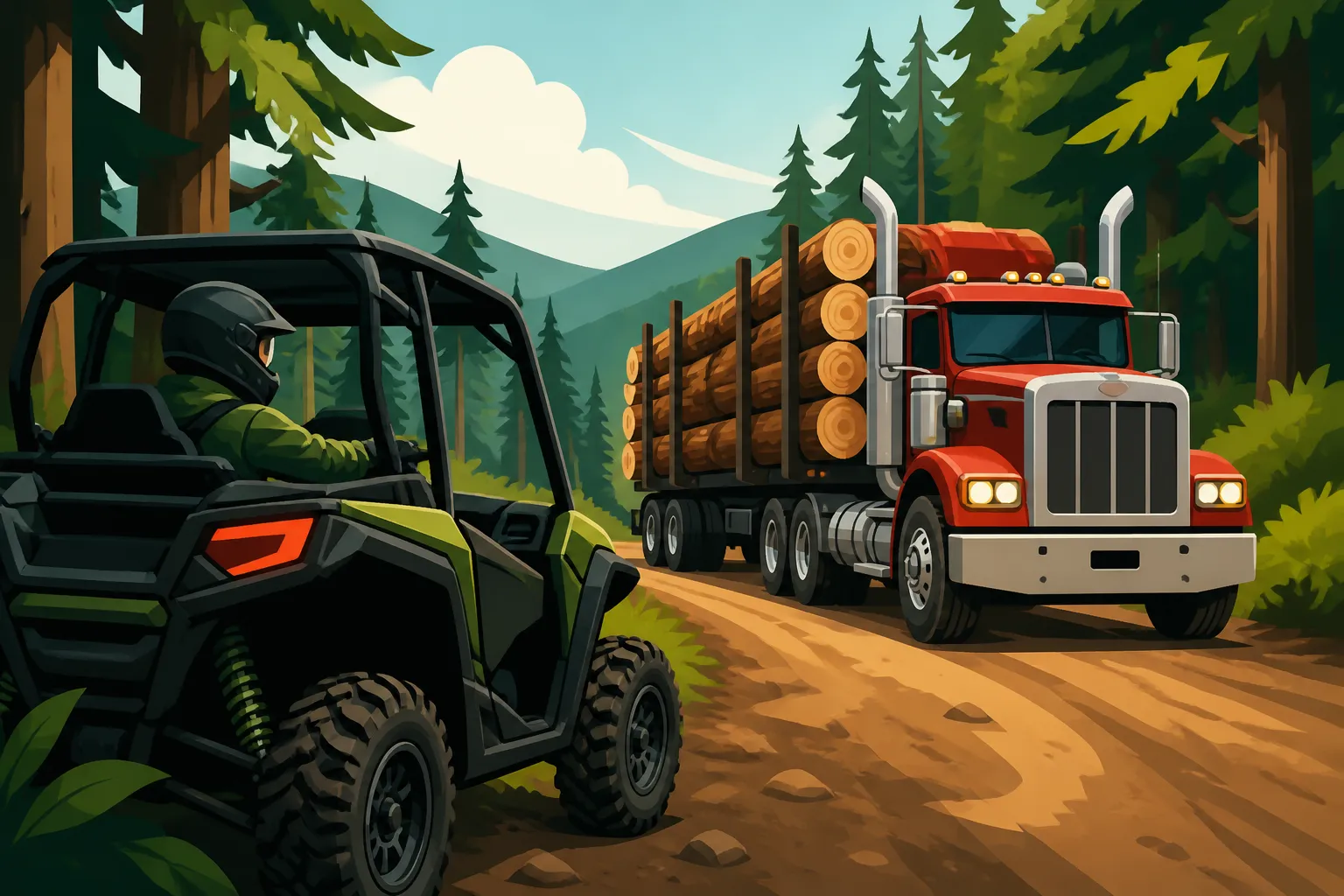
There's nothing quite like the freedom of exploring Pennsylvania's state forest roads on your ATV or UTV. The winding paths, the scent of pine, the promise of a scenic overlook – it's pure bliss. Until, that is, you round a blind corner and find yourself staring down the grill of a fully loaded log truck, its brakes hissing, its engine roaring, and your heart leaping into your throat. It's a jolt back to reality, reminding us that these aren't just recreational trails, but active, working landscapes. This guide is all about helping you understand these shared spaces and, most importantly, navigate those heart-stopping encounters with massive logging vehicles safely and confidently.
The Reality of Pennsylvania Forest Roads: Shared Space with Heavy Haulers
It's easy to forget, when you're out enjoying the quiet beauty of a state forest, that these lands serve multiple purposes. While they offer incredible recreational opportunities for riders like us, they're also vital working forests, providing timber that supports countless livelihoods and industries across Pennsylvania.
Why Log Trucks Are There
When you picture yourself riding through a Pennsylvania state forest, you're likely imagining serene solitude, maybe a few fellow riders, or a hiker or two. The thought of a gargantuan log truck thundering towards you might be the furthest thing from your mind. Yet, these trucks are an integral part of the forest ecosystem, especially in areas managed for timber production. State forest lands are actively managed by the Department of Conservation and Natural Resources (DCNR) for a variety of benefits, and sustainable timber harvesting is a significant component of that management. This means that at any given time, there could be logging operations underway deep within the forests you ride.
These operations are often happening off the main roads, but the trucks have to get to and from the timber sale sites. That means they use the same forest roads and sometimes even designated ATV/UTV trails as access points. It’s a reality we, as recreational users, need to respect and prepare for. The presence of logging vehicles isn't an inconvenience; it's simply a sign that the forest is being managed for its resources, and those resources are crucial to the state's economy. So, while your peaceful ride might be momentarily disrupted, it's a testament to the diverse uses of these magnificent public lands.
Understanding Right-of-Way and Speed
When you encounter a log truck on a forest road, understanding the dynamics of right-of-way and speed is absolutely critical for your safety. These are not pleasure vehicles. These are heavy, commercial trucks, often loaded with tons of timber, operating on tight schedules, and they have the legal and practical right-of-way. Imagine trying to stop a freight train – that's a bit like a log truck trying to stop suddenly on a gravel road. Their stopping distances are exponentially longer than your ATV or UTV's, especially on loose or wet surfaces.
Furthermore, these drivers are highly skilled professionals, but they are focused on their work. They know these roads intimately, often driving them daily, and they anticipate speed and conditions based on their commercial duties. They might be coming around a corner faster than you'd expect, simply because they're carrying momentum up a grade or trying to maintain efficiency. Your nimble ATV or UTV, by contrast, can stop and maneuver much more quickly. This means the responsibility to yield, to get completely out of their way, and to do so safely falls squarely on us, the riders of smaller, more recreational vehicles. There's no argument about who was "first" or "should have been paying attention." Their size and operational necessity dictate that they get priority, and our safety depends on acknowledging that reality without hesitation.
Preparing for the Unexpected: Before You Even Ride
Knowing that you might encounter heavy machinery on forest roads isn't enough; you need to actively prepare for it. A little foresight before you even leave home can make a world of difference when you're faced with an unexpected situation on the trail.
Researching Your Route and Conditions
One of the best ways to prepare for potential log truck encounters is to do your homework before your wheels ever touch the dirt. The DCNR, which manages Pennsylvania's state forests, often provides information about active logging operations. Sometimes this is posted on specific district office websites, or you might see temporary signs at trailheads indicating timber harvesting in the area. Take a few minutes to check these resources before you head out. Understanding the general [Pennsylvania Rules for Riding a State Forest Road] can also give you context on what to expect.
Certain times of the year, like late fall and winter, tend to see an increase in logging activity, as frozen ground can make it easier to access timber without damaging the forest floor. If you're riding after a heavy rain or during periods of thaw, the roads can be extremely muddy, making braking and steering more challenging for both you and a heavy truck. Being aware of these conditions means you can adjust your speed, heighten your senses, and be even more vigilant for signs of active work. Knowledge is your first line of defense; it allows you to anticipate, rather than just react.
Equipping Your Machine for Visibility and Safety
Your ATV or UTV might be a powerhouse, but against a log truck, it's a tiny speck. Maximizing your visibility is paramount, even on a sunny day. Think about what makes you stand out. Brightly colored gear, a high-visibility helmet, and a safety flag mounted high on your machine can significantly increase the chances of a truck driver seeing you sooner. Imagine you're cresting a hill or coming around a tight corner; that extra second a driver has to spot your bright flag could be the critical difference.
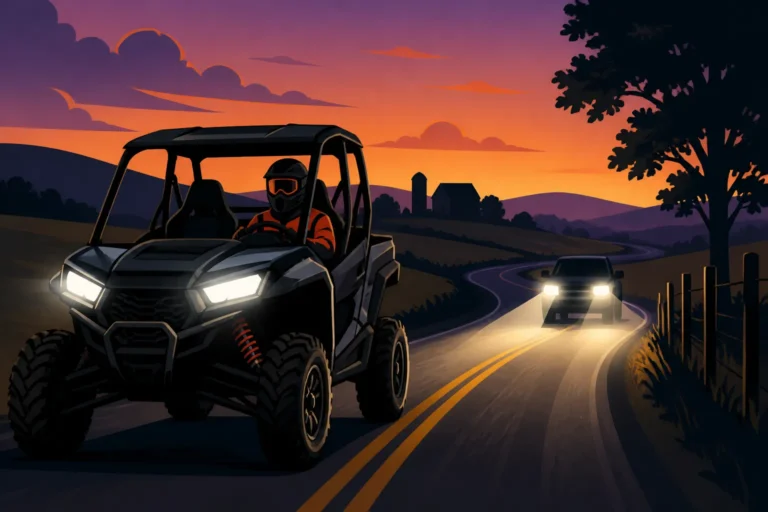
Consider your machine's lighting, too. While [Pennsylvania Lighting Rules for Night Riding] certainly focus on after-dark excursions, having your headlights on during the day, especially in heavily forested or overcast conditions, can help you be seen. Many riders also add aftermarket lighting, such as LED light bars or auxiliary spotlights. Brands like SuperATV offer a wide range of lighting kits and accessories designed to improve visibility on the trail, from powerful headlights to flashing amber warning lights. Beyond just being seen, ensure your machine is in top mechanical condition. Your brakes should be sharp and responsive, and your tires should have good tread, especially if you might need to make a quick, controlled stop on loose gravel or muddy surfaces.
Rider Preparedness and Mindset
Beyond your machine, your own mental preparedness is a huge safety factor. When you hit those forest roads, shift your mindset from pure recreation to defensive riding. This means assuming there's something around every bend, always scanning ahead, and listening intently. The roar of your engine might be exhilarating, but it can also mask the approach of a large truck. Periodically throttle back or pull over for a moment to just listen to the forest sounds – is that a bird, or the distant rumble of a diesel engine?
If you're riding in a group, communication is key. Establish hand signals or consider using two-way radios so your lead rider can warn those behind them about an approaching vehicle. Don't ride bumper-to-bumper; leave enough space between machines so everyone has time to react and pull over safely. Your ride should be enjoyable, but a significant part of that enjoyment comes from knowing you're riding smart and safe, and that includes being constantly vigilant for the unexpected, like a massive log truck.
Navigating the Encounter: What to Do When You See a Log Truck
Okay, you've done your prep work, you're riding cautiously, but then it happens: you see or hear a log truck. This is the moment where your training and mindset kick in. Quick, decisive, and safe actions are essential.
Spotting the Danger Early
Early detection is your best friend when it comes to avoiding a close call with a log truck. These aren't silent machines. Even before you see them, you might hear them. Listen for the distinct rumble of a large diesel engine, the whine of a transmission climbing a grade, or the hiss of air brakes. On dry days, a tell-tale plume of dust rising above the trees, especially on a [Blind Corners on a Mountain Road] or a straight stretch, is a clear signal. If you're riding with a CB radio, you might even pick up chatter from truckers warning each other about conditions or other vehicles.
Actively scan your surroundings. Look through gaps in the trees, observe the road ahead, and pay attention to areas where visibility is limited, like sharp turns, hillcrests, or dense foliage. If you're on a two-way section, always assume there could be oncoming traffic, especially around those tight bends. Seeing the signs early gives you precious extra seconds to react safely and calmly, rather than having to make a panicked, last-second maneuver.
Immediate Actions to Take
The moment you confirm the presence of a log truck, your immediate actions are crucial. The priority is to remove yourself and your machine from the active travel lane as quickly and safely as possible. Here’s a breakdown of what to do:
- Slow Down and Signal: Immediately reduce your speed. If riding in a group, signal to those behind you.
- Pull Over COMPLETELY: This isn't just about getting mostly out of the way. You need to pull your ATV or UTV as far off the traveled portion of the road as you can. This might mean getting into the ditch, a turnout, or a wider shoulder. Ensure your machine and any passengers are clear of the truck's path, including its wide load and potential swinging logs. The goal is to be fully off the road where the truck needs to be.
- Turn Off Your Engine: This is a courtesy that also enhances safety. Turning off your engine reduces noise, allowing for clearer communication with the driver if needed, and also minimizes the dust you might kick up. It also signals to the driver that you are aware of their presence and yielding.
- Make Eye Contact (If Safe): Once stopped, if the situation allows, try to make eye contact with the truck driver as they approach. A nod, a wave – this confirms to them that you see them and are safely out of the way. Do not approach the truck or try to engage in conversation unless absolutely necessary and safe.
- Stay Calm and Stationary: Resist the urge to move or make sudden adjustments as the truck passes. Log trucks are massive; stay put until they are well clear.
Remember, the truck driver's field of vision is often limited, especially with a long load, and they might not expect recreational vehicles around every turn. Your proactive measures are your best defense.
Post-Encounter Protocol
So, the massive log truck has rumbled past, leaving a cloud of dust and the lingering smell of diesel. Your heart might still be pounding, but don't immediately jump back onto the road. There's a proper post-encounter protocol to follow to ensure continued safety.
First, wait. Let the dust settle completely, if possible. That cloud of dirt can obscure your vision and make it difficult to see what's coming next. More importantly, don't assume that one truck means the coast is clear. Logging operations often involve multiple trucks moving in convoys or staggered patterns. There might be another truck right behind the first, or a different vehicle associated with the logging crew. It's always a good idea to listen for a moment and scan the road again before pulling back out.
Once you're sure it's safe, slowly and carefully re-enter the road. Be mindful of any debris that might have been kicked up by the truck, or new ruts created by its weight, especially if the road was wet or soft. The forest roads in Pennsylvania are subject to constant change, and something as simple as [Mud Season and Road Damage] can dramatically alter the terrain between your encounters. Continue riding with heightened awareness for a while, as the memory of the encounter fades, the next one could be just around the corner.
General Safety on Pennsylvania Forest Roads
Beyond the specific threat of log trucks, riding on Pennsylvania's state forest roads demands a broader commitment to safety and responsible riding. These are shared natural resources, and our actions impact not only our own well-being but also that of other users and the environment.
Respecting Speed Limits and Trail Rules
It's tempting to open up the throttle on a wide-open stretch of forest road, but these aren't race tracks. Forest roads often have lower, sometimes unposted, speed limits that reflect their winding nature, variable surfaces, and shared use. The [Pennsylvania Rules for Riding a State Forest Road] specify guidelines that we, as riders, must adhere to, and these rules are in place for good reason. Excessive speed reduces your reaction time significantly, making it incredibly difficult to avoid unexpected hazards – be it a fallen tree, a deer darting out, or yes, another log truck.
Beyond posted limits, use common sense. If visibility is poor due to tight corners, dense foliage, or dust, slow down. If the road is rough, muddy, or covered in loose gravel, reduce your speed to maintain control. Remember, you're not just looking out for yourself; you're sharing these roads with hikers, mountain bikers, hunters ([Riding During Antlerless Deer Season] often coincides with peak ATV season), and other recreational users, all of whom expect a certain level of safety and courtesy. Adhering to responsible speeds and rules is a sign of respect for the forest and everyone in it.
Group Riding and Communication
Riding with friends or family is one of the joys of ATV and UTV recreation, and it also adds a layer of safety, particularly on shared forest roads. However, group riding isn't just about following each other; it requires intentional communication and coordination. Designate a lead rider who sets the pace and is responsible for spotting hazards, and a sweep rider who ensures no one gets left behind.
Effective communication within the group is vital. Simple hand signals can convey messages like "slow down," "stop," or "hazard ahead." For more complex situations, or if you're riding a larger group, investing in helmet-mounted communicators or two-way radios can be a game-changer. These devices allow the lead rider to warn everyone instantly about an approaching log truck, a downed tree, or a sudden change in terrain. This real-time information can prevent a chain reaction of close calls. Furthermore, if a breakdown or emergency occurs, having others in your group who know where you are and can assist or call for help is invaluable. Always ride within sight of the rider in front of you, but leave enough distance for dust to settle and for each rider to react independently to obstacles.
Understanding Road Conditions and Other Hazards
Pennsylvania's state forest roads are dynamic environments, constantly changing with weather, seasons, and use. What might have been a smooth gravel path last month could be riddled with potholes and washouts after a heavy rain. Loose gravel, uneven surfaces, and unexpected ruts are common and can quickly destabilize your machine if you're not paying attention. Conditions can vary widely even within a short stretch of road, especially when you consider elements like [Mud Season and Road Damage], which might close certain sections or make them extremely challenging.
Beyond road surface, wildlife is a constant presence. Deer, bear, and other animals can dart onto the road without warning, especially at dawn and dusk. Always be prepared to stop or swerve safely. Be aware of other human activities too: forest roads are used by hikers, hunters, loggers (even when trucks aren't actively hauling), and DCNR staff. Respect [Gated Forest Roads in Hunting Season] and other closures. Finally, always carry a basic toolkit, a first-aid kit, and enough water and snacks for your trip. Even a simple flat tire can become a major ordeal if you're unprepared and miles from civilization. By understanding and respecting the multi-faceted nature of forest roads, you ensure a safer, more enjoyable experience for everyone.
| Feature / Responsibility | ATV/UTV Rider | Log Truck Driver |
|---|---|---|
| Vehicle Size/Weight | Relatively small, light, agile | Very large, heavy, low maneuverability |
| Stopping Distance | Short | Very long, especially when loaded |
| Purpose on Road | Recreation, sport, touring | Commercial transport of timber, essential work |
| Primary Right-of-Way | Yield to commercial vehicles | Commercial operations generally take precedence |
| Visibility | Often low profile; requires active efforts to be seen | High profile, but blind spots due to length/load |
| Anticipation | Must anticipate larger vehicles, slow/yield early | Anticipates clear passage, may not see small vehicles early |
| Response to Encounter | Slow, pull off road completely, turn off engine | Maintain speed/lane, expect smaller vehicles to yield |
| Dust/Debris | Creates less dust; affected by truck dust | Creates significant dust and can kick up debris |
Disclaimer
This article is for general informational purposes only and does not constitute professional advice. Laws, prices and regulations vary by location and change over time. Consult a qualified professional for guidance on your specific situation.