Pennsylvania Rules for Riding a Cemetery Road
It’s a common scenario: you’re out on your ATV, exploring the backroads and rural landscapes of Pennsylvania, and you come across a quiet, paved lane leading into what looks like a public cemetery. Your mind might instantly jump to the question, "Can I just ride my quad down this road?" It’s tempting to think of it as just another open path, but the truth about riding ATVs on cemetery roads in Pennsylvania is far more nuanced, and often, much more restrictive than you might hope. This guide will help you understand why these seemingly open paths are usually off-limits for ATV riders and steer you towards legal and respectful riding opportunities.
The Foundation: Pennsylvania's ATV Road Regulations
Pennsylvania’s rules for ATV use are designed to keep riders safe, protect the environment, and ensure public peace. The core principle revolves around where ATVs are legally permitted to operate, and sadly, most public roads, including those within cemeteries, don't make the cut.
Why Most Roads Are Off-Limits to ATVs
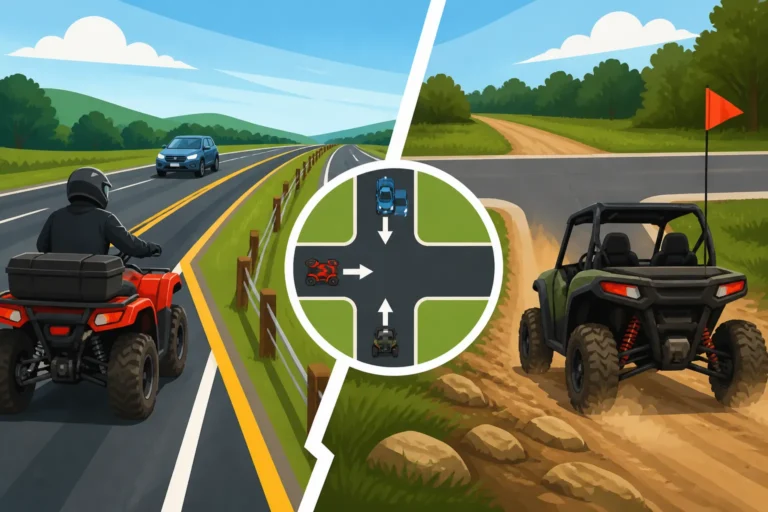
In Pennsylvania, the Department of Conservation and Natural Resources (DCNR) is the primary agency overseeing ATV registration and use. Unlike passenger vehicles registered with PennDOT, ATVs are generally considered off-road vehicles. This means they are largely prohibited from operating on highways, streets, and most public roads. The legal framework isn't designed to allow ATVs to mingle with regular traffic or be used for general transportation.
This can be a real point of frustration for riders. Many wish they could just hop on their quad and ride it down to the corner store or cross town to a friend's house, but that's simply not how the law is structured here. You'll often hear people ask about [Street Legal ATVs in Pennsylvania: The Short Answer], and the short answer is almost always a resounding "no" for the vast majority of machines and situations. Your ATV is built for trails, not for cruising through neighborhoods or along state routes, and that includes the quiet lanes of a cemetery. The noise, the lack of proper road-specific safety equipment, and the inherent design of an ATV make it unsuitable for such environments in the eyes of the law.
Understanding "Designated" vs. "Public Access" Roads
This distinction is absolutely critical for Pennsylvania ATV riders. Just because a road is publicly accessible, meaning anyone can drive their car down it, does not automatically make it legal for ATV use. In fact, the opposite is almost always true. For an ATV to be legally ridden on any road, that road must be specifically designated for ATV use by the controlling authority, whether that's the DCNR for state forests, a municipality, or a private park.
Think of it this way: a public park might have walking paths that anyone can use, but that doesn't mean you can drive your truck on them. Similarly, a public road allows cars, but it doesn't extend permission to ATVs unless explicitly stated. The DCNR maintains a list of [Pennsylvania's Designated ATV Roads] and trails, and these are the places you should be focusing your riding efforts. A cemetery road, even if it's open to vehicular traffic like cars visiting gravesites, is almost certainly not on any list of designated ATV routes. Assuming "public access" equates to "ATV permitted" is a common, and often costly, misconception that can lead to fines and legal trouble.
Cemetery Roads: A Special Case of Public (But Not ATV-Friendly) Access
Now, let's zero in on cemetery roads specifically. While they often feel like quiet, out-of-the-way lanes, they are steeped in particular regulations and, perhaps more importantly, an atmosphere of reverence and respect that clashes directly with recreational ATV use.
Who Owns and Manages Cemetery Roads?
Cemeteries in Pennsylvania can be managed by a variety of entities. You might find municipal cemeteries, which are owned and operated by a local borough, township, or city. Others are privately owned, often by religious organizations like churches, or by for-profit corporations. Each of these entities has the authority to set rules and regulations for their property, including the internal roads.
Even in a municipal cemetery, where the land might technically be "public," the roads within are dedicated to a very specific purpose: providing access for visitors to gravesites and for maintenance vehicles. They are not intended for general public recreation, and certainly not for off-road vehicle use. Cemetery management, regardless of who they are, has a vested interest in maintaining peace, quiet, and safety for visitors, as well as protecting the sanctity of the grounds. This means they'll almost always have rules against activities that disrupt this environment, and an ATV buzzing through is a prime example of such a disruption. Therefore, assuming that because a cemetery is municipal, its roads are open to all forms of public access is a mistake many riders make.
The Legal and Ethical Hurdles for ATV Use
Beyond the question of ownership, there are several legal and ethical reasons why cemetery roads are fundamentally unsuitable for ATV riding in Pennsylvania.
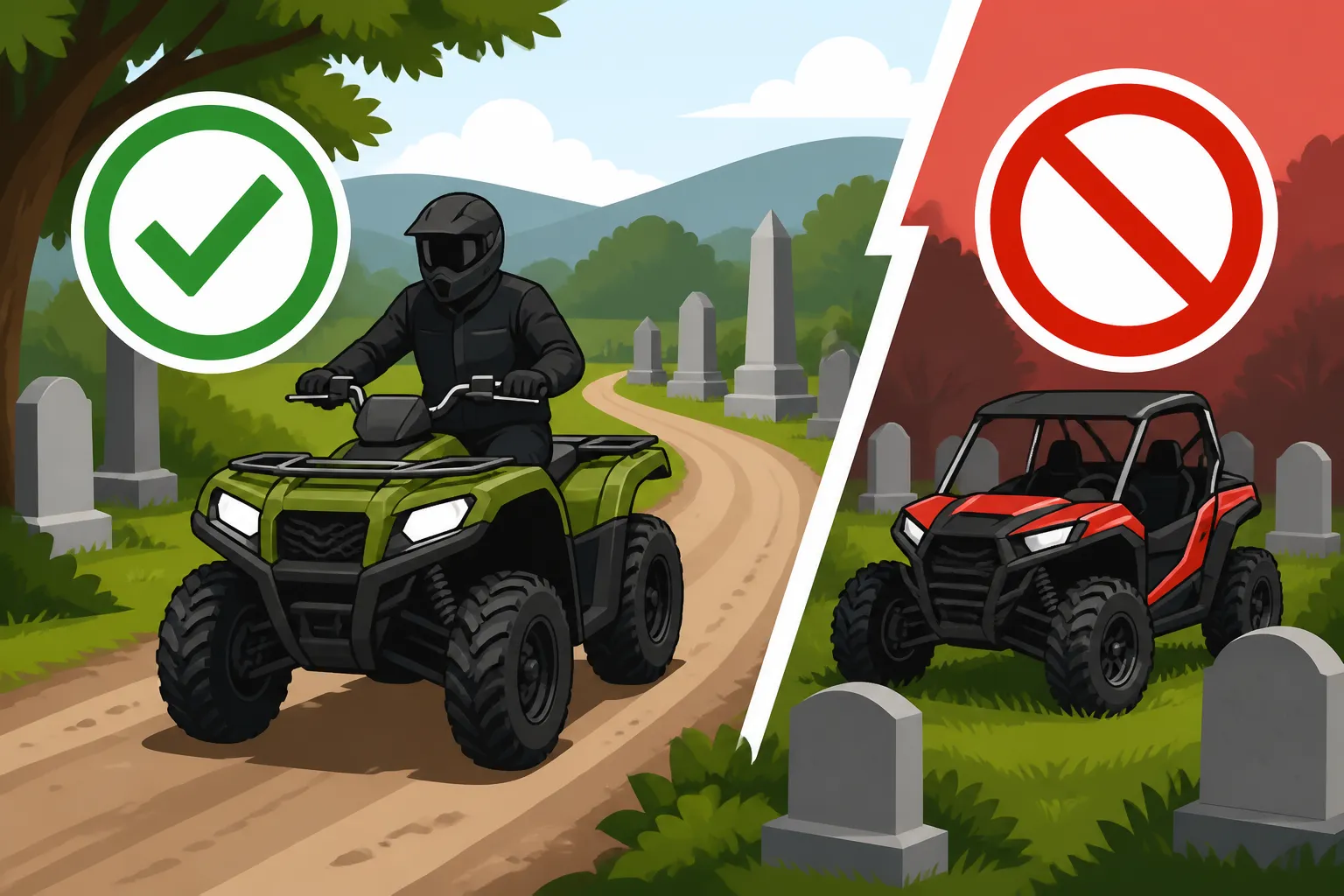
First and foremost is the lack of designation. As we discussed, Pennsylvania law requires roads to be explicitly designated for ATV use. Cemetery roads, without exception, lack this designation. They are not part of any state forest trail system, nor are they typically opened by local municipalities for ATV traffic. There’s no legal ambiguity here; if it’s not designated, you shouldn’t be riding your ATV on it. You wouldn't find a cemetery road listed on a DCNR trail map, and that's your clearest indication it's off-limits.
Then there's the critical issue of safety and respect. Cemeteries are places of quiet contemplation, mourning, and remembrance. Families visit loved ones, often seeking solace and peace. The noise, dust, and fast-moving nature of an ATV are profoundly out of place and disrespectful in such an environment. Imagine trying to reflect on memories of a family member while a loud quad revs its engine nearby or kicks up gravel. It creates an immediate and undeniable disturbance. Beyond the noise, there's the safety aspect; cemeteries often have pedestrians walking between grave markers, maintenance workers tending to plots, and even slow-moving vehicles. An ATV introduces a risk of collision and disruption that simply isn't acceptable in this sensitive setting. It is the antithesis of the atmosphere a cemetery strives to provide.
Finally, liability concerns are huge for cemetery owners and operators. If they were to permit ATV use, they would open themselves up to immense liability for potential accidents, injuries, or property damage – not just to visitors, but to the grave markers and landscaping itself. A stray ATV could easily damage a headstone or tear up carefully maintained turf. Because of these significant risks, cemetery management will almost always prohibit ATV operation. Even if the cemetery is privately owned, [Pennsylvania Rules for Riding a Private Road] still typically require explicit permission from the landowner, and it is highly unlikely any cemetery would grant such permission for recreational ATV use on their solemn grounds.
Avoiding Fines and Finding Legal Riding Opportunities
It’s crucial to understand the very real consequences of riding where you shouldn’t and, more positively, to know where you can enjoy your ATV legally and responsibly in Pennsylvania.
The Real Costs of Illegally Riding a Cemetery Road
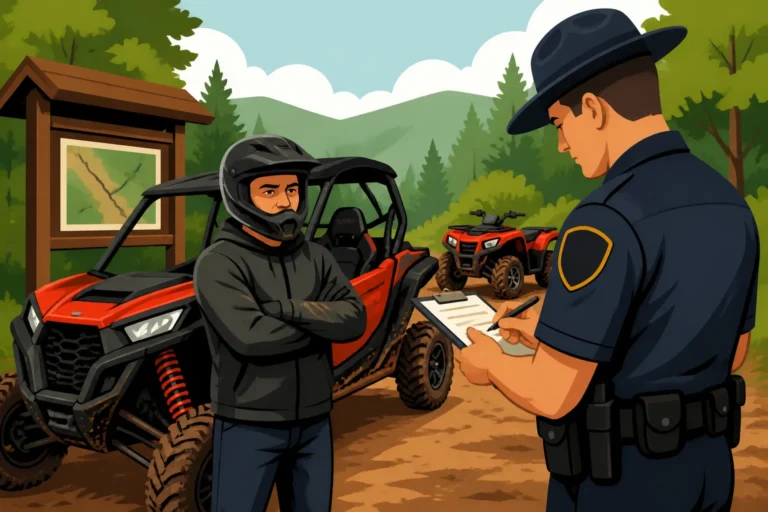
Attempting to ride your ATV on a cemetery road can lead to a host of unpleasant and expensive repercussions. Law enforcement, whether local police or DCNR rangers, can issue citations for operating an ATV on an unauthorized road. These aren't minor infractions. You could be facing significant [Pennsylvania Fines for Riding Illegally], which can quickly add up. If your ATV isn't even properly registered with the DCNR, which is required for operation off your own private property, you're looking at additional penalties. [Pennsylvania Fines for an Unregistered ATV] are substantial, and [Riding Unregistered Brings an Automatic $300 Fine] in many instances, before any other charges are considered.
Beyond the fines, there's the potential for trespassing charges if the cemetery is privately owned or if you're operating your ATV in areas clearly marked as off-limits. If your ATV causes any damage, even inadvertently kicking up gravel that scratches a parked car or damaging turf, you could be held financially responsible for repairs. And let's not forget the intangible cost: the anger and distress you could cause to families visiting gravesites. Public backlash and negative publicity for ATV riders in general are consequences we all want to avoid. That quick, seemingly harmless ride can become a major headache that costs you far more than just money.
Where Pennsylvania Riders Can Legally and Respectfully Explore
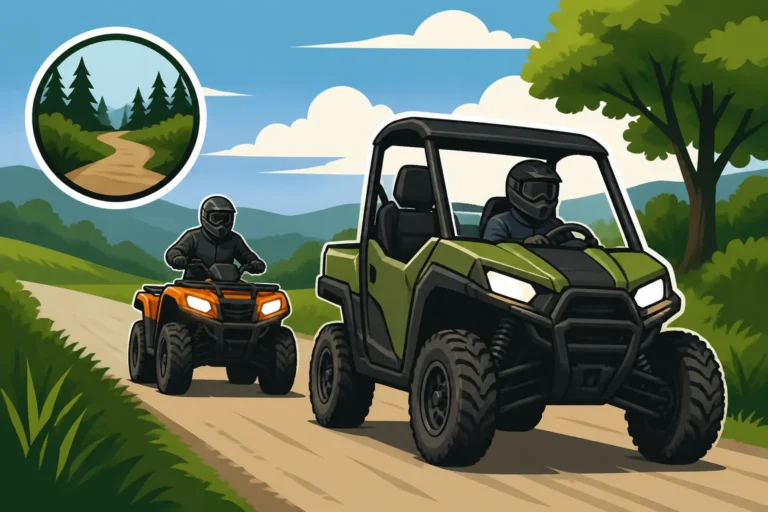
The good news is that Pennsylvania offers an abundance of incredible, legal places to ride your ATV. Instead of risking fines and disrespecting sacred ground, direct your energy towards the many designated trails and riding parks across the state. These places are designed for ATV use, ensuring both your safety and an enjoyable experience.
Pennsylvania boasts [Pennsylvania's 908 Miles of ATV Riding Statewide] on designated trails within state forests like Sproul, Bald Eagle, and Tiadaghton, to name a few. These trails offer diverse terrain, beautiful scenery, and the opportunity to truly experience off-road riding as it's meant to be. There are also fantastic private riding parks such as the Anthracite Outdoor Adventure Area (AOAA) and Rock Run Recreation Area, which offer extensive trail networks for all skill levels. These parks are specifically set up for off-road enthusiasts, providing a safe, legal, and thrilling environment. You can find detailed information on these and other locations by checking out [Where to Ride an ATV in Pennsylvania] on the DCNR website or through park-specific resources.
When you do venture out onto these approved trails, it’s a good idea to ensure your machine is properly equipped and maintained for the rigors of off-road riding. Companies like SuperATV offer a wide range of aftermarket parts and accessories, from heavy-duty axles and lift kits to winches and lighting, that can enhance your machine's performance and durability on demanding Pennsylvania terrain. Outfitting your ATV with quality components, whether it's for improved suspension or better tire traction, prepares you for the adventure ahead. Remember, riding legally and responsibly on [Pennsylvania Rules for Riding a State Forest Road] or a private park's trails means having your machine in top shape, carrying your [What a Ranger Checks at a Trailhead] documentation, and always respecting trail rules and other riders.
Here’s a quick overview of where ATVs generally can and cannot be ridden in Pennsylvania:
| Location Type | General ATV Legality in Pennsylvania | Key Considerations |
|---|---|---|
| Designated State Trails | Legal | Requires DCNR registration, safety certificate (if applicable), sometimes a permit. |
| Private Riding Parks | Legal | Requires park-specific fees, often registration and safety certificate. |
| Private Land | Legal with Permission | Absolutely requires explicit [Pennsylvania Landowner Permission Rules]; avoid trespass. |
| Cemetery Roads | Illegal | Not designated for ATVs; respectful conduct, safety, and liability concerns. |
| Public Roads (Non-Designated) | Illegal | ATVs are not street legal; fines for operation on highways/streets. |
| Game Lands | Illegal | Generally prohibited, with very limited exceptions for disabled access. |
| Rail Trails | Illegal | Not typically designated for motorized vehicles. |
By sticking to designated areas and understanding the rules, you can have countless hours of safe and enjoyable ATV riding in the beautiful state of Pennsylvania, leaving cemetery roads to their intended purpose.
Disclaimer
This article is for general informational purposes only and does not constitute professional advice. Laws, prices and regulations vary by location and change over time. Consult a qualified professional for guidance on your specific situation.