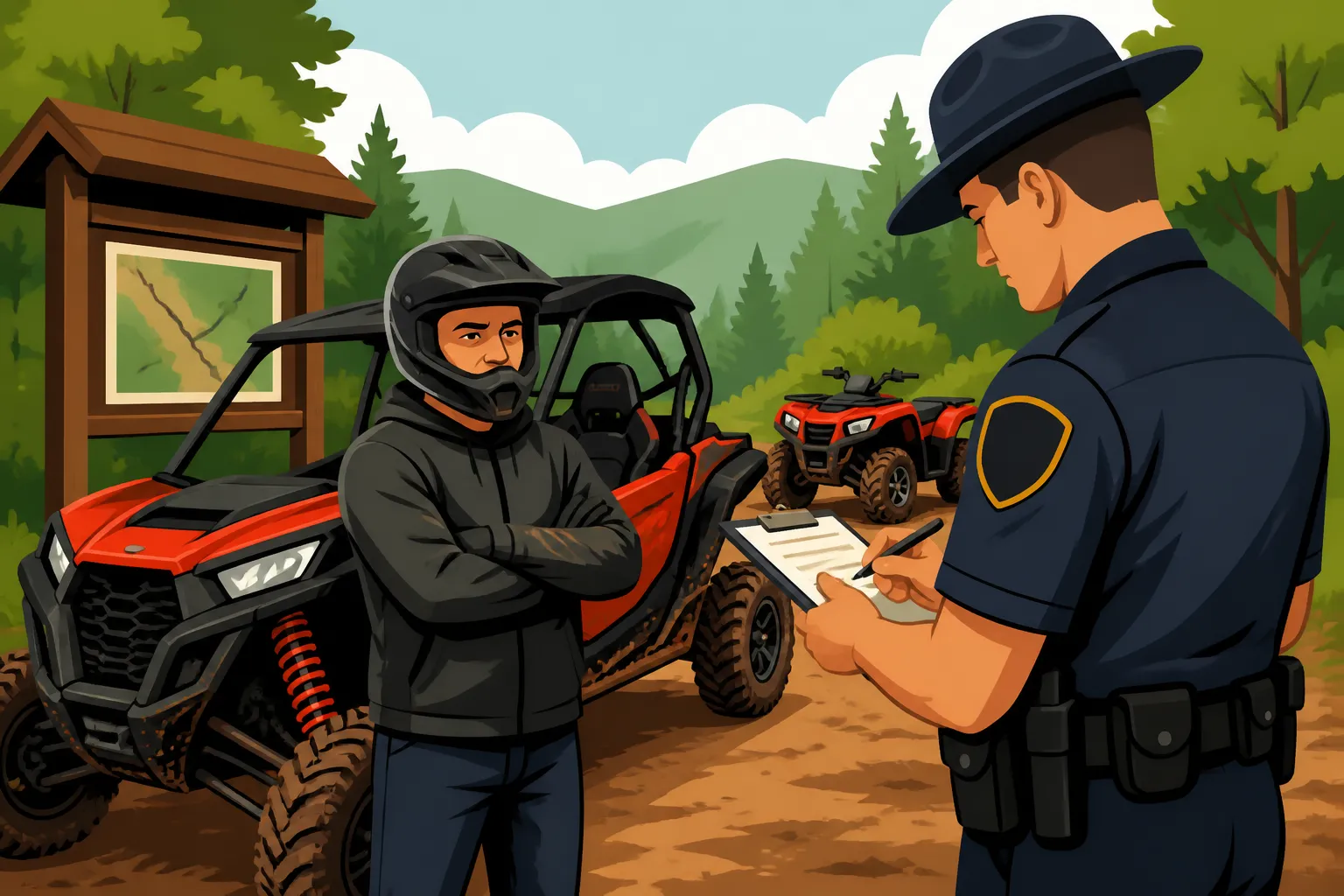
Getting a Citation Written at a Pennsylvania Trailhead
Picture this: You've just unloaded your quad at a Pennsylvania trailhead, excited for a day of ripping through the woods, only to be met by an officer asking for your paperwork. Or worse, you're halfway down the trail, having a blast, and suddenly, lights flash behind you. It's a scenario many riders dread, and unfortunately, it happens. Getting a citation written at a Pennsylvania trailhead can quickly turn a fun day into a frustrating and expensive ordeal. This guide will walk you through who might stop you, what they're looking for, the common reasons riders get ticketed, and what to do if you find yourself facing a citation.
Who Is Checking for Violations at Pennsylvania Trailheads?
It's easy to think that once you're out in the woods, you're free from the watchful eye of law enforcement. But that's simply not the case, especially at Pennsylvania's popular ATV trailheads. The trails and the lands they traverse are managed, and with that management comes enforcement. You might encounter several different types of officers, each with their own jurisdiction and focus. Knowing who they are and what they're looking for can help you be better prepared.
DCNR Rangers and Their Jurisdiction
When you're riding on Pennsylvania state forest or state park land, the most common law enforcement you'll encounter will be DCNR Rangers. These dedicated men and women are essentially the police force of our state lands, and they are incredibly knowledgeable about ATV laws and regulations. Their primary role is to protect the natural resources and ensure the safety of all visitors, including ATV riders.
DCNR Rangers are specifically empowered to enforce all the regulations laid out by the [Pennsylvania's DCNR Snowmobile and ATV Section]. This means they'll be checking everything from your registration and trail permits to your helmet and how you're operating your machine. They know the trails intimately, they know the common violations, and they're often visible at staging areas, access points, and even deep within the trail systems. Their presence isn't meant to spoil your fun, but rather to ensure that everyone is riding responsibly and legally, which helps keep our trail systems open and safe for years to come.
State and Local Law Enforcement
While DCNR Rangers are the primary authority on state lands, it's important to remember that other law enforcement agencies can and do get involved, especially if a trailhead or trail system abuts or uses public roads. The Pennsylvania State Police (PSP) have statewide jurisdiction and can enforce ATV laws anywhere in the Commonwealth. If a trail crosses a state highway, or if you're using a designated road to connect to a trail, PSP could certainly be the ones to pull you over.
Similarly, local police departments – whether from a township or borough – have jurisdiction within their municipal boundaries. This becomes particularly relevant if your trailhead parking area is on a local road, or if you're riding your ATV on local roads that are not part of [Pennsylvania's Designated ATV Roads]. Many riders use municipal roads as connector routes to reach trails, and if those roads aren't explicitly open to ATVs, or if you're violating other traffic laws, local police can issue citations. It's a common misconception that "the police won't bother with ATVs," but rest assured, if you're breaking the law, they absolutely will.
Game Wardens on State Game Lands
Pennsylvania is home to a vast amount of State Game Lands, managed by the Pennsylvania Game Commission. While these lands are primarily for hunting and wildlife management, some ATVs are used for access, particularly during hunting seasons. However, the rules for ATV use on Game Lands are very strict and generally prohibit recreational riding. If you're riding on State Game Lands without specific permission or a very particular access permit (usually for game retrieval by disabled hunters), you're very likely to encounter a Pennsylvania Game Warden.
Game Wardens are highly focused on enforcing Game and Wildlife Code, and illegal ATV use is a common violation they deal with. Riding an ATV on Game Lands without authorization is typically considered trespass and can result in significant fines. It's critical to understand that [Pennsylvania State Game Lands and ATVs] have distinct rules compared to state forest trails, and ignorance of these rules is not a defense. Always know whose land you're on and what the specific regulations are before you unload your machine.
Common Offenses That Lead to Citations
So, what exactly are these officers looking for that might lead to a citation? It's usually a combination of paperwork discrepancies, safety equipment failures, and blatant disregard for established rules. The good news is that most of these are easily avoidable with proper preparation and responsible riding.
Registration and Permit Violations
This is, hands down, one of the most frequent reasons riders get cited at or near a trailhead. Pennsylvania has clear rules about registering your ATV, and if you're caught without proper documentation, it's an automatic issue.
First, your machine needs to be registered with the DCNR. This is your [Pennsylvania's Two-Year ATV Registration], and if you're riding on any public land, it's mandatory. An officer will check for a current registration sticker on your plate and may ask for your wallet card. If your registration has expired, even by a day, you're technically riding unregistered. Many riders simply forget to [Renewing a Pennsylvania ATV Registration], only realizing their oversight when an officer points it out. Make sure your [Pennsylvania ATV Plates and Where They Mount] are visible and correctly affixed, along with the current stickers.
Beyond registration, many state forest trail systems require a specific trail permit. For example, the Northcentral Region has a regional permit covering nearly a thousand miles of trails. Riding on these designated trails without the proper permit is an offense, and officers will be checking for it. Don't assume that just because your machine is registered, you're good to go everywhere. Always check the specific permit requirements for the trail system you plan to ride. The [Pennsylvania ATV Trail Permit Cost] is a small investment compared to the potential fine for not having one. Also, don't forget that [Why Both Pennsylvania Registrations Include a Wallet Card] is important, as it's proof of your registration that you should carry with you.
Safety Equipment and Age Restrictions
Pennsylvania takes rider safety seriously, and several laws are in place to minimize injuries. Violating these can quickly lead to a citation, not to mention putting yourself or others at risk.
The most critical safety violation is often related to helmets. [Pennsylvania Helmet Law for ATV Riders] is clear: if you're riding an ATV off your own private property, you must wear an approved helmet. This isn't just a suggestion; it's the law. Many riders also forget about eye protection, which is equally important. Goggles or a face shield are required, and a helmet without a face shield means you still need separate eye protection.
Age restrictions for riders are another common point of enforcement. Pennsylvania has specific rules regarding the minimum age to operate an ATV on public lands, and these also tie into safety certifications and supervision for younger riders. For instance, [Pennsylvania Minimum Age to Ride an ATV] means no one under eight can operate an ATV on state-owned land. For those between 8 and 15, a [Pennsylvania ATV Safety Certificate Requirements] is often necessary, and specific engine size caps apply. An officer will certainly check for compliance, especially if they see a young rider who looks to be under the legal age or riding unsupervised. Lastly, [Pennsylvania Rules for a Passenger on a Quad] are strict; many ATVs are designed for one rider only, and carrying an unauthorized passenger can result in a ticket and is incredibly dangerous.
Trail Rules and Environmental Violations
Beyond paperwork and safety gear, officers are also enforcing specific trail rules designed to protect the environment and maintain the integrity of the trail system. These rules ensure that everyone can enjoy the trails without undue damage or conflict.
One of the biggest no-nos is riding off designated trails. This is a significant issue because it leads to erosion, habitat destruction, and can create unauthorized, unsafe paths. [Pennsylvania Fines for a Trail Violation] can be substantial for this offense. Always stay on marked trails, no matter how tempting that muddy shortcut or open field might look.
Other common violations include excessive speed, especially in areas with blind corners or near campgrounds and staging lots. Your machine's modifications can also draw attention. [Pennsylvania Muffler Requirements for ATVs] and the [Pennsylvania Spark Arrester Requirement] are in place to control noise pollution and prevent wildfires. A super-loud exhaust or one that hasn't been properly maintained with a spark arrester can definitely earn you a citation. And, of course, simple acts like littering, which might seem minor, are still violations and can be ticketed. Finally, and very seriously, operating an ATV under the influence of alcohol or drugs is strictly prohibited. [Pennsylvania DUI Rules for ATV Riders] apply to ATVs just as they do to cars, and the consequences can be just as severe, including the suspension of your driver's license.
| Violation Type | Enforcement Authority | Common Scenario | Potential Consequences (General) |
|---|---|---|---|
| Unregistered ATV | DCNR, PSP, Local Police | Riding any public or shared land | Significant fine, cost of prosecution |
| No Trail Permit | DCNR | Riding designated state forest trails | Fine, denial of trail access |
| No Helmet / Eye Protection | DCNR, PSP, Local Police | Any public riding, even private with rules | Fine, safety risk |
| Underage Rider | DCNR, PSP, Local Police | Rider below minimum age/unsupervised | Fine, parent/guardian responsibility |
| Riding Off-Trail | DCNR, Game Wardens | Environmental damage, trespass | Fine, potential restitution, trespass charge |
| Loud Exhaust | DCNR, PSP, Local Police | Non-compliant muffler | Fine |
| DUI on ATV | DCNR, PSP, Local Police | Operating under influence | Hefty fines, suspension of driving privileges |
| Trespassing (Game Lands) | Game Wardens | Riding on State Game Lands | Fine, potential confiscation of machine |
What Happens When You Get Pulled Over and Cited
So, you're out riding, having a good time, and then it happens: an officer signals for you to stop. It can be a jarring experience, especially if you're unsure why you're being stopped. Knowing the process can help you remain calm and handle the situation appropriately.
The Stop and Document Check
When an officer signals for you to stop, do so safely and promptly. Pull over to the side of the trail or road in a clear, visible spot. Turn off your engine and keep your hands visible. The officer will approach and explain why they stopped you. They will typically ask for your identification, your ATV registration, and potentially your trail permit or proof of insurance. This is why it's so important to have your [Carrying Proof of Insurance in Pennsylvania] readily accessible, along with your DCNR wallet card.
Be polite and cooperative. Arguing or being confrontational will not help your situation and could potentially lead to further charges. Answer their questions clearly and truthfully. If you don't understand a question, politely ask for clarification. They are simply doing their job to ensure compliance with the law. They might also inspect your machine for things like spark arrestors, proper lighting if applicable, or even the general condition of the ATV to ensure it's safe for operation. This is standard procedure, so be prepared for a thorough check of your documents and your machine.
Receiving the Citation and Next Steps
If the officer determines a violation has occurred, they will issue you a citation. In Pennsylvania, most ATV violations are considered "summary offenses," which are the least serious type of criminal charge, similar to a traffic ticket. However, don't mistake "least serious" for "not serious" – they still carry fines and consequences.
The citation will clearly state the specific violation(s), the applicable section of the law, the date, time, and location of the offense, and the name of the issuing officer. Crucially, it will also outline your options and the timeframe within which you must respond. Usually, you have about 10 days to either plead guilty and pay the fine or plead not guilty and request a hearing. Read every detail on the citation carefully. It's your official notice of the alleged offense and outlines the next steps you need to take. This isn't just a slap on the wrist; it's a formal legal document.
Potential Fines and Consequences
The financial impact of an ATV citation can range from annoying to quite painful, depending on the severity of the offense and whether it's a first-time or repeat violation. [Pennsylvania ATV Registration Fines] for an unregistered machine, for instance, can be significant. If you're cited for [Pennsylvania Fines for an Unregistered ATV], you're not just looking at a base fine; there are often court costs and fees tacked on.
This "cost of prosecution" means that even a seemingly small fine can quickly balloon once all the administrative fees are added. [Cost of Prosecution on Top of a Fine] can often double or even triple the amount you originally thought you owed. For more serious offenses, or if you have previous violations, the fines can be much higher. [Pennsylvania Fines for a Second Offense] are designed to deter repeat offenders, so a second violation will likely be more expensive. While most ATV summary offenses don't directly impact your driving record like a speeding ticket would (so [Does a Pennsylvania ATV Ticket Hit Your Driving Record?] generally yields a "no"), they can still become part of your public record and certainly impact your wallet. Ignoring a citation can lead to even more severe consequences, including warrants for your arrest or suspension of privileges, so always address it promptly.
What to Do If You Receive a Trailhead Citation
Finding yourself with a citation in hand can be unsettling, but it's important to know that you have options and a clear process to follow. Don't panic; take a deep breath and review the situation.
Understanding Your Options
Once you've received your citation, you essentially have two main paths:
- Plead Guilty: This means you admit to the violation, pay the fine (and any associated court costs), and the matter is closed. You typically do this by mailing in a payment or, in some cases, paying online. This is often the path many choose, especially for minor infractions, as it's usually the simplest and quickest way to resolve the issue.
- Plead Not Guilty: If you believe you did not commit the offense, or if there were extenuating circumstances, you have the right to challenge the citation in court. This will involve requesting a hearing before a District Judge. You must notify the court of your intention to plead not guilty within the timeframe specified on the citation, typically 10 days.
Before deciding, carefully review the citation. Make sure you understand exactly what you're accused of and what the potential penalties are. If you're unsure, you can always contact the issuing office (like DCNR, PSP, or the local magistrate's office) for clarification on the process, but they cannot give you legal advice.
Contesting a Citation
If you choose to contest the citation, you'll need to prepare for a hearing. This means gathering any evidence you have to support your case. This could include photos, videos, witness statements, or documents proving your registration or permit status. For example, if you were cited for an expired registration but you had just renewed it, your proof of renewal would be key.
During the hearing, you'll have the opportunity to present your side of the story to the District Judge. The officer who issued the citation will also be present to present their case. It's important to be respectful, clear, and concise in your presentation. This isn't about arguing with the officer, but rather presenting facts and legal arguments to the judge. If you feel the violation was based on a misunderstanding of the law, or if there was a factual error, this is your chance to explain. In some cases, depending on the complexity, you might even consider seeking legal counsel, especially if the fines are high or if there are multiple charges. The process for [Appealing a DCNR Citation] would be similar to appealing any summary offense.
Paying the Fine and Moving Forward
If you decide to plead guilty, or if you contest the citation and are found responsible, the next step is to pay the fine and any associated costs. The citation will provide instructions on how to do this, whether by mail, online, or in person at the local District Court. Make sure to pay within the specified timeframe to avoid additional penalties or complications.
Once the fine is paid, it's a good idea to take steps to correct the underlying issue that led to the citation. Did your registration expire? Get it renewed. Did you forget your permit? Purchase one for your next ride. Were you missing a helmet? Invest in approved safety gear. This isn't just about avoiding future fines; it's about being a responsible and safe rider, ensuring you can continue to enjoy Pennsylvania's incredible ATV trails for years to come. Every citation, though frustrating, can be a valuable lesson in proper preparation and adherence to the rules.
Disclaimer
This article is for general informational purposes only and does not constitute professional advice. Laws, prices and regulations vary by location and change over time. Consult a qualified professional for guidance on your specific situation.