Are ATVs Street Legal in Pennsylvania?
It's a question that nearly every ATV and UTV owner in Pennsylvania has asked themselves at some point: Can I just take my quad or side-by-side out on the road, even for a short hop? The desire to connect trails, ride to a local store, or simply get from point A to point B without trailering is incredibly strong, but the reality in our state can be a frustrating maze of rules. This guide will cut through the confusion and explain exactly when and where you can legally ride your ATV on Pennsylvania's roads, and why most of the time, the answer is a firm "no."
The Short Answer: Why Pennsylvania Says "No" to Street Legal ATVs
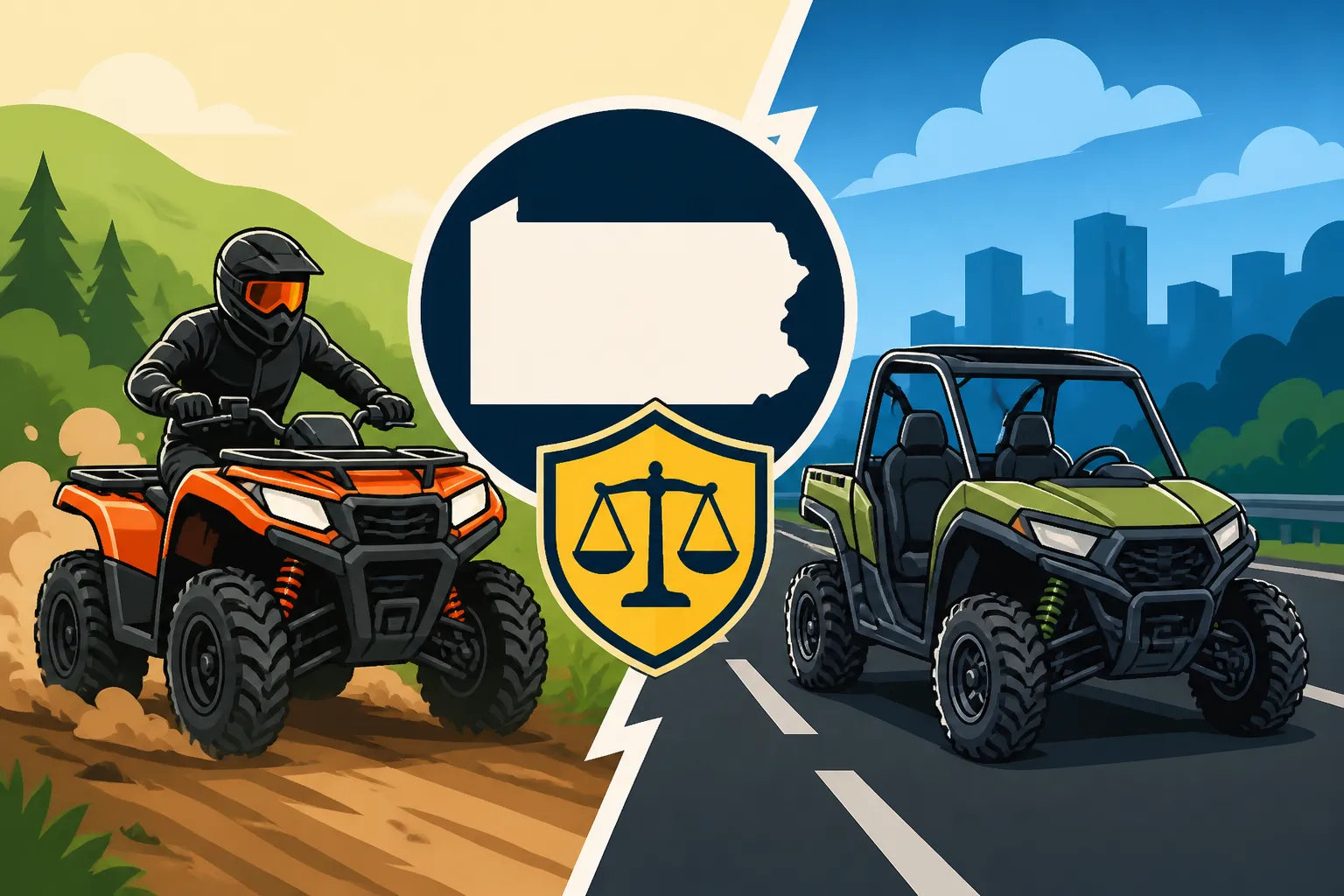
Let's just get straight to the point because it's the biggest source of disappointment for many riders: In Pennsylvania, ATVs are generally not street legal. You cannot just slap a license plate on your quad and head down the highway or even most local roads. This isn't due to a lack of desire from riders, but rather deeply ingrained state legislation that categorizes ATVs specifically as off-road vehicles. It’s a bitter pill to swallow when you see machines on the road in other states, but Pennsylvania has chosen a different path.
Understanding Pennsylvania's Vehicle Classifications
The Pennsylvania Department of Conservation and Natural Resources (DCNR) is the primary state agency responsible for ATV registration and regulation, not PennDOT. This distinction is crucial. PennDOT handles vehicles designed and manufactured for highway use, complete with features like turn signals, rearview mirrors, and federally mandated safety standards. Your ATV, while incredibly fun and capable off-road, typically doesn't meet these requirements. The state views an ATV as a recreational vehicle meant for unpaved terrain, not public roadways. This classification is the bedrock of why they aren't generally street legal, and it’s why you'll find that [Why PennDOT Does Not Register Pennsylvania ATVs] is a common point of confusion for new riders.
The law sees these machines as fundamentally different from cars, trucks, or motorcycles. They are designed for agility, power, and handling rough terrain, which often means sacrificing the features needed for safe and predictable operation in traffic. While you might feel perfectly capable of navigating a paved road on your quad, the state's legal framework prioritizes the safety of all road users and the specific design intent of the vehicle.
The Unforgiving Law: 17 Pennsylvania Code Chapter 51
The core of Pennsylvania's stance on ATV road legality lies within Title 17, Chapter 51 of the Pennsylvania Code, specifically regarding Snowmobiles and All-Terrain Vehicles. This isn't some obscure footnote; it's the defining legal text that governs how and where these machines can be operated. This chapter clearly outlines the definition of an ATV and expressly restricts its operation to "designated lands, trails, or areas" and explicitly prohibits their use on "highways," which includes most public roads.
This strict legal framework can be incredibly frustrating for riders. You might live just a mile down the road from a fantastic trail system, or your friend might be a few blocks away, and the idea of loading up a trailer for such a short distance feels completely counterintuitive. However, the law is unambiguous. It doesn't offer much in the way of interpretation for the average rider. While there's a strong desire among riders to have ATVs recognized for limited street use, the current legal structure leaves little room for individual discretion. It's a blanket rule designed to regulate the entire category of off-road vehicles, prioritizing public safety over convenience for riders.
Navigating the Exceptions: Where You CAN Ride Your ATV on Paved Surfaces in PA
While the general rule is a resounding "no," Pennsylvania isn't completely devoid of opportunities to ride your ATV on paved surfaces. These exceptions are critical for riders to understand, as they represent the only legal avenues for mixing your off-road machine with asphalt. Ignorance of these rules isn't a valid defense if you're caught riding illegally, so let's get into the specifics.
Designated Joint-Use Roads and Township Ordinances
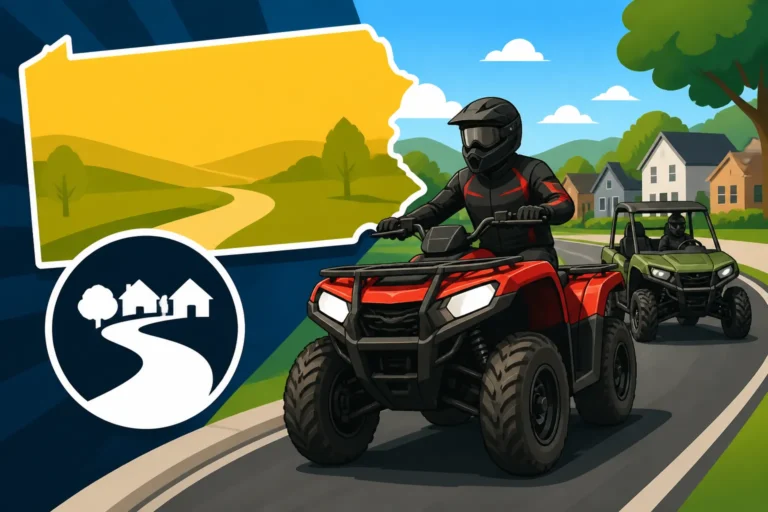
The most significant exception to Pennsylvania's "no street legal" rule comes in the form of "joint-use roads" or "designated roads." These are specific public roads, typically maintained by townships or boroughs, that local municipalities have chosen to open to ATV traffic via a local ordinance. This isn't something that happens statewide; it's a decision made at the hyper-local level. When a township decides to open a road, they must explicitly designate it, often by installing specific signage. You'll recognize these as [The Green Sign on a Pennsylvania Township Road] that indicates ATV access. Without that green sign, assume the road is closed.
These designated roads are usually meant to connect trail sections, provide access to trailheads, or allow residents to reach services. It's not a free-for-all for joyriding. Furthermore, there are often specific rules that apply when riding on these roads. For instance, [Pennsylvania's Sixteen-Year-Old Road Rule] dictates that operators must be at least 16 years old to ride on a designated road, regardless of their age off-road. You also typically cannot exceed a certain speed limit (often lower than the posted vehicle speed limit), and you must abide by all traffic laws that apply to other vehicles. It’s crucial to understand that these are specific, limited designations. If you want to know more, looking into [Pennsylvania's Designated ATV Roads] can give you a better overview. It's truly up to each municipality to decide [How a Pennsylvania Township Designates a Road], so what might be open in one area could be strictly off-limits just a few miles down the road.
Crossing Roads and Agricultural Exemptions
Beyond designated roads, there are very limited scenarios where an ATV can touch a public road. One such instance is for crossing. If your trail or private property is bisected by a public road, you can often legally cross it. However, this isn't just a matter of zipping across. The law requires you to stop before entering the roadway, yield to all oncoming traffic, and proceed across the road at approximately a ninety-degree angle to the flow of traffic. You're not meant to ride on the road for any distance, only to traverse it as directly as possible. This applies whether you're dealing with a quiet back road or need to [Crossing a Highway on an ATV in Pennsylvania]. Always remember the specifics like [Crossing at Ninety Degrees in Pennsylvania] to stay within the law.
Another important exception is for agricultural use. Farmers or those engaged in legitimate agricultural operations can often operate ATVs on public roads for specific purposes, such as moving between fields or accessing equipment. This exception is not a general license to ride; it's strictly for farm-related activities. For example, if you're using your quad to tend to crops or move livestock on your land, and you need to cross a road to get to an adjacent parcel, you might be covered. However, even with the [Pennsylvania's Agricultural Exception to the Helmet Rule], there are still expectations for safe operation. This exemption is tied directly to the [The Farm and Business Exemption in Pennsylvania] and isn't intended for recreational riders. It’s important to note that you typically need to be actively engaged in farm work for this to apply, not just riding your quad for fun and claiming a farm connection.
Private Property and Event Permits
Of course, one of the most straightforward ways to ride your ATV without worrying about street legal status is on private property with permission. If you own the land, or have express consent from the landowner, you're generally free to ride as long as you adhere to local noise ordinances and any other applicable laws. This is a common solution for many riders who enjoy their quads primarily on their own acreage or with friends on their land. Remember that [Pennsylvania Rules for Riding Private Property] usually means having explicit, verifiable permission. A casual "go ahead" from a neighbor might not hold up if there's an incident.
Occasionally, you might also see ATVs on public roads during organized special events, such as parades, charity rides, or community festivals. These instances are typically covered by specific, temporary permits issued by the local municipality or state. These are not everyday occurrences and require extensive planning and approval. So, if you see an ATV riding down Main Street during a town parade, understand that it's likely operating under a special exemption, not because ATVs are suddenly street legal. It’s important not to confuse these rare, permitted events with a general allowance for road use.
Essential Requirements for Any Permitted Road Use
Even in the limited scenarios where an ATV can legally be on a paved surface in Pennsylvania—such as a designated joint-use road or a quick ninety-degree crossing—there are still strict requirements you must meet. These aren't optional; they're vital for your safety, the safety of others, and for avoiding costly fines and legal trouble. Think of these as the absolute minimum bar you need to clear before putting a tire on asphalt, even for a moment.
Registration, Insurance, and Safety Gear
First and foremost, your ATV must be properly registered with the Pennsylvania DCNR. This is non-negotiable. Whether you're riding on a state trail, a private park, or a designated road, an unregistered machine is an illegal machine. Make sure your [Registering an ATV in Pennsylvania] is up to date and that you have proof of registration with you. This isn't just a piece of paper; it's your machine's identity in the eyes of the law.
Beyond registration, Pennsylvania mandates that all ATVs operated off private property must carry liability insurance. This means if you're involved in an accident on a designated road or during a road crossing, you have coverage for damages or injuries you might cause to others. Don't skip this; the financial implications of an uninsured accident can be devastating. Understand your [Pennsylvania ATV Insurance Requirement] thoroughly. Finally, safety gear is paramount. While the rules can vary slightly depending on your age and location, helmets are generally required for ATV riders in Pennsylvania, especially when on designated roads or other public accesses. [Helmet Rules for Pennsylvania Riders] are in place for a reason, and protecting your head is just common sense. You can find many robust helmet options that also cater to comfort and style from brands like SuperATV, ensuring you stay safe while looking good.
Lighting, Mufflers, and Other Equipment Standards
When you're on a public road, even a designated one, your ATV needs to be visible and audible in an appropriate manner. This means your machine must have proper lighting, particularly if there's any chance you'll be riding near dusk, at night, or in low-visibility conditions. Headlights, taillights, and often reflectors are a must. Many ATVs come with basic lighting for off-road use, but if you're venturing onto roads, ensure your system is fully functional and visible to other motorists. Upgrading your lighting for brighter, more reliable illumination is a smart move if you're frequently on designated roads, and aftermarket suppliers often offer robust solutions. Understanding [Pennsylvania Lighting Rules for Road Use] is key to staying safe and compliant.
Additionally, your ATV must be equipped with an effective muffler and a U.S. Forest Service-approved spark arrester. Noise pollution is a common complaint against ATVs, and excessively loud machines can quickly draw the attention of law enforcement and irritate local residents. Keeping your machine's exhaust system in good working order and ensuring it meets legal sound limits is crucial. The spark arrester, while primarily a fire safety device for trails, is also a legal requirement that helps prevent wildfires. Violations of [Pennsylvania Muffler Requirements for ATVs] or the [Pennsylvania Spark Arrester Requirement] can lead to fines and, potentially, the end of your ride.
What About UTVs and Other Off-Road Vehicles?
The world of off-road vehicles has expanded dramatically beyond traditional ATVs, with UTVs (Utility Terrain Vehicles) or side-by-sides becoming incredibly popular. With their car-like seating, often larger size, and sometimes enclosed cabs, it’s easy to wonder if UTVs have different rules when it comes to street legality in Pennsylvania. The short answer, frustratingly, is often the same as for ATVs.
UTVs and the Same "No" Rule
Unfortunately for UTV owners, Pennsylvania's classification system generally lumps UTVs into the same "off-road vehicle" category as ATVs. This means that, for the most part, UTVs are subject to the same restrictions: they are not considered street legal for general public road use. Just like ATVs, you cannot simply title and register a UTV with PennDOT for highway travel. The DCNR registers UTVs, and their operation is largely confined to designated trails, private property, and the very limited road exceptions we've already discussed. So, if you're asking [Can You Plate a UTV in Pennsylvania?], the answer for street legality is typically no.
While UTVs often come with features like seatbelts, roofs, and sometimes even turn signals (especially aftermarket kits from companies like SuperATV), these additions do not magically make them street legal in Pennsylvania. The core legal definition and classification of the vehicle remain unchanged. Many UTVs, particularly larger models, also exceed width limits for many state forest ATV trails, with [Pennsylvania's Class II Trail Width Limit] being 64 inches. This means a wider UTV might struggle even on some designated off-road trails, further complicating their use. The rules for [Pennsylvania Rules for a UTV on a Road] are essentially the same as for ATVs, focusing on designated joint-use roads or direct crossings, not general transportation.
Golf Carts, LSVs, and the Difference
It's common to see golf carts or other small, slow-moving vehicles operating on local roads in some communities, and this can lead to confusion about why ATVs and UTVs can't do the same. The key difference lies in their legal classification and intended design. Golf carts and Low-Speed Vehicles (LSVs) are distinct categories with different regulations. LSVs, for example, are a specific class of vehicle that must meet certain federal safety standards (like seatbelts, headlights, turn signals, mirrors, etc.) and have a top speed between 20 and 25 mph. These vehicles can be titled and registered for street use in Pennsylvania, but they are very different from ATVs or UTVs.
ATVs and UTVs are designed for off-road performance, speed, and agility, not for highway safety or the specific speed and design requirements of LSVs or golf carts. While some aftermarket kits can add street-legal features to a UTV (like turn signals or mirrors), they do not change the underlying legal classification of the vehicle in Pennsylvania. It's a fundamental difference in how the state defines and regulates the vehicle type. So, while you might see [Golf Carts and Low-Speed Vehicles in Pennsylvania] on local roads, understand that this doesn't create a loophole for your ATV or UTV.
| Permissible ATV Road Use in Pennsylvania | Conditions & Requirements | Impermissible ATV Road Use in Pennsylvania |
|---|---|---|
| Designated Joint-Use Roads | Marked with green DCNR signs; age 16+; follow traffic laws; often lower speed limits. | General public roads (State, County, Township) not specifically designated. |
| Direct Road Crossings | Stop, yield, cross at 90-degree angle, minimum distance on road. | Riding on public roads for travel, even short distances (unless designated). |
| Agricultural Use | Strictly for farm-related tasks between fields or to access equipment; not recreational. | Commuting, running errands, or recreational cruising on public roads. |
| Private Property | With owner's permission; adhere to local noise ordinances. | Riding on private property without express permission (trespassing). |
| Special Permitted Events | Requires specific, temporary permits from municipality or state. | Impromptu parades or group rides on public roads without permits. |
This table should help clarify the narrow scope of legal road use for ATVs and UTVs in Pennsylvania.
Disclaimer
This article is for general informational purposes only and does not constitute professional advice. Laws, prices and regulations vary by location and change over time. Consult a qualified professional for guidance on your specific situation.