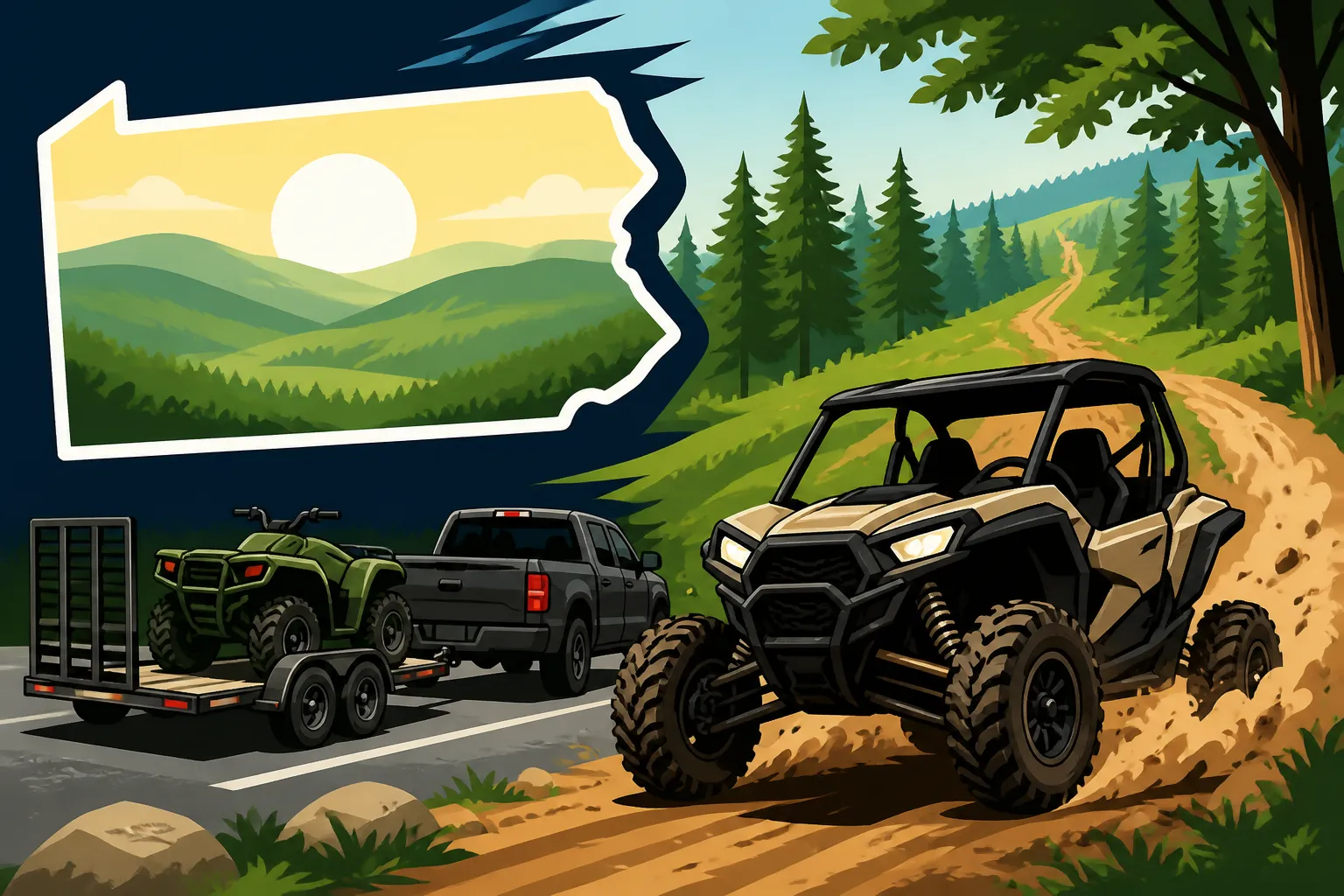
Pennsylvania Trails With a Staging Lot
Finding a Pennsylvania ATV trail with a staging lot can make the difference between an easy riding day and a stressful one. A cramped pull-off, nowhere to turn a trailer around, or a long haul from the parking area to the trail can throw off your plans. This guide explains what to look for, how to check access, and how to arrive prepared.
What counts as a staging lot at a Pennsylvania ATV trail
A trailhead parking area is not always a full staging lot
Riders use “staging lot” to describe several kinds of places to park and unload. At a developed riding area, it may mean a designated lot with room for trucks, trailers, and several machines. At a state forest trailhead, it may be a smaller parking area beside an access point. And on a map, a marked trailhead might be little more than a pull-off.
That difference matters when you’re towing. A compact car can usually manage a small roadside space more easily than a long truck-and-trailer combination. A lot may also fill quickly on a busy weekend, leaving late arrivals to wait, search for overflow parking, or reconsider their route.
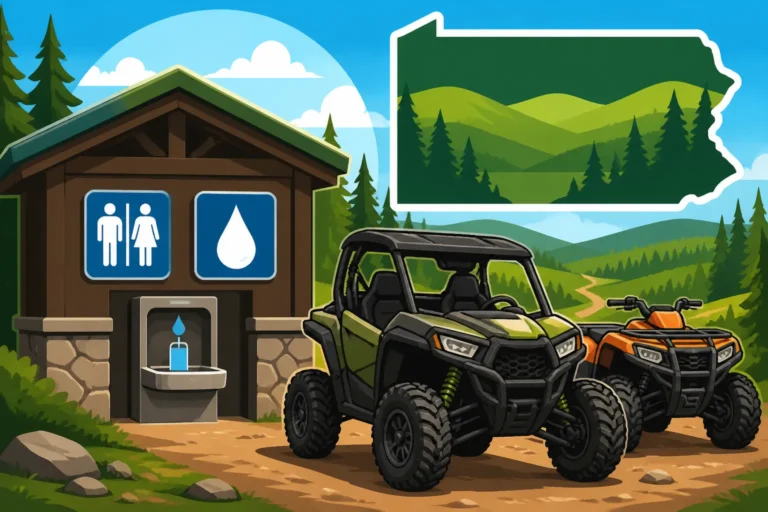
Before you set out, look for specific details: whether trailers are allowed, how many vehicles the lot can reasonably hold, whether the entrance provides room to turn, and whether parking is permitted overnight. A general map pin alone doesn’t answer those questions. For a broader look at nearby facilities, see [Pennsylvania Trailheads With Restrooms and Water].
Public trailheads and private riding parks work differently
Pennsylvania’s public riding opportunities and private parks can have very different arrival routines. A state forest trailhead may offer access to a trail network without the services or space you’d expect at a commercial park. A private riding area may have a more developed entrance and designated parking, but its rules, access, and facilities are set by the operator.
For example, riders considering [Riding the Anthracite Outdoor Adventure Area in Pennsylvania] or [Rock Run Recreation Area in Cambria County] should check the riding area’s own instructions before loading up. Don’t assume that a parking arrangement at one location applies to another, even if both offer trail riding. Rules can differ around unloading, check-in, parking locations, operating hours, and which machines are permitted.
It also helps to distinguish the place you park from the trail you’re allowed to ride. A lot may sit near a trail entrance without every nearby route being open to every vehicle. Look for the specific route restrictions and access requirements, rather than treating the presence of a parking area as permission to ride the surrounding land.
How to find and verify a staging lot before you leave
Use maps to plan, then confirm with the managing organization
Start with the trail system’s official map or information from the land manager or riding-area operator. Note the trailhead or parking area, the route you plan to ride, and any restrictions that could affect your machine. [Pennsylvania Trail Maps From DCNR] can help with state forest planning, but a map is only one part of the check: it may not answer questions about current parking access or a particular lot’s capacity.
A navigation tool such as onX Offroad can help you compare a planned route with nearby access points and get your bearings once you’re in the area. It’s useful as a planning aid, not a substitute for the managing organization’s rules or a posted closure notice. Save the location before leaving home, and make sure you know how you’ll recognize the correct entrance. Cell reception can be unreliable in remote parts of the state.
Before the trip, look for practical updates from the organization responsible for the property. Check whether the trail or lot is open, whether construction or seasonal conditions have changed access, and whether parking has special requirements. If the available information is unclear, ask before driving a long distance with a trailer. For one more planning step, consult [Pennsylvania Trail Conditions Before You Go].
Match the lot to your truck and trailer
A staging area that works for a pickup with a short trailer may not work for a long enclosed trailer or a truck carrying multiple machines. Think through the whole maneuver: entering from the road, turning around, backing into a space, unloading, and getting back out without blocking other riders.
Small forest trailheads can be especially challenging for large rigs. A narrow entrance or limited turning space can make backing difficult, even when the lot is technically accessible. Look for posted lot details and recent information from the land manager. If the lot appears small, don’t assume you can safely park along the shoulder or use a nearby driveway as overflow.
If you’re hauling a larger setup, plan a fallback before you leave. That might mean choosing a different authorized trailhead or selecting a riding area whose parking arrangements suit your vehicle. Avoid relying on an informal roadside spot: it may be unsafe, obstruct traffic, or violate local parking rules. For more planning guidance, see [Parking a Trailer at a Forest Trailhead] and [Trailer Size Limits at a Small Trailhead].
| What to check | Why it matters | What to do before leaving |
|---|---|---|
| Trailer access | Some lots may not have room for a trailer to enter, turn, or park | Confirm access with the land manager or operator |
| Lot size and layout | A small lot can fill quickly or be difficult to maneuver in | Compare your rig with available lot details and arrive with a backup plan |
| Overnight parking | Overnight rules can differ from day-use parking | Check the specific property’s posted requirements |
| Machine restrictions | Parking near a trail does not mean every machine can use every route | Confirm machine size and route rules |
| Seasonal access | Weather, closures, or seasonal schedules can affect the trip | Check current notices before towing out |
Choose a staging area that fits your machine and ride
Check machine width and the route, not just the parking space
A spacious lot is only useful if the trail system accommodates your machine. This is especially important for side-by-sides and other wide vehicles. A trail network may have width limits or routes that are not suitable for a full-size rig, even if you can park and unload without difficulty.
Measure your machine as it will be ridden, including accessories that add width, such as mirrors or other installed equipment. Then compare that measurement with the rules for the specific trail system. Don’t rely on a salesperson’s general description or a photo of another vehicle on the trail. A machine that looks similar can have different dimensions once accessories are fitted.
If you ride a UTV, look specifically for routes intended for that machine class and check whether the staging area serves those routes. [Pennsylvania Trails That Allow Full-Size Rigs] is a useful related topic when narrowing down options. A little extra checking can save you from arriving at a trailhead only to discover that your machine doesn’t fit the permitted route.
Confirm permits, registration, and access rules
A staging lot is an arrival point, not a replacement for paperwork or permits. Depending on where you ride, you may need the appropriate registration, trail permit, or other authorization. Requirements can differ between state forest trails, a private riding park, and other managed land, so check the rules for the exact destination.
Keep required documents accessible, but secure them against rain and mud. A wallet card in a protected holder and a dry place for other paperwork can save frustration during a roadside check. If you’re riding with a group, ask each rider to confirm their own machine’s documents and equipment before the convoy leaves home. That’s much easier than sorting out missing paperwork in a crowded lot.
Don’t assume that a permit for one area covers another. Read [Pennsylvania ATV Trail Permits Explained] and confirm which rules apply to your planned ride. Also check the property’s own requirements: a private operator may have separate entry procedures, safety rules, or machine restrictions.
Make arrival and unloading smoother
Plan for a busy lot and be considerate of other riders
On a popular riding day, several groups may arrive around the same time. If possible, arrive with enough time to unload without rushing. Keep your vehicle and trailer within designated parking areas, leave room for others to maneuver, and avoid blocking access roads, gates, or trail entrances while you prepare.
Before unloading, decide where each machine and piece of gear will go. Secure loose items, keep tie-downs and ramps organized, and make sure children or passengers stay clear of moving vehicles. If you’re meeting friends, agree on a specific location in the lot rather than stopping in the entrance to find one another. Small habits like these help prevent a bottleneck when everyone is trying to get on the trail.
Keep an eye out for posted signs once you arrive. A lot may have designated spaces, a separate unloading area, or restrictions on parking outside marked boundaries. If something is unclear, ask the operator or land manager rather than guessing. A convenient spot isn’t worth a ticket, a blocked route, or an unpleasant conversation with another group.
Save your route and a backup access point
Before the trip, download or save the route information you’ll need, especially if you expect patchy cell coverage. onX Offroad can be helpful for keeping a planned route and nearby access points in view, while official maps and posted notices remain essential for understanding closures and land rules. Check that you’ve saved the right location: trail systems can have multiple entrances, and a pin for a general recreation area may not take you to the lot you intended.
Choose a backup plan in case your first lot is full or inaccessible. That doesn’t mean parking wherever you can find space; it means knowing another authorized trailhead or having a second riding destination in mind. You might also decide in advance when you’ll stop trying to make a location work and move on. This is especially useful when traveling with a group, where one trailer getting stuck or turned around can delay everyone.
A final pre-trip check can be simple: confirm the trail is open, verify the lot suits your rig, review machine and permit rules, save the route, and tell someone where you plan to ride. If you’re researching options near the region you’ll visit, guides such as [Pennsylvania Trails Near State College] can help you continue comparing locations and access points.
Disclaimer
This article is for general informational purposes only and does not constitute professional advice. Laws, prices and regulations vary by location and change over time. Consult a qualified professional for guidance on your specific situation.