Why the AOAA Has No Camping
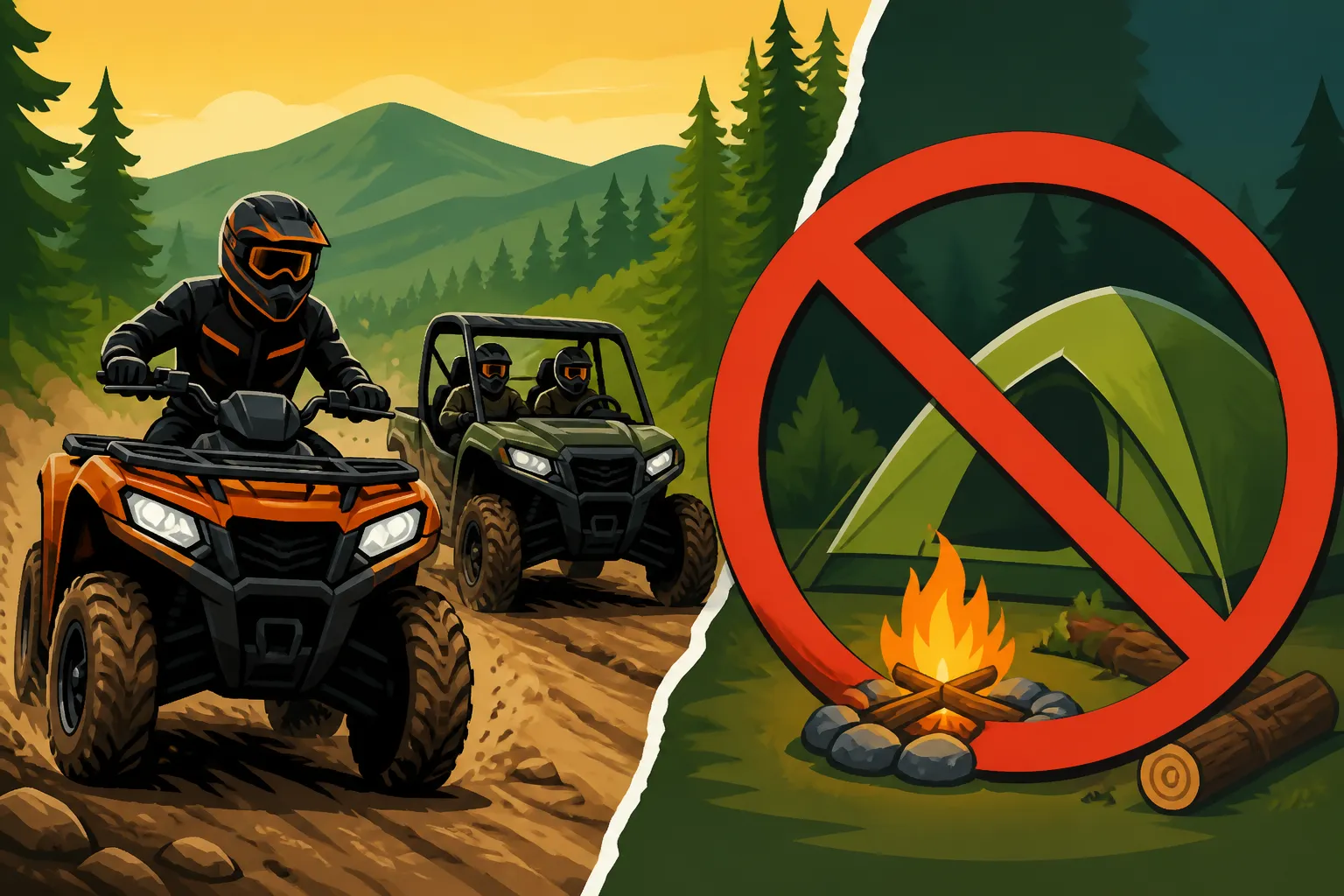
The Anthracite Outdoor Adventure Area is a day-use off-road destination near Coal Township and Shamokin, and visitors shouldn’t assume they can camp beside their machines after riding. That can complicate a weekend trip, especially when you’re hauling a UTV or traveling with family. This guide explains what “no camping” means for your plans and how to organize an overnight stay nearby.
Why the AOAA does not offer camping
The AOAA is an off-road riding area, not a campground
The AOAA is built around off-road recreation: riders arrive, check in, ride designated routes, and leave at the end of their visit. That’s a different setup from a campground, where overnight stays, tent sites, hookups, bathhouses, and other accommodations are part of the operation.
It’s easy to see why the distinction can catch people off guard. A large trail network with staging areas can look like a natural place to pitch a tent or park a camper overnight. But a staging area is for preparing to ride, unloading, and organizing a visit—not automatically an overnight campsite. Unless the AOAA specifically authorizes overnight camping in a designated area, plan to sleep somewhere else.
That separation also makes day-use operations easier to manage. Riding areas have to account for vehicle movement, trail access, check-in, parking, and the needs of riders arriving and leaving. Overnight guests introduce different practical concerns, including sanitation, quiet hours, fire safety, trash, and after-hours site supervision. Those are campground responsibilities, not an automatic part of operating an off-road park.
Camping brings different land-management and safety needs
Camping on an off-road property can create problems that don’t arise during ordinary riding hours. Fires need careful control, waste needs proper disposal, and visitors need clear rules about where they may stay. A site also needs to be monitored when riders are sleeping, not just when the trails are open.
There’s a safety difference, too. A parked RV or tent can be vulnerable to noise, dust, and nearby vehicle traffic if it’s not in a purpose-built camping area. Riders may return at different times, and trail conditions or mechanical trouble can change someone’s schedule. Keeping overnight lodging separate from riding and staging areas helps visitors plan around those realities.
It’s best not to guess at a private facility’s exact policy rationale. The practical point is simpler: the AOAA is not a place to count on for an overnight campsite. Treat the absence of on-site camping as a firm planning constraint and confirm any special arrangements directly with the facility before you travel.
No camping does not mean you cannot make a weekend of it
You can still plan a full weekend around AOAA riding. The key is to treat lodging and riding as two parts of the same trip. Find a place to stay within a manageable drive, confirm its rules for trailers and off-road machines, and then plan your arrival and departure around the AOAA’s operating information.
Nearby communities such as Shamokin, Mount Carmel, and Elysburg can be useful starting points when looking for a room, campground, or other overnight option. Availability, access, and policies vary, so check with the property directly rather than assuming it accepts trailers, has room for a truck and hauler, or permits you to store a machine overnight.
If you’re comparing what a riding visit involves, [What a UTV Day Pass Costs at the AOAA] and [AOAA Hours and Age Rules] are useful planning topics. They help you think about the park visit itself; lodging remains a separate booking.
How to plan an overnight stay near the AOAA
Choose lodging based on your vehicle and riding plans
A standard hotel room might be convenient for a couple traveling in a car, but it may not solve the needs of a group towing a trailer. Before booking, ask practical questions: Is there space to park a truck and trailer? Can you leave the trailer there during the day? Are there restrictions on bringing muddy gear into the room? Is the property comfortable with guests transporting off-road vehicles?
A campground can be a good fit for riders who prefer a tent, cabin, or RV stay, but don’t assume every campground welcomes ATVs or UTVs. Some may allow you to camp while requiring you to haul your machine to the riding area rather than ride it from the campground. Others may have quiet hours, vehicle limits, or rules about washing machines. Get those details in writing or confirm them directly before you commit.
Think about the group’s needs, not only the price or distance. Families may value a private bathroom and a predictable bedtime. A group with several machines may need secure trailer parking. A rider arriving late may want lodging with straightforward check-in. The best option is the one that makes the whole trip work, not simply the closest listing on a map.
| Overnight option | Often works well for | Questions to ask before booking |
|---|---|---|
| Hotel or motel | Riders who want a room and are hauling machines separately | Is trailer parking available? Are muddy riding clothes or gear permitted? |
| Campground | Tent, cabin, or RV travelers | Are off-road machines allowed on the property? Is there space for the tow vehicle and trailer? |
| Rental home or cabin | Families or groups who want shared space | Are trailers allowed? Are there rules about outdoor storage, noise, or washing equipment? |
| Staying with friends or family | Visitors with a local connection | Is there a safe, permitted place to park the machine and trailer overnight? |
Map the trip in two parts
Plan the route from home to your lodging, then plan the drive from lodging to the AOAA. That sounds obvious, but it prevents a common trip-day headache: booking a place that looks close on a map but is awkward to reach with a trailer, or assuming you can travel directly between lodging and trails on the ATV.
An ATV or UTV registration does not by itself make public roads available for riding. In Pennsylvania, road access depends on the particular road and applicable rules. For a general overview, read [Street Legal ATVs in Pennsylvania: The Short Answer] and [Pennsylvania's Designated ATV Roads]. When in doubt, haul the machine between your lodging and the park rather than treating the road trip as a riding connector.
A navigation app can help you estimate driving routes, locate fuel stops, and orient yourself around the area. onX Offroad can also be useful for looking at riding maps and organizing a route before you arrive, but don’t treat an app map as permission to ride a road, private property, or an unmarked trail. Follow AOAA directions and posted rules, and use the park’s current information for access and operating details.
Leave room in the schedule for check-in and unloading
A weekend plan can feel rushed if you book a distant place, arrive at the park close to opening, and expect to unload several machines immediately. Give yourself time to find the entrance, handle check-in, secure your trailer, and get your group ready. If you’re traveling with children or inexperienced riders, allow extra time for helmets, eye protection, and a quick safety discussion.
Before leaving lodging, make sure the machines are secured for transport and that you have the essentials: registration documents, any required permits or passes, appropriate protective gear, water, and basic tools. Keep paperwork protected from rain and mud. A phone photo may be handy as a backup, but carry whatever documents the rules or facility require.
For the ride itself, decide on a meeting point in case members of your group get separated. Set expectations about stopping, passing, and what to do if someone has a mechanical issue. If you’re using a digital map, download or save what you need before heading out; don’t assume you’ll have a reliable signal everywhere. onX Offroad may help with advance route orientation, while posted signs and official park guidance should remain your authority on where you may ride.
What to check before booking and riding
Confirm overnight rules with the lodging provider
A listing that says “camping” or “parking available” may not answer the questions an ATV or UTV group actually has. Call or message the provider and explain your setup: the number of people, whether you’re bringing a truck and trailer, how many machines you’re transporting, and when you expect to arrive.
Ask whether the trailer can stay parked while you ride, whether there are restrictions on washing equipment, and whether the property has quiet hours or other rules that affect a group. If you’re bringing an RV, confirm that the site can accommodate its size and that the access route is suitable. Those details are much easier to sort out before you arrive than after you’ve driven into town with a loaded trailer.
Also check cancellation and arrival policies. A trail day can be affected by weather, mechanical problems, or changes in operating information. Knowing whether you can arrive late or adjust a booking can make the trip less stressful. For more lodging-focused ideas, [Staying Near the AOAA] is a helpful companion topic.
Check park information and prepare for the trail conditions
Before departure, confirm the AOAA’s current hours, admission requirements, age rules, and any restrictions that could affect your group or machine. Don’t rely on an old social post or a previous visit as the final word. A change in operating conditions can affect where you can ride and how much time you have.
Machine fit matters as well. If you’re bringing a side-by-side, verify that it meets the park’s requirements for the routes you intend to use. Width and vehicle capability can shape which trails are suitable. The guide [Pennsylvania Trails That Allow Full-Size Rigs] can help you think through trail fit more broadly, while the AOAA’s own information should guide your decisions for its property.
Weather can change the character of a ride. Rain can make some terrain slippery, while dust and heat can affect comfort on a long day. Check conditions, pack water, and avoid pushing a group beyond its experience level. For advice that applies across Pennsylvania riding areas, see [Pennsylvania Trail Conditions Before You Go] and [Pennsylvania Trail Etiquette on Narrow Trails].
Keep camping, parking, and riding permission separate
It helps to think of three separate permissions: permission to stay overnight, permission to park a vehicle or trailer, and permission to ride a machine. A campground might allow you to sleep there but not ride from the property. A lodging provider might allow a truck in its lot but not a trailer. And a machine that is registered for riding still does not have permission to travel wherever a public or private road happens to lead.
That distinction matters especially when a property is near the riding area. A nearby field, roadside pull-off, or empty-looking lot is not an invitation to camp or leave a trailer. Use designated, authorized places and ask the owner or operator if the rules aren’t clear.
When organizing a group trip, share the plan with everyone before departure: where you’re staying, where the trailer will be parked, when you’ll meet, and what to do if someone arrives late. It may feel like overplanning, but it prevents the familiar end-of-day scramble of trying to find a place to sleep, park a machine, or regroup after riding.
Common mistakes to avoid when visiting the AOAA
Assuming the staging area is an overnight parking area
A staging area may be busy, convenient, and large enough to unload a machine, but that does not make it a campsite or a place to leave a trailer overnight. Don’t set up a tent, sleep in a vehicle, or leave equipment after hours unless the AOAA has expressly allowed it. If you need to clarify a special circumstance, ask the facility before your trip rather than trying to work it out at the gate.
The same caution applies to nearby public lots and roadside areas. A spot that appears empty during the day may have restrictions or may be private property. Unplanned overnight parking can create safety problems and may interfere with the property’s normal use.
Booking first and checking trailer access later
The room may be comfortable, but a narrow driveway, limited parking, or a prohibition on trailers can turn it into the wrong choice for your group. If you’re towing, confirm the full combination—tow vehicle, trailer, and any extra vehicle—rather than asking only whether there is parking.
Don’t assume that because a property is outside a town center it has unlimited space. Rural lodging can still have tight access, soft ground, or neighbors close enough that late unloading is disruptive. A short call can save a long detour with a loaded trailer.
Treating a route app as permission
Digital mapping tools can be valuable for trip preparation, but a line on a screen does not establish that a route is legal, open, or authorized. Use onX Offroad or another mapping tool to orient yourself and plan questions—not to override signs, closures, property boundaries, or AOAA instructions.
When an area is unclear, stop and verify rather than improvising. Stay on designated routes, follow posted rules, and respect private property. For an AOAA weekend, the simplest reliable plan is to sleep at an authorized lodging or campground, transport your machine to the riding area, and follow the park’s current guidance from arrival through departure.
Disclaimer
This article is for general informational purposes only and does not constitute professional advice. Laws, prices and regulations vary by location and change over time. Consult a qualified professional for guidance on your specific situation.