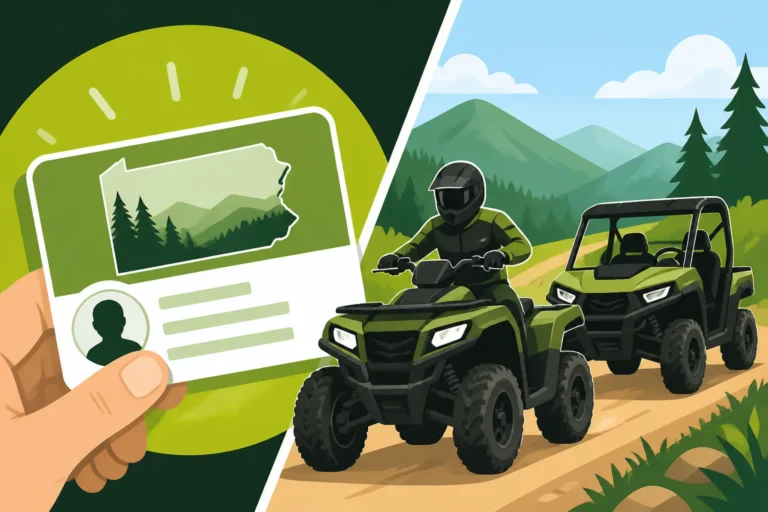
Pennsylvania Limited Registration Cost
Navigating the world of ATV registration in Pennsylvania can feel like trying to ride a rocky trail blindfolded, especially when you're just trying to figure out what it's going to cost you. Many riders wonder if they really need to register their quad if they only ever plan to use it on their own property or a private hunting lease. And if you do, what's the actual financial outlay for that "limited" registration? This guide is here to pull back the curtain and clearly explain the typical costs associated with Pennsylvania's limited ATV registration, helping you budget and prepare without any nasty surprises.
Understanding Pennsylvania's Limited Registration
Let's be honest, the word "limited" might make you think "free" or "super cheap," and while it does have a distinct purpose, it's important to understand what you're actually signing up for. Pennsylvania offers two main types of ATV registration, and the limited option is designed for a very specific use case.
What "Limited Registration" Actually Means
When the Pennsylvania Department of Conservation and Natural Resources (DCNR) talks about "limited registration," they're referring to an ATV (or UTV, for that matter) that will only be operated on private property. This means land you own, land leased by you, or land for which you have explicit, written permission from the landowner. It's truly for those machines that never see a public trail, a designated joint-use road, or any other state-managed riding area. You're simply not allowed to take a machine with limited registration onto public trails.
This distinction is super important because it dictates where you can legally ride. If your quad is strictly for chores on your farm, zipping around your hunting camp, or exploring your sprawling backyard acreage in rural Pennsylvania, then limited registration is likely the path for you. It's often misunderstood, with many assuming if it's not a public trail, no registration is needed. But DCNR's regulations are pretty clear: almost all ATVs operated in the state need some form of registration. For those sticking to private grounds, it's [Pennsylvania's Limited Registration for Your Own Land].
Why Pennsylvania Charges Anything for Limited Use
It might seem counterintuitive to pay for registration if you're not using state trails. After all, if your machine never touches public land, why should the state collect a fee? The reality is that DCNR is tasked with overseeing all ATV and snowmobile operations within the Commonwealth, regardless of where they're ridden. This involves a significant administrative infrastructure, from processing applications and maintaining a database of registered machines to issuing plates and wallet cards.
Even a limited registration machine needs to be officially identified and recorded. This helps DCNR track ownership, aids law enforcement in identifying machines, and ensures a certain level of accountability across the board. The fees collected, even from limited registrations, contribute to the overall operational costs of the DCNR's Snowmobile and ATV Section. While the primary purpose of these fees isn't to fund public trail maintenance (that's largely covered by general registration), they do cover the administrative overhead of making sure every machine has its proper paperwork and identification.
The Core Cost of a Pennsylvania Limited Registration
Now, let's get down to the brass tacks: what's this actually going to set you back? The good news is that the limited registration is generally more affordable than its "general" counterpart, reflecting its restricted use. However, there are a couple of components to consider beyond just the sticker price.
The Registration Fee Itself
When you register your ATV for limited use in Pennsylvania, there is a set fee that you'll pay. This fee covers a two-year registration period. Unlike some other vehicle registrations, the limited ATV registration fee is a consistent, fixed amount, regardless of the machine's value or age. It's designed to be a straightforward charge for the administrative process and the issuance of your identifying materials.
While I can't give you the exact current number, think of it as a relatively modest, recurring expense every couple of years. It's significantly less than what many states charge for road vehicles, and it's certainly less than the fee for a general ATV registration in Pennsylvania, which includes funding for trail systems. The intent here is to provide a low-cost option for private land users to remain compliant with state law. It's not meant to be a barrier, but rather a simple way to identify your machine. You can find more details specific to this particular charge by looking into Pennsylvania Limited Registration Cost.
Beyond the Registration: Potential Associated Costs
While the registration fee itself is fairly straightforward, there might be other costs lurking in the background, especially if you're new to the machine or acquired it in a private sale.
First and foremost is the titling process. In Pennsylvania, most ATVs require a title. If you're registering a machine for the first time, you'll likely need to obtain a title if it doesn't already have one in your name. This involves a separate, one-time fee. The DCNR handles both registration and titling, and there's a specific charge for the title. This is a crucial step for proving legal ownership and is separate from the biennial registration fee. It's worth researching [Pennsylvania ATV Title Cost] and specifically [Pennsylvania's $22.50 ATV Title Fee] to understand this one-time expense.
Then there's sales tax. If you bought your ATV, even from a private seller, you're generally responsible for paying Pennsylvania's sales tax on the purchase price. This isn't a DCNR fee, but it's often collected when you submit your title and registration paperwork. If you bought from a dealer, they typically handle this, but for private sales, it's on you to declare and pay. Don't forget to factor in [Pennsylvania ATV Sales Tax on a Private Purchase]. Finally, if you're buying privately and want to ensure all your paperwork is in order, including a proper bill of sale, you might consider services like LawDepot to generate legally sound documents, which could involve a small cost for their service. This ensures you have clear proof of purchase and can avoid headaches down the line when trying to register.
Here's a quick comparison of the typical cost components you might encounter:
| Cost Component | Description | Frequency |
|---|---|---|
| Limited Registration Fee | The core fee paid to DCNR for your limited use registration. | Every two years |
| ATV Title Fee | One-time fee for issuing a certificate of title for your ATV, establishing legal ownership. | Once (per owner transfer) |
| Sales Tax | State sales tax on the purchase price of the ATV, whether from a dealer or private seller. | Once (per purchase) |
| Documentation Services (Opt.) | Fees for services like LawDepot if you need help creating a formal bill of sale or other purchase documents for a private transaction. | As needed (typically for private sales) |
What Your Limited Registration Fee Covers (and Doesn't)
It's natural to wonder what you're actually getting for your money, even if the fee is relatively small. The limited registration provides specific benefits and identifiers, but it also has clear boundaries regarding where you can ride.
Administrative Services and Identification
When you pay for your limited registration, you're essentially funding the administrative processing of your application, the creation of your official records within the DCNR system, and the physical items that identify your machine. You'll receive a special license plate (or often, a sticker that goes on a specific plate for limited use) that needs to be displayed on your ATV. This is detailed further in [The Plate Pennsylvania Gives Limited Registrants].
Beyond the physical plate or sticker, you'll also get a DCNR wallet card. This card serves as official proof of your registration and should be carried with you whenever you operate the ATV, even on private land. It's a quick and easy way for law enforcement or landowners to verify that your machine is properly registered according to Pennsylvania law. This helps streamline any inquiries about your machine's status and ensures you're compliant. The administrative burden of maintaining these records, processing renewals, and responding to inquiries is what this fee largely supports.
No Trail Access Directly
This is perhaps the most crucial distinction, and a common point of confusion for riders. Your Pennsylvania limited registration absolutely does not grant you permission to ride on any state-managed ATV trails, designated joint-use roads, or other public riding areas. The fee you pay for limited registration is not allocated towards the maintenance or development of these public trails.
If you ever decide you want to venture beyond your private property and explore Pennsylvania's fantastic public trail systems, you would need to switch to a general registration. The general registration has a different fee structure, which includes funds specifically earmarked for the development and upkeep of those public trails. It's vital to understand [What Limited Registration Does Not Let You Do] before you head out, as riding a public trail with only a limited registration could result in fines. The limited plate or sticker is a visual cue to authorities that your machine is restricted to private use only.
Keeping Your Limited Registration Current
Once you've gone through the process of getting your limited registration, it's not a "one and done" deal. Like most vehicle registrations, it has an expiration date, and keeping it current is essential for continued compliance.
Renewal Cycle and Process
Pennsylvania's ATV registrations, including the limited variety, are issued for a two-year period. This means you won't be dealing with paperwork and fees every single year, which is a nice break. You'll typically receive a renewal notice from DCNR in the mail as your expiration date approaches, reminding you that it's time to re-up. This notice will outline the steps you need to take and the renewal fee required. It’s always a good idea to keep an eye on your calendar or set a reminder for two years from your initial registration date, just in case a notice gets lost in the shuffle.
The renewal process is generally straightforward. You'll pay the same registration fee you paid initially, as there's no new titling involved unless you've sold or transferred the machine. This biennial cycle for registration is consistent across both limited and general registrations, making it predictable for riders. For more on this, check out [Pennsylvania's Two-Year ATV Registration].
Avoiding Fines and Hassles
Ignoring your renewal notice or simply forgetting to renew your limited registration can lead to unnecessary complications. While the limited registration is for private land, if your machine is ever ridden off that private land without proper general registration, or if it's involved in an incident where identification is needed, an expired registration can certainly become an issue. Even if you only ever ride on your own property, an outdated registration means your machine isn't officially recognized as compliant by the state.
An unregistered ATV found operating on public lands, or even potentially during an inspection by authorities, could lead to fines. While specific enforcement on private land for an expired limited registration might be less common, it’s always best to be fully compliant. The administrative hassle of rectifying an expired registration can be far more annoying than simply paying the renewal fee on time. Plus, if you've moved, remember to notify DCNR of your new address so you continue to receive important notices. [Changing Your Address With DCNR] is a simple step that can save you a lot of headache down the road and help you avoid the dreaded [Pennsylvania Fines for an Unregistered ATV].
Disclaimer
This article is for general informational purposes only and does not constitute professional advice. Laws, prices and regulations vary by location and change over time. Consult a qualified professional for guidance on your specific situation.