Riding Bloody Skillet in Winter
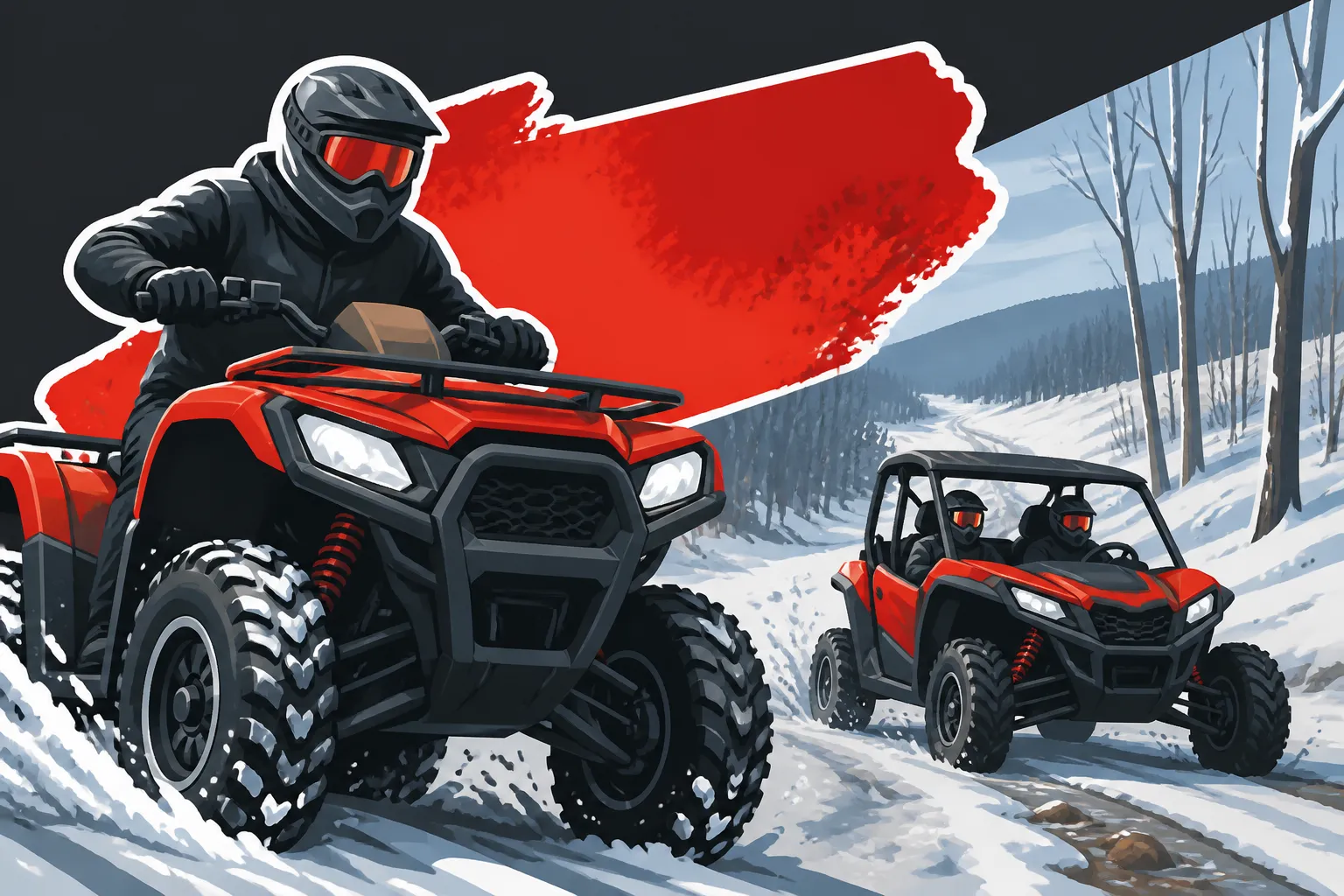
Winter riding at Bloody Skillet can be rewarding, but snow, ice, short daylight and seasonal closures can turn a fun outing into a frustrating one if you arrive unprepared. This guide explains how to check whether the trail is open, prepare your machine and gear, ride safely on winter terrain, and avoid common access and parking problems.
Check whether Bloody Skillet is open before you leave
Winter access depends on the season and trail conditions
Bloody Skillet is an ATV trail system in the Sproul State Forest area of Clinton County. Winter access is not something to assume just because snow is on the ground or the trail appears passable. Seasonal operating windows, forestry work, weather damage and temporary closures can affect whether you may ride on a particular day.
Before packing the trailer, check the latest information from the Pennsylvania Department of Conservation and Natural Resources and look for notices from the relevant state forest district. Check again shortly before departure: a route that was open when you planned the trip may close after heavy snow, thawing, a storm or trail damage. [Pennsylvania Trail Closures to Check First] and [Pennsylvania Trail Conditions Before You Go] are useful reminders that access can change, even during the same riding season.
Pay attention to the distinction between a trail’s usual winter season and its actual status on your chosen date. An officially designated winter window does not guarantee that every segment is open or in suitable condition. Likewise, a visible set of tire tracks does not prove that riding is allowed. Follow posted closures and barriers rather than treating them as suggestions.
Confirm rules, permits and machine eligibility
Before riding, make sure your machine meets Pennsylvania’s applicable registration and trail-access requirements. The rules can depend on where you ride and which trail system you use, so do not assume that a plate or permit from another place automatically covers every Pennsylvania route. Review [Pennsylvania ATV Trail Permits Explained] and [Pennsylvania's Northcentral Regional Trail Permit] to understand which requirements may apply to the area you plan to visit.
Check your ATV or UTV’s width before you go. Pennsylvania state forest trails have machine requirements, and a full-size side-by-side may not be eligible for a route that a narrower ATV can use. Compare the machine’s actual width with the applicable limit, rather than relying on a model name or a dealer’s general description. [Pennsylvania's Class II Trail Width Limit] explains why this matters when choosing a route.
Bring the documents and equipment required for your ride, and keep them accessible rather than buried under winter clothing in a storage box. Make sure your registration information is legible and your plate is securely mounted. If you are unsure whether a particular permit, registration or machine type is accepted on the route, resolve that before departure instead of relying on an assumption at the trailhead.
Prepare for snow, ice and changing trail surfaces
Plan around traction, not just snowfall
Winter conditions can change dramatically over a short distance. A shaded patch may remain icy while an exposed section has softened, and compacted snow can feel firm until a machine turns or brakes on it. Frozen ruts, buried rocks and slick roots can all make a familiar trail behave differently from a summer ride.
Ride at a pace that leaves room to respond. Give yourself extra distance to slow down, take turns smoothly and avoid abrupt throttle or brake inputs. On a steep or uneven section, pause and assess the route before committing. If the surface looks beyond the ability of your machine or riding group, turning back is a sensible choice, not a failure.
Do not assume that a layer of snow has made a muddy section safer. It can hide deep holes, loose stones, washouts and soft shoulders. During a thaw, a trail that seemed firm earlier in the day can become slick or rut easily. [Pennsylvania Trails After Heavy Rain] covers a related problem: wet and softened ground can be vulnerable to damage, so avoid riding when conditions are causing excessive rutting or when authorities have closed the route.
Set up the machine and clothing for cold-weather riding
Before leaving home, inspect the basics: tires, brakes, steering, lights, battery condition and any belts or chains your machine uses. Check tire pressure according to the machine manufacturer’s guidance and consider whether your tires are appropriate for the conditions. Cold temperatures can affect battery performance, so test the starting system before loading up rather than discovering a weak battery at a remote trailhead.
Dress for a stopped machine as well as a moving one. Wind chill can make a short break feel much colder, especially when gloves or boots get damp. Use layers that let you adjust as your effort changes, and keep dry gloves and an extra warm layer in a sealed bag. A helmet, eye protection and suitable footwear still matter in winter; bulky clothing should not interfere with safe control of the machine.
Pack for a delay, not only for the ride you hope to have. A charged phone, a paper or offline map, a small first-aid kit, water, basic recovery equipment and a way to contact your riding group can make a difference if someone gets stuck or a machine develops a problem. Tell someone where you are going and when you expect to return. Cell service can be unreliable in forested or mountainous areas, so do not make a live map or phone connection your only navigation plan.
Navigate the route and ride with a winter margin
Use maps as planning aids, not proof of access
Study the route before you unload. Identify the trailhead, the intended loop or out-and-back route, likely turnarounds and places where your group could regroup. A mapping tool such as onX Offroad can help you review routes and keep your group oriented, especially when snow makes familiar landmarks harder to recognize. Still, a digital map cannot confirm that a trail is open today or override a posted restriction.
Download or save the information you expect to need before you lose service. If you use onX Offroad, check that the map area is available offline and make sure everyone in the group understands the planned route. Carry a backup navigation option as well, such as a printed map or a second device. Apps can help with orientation, but they should not be treated as an official closure notice.
Winter also changes how quickly a group can travel. Stops to assess ice, help a rider, or recover a machine can stretch a planned outing well beyond its summer timing. Set a conservative turnaround time that leaves enough daylight to return to the trailer. If the group is moving more slowly than expected, shorten the ride rather than pressing on just to complete a loop.
Keep distance, visibility and group communication in mind
Leave extra space between machines. A rider ahead may brake unexpectedly on ice, and snow spray can make it harder to see what is coming. Use agreed signals or radios if your group has them, and stop somewhere safe when you need to regroup. Avoid stopping just around a blind corner or on a narrow section where another rider may not see you in time.
Be especially cautious when the trail narrows or visibility drops. A headlight helps other riders notice you, but it does not make a blind corner safe to enter quickly. Approach bends and rises at a speed that lets you stop within the visible, clear portion of the trail. On a shared or multi-use route, stay alert for other permitted users and follow posted direction signs.
Winter riding can make small mistakes more consequential. If a rider is cold, tired or uncomfortable, take that seriously. A short break in a sheltered, safe spot may help; continuing while someone is losing focus can increase the risk for everyone. The goal is not to cover the most miles. It is to return with the group and machines in good condition.
Make the trailhead and return trip part of the plan
Choose parking and unloading carefully
Check the trailhead and parking information before towing to Bloody Skillet. Snowbanks can reduce space, and a lot that works for a single vehicle in summer may be difficult for a truck and trailer in winter. Do not block gates, access roads, emergency routes or other vehicles while unloading. If the designated lot is full or inaccessible, do not create a new parking area by driving onto a soft shoulder or forest ground.
Think through the trailer’s approach and exit before committing to a narrow or icy access road. A loaded tow vehicle needs room to turn and enough traction to move again after stopping. If conditions make the route to the lot questionable, reconsider the trip rather than risking a stuck vehicle that blocks other users. [Parking a Trailer at a Forest Trailhead] offers useful planning points for a common source of winter-day stress.
Once parked, secure the truck and trailer, keep the unloading area orderly and make sure your group is ready before moving onto the trail. This avoids last-minute equipment searches in cold weather and reduces the chance that someone walks into the path of another machine. Before riding away, confirm that everyone has the agreed route, turnaround plan and a way to contact the group.
Use this final winter checklist
The following table is a practical last-minute check. It is not a substitute for official rules or trail notices, but it can help catch the details people often overlook while loading in a hurry.
| Before you leave | What to confirm | Why it matters |
|---|---|---|
| Trail status | Check official seasonal access and current closures | A route’s usual season does not guarantee it is open today |
| Registration and permits | Confirm the requirements for your machine and intended route | Requirements can vary by riding area |
| Machine fit | Check width and other applicable eligibility rules | A machine may not be allowed on every trail |
| Weather and daylight | Review the forecast and set a turnaround time | Cold, low visibility and early darkness reduce your margin |
| Navigation | Save maps for offline use and carry a backup | Phone service and digital maps may not be dependable |
| Clothing and supplies | Pack dry layers, water, basic tools and first aid | Cold or a mechanical delay can extend the ride |
| Parking | Confirm the lot can accommodate your truck and trailer | Snow and ice can make access or turning difficult |
| Group plan | Share the route, regroup points and return time | Clear expectations help if riders become separated |
When the ride is over, check your machine and trailer before heading home. Clear snow from lights and plate areas, look for damage or packed debris, and make sure tie-downs are secure. If conditions have softened the trail or created damage, avoid another pass through the affected section and follow any closure guidance. Responsible riding helps protect access for the next visit.
A useful trip plan also leaves room to change your mind. If the trail is closed, the lot is unsafe to reach, or the group encounters conditions that exceed its experience, call the ride early. Check [Pennsylvania's Winter Season Dates] and [Riding a Trail After Antlerless Season] when planning around seasonal access, and treat the posted local status as the deciding information for the day. Winter riding at Bloody Skillet is most enjoyable when preparation makes it easy to choose a safer route—or postpone the trip—without feeling pressured to push on.
Disclaimer
This article is for general informational purposes only and does not constitute professional advice. Laws, prices and regulations vary by location and change over time. Consult a qualified professional for guidance on your specific situation.