Pennsylvania Rules for Riding a Club Trail
A Pennsylvania club trail can look like a public route on a map, but access may depend on the landowner and the club’s rules. The key is to separate permission to ride from state registration and trail permits. Knowing which applies before you arrive can prevent a wasted trip—or a ride beyond where you are allowed to go.
What riding a club trail usually requires
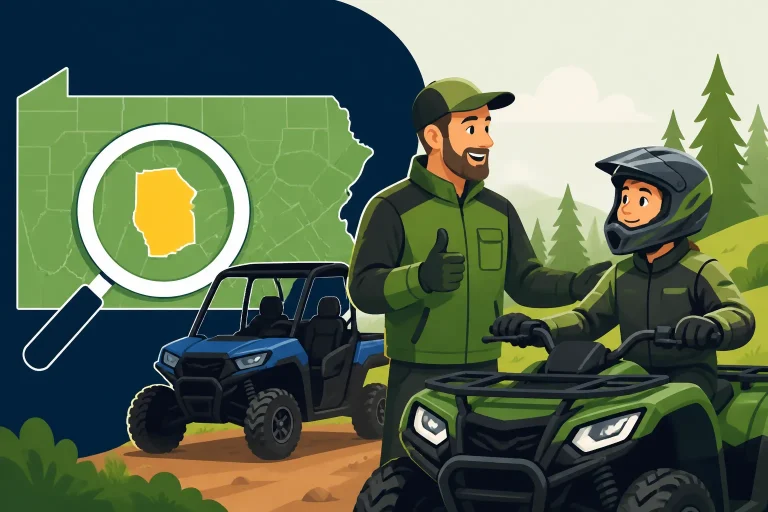
A “club trail” is not one statewide access category. It may cross land owned by a club, private property leased by a club, or a mix of properties. The club’s permission applies only to the places it is authorized to open. A membership card or club decal does not automatically give you permission to ride neighboring land, a public road, or a state forest trail.
Clubs set their own access arrangements. Depending on the trail system, you may need to join the club, buy a day pass, register each machine with the club, ride with a member, or make a reservation. Some clubs may have no public access at all. Requirements can also differ between locations run by the same organization.
Before making the drive, contact the club or property manager and ask:
- Is the trail open to nonmembers, and what access option is available?
- Does access cover the entire system or only certain sections?
- Does each rider, each machine, or both need a pass?
- Are there age, supervision, helmet, or passenger rules?
- Are there limits on machine width, noise, or equipment?
- What are the current operating hours, season dates, and closure notices?
- Where should you park, and are overnight parking or camping allowed?
These questions matter because private trail access is controlled by permission, not by the fact that a route appears on a map or that other riders are using it. A club may also close a route temporarily for maintenance, weather, logging, hunting, or a property-access change. Treat posted signs and current club notices as more reliable than old maps, social posts, or word of mouth.
| Requirement | What it does | Who sets it |
|---|---|---|
| Club membership or pass | Gives access only under the club’s stated terms | The club or land manager |
| Pennsylvania ATV registration | Meets applicable state registration requirements | Pennsylvania |
| State forest or other land permit | Allows access to designated land or trails covered by that permit | The agency or land manager |
| Insurance | Provides required coverage where state law or the club requires it | Pennsylvania law and, where applicable, the club |
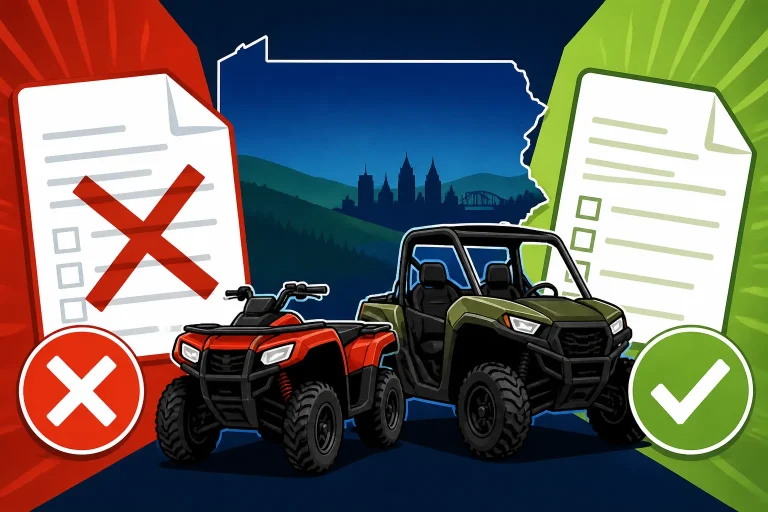
A club pass is not a substitute for Pennsylvania registration, and state registration is not permission to ride a club’s property. Keep those obligations separate when planning your trip.
Registration, trail permits, and insurance are different
Pennsylvania’s registration options have different purposes. A Pennsylvania’s Limited and General Registrations distinguishes limited registration, which is tied to use on land you own, from general registration for broader riding. If you intend to ride on property that belongs to a club or another landowner, do not assume that a limited registration for your own land covers that ride. A club’s leased property is not automatically your land simply because you have a membership.
A club may ask for proof of general registration, display of a state plate, or other documents before it allows you onto the trail. Its policy may be stricter than what you expected, so ask before the ride. For an overview of the state process, see Registering an ATV in Pennsylvania. If you are unsure whether your machine’s current registration matches your intended use, confirm the answer with the Pennsylvania DCNR Snowmobile and ATV Section and the club.
State trail permits are another separate matter. The Pennsylvania’s Northcentral Regional Trail Permit and Pennsylvania’s Allegheny National Forest Permit apply to the land and trail systems those programs cover. They do not grant entry to unrelated private club property. Similarly, free state forest trails are not the same thing as a club trail; check the requirements for the specific land you plan to ride, including Pennsylvania’s Free State Forest Trails.
The practical rule is to identify every land type on your planned route. If a club trail connects to a state forest trail, for example, the club’s access terms may cover only the club section. The public-land section can have its own permit, registration, season, and machine restrictions. Do not assume one pass covers the whole route just because the trails connect.
Insurance needs a separate check, too. Pennsylvania’s insurance rules can depend on where and how the ATV is operated. Riding on land that belongs to someone else is not the same as riding only on your own property. A club may also require proof of insurance as a condition of access, even where a rider believes state rules do not require it for a particular use.
Ask what proof the club accepts and whether the policy must cover off-road use. A card for an auto policy or a general liability policy may not show that your ATV is covered for the activity you are planning. Review your policy or contact your insurer rather than assuming that registration, a club pass, or a household policy proves adequate coverage. More on the state requirement is covered in Pennsylvania ATV Registration and Insurance Proof.
Check the rules before you unload
A little preparation helps avoid a situation where you arrive with the wrong machine, the wrong pass, or no way to verify your paperwork. Keep club requirements and state rules in mind at the same time: meeting one does not cancel the other.
Confirm the exact trail and access terms
Ask the club for its current map and directions to the correct entrance or staging area. Check that the map is current and that the section you want to ride is open to your type of machine. If the route leaves club property, ask where the club’s permission ends and what requirements apply beyond that point.
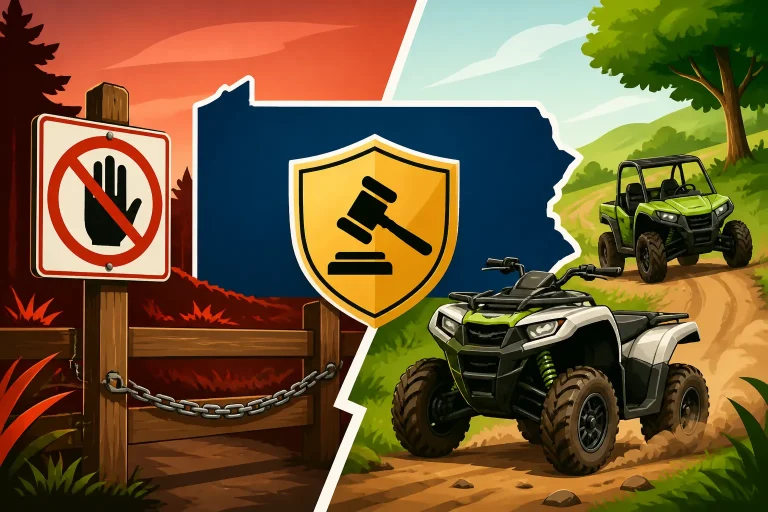
Do not ride around a locked gate, closed sign, or boundary marker because a trail appears to continue on the other side. Access permission is limited to the areas and dates the landowner or club allows. If you are not sure whether a spur or connector is open, stop and ask before riding it.
Bring proof and follow the club’s machine rules
Carry the registration documents required for your ride, proof of insurance if required, and the club pass or membership information. Ask whether the club expects a physical document, a digital copy, or a particular decal displayed on the machine. The club may also require a sign-in or inspection at the staging area.
Check your machine’s dimensions against the club’s limits. Trails can be narrower than the roads used to reach them, and a side-by-side that fits on a road may not fit through every trail or gate. A club’s width rule is specific to that property; it is not necessarily the same as a limit on a state forest route. If machine width is a concern, see Pennsylvania Trails for a Wide Machine and confirm the club’s own rules.
Make sure the machine is in safe operating condition. Check tires, brakes, lights, steering, and any required safety equipment before leaving home. Clubs can set additional rules for exhaust noise, spark arresters, passengers, or equipment, so ask rather than relying on another trail system’s policy.
Ride within the permission you were given
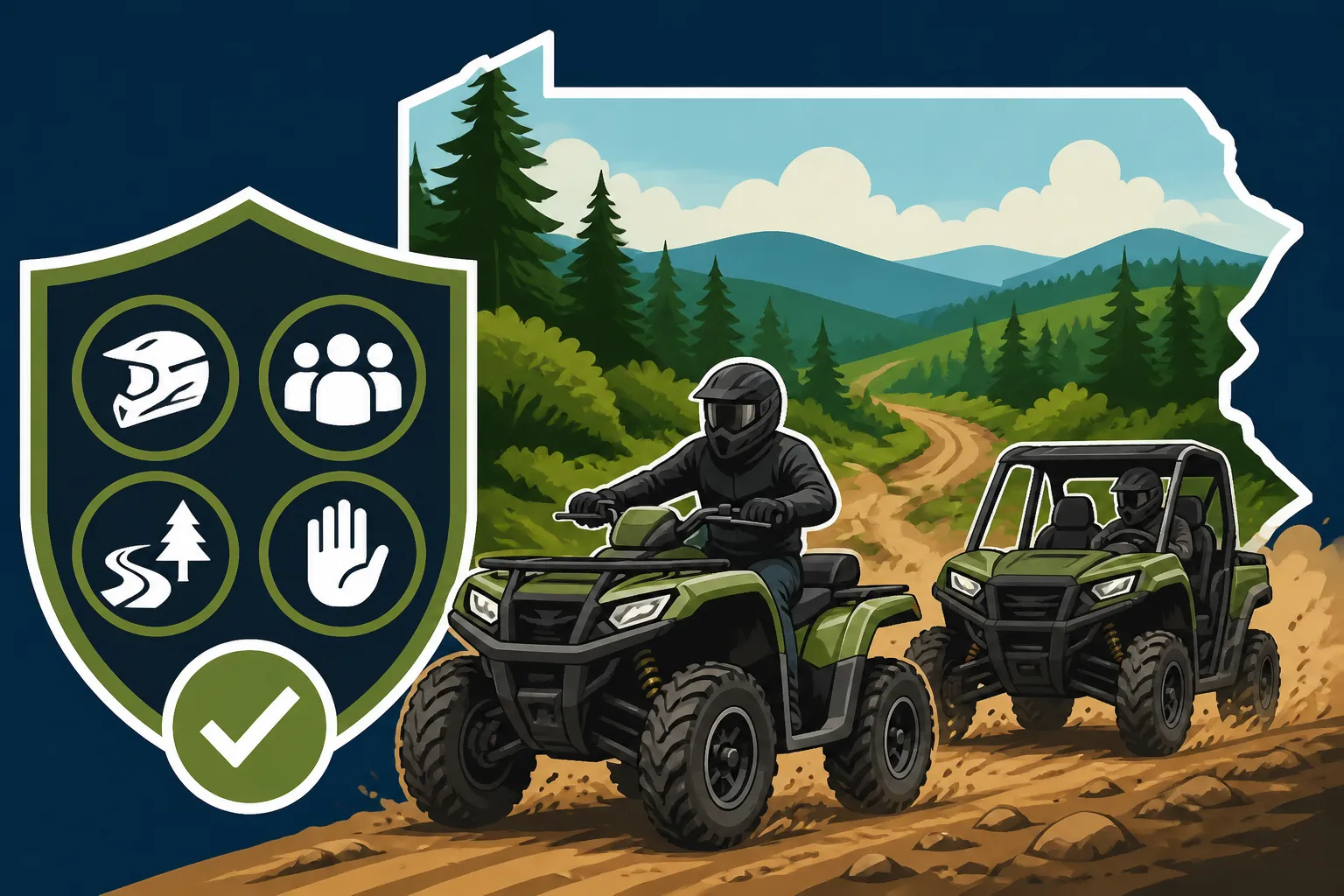
Stay on designated routes and respect closures, property boundaries, and posted instructions. Riding off trail can damage the property, create conflicts with landowners, and put future access at risk. Keep speed under control, especially around blind corners, staging areas, other riders, hikers, and work crews. Yield as directed by the club, and avoid creating dust or noise near homes.
Do not assume that a club’s private-land rules make every state rule irrelevant. General safety and operating laws may still apply, and rules can differ based on the rider’s age, the machine, the location, and whether the route reaches a road or public land. For example, a club pass does not authorize a road connection that is otherwise closed to ATVs. Check the legal requirements that apply to the specific parts of your trip, not just the club’s internal rule sheet.
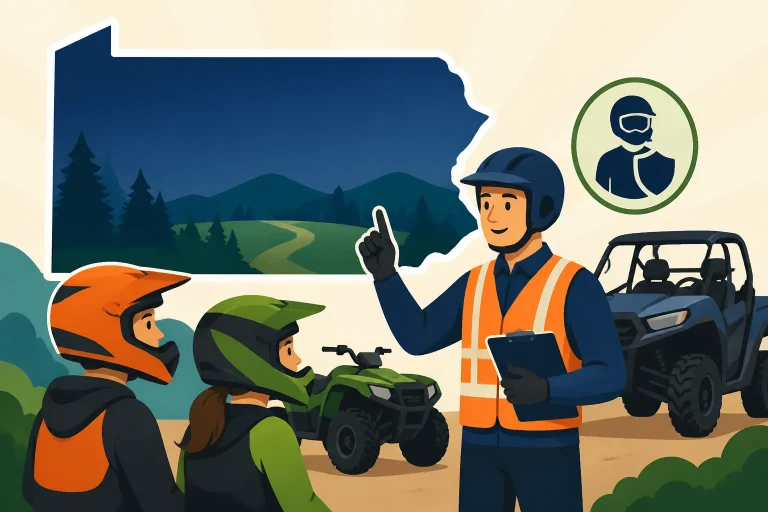
If you ride with children or passengers, verify that the machine is designed for the passenger and that the club allows that use. Ask about supervision, age limits, and safety-course requirements. Do not treat an adult’s membership or pass as automatic permission for every person in the group; the club may require individual passes or have rider-specific conditions.
A useful pre-ride routine is:
- Confirm the trail is open and your access is valid for the date.
- Check whether each rider and machine needs a separate pass.
- Verify registration and insurance requirements with the club and the relevant state rules.
- Review machine-width, passenger, age, and equipment restrictions.
- Save or carry the current map, directions, and contact details.
- Recheck closures and weather before setting out.
If the club cannot clearly confirm access or you cannot tell where its permission ends, choose a route with rules you can verify. A short call before the trip is far easier than sorting out a boundary or permit issue at the trailhead.
Disclaimer
This article is for general informational purposes only and does not constitute professional advice. Laws, prices and regulations vary by location and change over time. Consult a qualified professional for guidance on your specific situation.