Pennsylvania Rules for Carrying Fuel
Carrying spare fuel can extend a Pennsylvania ride, but it also adds fire, spill and handling risks—and the rules may differ between public trails, private property and riding areas. The safest approach is to use a gasoline-rated container, secure it away from heat and moving parts, and check the land manager’s current restrictions before setting out.
Start With the Rules for the Place You Plan to Ride
Fuel rules are not just about the ATV or UTV. The land manager may have restrictions on what riders can carry, where they can refuel, or whether fuel containers can be left at a trailhead. Fire conditions and temporary closures can change what is allowed. A setup that works on private property is not automatically suitable for a state forest trail or a managed riding area.
Before packing extra fuel, check the rules for the specific place you are visiting. For public land, look for current notices from the agency or office responsible for the route. For a private riding area or club trail, check with its operator. If the rules are unclear, ask before you ride rather than assuming a portable can is permitted. The same preparation helps with other land-use requirements, covered in Pennsylvania ATV Trail Permits Explained and Pennsylvania Rules for Riding a National Forest.
Pay particular attention to fire restrictions. A dry-weather notice may limit activities that could start a fire, while an area closure may affect access altogether. A fuel container is not an ignition source by itself, but a leak, fuel-soaked rag, hot exhaust or careless refueling can create a serious hazard. Check notices shortly before departure, not only when you first plan the trip. Pennsylvania Trail Closures to Check First explains why conditions and access can change.
Fuel storage at a trailhead is a separate question from carrying fuel on your machine. Do not leave a can unattended in a parking lot, beside a trail or at a campsite unless the land manager expressly allows it and you have a safe, permitted way to store it. A container can leak, be disturbed or expose other visitors to flammable vapors. If you need a larger supply, ask about the approved storage and refueling arrangements before arriving. For overnight trips, review Pennsylvania Rules for Camping at a Trailhead as well.
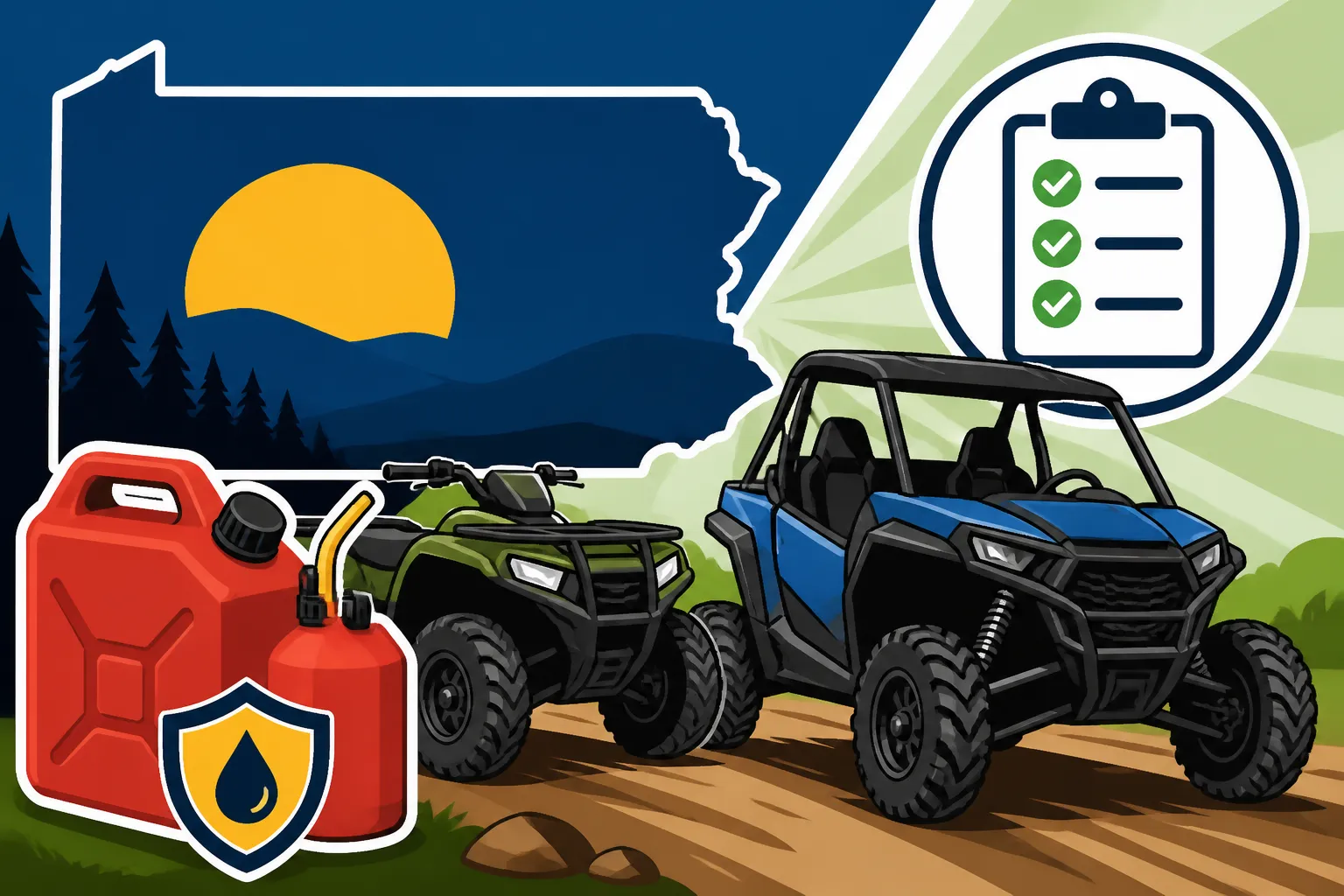
Use this quick check before you pack:
- Confirm the route or riding area is open and check for fire or fuel-related restrictions.
- Ask the land manager whether portable fuel containers are allowed on that route.
- Confirm whether refueling or storing fuel at the trailhead is allowed.
- Check that your ATV or UTV has a secure, suitable place to carry the container.
- If any part of the plan is unclear, carry only the fuel the machine can safely hold in its regular tank and identify a legal place to refuel.
This is especially important when riding through a mixture of public and private land. A rule that applies at one trail system may not apply on a connecting road, a club property or the next parcel. Permission to ride does not necessarily include permission to store fuel, build a fire or refuel wherever you choose.
Choose a Container Made for Gasoline
Carry fuel only in a container designed and labeled for gasoline. Do not use a drink bottle, water jug, household container or other improvised vessel. Those may not seal properly, may be damaged by gasoline, and can be mistaken for drinking water. A dedicated fuel container is easier to identify and is designed for the substance it holds.
Choose a container that fits the way you ride. A compact can may be easier to secure on a quad, while a UTV may have more cargo space—but extra capacity is not automatically a better choice. A larger container can add substantial weight and take up room needed for other gear. Consider the route, expected fuel use, available refueling points and your machine’s carrying limits before deciding how much to bring.
| Carrying option | Potential advantage | Main concern |
|---|---|---|
| Properly mounted auxiliary fuel system | Designed to remain attached while riding when installed as directed | Must be compatible with the machine and installed according to its instructions |
| Portable gasoline can secured to a rack or cargo area | Removable and useful for occasional extra range | Can shift, leak or be damaged if it is not restrained and protected |
| Fuel can carried loose in a passenger or storage area | May seem convenient | More likely to tip, strike other cargo or expose people to fumes |
| Fuel left at a trailhead or campsite | Avoids carrying the full supply on the machine | May violate site rules and creates a risk if left unattended |
A purpose-built auxiliary tank may be more practical for frequent long rides, but installation and compatibility matter. Follow the machine and tank manufacturers’ instructions, and have installation checked by a qualified mechanic if you are uncertain. A portable can should also be secured according to its manufacturer’s directions. Do not assume that a rack, strap or mounting point is safe simply because it holds the can while parked.
If you buy a can through a retailer such as Amazon, read the product details carefully and verify that it is intended for gasoline, fits your use and can be secured to your machine. A low price or a product photo is not proof that the container is right for off-road use.
Avoid overfilling. Leave the space the container’s instructions call for, close the cap firmly and use any vent only as directed. Fuel expands as temperatures rise; a container filled to the brim can leak or release fuel through its closure. Never modify a can, cap or vent to make it fit a rack.
Inspect the container before each ride. Look for cracks, dents, worn seals, a loose cap or signs of previous leakage. If it smells strongly of gasoline when closed, or you see wetness around the cap or body, do not carry it until the problem is fixed. Replace a damaged container rather than trying to repair it with tape or an improvised seal.
Secure Fuel Away From Heat and Moving Parts
The container must stay in place over bumps, side slopes and sudden stops. A can that slides around can damage itself, spill fuel or interfere with riding. Secure it using the intended mounting system or strong restraints attached to a suitable cargo point. Recheck the attachment before departure and during a break, especially after rough terrain.
Keep fuel away from hot parts, including the exhaust and engine, and away from moving parts such as tires, suspension components, belts and chains. The location should not block steering, lights, the rider’s view, access to controls or the movement of a passenger. Avoid placing a can where it could be crushed in a rollover or where it would hit someone if the machine stops abruptly.
On an ATV, a properly designed rack mount may be more suitable than carrying a can on the seat or in a bag beside the rider. Do not place fuel between your legs or where your body could press against it. On a UTV, a cargo area may offer more options, but the container still needs to be restrained and kept away from heat, passengers and loose gear. Consult the machine’s owner’s manual for cargo limits and approved mounting locations. For size and trail-fit considerations, see Pennsylvania Rules for a Side-by-Side on a Trail.
Keep the load balanced. A heavy can mounted high or far to one side can affect handling, particularly on uneven ground. Avoid adding weight beyond the machine’s cargo limits. If the container cannot be secured without blocking a passenger’s space or putting it near hot or moving parts, do not carry it there. Reconsider the route, refueling plan or equipment.
Do not carry spare fuel in a backpack or ordinary soft luggage. A bag may not contain a leak, and its position can put the fuel against a rider’s body. Keep gasoline separate from food, drinking water, clothing and first-aid supplies. Store fuel-soaked items separately and handle them according to local rules; do not toss them into vegetation or leave them beside the trail.
A UTV’s enclosed cab is not a substitute for a suitable fuel-storage location. Vapors can collect in enclosed or poorly ventilated spaces. Keep containers outside the passenger compartment when the machine provides a secure, appropriate exterior cargo area, and follow the vehicle manufacturer’s guidance. Do not carry gasoline in a way that exposes riders to fumes or puts a container where it can shift into the cab.
Refuel Carefully and Plan for Spills
Refuel outdoors, away from flames, cigarettes, hot surfaces and other ignition sources. Stop the machine and let hot components cool before handling fuel. Keep riders and bystanders clear, and do not refuel while the engine is running. A few minutes spent letting the machine cool is safer than pouring fuel near a hot exhaust.
Follow the instructions on both the machine and the fuel container. Open the cap carefully, keep the container stable and pour slowly to reduce splashing. Do not top off a tank after the fuel reaches its intended fill level. Replace the machine’s cap and the can’s cap securely before starting or moving the vehicle. If fuel spills, stop and deal with it before riding; never leave a spill for someone else to encounter.
A small spill on soil, leaves or trail gravel can still create a fire and environmental hazard. Keep absorbent material suitable for fuel spills with your gear if you are carrying fuel, and check the riding area’s rules on waste and cleanup. Do not wash fuel into a stream or drain, bury contaminated material or burn a fuel-soaked rag. If the spill is large, reaches water, or cannot be safely contained, move away from ignition sources and contact the appropriate land manager or emergency service for guidance.
Do not refuel beside a campfire or where another rider is cooking. On an overnight trip, keep fuel separate from tents, sleeping areas and cooking equipment. Check the site’s rules before using any flame or stove; Pennsylvania Rules for Campfires on State Forest Land covers a related issue, but a fire allowance does not make careless fuel handling safe.
Plan fuel stops around the ride rather than carrying more than you need. Check the route distance, your machine’s fuel use, terrain and any permitted refueling locations. Deep mud, steep climbs, low temperatures, heavy loads and frequent stops can change fuel consumption. A route that looks manageable on a map may take longer or use more fuel than expected. Leave a reserve, but do not treat an unverified fuel can as a substitute for route planning.
If you are riding with a group, agree on a fuel plan before leaving. Make sure everyone knows where fuel is being carried, who is responsible for checking the container and what to do if a machine runs low. Do not transfer fuel beside a trail just because one rider has a can; first choose a safe location away from traffic, heat, sparks and other riders. Keep the group clear while fuel is being handled.
Before each ride, check the container, mounting points and straps, then confirm that the load stays clear of tires, exhaust and controls. After a rough section, stop in a safe place and check again. If you smell gasoline, see a leak or find the can has shifted, shut down the machine in a safe location and address the problem before continuing.
Carrying spare fuel is most useful when it is part of a sound plan: a suitable container, a secure mounting point, a known route and permission for the places you will ride. When the route’s rules are uncertain, ask the land manager first. When the container cannot be secured safely, do not carry it on the machine.
Disclaimer
This article is for general informational purposes only and does not constitute professional advice. Laws, prices and regulations vary by location and change over time. Consult a qualified professional for guidance on your specific situation.