Why Both Might Be Required
Many ATV and UTV riders who are new to Pennsylvania, or even long-time residents, often find themselves puzzled about the exact requirements for legally operating their machines. It’s a common pitfall to assume that simply registering your ATV or side-by-side means you're good to go anywhere. The reality is that for many of the most popular riding areas in the Commonwealth, you’ll actually need both a state registration for your machine and a separate trail permit to gain access. This comprehensive guide will explain why these two distinct requirements exist, what each one covers, and how to ensure you're fully compliant before you hit Pennsylvania's trails.
What is ATV Registration in Pennsylvania and Why Do I Need It?
When you acquire an all-terrain vehicle or utility terrain vehicle in Pennsylvania, one of the first things you'll encounter is the need to register it with the Department of Conservation and Natural Resources (DCNR). This isn't just a suggestion; it's a legal mandate for nearly all machines that will be operated off your own private property. Think of registration as your ATV's official identification, similar to how a car has a license plate and title for road use. It establishes ownership, helps law enforcement identify machines, and ensures a basic level of accountability for riders on public lands.
The Core Purpose of DCNR Registration
The primary goal of the DCNR's registration program is to manage and regulate off-highway vehicles (OHVs) throughout the state. Unlike cars and trucks, which are registered by PennDOT for highway use, ATVs and UTVs fall under the DCNR's purview because their primary use is off-road, often on state forests, parks, and other designated recreational areas. This registration system provides a mechanism for the state to keep track of machines, enforce safety regulations, and, critically, generate funds that are reinvested directly back into the OHV program. Without registration, there would be little structure or funding for the trails many of us enjoy.
When you register your machine, you're not just getting a piece of paper; you're becoming part of a system designed to keep trails open and safe. The DCNR uses the funds from registration fees to maintain existing trails, develop new ones, provide rider education, and enforce the rules that protect both riders and the natural environment. So, while it might feel like just another hoop to jump through, your registration directly contributes to the riding opportunities available across Pennsylvania. This foundational registration is the first step towards legally enjoying the vast network of trails.
Limited vs. General Registration: Knowing the Difference
Pennsylvania offers two main types of ATV registration, each designed for different usage scenarios: Limited Registration and General Registration. Understanding the nuances of [Pennsylvania's Limited and General Registrations] is crucial because it dictates where you can legally ride. You don't want to get caught on the wrong type of land with the wrong registration.
Limited Registration is primarily intended for machines that will only be operated on the owner's private property. If you have a large tract of land or use your ATV exclusively within a hunting camp's boundaries and never venture onto public trails or lands, this registration might seem appealing. It generally comes with a lower fee, as the machine's impact on public resources is minimal. However, the moment you decide to take that ATV down a state forest trail, even just to cross a road to get to another private section, you immediately become non-compliant. Many riders opt for limited registration thinking it's a cost-saving measure, only to find themselves restricted or, worse, facing fines if they stray from their own property.
General Registration, on the other hand, is the more common and versatile option for most riders. This registration is required for any ATV or UTV that will be operated off the owner's private property, including on DCNR-designated trails, private parks, club trails, or even crossing a public road where permitted. When you get a general registration, your machine receives a distinctive registration plate and a DCNR wallet card, signifying its legal status for broader public use. This is the registration type that most recreational riders will need, as it opens up the vast majority of riding opportunities available in Pennsylvania. The fee for General Registration directly supports the DCNR's efforts to provide and maintain these public riding resources, which is a key reason [Why DCNR Registers Pennsylvania ATVs].
What Your Registration Fees Support
It's natural to wonder where your money goes when you pay for ATV registration. The fees collected by the DCNR are not just disappearing into a general state fund; they are specifically earmarked for the Snowmobile and ATV Restricted Account. This account is dedicated to supporting the statewide ATV and snowmobile program. This includes everything from the initial processing of your application to the long-term maintenance of the trails themselves.
Imagine riding through a well-groomed trail system, knowing that bridges are sound, signage is clear, and hazards have been addressed. These improvements and ongoing upkeep are directly funded by registration fees. A portion of the funds also goes towards educational programs that teach new riders about safety and responsible trail use, as well as enforcement efforts by DCNR rangers and other law enforcement agencies to ensure everyone adheres to the rules. So, every two years when you renew, you're investing in the future of the sport in Pennsylvania. Without this funding mechanism, the public trail systems we enjoy today would simply not exist in their current form, or they would deteriorate quickly, making for a less safe and enjoyable experience for everyone.
Understanding Pennsylvania's ATV Trail Permits: The "Other" Requirement
While DCNR registration gives your ATV legal standing in Pennsylvania, it's not always the golden ticket to every trail. Many of the state's most popular riding destinations, particularly those managed by state or national agencies, require a separate trail permit. This is where the "both" in "why both might be required" really comes into play. These permits are essentially access passes, ensuring that only authorized and often trained riders are using specific trail systems.
State Forest Trail Permits: Your Access to Public Lands
For those looking to ride the extensive networks of trails found within Pennsylvania's state forests, a specific State Forest Trail Permit is almost always a necessity. These permits are managed by the DCNR, much like registrations, but they serve a different function. A registration declares your machine is legal to operate; a permit grants you permission to enter and ride on a particular land management unit's trails. For instance, if you want to ride the beautiful yet challenging trails in Sproul State Forest, you’ll need a permit specific to that region.
These permits are typically seasonal and are designed to manage rider impact, contribute to local trail maintenance, and ensure adherence to specific rules for those trail systems. The fees associated with these permits go directly back into the upkeep of those specific state forest trails – things like grooming, clearing downed trees, repairing erosion, and updating maps. For example, the [Pennsylvania's Northcentral Regional Trail Permit] covers a vast network of trails across several counties, offering incredible riding but requiring that specific permit in addition to your state registration. It's not uncommon for riders to have their DCNR registration plate prominently displayed, only to be turned away or cited on a state forest trail because they didn't have the appropriate permit sticker attached to their machine or easily accessible on their person.
National Forest Permits: A Separate Gatekeeper
Pennsylvania is also home to a significant portion of the Allegheny National Forest, managed by the U.S. Forest Service. If your riding plans take you to this beautiful federal land, you'll encounter yet another layer of permitting requirements. The Allegheny National Forest operates under its own set of rules and, consequently, requires its own specific ATV permit. This is separate from any DCNR state registration or state forest trail permit.
The Allegheny National Forest permit typically involves a fee and might have different validity periods or requirements compared to state-issued permits. For instance, the [Pennsylvania Allegheny Forest Permit Cost] is distinct and covers access to the trails within that national forest. It’s a common mistake for riders to assume their Pennsylvania DCNR registration or a DCNR state forest permit will grant them access to federal lands. Federal agencies have their own mandates and funding structures, necessitating their own permit system. This means if you're traveling from a state forest trail directly to an Allegheny National Forest trail, you'll likely need to stop and acquire the appropriate federal permit, adding another step to your preparation. Always check the specific requirements for federal lands well in advance of your trip.
Private Parks and Club Memberships: Their Own Rules
Beyond state and national forest lands, Pennsylvania boasts a vibrant network of private ATV parks and club trails. Places like the Anthracite Outdoor Adventure Area (AOAA) or Rock Run Recreation Area, or numerous local riding clubs, offer fantastic riding experiences. However, these privately owned or managed areas operate under their own access rules. While your DCNR registration is still legally required for your machine, these venues will typically require an entrance fee, day pass, or annual membership for access to their trails.
These fees often go towards the park's operational costs, insurance, trail maintenance, and facility improvements. Some private parks might also have additional rules regarding safety gear, machine width, or noise levels that go above and beyond state regulations. For example, a club might require proof of liability insurance in addition to your registration and their membership, ensuring that all riders are covered in case of an incident. Always check the specific requirements of any private park or club you plan to visit, as their access policies are independent of state-level permits, though they will invariably require your machine to be properly registered with the DCNR.
Why You Might Need Both: Navigating the Overlap
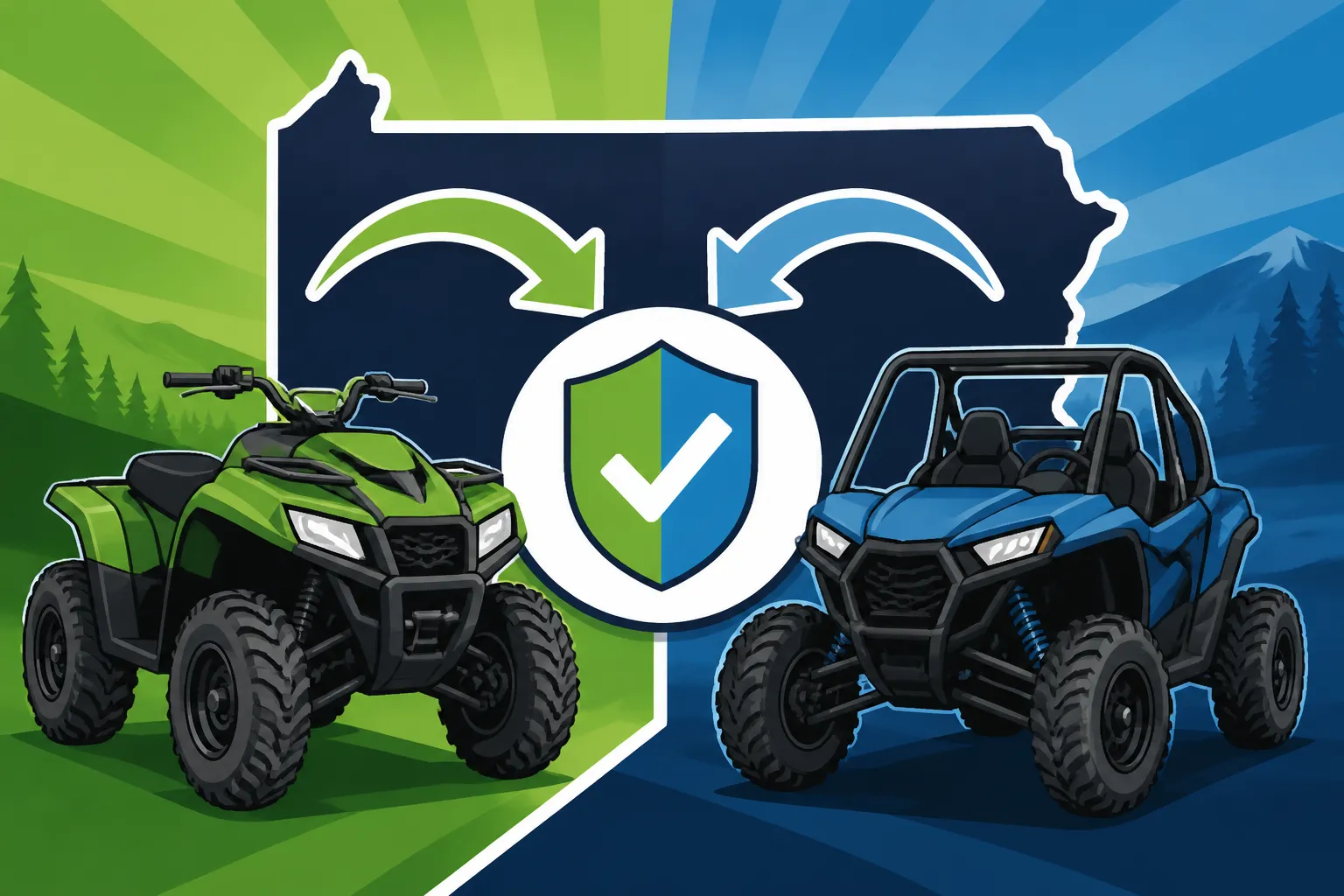
The question of "why both" truly boils down to the different purposes each document serves. Your Pennsylvania DCNR registration is about the machine and its legal standing statewide. A trail permit, whether state, federal, or private, is about access to a specific piece of land. Without both, you could find yourself legally operating an ATV but without permission to ride on your desired trail, or, conversely, with a valid trail permit but an illegally unregistered machine.
Registration for Legality, Permits for Access
Think of it this way: your DCNR registration is like having a driver's license for your ATV. It proves that you, and your machine, meet the basic legal requirements to operate an off-highway vehicle anywhere it's permitted in Pennsylvania. This includes having a valid plate, a [What a DCNR Wallet Card Is For], and ensuring your machine is identifiable. This is a general authorization that applies across the Commonwealth.
A trail permit, on the other hand, is like a ticket to a concert or an entry pass to a specific park. It grants you the right to enter and use a specific trail system for a designated period. While your registered ATV is legally recognized, it doesn't automatically mean you can just roll onto any trail. Many of the most popular and well-maintained trail systems, especially those on public lands like state forests, need that extra layer of management and funding provided by permits. Without the permit, even a fully registered ATV is trespassing on those specific trails. It's a system designed to manage crowds, ensure funding, and maintain the quality of the riding experience for everyone.
Common Scenarios Requiring Both
Let's look at some real-life situations where you'd definitely need both your DCNR registration and a trail permit:
- Riding in a Pennsylvania State Forest: This is perhaps the most common scenario. If you're heading to designated DCNR ATV trails within state forests like Sproul, Bald Eagle, or Tiadaghton, your machine must have a current DCNR General Registration. In addition, you must also possess the relevant State Forest Trail Permit, such as the Northcentral Regional Permit. You'll attach the permit sticker to your registered ATV plate or somewhere visible on the machine. Riding these trails without both is a clear violation.
- Exploring the Allegheny National Forest: As mentioned, venturing onto the trails of the Allegheny National Forest requires your DCNR General Registration. But you'll also need to purchase and display the specific Allegheny National Forest ATV Permit. This dual requirement ensures both state and federal regulations are met, and that funds are directed to the appropriate land management entity.
- Participating in an Organized Ride or Event: Many organized ATV rides, poker runs, or charity events take place on public or leased lands. While the event organizer might handle specific access permissions with the land manager, you will still be personally responsible for ensuring your ATV has a valid DCNR General Registration. The event itself might also issue a temporary permit or require proof of payment that acts as your "access pass" for that specific event, but your state registration is the underlying legal requirement for your machine.
These scenarios illustrate that simply having one document doesn't negate the need for the other. Each serves a vital, distinct role in the framework of Pennsylvania ATV laws.
Avoiding Fines and Trail Closures
The consequences of not having both registration and the appropriate permit can range from an inconvenient turnaround to substantial fines. DCNR rangers, state police, and federal park rangers actively patrol popular riding areas, especially during peak seasons. They are trained to check for both valid registration plates/stickers and the required trail permits. Getting caught with an unregistered machine on public land, or a registered machine without the necessary trail permit, can lead to a citation. A fine for riding unregistered, for example, can be steep, with [Riding Unregistered Brings an Automatic $300 Fine] being a common starting point, plus potential court costs.
Beyond individual penalties, widespread non-compliance can have broader implications. If a trail system sees a high rate of unregistered machines or riders without permits, it can undermine the funding model that supports those trails. This could lead to reduced maintenance, limited operational hours, or even permanent trail closures. Responsible riders understand that adhering to both registration and permit requirements is not just about avoiding a ticket; it's about preserving access to the trails for everyone and ensuring the continued health and funding of Pennsylvania's OHV program. Always double-check your paperwork before you head out, and if you're ever unsure, contact the DCNR or the specific land management office for clarification.
Practical Steps for Compliance: Getting Both Your Registration and Permit
Navigating the paperwork for both your ATV registration and trail permits might seem like a lot, but breaking it down into manageable steps makes the process straightforward. Being prepared ensures you can hit the trails without worry, knowing you're fully compliant with Pennsylvania law.
Applying for Pennsylvania ATV Registration
The process for registering your ATV or UTV in Pennsylvania is handled by the DCNR. Whether you buy from a dealer or through a private sale, the fundamental steps are similar, though the paperwork might vary slightly. When purchasing from a Pennsylvania dealer, they will typically handle most of the registration paperwork for you, simplifying the process considerably. They'll submit the necessary forms, collect the fees, and often provide you with a temporary tag that allows you to ride while your official registration and plate are processed.
If you're buying from a private seller, you'll need to take a more active role. You'll need a properly executed bill of sale, ensuring it includes all machine details and purchase price, especially if you want to prove [Pennsylvania Sales Tax on a Private Purchase]. Platforms like LawDepot can be incredibly helpful for generating a robust, legally sound bill of sale that protects both buyer and seller, making sure all the necessary fields are covered for DCNR purposes. You'll then submit Form DCNR-43, proof of ownership (title or previous registration), proof of sales tax payment (if applicable), and the appropriate fees to the DCNR. A comprehensive [Pennsylvania ATV Registration Paperwork Checklist] can be found on the DCNR website or through their registration portal. Remember, this registration is valid for two years, and you'll receive a plate, sticker, and wallet card.
Securing Your Trail Permit
Once your ATV is properly registered with the DCNR, the next step is to acquire the necessary trail permits for the specific areas you plan to ride. As discussed, these vary depending on whether you're riding state forest, national forest, or private park trails.
For Pennsylvania State Forest trails, such as those in the Northcentral region (Clinton, Lycoming, Potter, and Tioga counties), you'll need to purchase the DCNR regional trail permit. These permits are typically sold annually, corresponding to the specific [Pennsylvania ATV Trail Season], and require you to have an active DCNR registration for your machine. You can usually purchase these online through the DCNR's Snowmobile and ATV Portal, by mail, or in person at certain DCNR district offices. The permit usually comes as a sticker that you apply to your ATV's DCNR registration plate. For areas like the Allegheny National Forest, you'll need to acquire their specific permit directly from the U.S. Forest Service. This can often be done at ranger stations or authorized vendors near the forest. Always check their official website for the most current application methods and requirements. And for private parks or club trails, visit their specific websites or contact them directly for information on day passes, memberships, and any other unique entry requirements.
Documenting Everything: What to Carry
Once you've gone through the effort of securing both your DCNR registration and any necessary trail permits, the final, crucial step is to ensure you have all proof of compliance with you when you ride. It’s not enough to just have them; you need to be able to present them if asked by a ranger or law enforcement officer.
For your DCNR registration, this means having your physical registration plate mounted correctly on your ATV, displaying the current year's sticker, and carrying your DCNR wallet card. The wallet card is your proof of registration and often includes important information about your machine and its registration period. For trail permits, you’ll typically need to have the permit sticker prominently displayed on your ATV’s registration plate, as instructed by the issuing agency. Additionally, for specific permits like the Allegheny National Forest permit, you might receive a paper permit that should be carried on your person, alongside your registration wallet card and proof of insurance. Having a waterproof holder for these documents, easily accessible yet protected from the elements, is a wise investment. Organizations like LawDepot offer templates for various legal documents, which can sometimes be useful in creating customized slips to hold emergency contact information or specific waivers you might need to carry, though for state-issued documents, the originals are always paramount. Always double-check the rules for the specific trail system you're riding to understand exactly what documentation they require you to have on hand.
Disclaimer
This article is for general informational purposes only and does not constitute professional advice. Laws, prices and regulations vary by location and change over time. Consult a qualified professional for guidance on your specific situation.