Township Roads Open to Pennsylvania ATVs
One of the biggest head-scratchers for ATV and UTV enthusiasts in Pennsylvania is figuring out where you can actually ride your machine legally, especially when it comes to township roads. It’s a common frustration to see a seemingly perfect stretch of gravel or pavement and wonder if it’s a permissible link to a trail, or if you’re just inviting a hefty fine. This comprehensive guide is designed to cut through the confusion, helping you understand the regulations, identify designated roads, and ride legally and confidently on Pennsylvania's open township routes.
Understanding Pennsylvania's ATV Road Rules
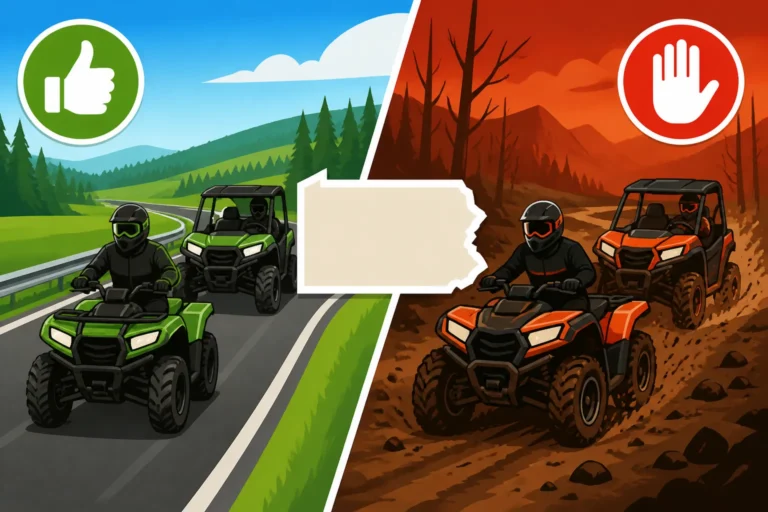
Pennsylvania has a unique and often misunderstood set of rules governing All-Terrain Vehicles and Utility Terrain Vehicles. Unlike some other states that might allow for broader street-legal conversion, Pennsylvania's approach is much more restrictive, especially regarding public roads. The default stance is that ATVs are not permitted on public highways, which includes township roads, unless specifically designated as open. This isn't just a suggestion; it's a critical legal distinction that every rider needs to understand before they even think about putting a tire on a paved or graveled public way.
The General Rule: Why Most Roads Are Closed
The fundamental principle in Pennsylvania is that ATVs and UTVs are recreational vehicles intended for off-road use. The state's vehicle code is primarily set up for vehicles registered with PennDOT, like cars, trucks, and motorcycles, which meet specific safety and equipment standards for highway operation. ATVs, by their design and how they're titled and registered, typically do not meet these standards. They lack features like turn signals, specific headlight configurations, and crash-worthiness requirements that are standard for street-legal vehicles. This lack of compliance with highway safety standards is the core reason why the vast majority of public roads, including most township and borough streets, remain off-limits to ATVs and UTVs. It’s not an arbitrary decision; it's rooted in safety and legal definitions.
When you see a road and wonder if you can ride it, assume the answer is "no" unless you have clear, undeniable evidence to the contrary. This cautious approach can save you a lot of grief, time, and money. Many riders, new and seasoned alike, fall into the trap of thinking "no sign means I can ride," but in Pennsylvania, it's actually the opposite: "no open sign means you cannot ride." The burden of proof that a road is open lies entirely on the rider, not on the township to post every closed road.
DCNR's Role vs. PennDOT's Authority
Understanding the regulatory landscape requires knowing which state agency governs what. In Pennsylvania, the Department of Conservation and Natural Resources (DCNR) is the primary authority for ATV and UTV registration and trail systems. When you register your ATV, you do it through DCNR, and they issue your plate and registration card. This registration allows you to ride on designated DCNR trails, approved municipal trails, and private land with permission. You can learn more about this process by reading [Registering an ATV in Pennsylvania]. However, DCNR's authority generally stops at the edge of public roads controlled by PennDOT or local municipalities.
PennDOT, on the other hand, is responsible for all state highways, and they also set the framework for how local roads (county, township, borough) are managed regarding vehicle types. PennDOT does not register ATVs for highway use, and this is a crucial distinction. There's no pathway to get a "street legal" ATV registration from PennDOT. This division of authority means that while DCNR facilitates your ability to ride off-road, it's the local municipalities, acting within PennDOT's overarching guidelines, that dictate if a township road can be opened for ATV use. There's no gray area here; DCNR and PennDOT have distinct roles, and neither grants carte blanche for street riding.
Pennsylvania's Specific ATV Legislation
The legal foundation for ATVs in Pennsylvania is primarily found within the state's vehicle code, specifically in sections pertaining to off-highway vehicles. These laws define ATVs and UTVs, establish registration requirements, and outline permissible uses. While I won't get into specific code numbers here, it's important to know that these laws clearly differentiate between "motor vehicles" intended for highway use and "ATVs" which are largely restricted to off-road environments. This legislative framework is why you can't simply add some lights and a horn to your quad and expect it to be street-legal. [Are ATVs Street Legal in Pennsylvania?] explains this in more detail.
The laws are designed to protect both riders and the general public, considering the inherent differences in handling, speed, and visibility of ATVs compared to traditional road vehicles. They also address issues like noise, environmental impact, and trail preservation. Any decision by a township to open a road must align with these state-level definitions and restrictions, which means the process isn't just a simple vote; it requires careful consideration of the legal implications and safety standards. This strict legislative environment is why navigating ATV road access in Pennsylvania requires such diligence and attention to local ordinances.
How a Township Road Becomes Open to ATVs
The idea of riding your ATV on a township road in Pennsylvania isn't just a matter of hoping for the best; it's a specific, multi-step legal process that a local municipality must undertake. This isn't something that happens overnight or by informal agreement. It requires a formal resolution or ordinance, public input, and often considerable discussion among local officials and community members.
The Local Decision-Making Process
For a township, borough, or even a city to open any of its roads to ATVs, the local governing body (like the board of supervisors or borough council) must pass a specific ordinance or resolution. This is a deliberate, official act. It usually begins when local residents or ATV clubs approach the municipality with a request, outlining the benefits – perhaps connecting existing trails, boosting local tourism, or providing access to businesses. The local officials then have to weigh various factors: public safety, potential impact on residents (noise, dust, traffic), road maintenance costs, and the economic benefits.
The process often involves legal review to ensure the proposed ordinance complies with state vehicle code and other relevant laws. This is not a task undertaken lightly, as municipalities assume a certain level of responsibility and liability when they open public roads to ATVs. They must consider the safety of all road users – ATV riders, motorists, pedestrians, and cyclists – and put measures in place to mitigate risks. It’s a careful balancing act, and every township approaches it differently, depending on local priorities and existing infrastructure.
Public Hearings and Community Input
A crucial part of opening a township road to ATVs is the requirement for public engagement. Before any ordinance is passed, the municipality will typically hold one or more public hearings. This is where residents, business owners, and other stakeholders get to voice their opinions, concerns, and support. It's a chance for the community to ask questions, raise potential issues like increased traffic or noise near residential areas, and for ATV advocates to present their case, perhaps showing how such roads could benefit the local economy or provide crucial connections for trail riders.
These hearings are vital because they allow local officials to gauge public sentiment and address potential problems proactively. A well-attended public hearing with strong community support can significantly help an ordinance pass, while strong opposition can lead to its defeat or significant modifications. If you're an ATV rider interested in seeing more roads open, attending these meetings, presenting a well-reasoned argument, and showing up with fellow riders can make a real difference. It’s about building a consensus and demonstrating that ATV riders are responsible members of the community.
The Ordinance or Resolution Explained
Once the local governing body has considered all factors and public input, they may draft and then vote on an official ordinance or resolution. This document is the legal instrument that officially designates specific township roads or sections of roads as open for ATV use. The ordinance will clearly define which roads are open, what hours of operation are permitted, any speed limits specific to ATVs, and potentially other restrictions. It might also specify requirements beyond state law, such as local permits or additional safety gear, though this is less common for general road use compared to trail systems.
The language in these ordinances is precise and legally binding. It typically refers to specific road names or sections (e.g., "From Main Street to Oak Lane"). It’s not a blanket approval for all township roads. Once passed, the ordinance becomes local law, legally enabling DCNR-registered ATVs to use those specified roads. Without such an ordinance in place, using any township road is illegal, regardless of how short the distance or how rural the setting. Always look for the official documentation or signage, as a casual "sure, it's fine" from a local resident isn't sufficient legal permission.
Identifying Open Township Roads: Signs and Indicators
So, you've learned that a township can open its roads, but how do you, as a rider, actually know which ones are open? This is where clarity and specific visual cues become incredibly important. You can't just guess; you need to be able to positively identify a designated ATV-friendly road.
The Green Sign on a Pennsylvania Township Road
The most definitive indicator that a township road is open to ATVs in Pennsylvania is the presence of a specific, standardized green sign. This sign typically features the words "JOINT USE ROAD" or similar phrasing, sometimes accompanied by a depiction of an ATV and a car, indicating that multiple types of vehicles are permitted. [The Green Sign on a Pennsylvania Township Road] is the sign you're looking for. These signs are posted prominently at the entry points of any road that has been officially designated for ATV use. They are usually reflective and designed to be easily visible to approaching riders and drivers.
If you don't see this green sign, assume the road is closed to ATVs. It's that simple. Local municipalities are responsible for installing and maintaining these signs once an ordinance is passed. This consistency in signage helps ensure that riders from different areas can quickly identify legal riding routes, minimizing confusion and accidental trespass or violations. Never rely on unofficial homemade signs or the absence of "no ATV" signs; always look for the official green indicator.
Online Resources and Local Maps
Beyond physical signage, many progressive townships and ATV clubs that have successfully advocated for open roads will often publish this information online. You might find maps or lists of designated ATV roads on the township's official website, within their ordinances section, or on the websites of local ATV clubs or county tourism boards. These digital resources can be invaluable for planning your ride in advance.
Some townships might even partner with DCNR or regional tourism initiatives to highlight their ATV-friendly routes, sometimes even integrating them into broader trail maps. Always check the official sources first. A quick search for "[Township Name] ATV roads" or checking the DCNR website's interactive map for connecting routes could yield results. However, always cross-reference online information with actual signage on the ground, as website updates might lag behind real-world changes. And remember, any map or list should ideally refer back to an official ordinance.
When a Road Isn't Marked: What to Do
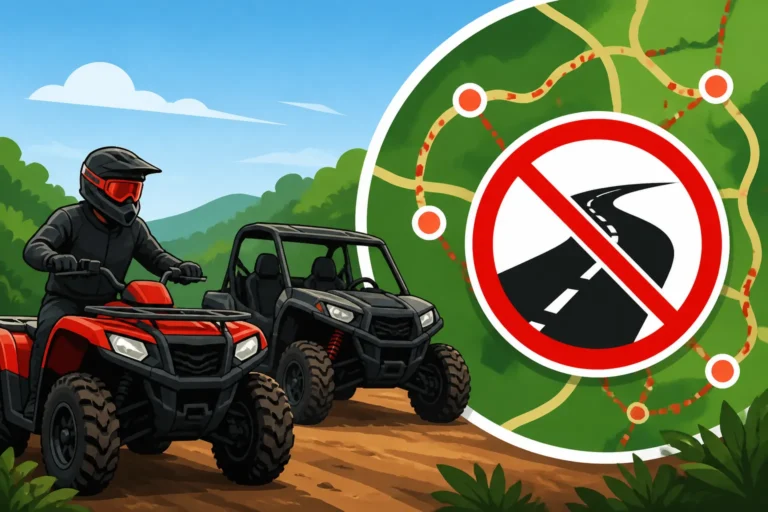
The biggest mistake a Pennsylvania ATV rider can make is riding a township road that isn't clearly marked with the official green "Joint Use Road" sign. If a road isn't marked, it is not open for ATV use. Period. This can be frustrating, especially if it seems like a logical connector, but deviating from this rule can lead to significant penalties.
If you find yourself on an unmarked road and aren't absolutely certain of its status, the safest course of action is to turn around or find an alternative legal route. Do not assume that because other people are riding it, or because it looks like a perfect gravel track, it's okay. They might be breaking the law, or they might have specific permission you don't. [Riding a Road That Is Not Posted] is a risky endeavor. Always err on the side of caution. If you believe a road should be open and isn't marked, your best bet is to contact the local township office directly for clarification, rather than risking a fine.
Rider Responsibilities on Township Roads
Riding your ATV on a designated township road in Pennsylvania comes with significant responsibilities. These aren't just suggestions; they are legal requirements designed to ensure the safety of everyone on the road, including yourself. Ignoring these rules can lead to fines, citations, and even serious accidents. When a township opens a road, it does so with the expectation that ATV riders will adhere to all applicable laws.
Pennsylvania's Minimum Age of Sixteen on Roads
One of the most critical rules to remember when riding an ATV on a designated township road is the age restriction. In Pennsylvania, you must be at least sixteen years old to operate an ATV on any public road, even those officially designated as open for ATV use. This rule is in place because public roads, even quiet township roads, present different challenges and hazards than off-road trails. A higher level of maturity, experience, and understanding of traffic laws is required. [Pennsylvania's Sixteen-Year-Old Road Rule] outlines this in more detail.
This means that even if you have a younger rider (say, a 12-year-old) who is highly skilled and has completed a safety course, they are still prohibited from operating an ATV on an open township road. This age restriction applies regardless of whether they are accompanied by an adult. For youth riders, designated off-road trails and private property are the only legal places to ride. Violating this age requirement can result in fines for both the underage operator and any supervising adult present.
Helmet and Eye Protection Requirements
Safety is paramount, and Pennsylvania law mandates specific gear for ATV riders, especially when on public roads. Both the operator and any passenger must wear an approved helmet. This isn't optional; it's a non-negotiable safety measure designed to protect against head injuries in the event of an accident. [Pennsylvania Helmet Law for ATV Riders] goes into the specifics. Helmets must meet certain safety standards (such as DOT certification) to be considered legal.
In addition to helmets, eye protection is also required. Goggles or a helmet with a face shield are essential to protect your eyes from dust, debris, insects, and other hazards you might encounter on the road. Even on a slow, casual ride, a sudden gust of wind or a rock kicked up by another vehicle can cause serious eye injury. Think of it this way: the risk of injury on a road, where you might encounter cars or other obstacles, is often higher than on a controlled trail, so taking every precaution is just common sense.
Insurance and Registration Proof
Just as you need a driver's license, registration, and insurance for your car, you need specific documentation for your ATV when riding on public roads in Pennsylvania. Your ATV must be properly registered with DCNR, and you must carry proof of that registration (the wallet card). This proves that your machine is recognized by the state for off-road use. [Pennsylvania's General Registration for Everywhere Else] covers this requirement.
Beyond registration, liability insurance is mandatory when operating an ATV on any land other than your own private property, which unequivocally includes open township roads. This insurance helps cover damages or injuries you might cause to others or their property in the event of an accident. You must carry proof of this insurance (your insurance card) with you at all times while riding. A law enforcement officer can stop you and request to see both your DCNR registration and proof of insurance. [Pennsylvania ATV Insurance Requirement] provides more insights into this critical requirement. Riding without proper registration and insurance on public roads can lead to significant fines and penalties.
Lighting, Mufflers, and Spark Arresters
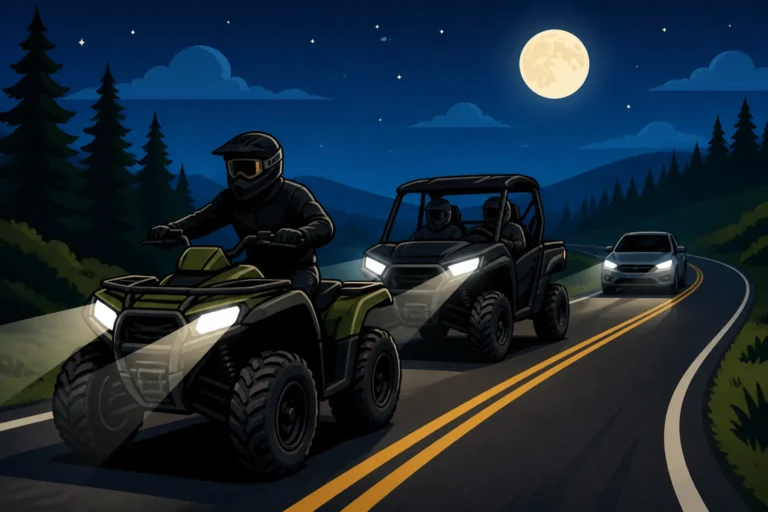
When riding on township roads, even those designated as open, your ATV must also comply with certain equipment standards, especially regarding lighting and exhaust. These requirements are in place for both safety and environmental reasons. All ATVs operating on public roads, particularly during dusk, dawn, or nighttime hours, must be equipped with working headlights and taillights. This ensures you can see where you're going and, more importantly, that other vehicles can see you. [Pennsylvania Lighting Requirements for ATVs] discusses this in detail. Good visibility is crucial when sharing a road with other traffic.
Additionally, your ATV must have an effective muffler system to keep noise levels within acceptable limits. This is often a significant concern for residents living along designated ATV roads. Excessive noise can quickly turn public support against ATV access. Your machine must also be equipped with a spark arrester, which prevents hot exhaust particles from escaping and potentially starting wildfires, especially during dry conditions. Ensuring your machine is well-maintained and compliant with these equipment standards is not just about avoiding a fine; it's about being a responsible rider and a good neighbor.
Navigating the Nuances: Joint-Use and Connector Routes
Pennsylvania's approach to opening township roads isn't just about randomly designating strips of asphalt. Often, these open roads serve specific purposes: either as "joint-use" roads shared with other vehicles or as crucial "connector routes" linking different trail systems. Understanding these nuances is key to planning effective and legal rides.
Pennsylvania Joint-Use Roads and Who Shares Them
A "joint-use road" in Pennsylvania is exactly what it sounds like: a road shared by ATVs and other conventional vehicles like cars and trucks. When a township designates a road as open for ATVs, it typically means it becomes a joint-use road. This isn't an exclusive ATV trail; it's a public thoroughfare that now accommodates ATVs in addition to other traffic. This means ATV riders must adhere to all conventional traffic laws, just like any other vehicle operator. This includes obeying speed limits, stop signs, yield signs, and hand signals for turning if your ATV isn't equipped with turn signals.
Riding on a joint-use road requires heightened awareness and defensive riding. You must always be prepared for encountering cars, trucks, bicycles, and pedestrians. Never assume other drivers see you, and always maintain a safe distance. [Pennsylvania Joint-Use Road Rules] reinforces the importance of this shared responsibility. The presence of a green "Joint Use Road" sign indicates that you're welcome, but it also means you're part of a mixed-traffic environment, and blending in safely is paramount.
Riding a Connector Between Two Trail Systems
One of the most valuable functions of open township roads is their ability to act as "connector routes." Imagine two fantastic ATV trail systems, perhaps managed by DCNR, separated by just a few miles of township road. Without a designated connector, riders would have to trailer their machines between the two, which is inconvenient and time-consuming. An open township road connecting these systems provides a seamless riding experience, allowing riders to transition directly from one trail to another.
These connectors are often short stretches of road, designed purely to bridge gaps. They typically aren't meant for long-distance touring on public roads but rather as functional links. Riders often advocate for these specific connectors because they enhance the overall trail experience and can bring economic benefits to small towns along the route. For example, a connector might allow you to ride from a state forest trail directly into a small town to grab a bite to eat or refuel your machine, as detailed in [Riding a Connector Between Two Trail Systems]. This is a prime example of responsible planning creating better access for the riding community.
Rules for Crossing State Routes
Even if you're riding on an open township road that connects to another, you'll inevitably encounter situations where you need to cross a state route (a road maintained by PennDOT, often designated with an SR number). The rules for crossing state routes are very strict in Pennsylvania:
- Crossing at Ninety Degrees: You must cross the state route at as close to a ninety-degree angle as safety permits. This minimizes the time your ATV spends in the travel lanes.
- Complete Stop: You must come to a complete stop before crossing and yield to all oncoming traffic. Treat it like a stop sign at a major intersection.
- Visibility: Choose a crossing point with maximum visibility in both directions. Never attempt to cross on a blind curve or hill crest.
- No Riding On State Routes: You cannot ride along a state route, even for a short distance, unless it is specifically designated as a joint-use road by PennDOT (which is exceedingly rare for ATVs). The allowance is strictly for direct crossing.
These rules are critical for your safety, given the higher speeds and traffic volumes on state routes. Violating them is not only illegal but extremely dangerous. [Pennsylvania Rules for Crossing a State Route] provides essential guidance here. Always exercise extreme caution and prioritize safety when crossing any state highway.
The Reality of Limited Open Roads and Advocacy
While the idea of riding your ATV on township roads might sound appealing, the reality in Pennsylvania is that designated open roads are still relatively few and far between. This isn't due to a lack of rider interest, but rather a complex interplay of factors, from safety concerns to community impact and the logistical challenges of implementation.
Why Most Roads Stay Closed
Many factors contribute to why most township roads in Pennsylvania remain closed to ATVs. Public safety is always at the forefront. Local officials often express concerns about potential accidents involving ATVs and other vehicles, especially given the different operational characteristics of ATVs. Noise pollution is another significant issue; even with compliant mufflers, a group of ATVs can generate considerable noise, which can be a nuisance to residents, particularly in more populated areas. Dust can also be a problem on gravel roads, impacting air quality for nearby homes.
Liability is also a major consideration for townships. Opening roads to ATVs can potentially increase a municipality's exposure to lawsuits in the event of accidents. While some of these concerns can be mitigated through careful planning and rider education, they remain powerful deterrents. [Why Most Roads Stay Closed] highlights these common objections. Furthermore, road maintenance can be a worry; while ATVs generally don't cause the same wear and tear as heavy trucks, some officials worry about increased traffic leading to more frequent repairs or dust control measures.
Engaging with Your Local Township
If you're a passionate ATV rider and believe a specific township road in your area should be open to connect trails or provide access, proactive engagement with your local township is key. Simply riding an unmarked road and hoping for the best is not the answer. Instead, organize with other local riders or an ATV club and approach your township supervisors or borough council with a well-researched proposal.
Your proposal should address common concerns. For example, highlight the economic benefits that ATV tourism can bring to local businesses (restaurants, gas stations, lodging). Emphasize rider responsibility, safety course completion, and adherence to noise regulations. Offer to help with signage, trail maintenance, or rider education initiatives. Showing a willingness to be part of the solution, rather than just demanding access, can go a long way. [Asking a Township to Open a Road] is a great resource for how to make your case effectively and professionally. Building a positive relationship with your local government and community is essential for progress.
The Future of ATV Road Access in Pennsylvania
The future of ATV road access in Pennsylvania is likely to be a slow but steady process, driven by local initiatives rather than broad state mandates. As ATV recreation continues to grow in popularity, and as communities look for ways to boost local economies, more townships may consider opening specific roads. However, this will likely remain focused on strategic connectors and joint-use sections rather than widespread access.
Technological advancements in ATV design, such as quieter engines and more sophisticated lighting, may also help address some of the current concerns. Increased rider education and advocacy from organizations like the Pennsylvania ATV-UTV Association will also play a crucial role in promoting responsible riding and demonstrating the positive impact of ATV tourism. While Pennsylvania isn't likely to become a "street legal everywhere" state for ATVs anytime soon, targeted and well-supported local efforts can continue to expand the network of legal riding opportunities on township roads.
Common Misconceptions and Fines
Despite the clear regulations, many misconceptions persist about ATV use on public roads in Pennsylvania. These misunderstandings can lead to accidental violations, which carry real and often significant financial penalties. It's crucial for every rider to be crystal clear on what is and isn't allowed to avoid costly mistakes.
Why Pennsylvania Will Not Plate a Quad
Perhaps the biggest and most common misconception is the idea that you can simply "plate" your ATV with PennDOT, like you would a motorcycle or car, and then legally ride it on any public road. This is absolutely not the case in Pennsylvania. [Why Pennsylvania Will Not Plate a Quad] explains the core issue: ATVs and UTVs do not meet the safety and equipment standards (e.g., crashworthiness, specific lighting, emissions, etc.) required for highway vehicles as defined by PennDOT.
Your DCNR registration plate and wallet card allow you to ride on designated off-road trails and specifically designated township roads, but they do not make your ATV a "street legal" vehicle in the traditional sense. There is no conversion path in Pennsylvania to turn a standard ATV or UTV into a vehicle that can be registered for general highway use. Adding turn signals, mirrors, or a horn is great for safety and might be required for designated roads, but it does not change the fundamental legal classification of your machine with PennDOT. Don't fall for advice that suggests otherwise; it's a guaranteed path to a citation.
Riding Unregistered Brings an Automatic $300 Fine
One of the most immediate and costly consequences of ignoring Pennsylvania's ATV laws is riding an unregistered machine on any public land, including designated township roads or state trails. If you are caught operating an ATV that is not properly registered with DCNR, you face an automatic fine of $300. This isn't a discretionary fine; it's a fixed penalty designed to strongly discourage non-compliance. [Pennsylvania Fines for an Unregistered ATV] spells this out clearly.
This fine applies even if you're riding on a legitimate trail or an officially open township road. Registration is a prerequisite for legal operation everywhere off private property. The costs don't stop there. If you don't have insurance, or if you're operating illegally in other ways (like underage riding on roads), those carry their own separate and compounding penalties. The DCNR registration fee is a minimal investment compared to the steep cost of a citation, not to mention the potential for your machine to be impounded.
Cost of Prosecution on Top of a Fine
It’s important to understand that a fine, like the $300 for an unregistered ATV, is often just one part of the total financial burden. If you receive a citation, you will almost certainly incur additional "costs of prosecution." These are administrative fees and court costs associated with processing your violation, whether you contest it or simply pay the fine. These costs can easily add another hundred dollars or more to your total bill, sometimes even approaching the initial fine amount.
This means that a $300 fine for an unregistered ATV could realistically end up costing you $400, $500, or even more, depending on the specific court fees in the jurisdiction where you were cited. These extra costs are often a surprise to riders who are only expecting to pay the initial fine amount. Always factor in these additional expenses when considering the true financial impact of an ATV violation. It underscores the importance of being fully compliant with all registration, insurance, and operating rules to avoid these significant out-of-pocket expenses.
Preparing Your Machine for Township Road Use
When you get the green light to ride on an open township road, it’s not just about having your DCNR registration and insurance in order. Your machine itself needs to be properly equipped and maintained for the unique demands of road riding. While ATVs are built for off-road adventures, public roads introduce different considerations for safety, visibility, and compliance.
Essential Safety Equipment for Road Riding
While helmets and eye protection are mandatory for the rider, your ATV needs specific equipment to be safe and legal on designated township roads. Foremost among these are functional headlights and taillights. These aren't just for night riding; they dramatically increase your visibility to other motorists during the day, especially in changing light conditions, bad weather, or dusty environments. Ensure your lights are clean, bright, and correctly aimed.
Mirrors are another crucial safety addition. While not always strictly mandated for off-road use, having at least one rearview mirror is essential for safely navigating a joint-use road. It allows you to monitor traffic behind you without constantly turning your head, which can destabilize your ride. Consider adding a right-side mirror as well for optimal situational awareness. Additionally, a working horn is vital for alerting other drivers or pedestrians to your presence. These are all common-sense additions that significantly enhance safety in a mixed-traffic environment.
Tire Choices and How They Impact Road Performance
The tires on your ATV are designed for specific terrain. While aggressive knobby tires are fantastic for mud, rocks, and loose dirt, they are not ideal for pavement or hard-packed gravel roads. Aggressive tread patterns wear down very quickly on hard surfaces, leading to premature tire replacement. More importantly, they can compromise handling and braking performance on paved roads, reducing traction and making your machine feel "darty" or unstable.
If you plan to frequently ride on open township roads that involve significant stretches of pavement, consider investing in a set of more road-friendly tires. These often have a less aggressive tread pattern, a harder rubber compound, and a larger contact patch for better grip on hard surfaces. Brands like SuperATV offer a range of tires, some of which are designed with hybrid use in mind, balancing off-road traction with better road manners and durability. While you don't necessarily need dedicated street tires, choosing a less aggressive all-terrain option can greatly improve your safety, comfort, and tire longevity when hitting the pavement.
Maintenance Checks Before Hitting the Pavement
Before every ride that involves designated township roads, perform a thorough pre-ride inspection of your ATV. This is even more critical when you'll be sharing the road with other vehicles.
- Tires: Check tire pressure. Over-inflated tires can reduce grip and make your ride harsh; under-inflated tires can cause poor handling and excessive heat. Inspect for cuts, punctures, or excessive wear.
- Brakes: Test both front and rear brakes. Ensure they engage smoothly and firmly. Check brake fluid levels and pad wear.
- Lights & Horn: Verify all lights (headlights, taillights, brake lights) are working correctly. Test your horn.
- Steering & Suspension: Check for any looseness or play in the steering. Inspect suspension components for damage or leaks.
- Fluids: Check oil, coolant, and fuel levels.
- Muffler & Spark Arrester: Ensure your muffler is secure and intact, and that the spark arrester is in place and not clogged.
These routine checks take only a few minutes but can prevent serious issues and ensure your machine is compliant and safe for road use. A well-maintained machine is a safer machine, not just for you but for everyone else on the road.
Disclaimer
This article is for general informational purposes only and does not constitute professional advice. Laws, prices and regulations vary by location and change over time. Consult a qualified professional for guidance on your specific situation.